REVIEW · BAKI GOVERNORATE
Baku: Old City Guided Walking Tour
Book on GetYourGuide →Operated by Alov Travel Baku · Bookable on GetYourGuide
One walk, three centuries of Baku. This Old City guided walk strings together the 12th-century Maiden Tower, the 15th-century Shirvanshahs’ Palace, the Juma Mosque, and the Baku Museum of Miniature Books in just two hours, so the streets start to make sense fast. I especially loved how the guide turns landmarks into a timeline as you move, and how the miniature-book stop adds a quirky, memorable change of pace. The main consideration: entrances to the Maiden Tower and the palace cost extra.
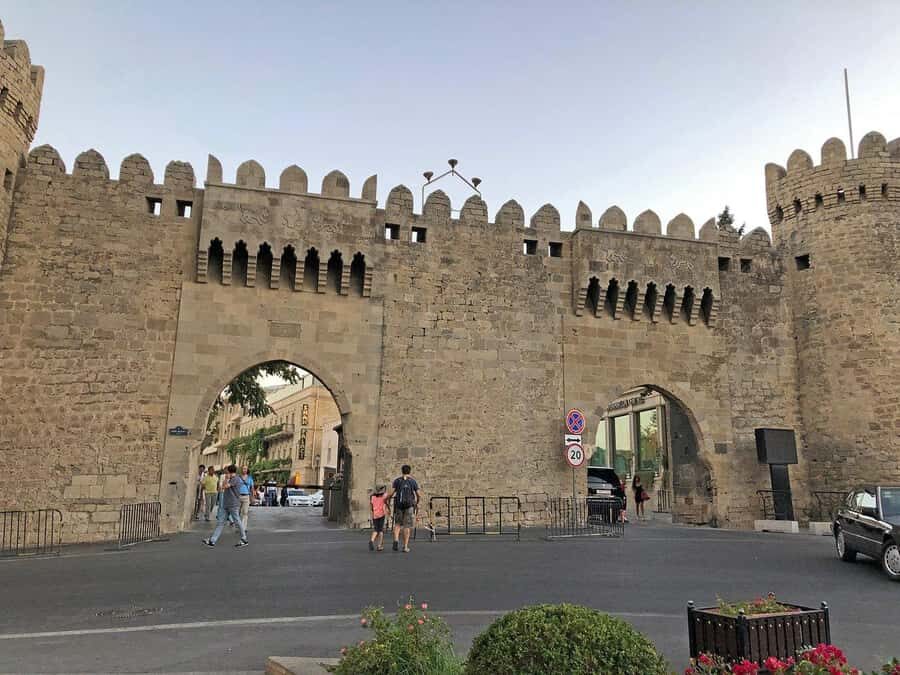
You start at Gosha Gala (Double Gate) and keep moving through Icherisheher, Baku’s Inner City, with photo stops and short guided explanations along the way. Tours run in English, Russian, and Turkish, and people in recent tours have praised guides like Veronica and Nurlan for making the history clear and easy to follow.
Wear comfortable shoes. The Old City streets are walk-first, and this isn’t set up for wheelchairs or for anyone who struggles with uneven ground. If you’re traveling with high expectations and limited time, this format is a good match.
In This Review
- Key Things I’d Focus On
- Getting Started at Gosha Gala Double Gate
- Maiden Tower: The 12th-Century Landmark You’ll Want to See Twice
- Baku Museum of Miniature Books: Small Scale, Big Personality
- Bazar Square and Arcades: Where the Old City Still Works
- Juma Mosque: Architecture Plus a Clear Date (1437)
- Shirvanshahs’ Palace: Divanhane, Mausoleums, and Sacred Details
- Quick Photo Stops: Bukhara Caravanserai and Madonna Seafaring
- Ali Shamsi’s Workshop: The Human Side of the Old City
- Price, Timing, and Value for a Two-Hour Walk
- What to Bring (and What to Leave at Home)
- Who This Walk Is Best For
- Should You Book This Baku Old City Guided Walking Tour?
- FAQ
- How long is the Baku Old City guided walking tour?
- How much does it cost?
- Where do I meet the guide?
- What are the main sights included on the tour?
- What is included in the price?
- Which entrances cost extra?
- What languages are offered for the live guide?
- What should I bring for the walk?
- Is this tour suitable for wheelchair users or limited mobility?
Key Things I’d Focus On
- Maiden Tower + Shirvanshahs’ Palace views are big, iconic, and UNESCO-linked as a historic monument group
- Baku Museum of Miniature Books is the only one of its kind you’ll find here, and it has a Guinness record story
- Juma Mosque includes a minaret erected in 1437, which gives you a clear date anchor
- The route is built around arcades, burial places, and market squares, not just “pretty photos”
- You end with a real creative stop: Ali Shamsi’s workshop inside the Old City
Getting Started at Gosha Gala Double Gate
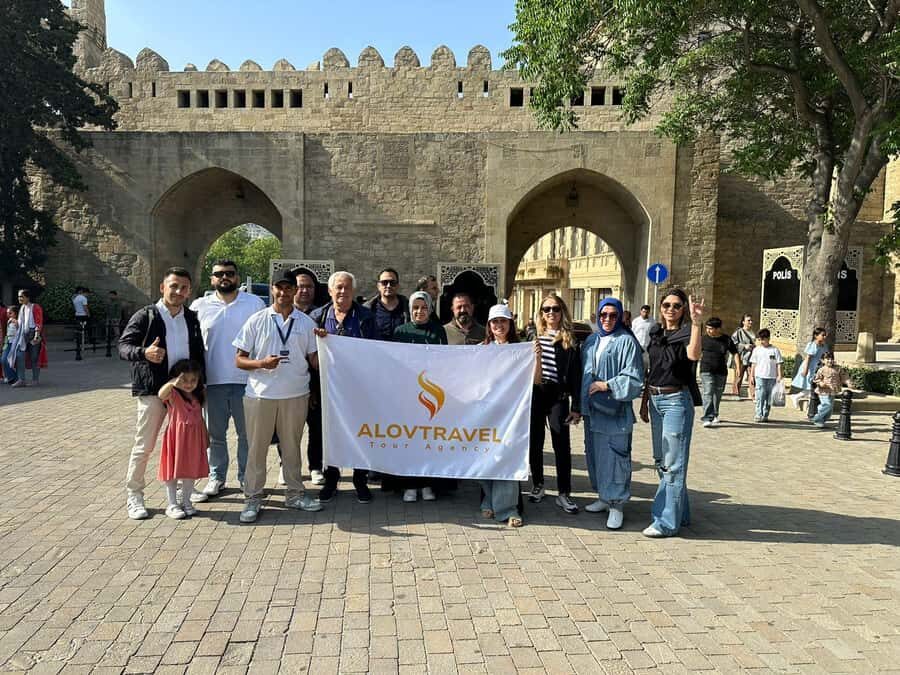
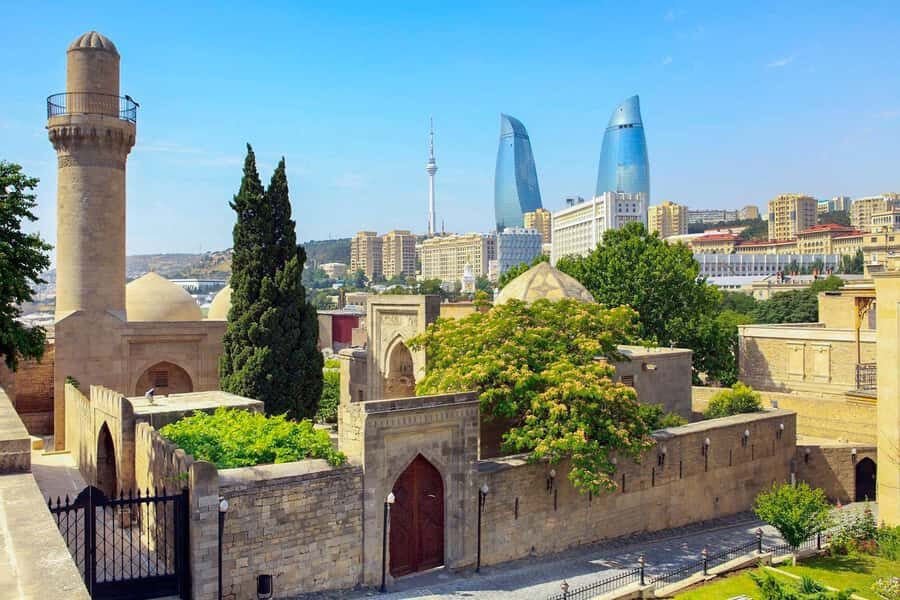
Your tour meets in front of the Double Gate (Gosha Gala) at Gosha Gala Gapysy. This matters because the Old City is a maze—starting in the right spot helps you get your bearings quickly and keeps the first 10 minutes from turning into wandering.
After a quick photo stop in the Inner City area, you’ll start moving on foot with a guide who keeps the story tied to what you’re seeing. This is one of those walks where you don’t just pass monuments—you learn why they’re grouped where they are.
Expect a tight, efficient pace. You’ll cover several major sights, plus a couple short “pass-by” photo moments, all in about two hours.
Maiden Tower: The 12th-Century Landmark You’ll Want to See Twice
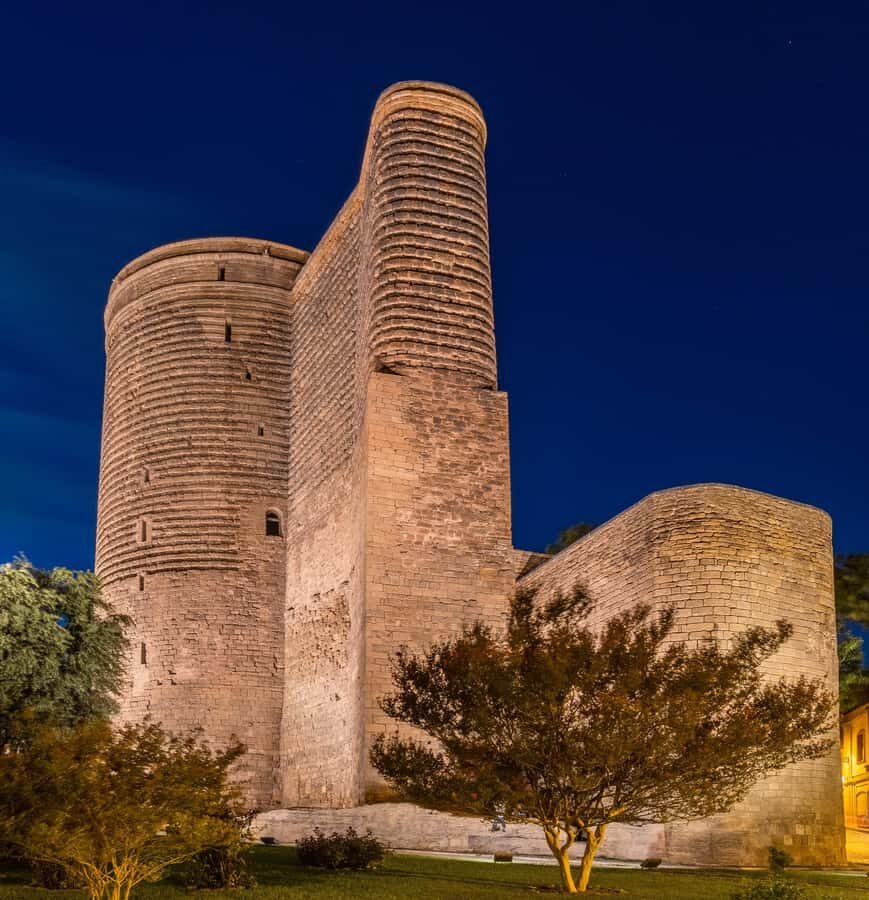
The walk begins at the Maiden Tower, a 12th-century monument in Icherisheher. Even if you’ve seen photos, standing close is different—the tower is tall, prominent, and it instantly frames the rest of your Old City experience.
You get guided context alongside the stop. The Maiden Tower and the Shirvanshahs’ Palace form a group of historic monuments listed in 2001 under the UNESCO World Heritage List of Historical Monuments as cultural property. That UNESCO link is useful because it turns the visit from “cool building” into “why this place matters.”
One practical note: the tour includes the guided experience, but entrance to the Maiden Tower costs extra (listed as $9). If you’re curious to go inside, bring a credit card or cash in case you need to pay on-site.
Tip for your photos: plan on a few angles. The tower photographs well from several street corners, and your guide can help you time those quick photo stops.
Baku Museum of Miniature Books: Small Scale, Big Personality
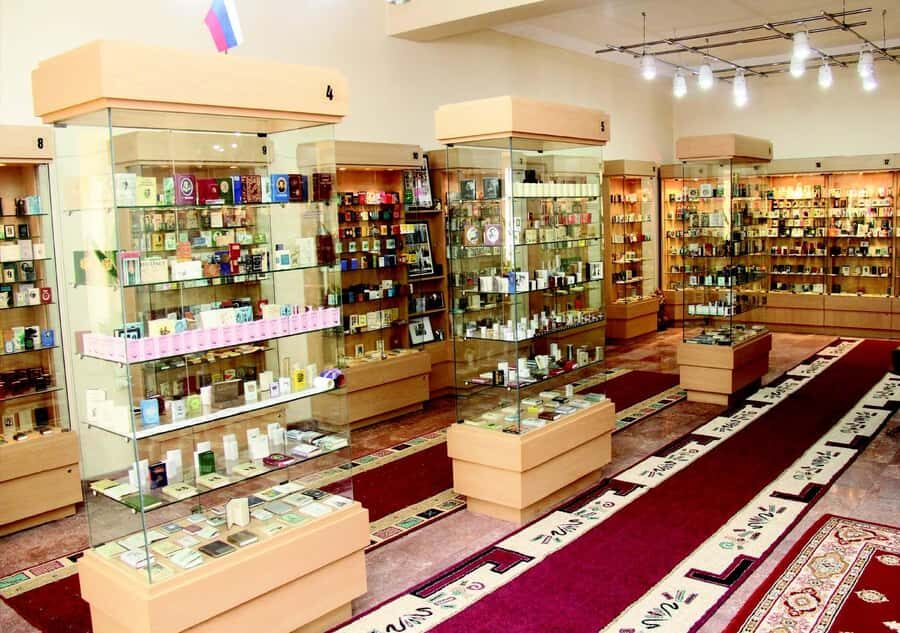
Next comes the Baku Museum of Miniature Books, and this is where the tour shows you it has more than just big monuments. It’s described as the only museum of miniature books in the world, which gives you a reason to stop even if you’re not a museum person.
The museum opened on April 2, 2002, and in 2015 it received a Guinness Book of Records certificate as the largest private museum of miniature books. That detail is worth knowing because it changes how you look at the collection—you’re not just seeing small books; you’re seeing an unusual long-term obsession turned into a public museum.
The tour time here is about right: you get guided time without it swallowing your whole schedule. This stop also works as a “breather,” especially if you’re tired from walking tight streets in the heat.
No surprise rules apply in the museum setting: you should avoid touching exhibits and keep your voice down. If you want to take photos, do it respectfully—some small displays can be sensitive to flash or handling, and the guide will steer you on how to behave.
Bazar Square and Arcades: Where the Old City Still Works
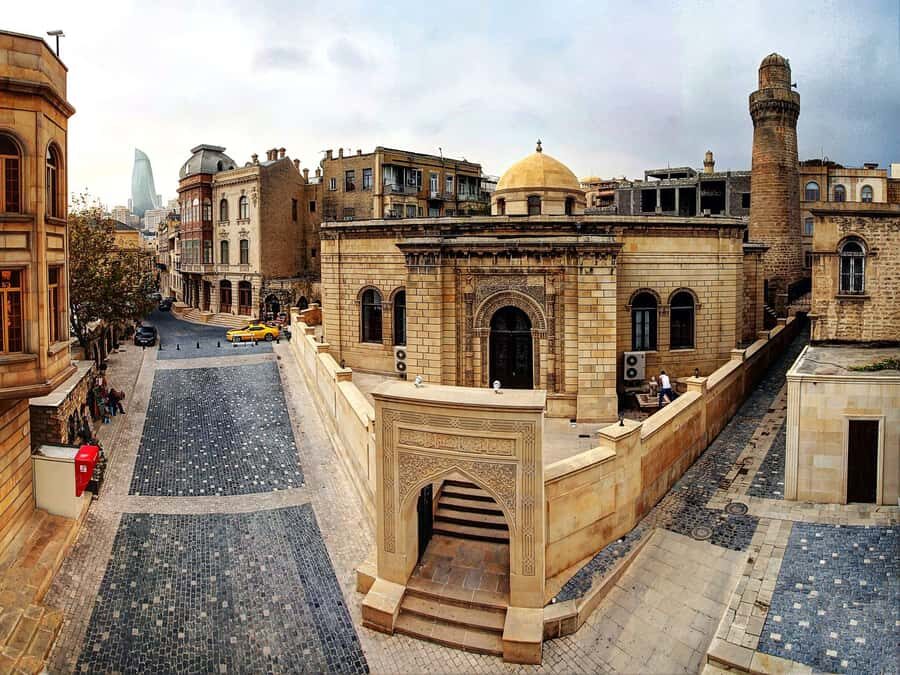
After the museum, you’ll head toward Bazar Square and the arcades and religious burial place complex. This is a valuable part of the tour because it shows the Old City as a living urban fabric, not just an open-air photo gallery.
You’ll see references to an arcade from the 12th and 13th centuries, which gives the streets a deeper timeline than you might expect. In plain terms: these aren’t random lanes. They’re part of how people moved, traded, and gathered.
This section is also where your guide’s explanations pay off. When you understand how squares and arcades functioned historically, the layout feels less confusing. You start to read the space instead of just walking through it.
If you’re sensitive to crowds, plan your patience here. Market areas can be busy, and your best strategy is to follow the guide’s pace and use the photo stops for quick shots rather than lingering in the flow of foot traffic.
Juma Mosque: Architecture Plus a Clear Date (1437)
The tour continues to the Juma Mosque, including a look at the minaret erected in 1437. That date is a gift to travelers—it anchors what you’re seeing in a real historical moment and gives your guide something concrete to explain.
The stop is described as focused on the mosque’s architecture and its history. This is one of the reasons I like this tour format: it doesn’t treat religious sites like “checkpoints.” Instead, you get a guided explanation of what you’re looking at.
Like many major religious sites, you’ll want to dress appropriately and act respectfully. The tour itself lists practical rules (no touching exhibits, no making noise), and the guide will keep you aligned with how to behave in the space.
Time-wise, this is a good mid-tour moment. You’ve already seen a tower and a museum, so the change to a religious-architectural stop resets your attention and keeps the walk from feeling monotonous.
Shirvanshahs’ Palace: Divanhane, Mausoleums, and Sacred Details
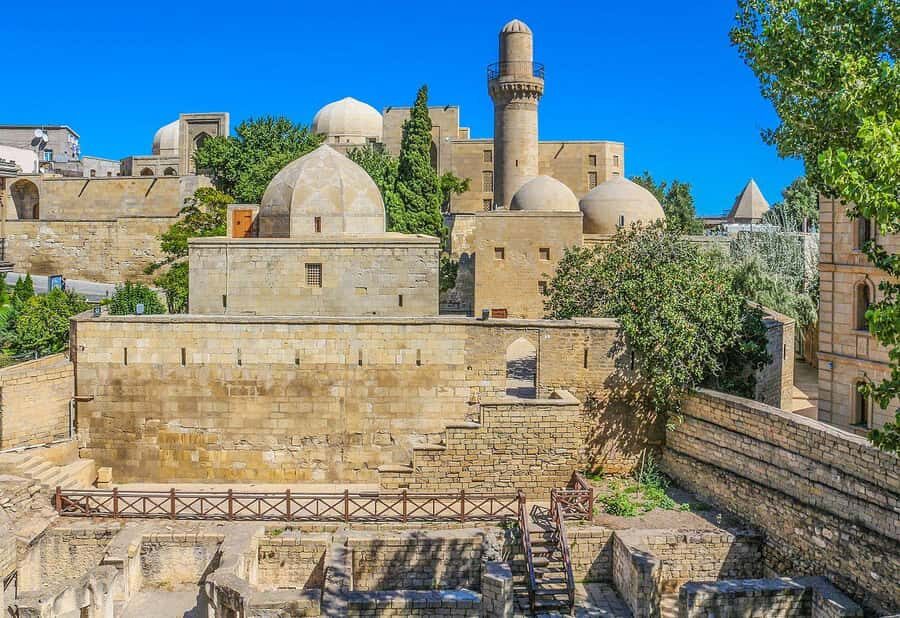
The biggest architecture stop is the Palace of the Shirvanshahs, a 15th-century complex. UNESCO describes it as one of the pearls of Azerbaijan’s architecture, and it’s easy to see why: it’s not just one building—it’s a cluster of linked structures and spaces.
You’ll learn what’s inside the complex as you visit key areas, including:
- Divanhane, the main building
- burial-vaults
- the shah’s mosque and its minaret
- Seyid Yahya Bakuvi’s mausoleum (often called the mausoleum of the dervish)
- a portal in the east and Murad’s gate
- a reservoir and remnants of a bath house
This matters for value. Many palace visits fail because you see rooms without context. Here, the guide helps you connect names to places. Once you understand what Divanhane is, what the mausoleum represents, and where Murad’s gate fits, the palace becomes a story instead of a confusing pile of stone.
Just remember: entrance to the Shirvanshahs’ Palace costs extra (listed as $9). The tour includes the guided exploration, but if you want to go inside, budget for that payment ahead of time so you’re not juggling cash in the moment.
If you’re short on time, prioritize what your guide points out rather than trying to see everything alone. In two hours, getting the key pieces understood beats trying to race through.
Quick Photo Stops: Bukhara Caravanserai and Madonna Seafaring
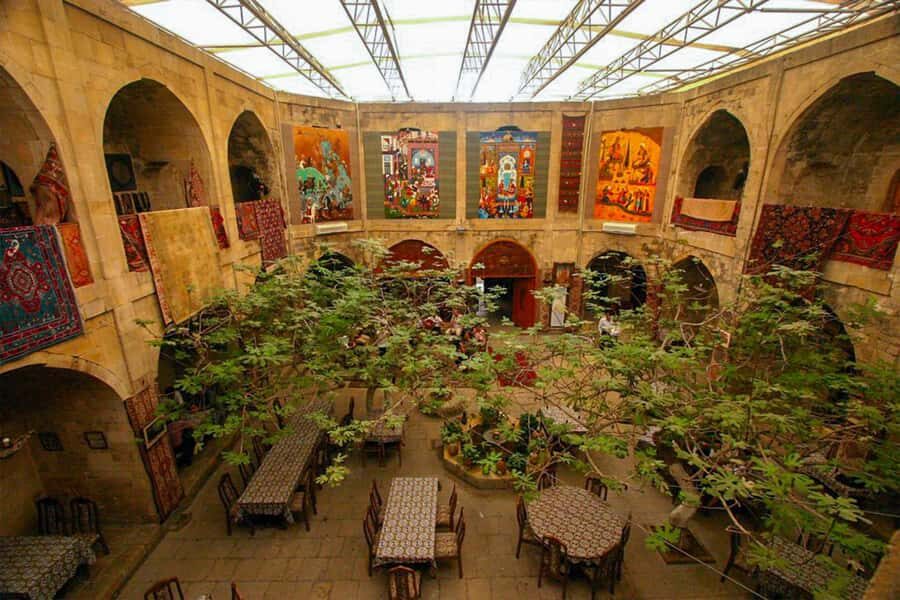
Between major sites, you’ll make shorter stops that help break up the walk and keep your route flowing. Two of these are Bukhara Caravanserai and Madonna seafaring.
These are typically quick photo-and-look moments, not long museum-style visits. That’s fine—think of them as landmarks that add texture to the neighborhood feel of Icherisheher. If you’re the type who enjoys small details in between big sights, you’ll probably like these.
If you’re more focused on major monuments only, just use your guide’s explanations here to decide what’s worth extra attention, then move on without guilt. The route is designed to keep you from burning your energy before the palace and mosque.
Ali Shamsi’s Workshop: The Human Side of the Old City
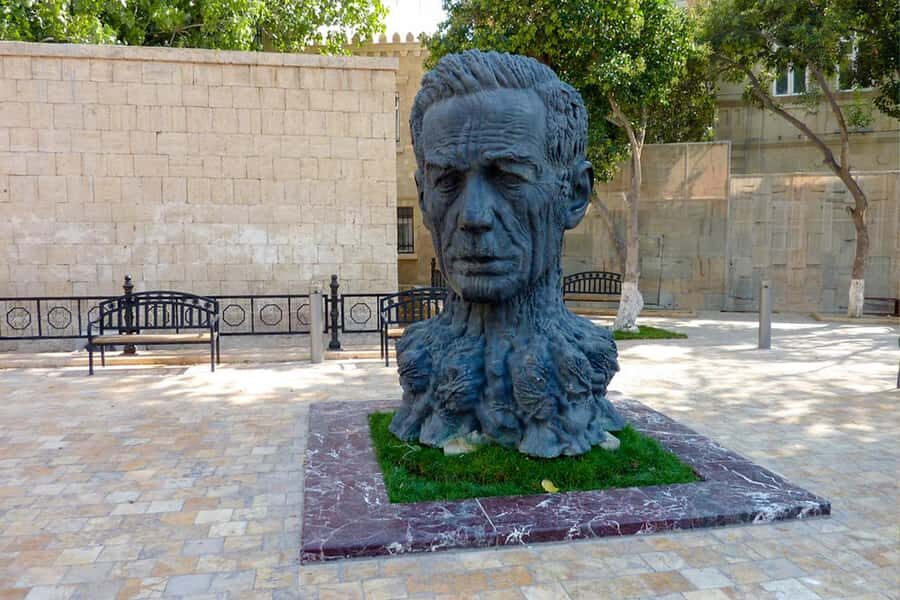
The tour ends at Ali Shamsi’s workshop in Icherisheher. This is a creative stop, not a formal ticketed attraction, and it’s one of the best reasons to take a guided route like this.
Ali Shamsi is described as a uniquely creative person living in the Old City, and he’s also called an artist with bare feet. The workshop is open for people who want to find out what’s inside.
What I like about this ending is that it shifts the mood. After architecture, dates, and museum facts, you get a real person and a real place to look at. It feels less like sightseeing and more like meeting the neighborhood.
If you want a souvenir, this is the moment to consider it. And even if you don’t buy anything, you’ll probably appreciate seeing how the Old City still produces art—not just history.
Price, Timing, and Value for a Two-Hour Walk
At $25 per person for a 2-hour guided walking tour, this is mostly a value play if you want structure. You’re paying for someone to connect the dots across multiple major sites—Maiden Tower, Juma Mosque, Shirvanshahs’ Palace, and the miniature-books museum—without you having to map every detail yourself.
The key pricing wrinkle is entrance fees:
- Maiden Tower entrance: $9
- Shirvanshahs’ Palace entrance: $9
So your true total depends on whether you add those. Still, even with those extras, the tour offers more than one ticketed stop. It pairs two iconic architecture anchors with a highly unusual museum concept and a creative end point at Ali Shamsi’s workshop.
Timing is also a strength. If you have limited time in Baku and you want the Old City highlights in one pass, two hours keeps you efficient while avoiding a full-day commitment.
Practical tip: bring cash and a charged smartphone. The tour lists both, and you’ll be thankful if any entrance payments or small purchases come up.
What to Bring (and What to Leave at Home)
This tour is simple, but you’ll enjoy it more if you come prepared for walking in Old City streets.
Bring:
- comfortable shoes
- a hat and sunscreen
- water
- camera
- cash and a credit card
- a charged smartphone
Don’t bring or use:
- high-heeled shoes
- oversize luggage or large bags
- pets (assistance dogs allowed)
- alcohol and drugs
Also expect behavior rules that keep the experience respectful—no touching exhibits, and keep noise down, especially inside museum and mosque spaces.
Who This Walk Is Best For
This tour is a good fit if you want a guided route that hits the main Old City landmarks plus one unusual museum. It works especially well for:
- first-timers who want Icherisheher highlights without planning every detail
- travelers who like history explained in small, clear pieces as you walk
- people who enjoy oddball stops, like the world of miniature books
It’s not a great match if you need wheelchair access or mobility support. The tour explicitly says it’s not suitable for people with mobility impairments, and it’s not for wheelchair users.
It’s also not suitable for people over 95, so if you’re traveling with older family members, check other options that match your pace.
Should You Book This Baku Old City Guided Walking Tour?
I’d book it if you want an organized Old City visit in a tight schedule and you’re interested in more than one type of stop—tower, palace, mosque, and a museum with a Guinness record connection. The guide factor is important here, because the route works best when you understand what each place represents, not just where it is.
Skip it if you’re the type who only wants inside entrances and you’re not interested in guided explanations, or if you need accessibility support. In that case, you may be happier with a slower, flexible plan.
If you do book, plan for the two extra entrances so you don’t get surprised mid-walk, and pack comfy shoes. Then show up ready to let the guide turn street corners into a timeline.
FAQ
How long is the Baku Old City guided walking tour?
The tour lasts 2 hours.
How much does it cost?
It’s $25 per person.
Where do I meet the guide?
The meeting point is in front of the Double Gate (Gosha Gala).
What are the main sights included on the tour?
You’ll visit the Maiden Tower area, the Shirvanshahs’ Palace area, the Juma Mosque, and the Baku Museum of Miniature Books, plus other Old City stops along the route.
What is included in the price?
Included are the guided Old City tour with a professional guide, visits to the Baku Museum of Miniature Books and the Juma Mosque.
Which entrances cost extra?
Entrance to the Maiden Tower costs $9, and entrance to the Shirvanshahs’ Palace costs $9.
What languages are offered for the live guide?
The live guide is available in English, Russian, and Turkish.
What should I bring for the walk?
Bring comfortable shoes, a hat, camera, credit card, sunscreen, water, cash, and a charged smartphone.
Is this tour suitable for wheelchair users or limited mobility?
No. It is not suitable for people with mobility impairments or wheelchair users, and it’s also not suitable for people over 95 years.