REVIEW · BAKU
Baku’s Ancient Heart
Book on GetYourGuide →Operated by Heydar · Bookable on GetYourGuide
Your shoes hit ancient cobblestones fast. This guided walking tour follows Baku’s UNESCO Old City, starting at Icherisheher and leading you through centuries of stories you can actually see in stone and carvings. I especially like how the guide, Heydar, keeps the route easy to follow and the details human, not just dates.
I love the moment you earn the views from Maiden Tower—its spiral staircase and high vantage point make Baku feel suddenly big: sea in one direction, old city in the other. And the stop at Shirvanshahs’ Palace gives you that “how did they build this?” feeling, plus a museum where royal-era artifacts explain what you’re looking at.
One consideration: there’s a lot of walking, and you’ll climb stairs (especially at Maiden Tower). If you’re not steady on your feet—or you’re over 70—this may be tough, so wear supportive shoes and plan for slow steps.
In This Review
- Key moments you shouldn’t miss
- Entering Icherisheher Through the Old City Gate Feeling
- Maiden Tower: Views, Stairs, and a 12th-century Mystery
- Shirvanshahs’ Palace: Courtyards, Carvings, and Royal Context
- Beyond the Big Names: Juma Mosque, Chapel Remnants, and the Bathhouse
- Juma Mosque in the Old City
- Remnants of the Saint Bartholomew chapel
- Hadji Bani underground hammam (15th century)
- Trade Routes and City Defenses You Can Walk Through
- Old City “Back Rooms”: Museums, a Presidium, Galleries, and More
- Local Crafts and Azerbaijani Tea Along the Way
- Mugam Club Restaurant and Miniature Book Museum: Two Very Different Cultural Stops
- Mugam club restaurant and museum
- Miniature book museum (Guinness record since 2014)
- Price and value: What $25 gets you in Baku’s Old City
- Who this walking tour suits best (and who should rethink it)
- Should you book Baku’s Ancient Heart?
- FAQ
- Where is Baku’s Ancient Heart located?
- How much does the tour cost?
- What are the main sights included?
- Is the tour guided and walkable?
- What stops relate to daily life and older community spaces?
- What language options are available?
- What should I bring?
- Who is it not suitable for?
- Can I reserve later or cancel?
Key moments you shouldn’t miss

- Icherisheher’s Double Gates: your first “you’re in the Old City” marker, and a good way to get oriented fast
- Maiden Tower: a 12th-century climb with big panoramic payoff
- Shirvanshahs’ Palace museum: courtyards and carved details plus context for the royal past
- Hadji Bani underground hammam: a 15th-century bathhouse you can imagine in use
- Juma Mosque: one of the oldest in Azerbaijan, and the biggest in the Old City
- Miniature book museum: tiny books with a Guinness record connection since 2014
Entering Icherisheher Through the Old City Gate Feeling
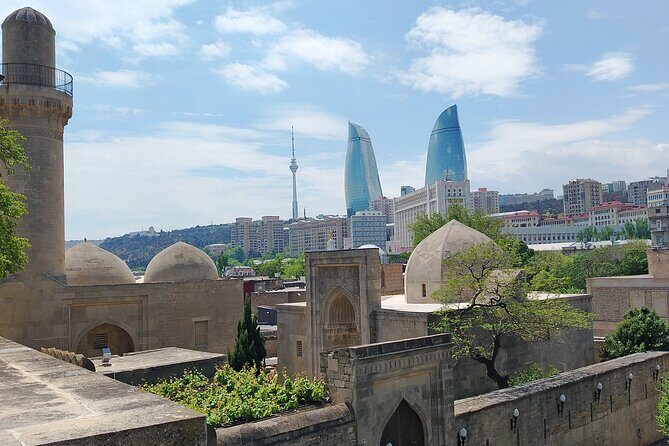
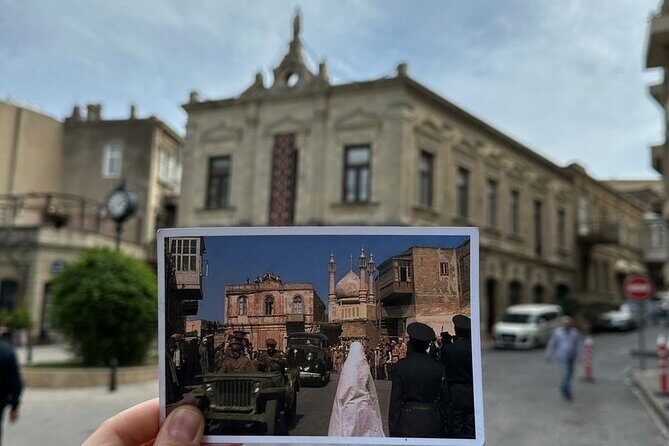
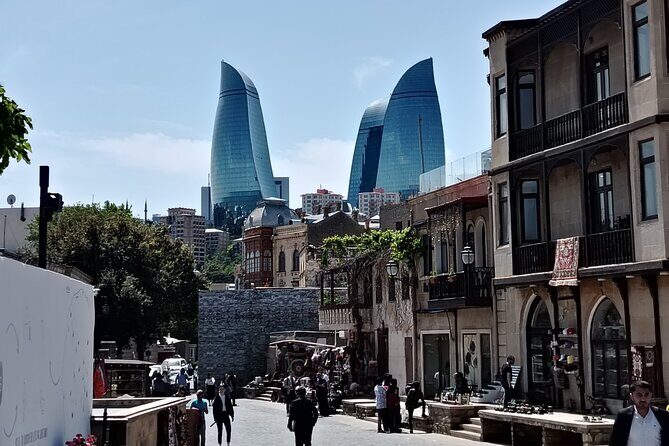
The tour begins in the historic core of Baku, at Icherisheher, the UNESCO World Heritage district with walls, alleyways, and landmarks packed close together. Right away, you’re funneled through the feel of the place rather than just seeing it from the outside. The Double Gates are your first real threshold, and it’s a helpful mental cue: once you pass them, you’re in the older Baku, the layered Baku.
On foot, the old streets make sense in a way that’s hard to get alone. Instead of bouncing between famous spots, you get a guided path that connects buildings to each other—religion to royalty, trade to daily life. And because you’re walking, you pick up the texture: doorways, carved stone, narrow turns that make you slow down without asking.
You can also read our reviews of more tours and experiences in Baku.


Maiden Tower: Views, Stairs, and a 12th-century Mystery
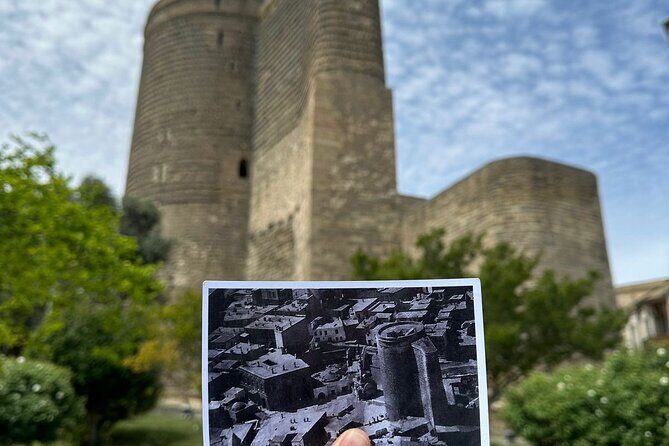
If Baku has a postcard moment, this is close to it. The Maiden Tower dates back to the 12th century, and it’s one of those structures that feels both stubborn and elegant—part of the skyline, part of the story of how the city defended itself and looked outward.
You’ll climb the spiral staircase to reach panoramic views over the Old City, the Caspian Sea, and the surrounding streets. For me, the value here is less about the photo and more about direction. From up top, you start to understand how the Old City sits in relation to water and how the landmarks line up within the walls.
Practical note: the stairs and tighter sections mean you should keep your pace steady. Bring comfortable shoes, and if you’re sensitive to height or confined stairs, plan for slower breaks. This isn’t a “long flat stroll” tour.
Shirvanshahs’ Palace: Courtyards, Carvings, and Royal Context
Next comes the Shirvanshahs’ Palace, where architecture does half the storytelling before the museum even starts. You’ll see intricate carvings and courtyards designed for power, ceremony, and daily movement within a royal residence.
What I like about this stop is the combination: you’re not only looking at beauty, you’re also getting help understanding what you’re looking at. Inside, the museum presents artifacts tied to the city’s royal past, so the palace doesn’t feel like a disconnected monument. It feels like a home that once had a political purpose.
The palace also reflects a blend of Islamic and Persian architectural styles, which you can often notice in the decorative choices and layout. With a guide pointing things out, you start to see patterns instead of just admiring details one by one.
Beyond the Big Names: Juma Mosque, Chapel Remnants, and the Bathhouse
Baku’s Old City isn’t only about palaces and towers. Some of the most memorable parts come from the quieter, more “day-to-day” history.
Juma Mosque in the Old City
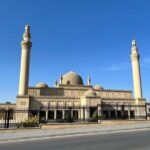
You’ll visit Juma Mosque, described as one of the oldest mosques in Azerbaijan and the biggest mosque in the Old City. This is a powerful stop because it shifts the story from rulers to worshippers, from political power to daily faith. Even if you’re not there for religious services, the architecture and age give the place weight.


Remnants of the Saint Bartholomew chapel
You’ll also see the remnants of the Saint Bartholomew chapel. Even though it’s not a fully restored complex, remnants can be fascinating. They remind you that Old City life changed over time—religions and communities left traces, and the city kept building over those layers.
Hadji Bani underground hammam (15th century)
Then there’s the Hadji Bani underground hammam, a 15th-century bathhouse. A hammam is more than “a place to wash”—it’s social space, routine, and ritual. Seeing it as an underground site makes it feel closer to lived history, because the environment suggests warmth, privacy, and daily habits that shaped community life.
Trade Routes and City Defenses You Can Walk Through
One thing this tour does well is connect “places” to “why Baku mattered.” You’ll see how the city functioned along major routes and how it tried to protect itself.
As you move through the Old City, your guide points out Baku City Walls, which once protected the settlement from invaders. Standing near wall remnants (or seeing their line through the streets) helps you grasp the city’s priorities: survival first, then growth.
You’ll also visit Caravansarai Multani and Bukhara, stopovers where traders rested while moving through networks linked to the Silk Road. Caravanserais are practical architecture: courtyards, storage, and space for people to pause. Even without a deep lesson, you can feel the logistics of trade in the layout.
And then there are the smaller named stops that broaden the picture:
- Caravanserai-style life in the courtyards and routes that traders would have used
- the way Old City structures cluster, suggesting how commerce and residence blended over time
Old City “Back Rooms”: Museums, a Presidium, Galleries, and More
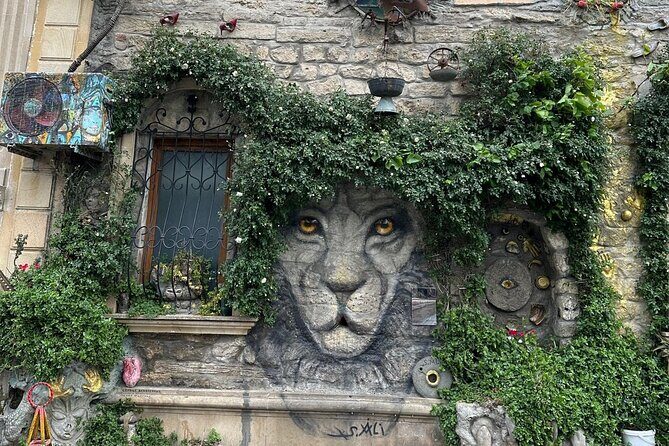
Baku’s Old City contains a lot of less-famous cultural spaces, and the tour makes sure you don’t only hit the headline monuments.
You’ll pass through the Enceclopedy house and the Open sky museum area. Without turning into a lecture, the guide uses these to underline how the Old City is also a living container for art, knowledge, and preservation.
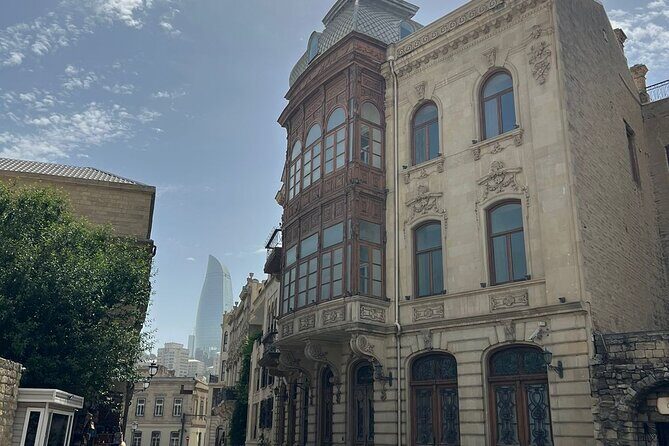
You’ll also visit Ismailliya house, linked with the Presidium of the Azerbaijan Academy of Sciences. That stop adds a modern layer: this district isn’t frozen in time. It continues to host institutions and ideas alongside older architecture.
Art lovers get two useful stops:
- Ali Shamsi art gallery
- Bust of Aliaga Vahid, giving you a chance to anchor the city’s creative or intellectual legacy in a specific named figure
Even if you’re not a gallery person, these stops help you understand what happens after sightseeing ends. The Old City still functions as a cultural address, not just a museum set.
Local Crafts and Azerbaijani Tea Along the Way
For a walking tour to feel worthwhile, it needs texture. This one includes time for local life, especially through artisans’ shops and a tea break.
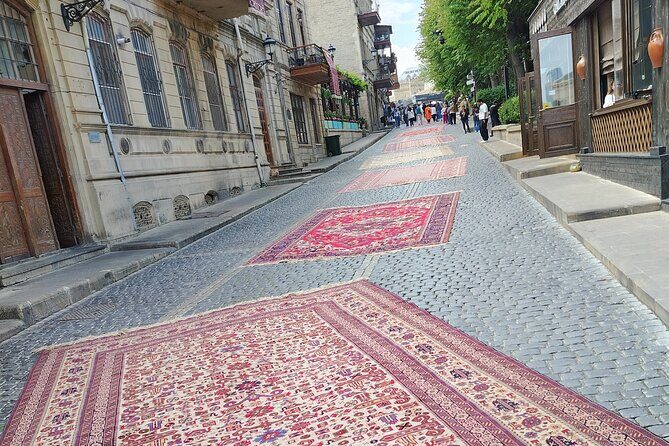
You’ll visit local artisans’ shops, where you can experience traditional craft work such as carpet weaving and copper engraving. What makes this valuable is that it turns “shopping” into a skill-based encounter. You’re looking at processes and materials tied to local tradition, not just souvenirs stacked for tourists.
And yes, you’ll have Azerbaijani tea served in the traditional glass. Tea matters here because it gives you a calm pause. In an area made of tight alleys and stone surfaces, a warm drink is the reset button. It also helps you slow down long enough to notice details again—patterns in doorways, the way sunlight hits carvings, the small shifts in street scenes as you move on.
Mugam Club Restaurant and Miniature Book Museum: Two Very Different Cultural Stops
Two of the most distinct stops on this route are also some of the easiest to remember later.
Mugam club restaurant and museum
You’ll visit the Mugam club restaurant and museum. Mugam is a key part of Azerbaijani musical culture, and this type of venue helps you connect the concept to a setting where it’s presented as culture, not just background sound. Even without turning it into a formal performance, walking into a museum space tied to live-style culture is a smart way to diversify your Old City experience.
Miniature book museum (Guinness record since 2014)
Then comes the Miniature book museum, which has been included in the Guinness book since 2014. Tiny books are an attention test—in a good way. They force you to focus, and that kind of focus can be a relief after lots of outdoor stone and staircases.
If you like quirky cultural stops, this is a standout. If you’re bored by anything too small, you might still enjoy it because it’s an odd contrast to the massive architecture elsewhere in the tour.
Price and value: What $25 gets you in Baku’s Old City
At $25 per person, this tour is built for value in a very practical way. You’re paying for three things that are hard to DIY in a place like this:
1) A route that strings landmarks together so you understand the city faster
2) Explanations for what you’re seeing (palace details, religious sites, trade architecture, and lesser-seen remnants)
3) Access to cultural spaces that you might skip if you were wandering alone
The tour is also structured around major stops—Maiden Tower, Shirvanshahs’ Palace, and Juma Mosque—so you’re not gambling on whether you’ll find the right highlights. The rest of the route fills in the “in between” that makes Baku feel real: underground bathing spaces, caravan stopovers, walls, and craft shops.
Who this walking tour suits best (and who should rethink it)
This is a good fit if you:
- want a guided way to understand Baku’s Old City (Icherisheher) rather than random sightseeing
- enjoy architecture, religious history, and how trade shaped cities
- like cultural stops that feel a bit different from the typical monument-only route
- appreciate time for tea and hands-on craft encounters
It’s less ideal if you:
- struggle with stairs or long walking on cobbled streets
- need low-impact pacing (the Maiden Tower climb is the obvious challenge)
- are over 70, since it’s listed as not suitable for that age group
Languages are English and Russian, so you can choose the one that matches your comfort level.
Should you book Baku’s Ancient Heart?
I think this is worth booking if you want Baku to feel coherent. The tour doesn’t just stack landmarks. It helps you connect them—gate to tower, palace to museum, mosque to daily life, caravanserai to trade, and crafts to what people still do.
Book it when you want value: $25 gets you a guided path through major icons plus the smaller stops that give the Old City personality. Skip it only if you know you can’t handle stair sections or lots of uneven walking, or if you need a very slow, minimal-walking plan.
FAQ
Where is Baku’s Ancient Heart located?
It’s in Absheron, Azerbaijan, centered on Baku’s Old City (Icherisheher).
How much does the tour cost?
The price is $25 per person.
What are the main sights included?
Key stops include the Maiden Tower, Shirvanshahs’ Palace, Juma Mosque, caravanserais (Multani and Bukhara), the underground Hadji Bani hammam, and the miniature book museum, among others.
Is the tour guided and walkable?
Yes. It’s designed as an on-foot exploration of the Old City, moving between landmarks.
What stops relate to daily life and older community spaces?
You’ll see the Hadji Bani underground hammam and remnants of the Saint Bartholomew chapel, plus caravanserais tied to Silk Road trade.
What language options are available?
The tour is available in English and Russian.
What should I bring?
Comfortable shoes are recommended.
Who is it not suitable for?
It’s not suitable for people over 70.
Can I reserve later or cancel?
There’s a Reserve & Pay Later option, and you can cancel up to 24 hours in advance for a full refund.
If you tell me your travel dates and whether you prefer English or Russian, I can help you plan a good day around this (and suggest what to pair it with in the rest of Baku).