Gobustan is one of Baku’s easiest day trips to picture fast. You’ll see ancient petrogliphs in a rugged ravine area and then step to the mud volcanoes where you can literally touch the cold mud. I like that this tour stays tight and practical (about 3 to 4 hours) and doesn’t bury you in museum time. One thing to keep in mind: the mud volcano output can feel smaller and less dramatic if there hasn’t been recent rain.
What makes this outing feel especially good is how the guides turn the sites into something you can understand. In particular, Aygul’s organization and Sadar’s on-the-ground explanations show up in the experience quality. You’re paying for transport plus on-site time, so it’s a solid pick when you want real context without spending the whole day crisscrossing Baku.
If you’re hoping for a long, leisurely day with a big lunch stop, this isn’t that. Lunch isn’t included, and the pace is designed for seeing the two core sights efficiently.
In This Review
- Key things to know before you go
- Gobustan’s ravines: why this place feels different
- First visit: Gobustan rock art and what to plan for
- Mud volcanoes: cold mud, easy photos, and a reality check
- Getting there smoothly: pickup, A/C, and the 3–4 hour rhythm
- Price and value: what $60 buys you in practice
- Guide quality: why Aygul and Sadar matter
- Weather and the rain factor you should respect
- Who should book this Gobustan & Mud Volcano tour
- Should you book it?
- FAQ
- What is the duration of the Gobustan & Mud Volcano tour?
- Where is this tour located?
- How much does it cost?
- What time does the tour start?
- Is pickup included?
- Are tickets included for both stops?
- What’s included in the tour price?
- Is lunch included?
- Is this a private tour?
- What’s the cancellation policy?
Key things to know before you go
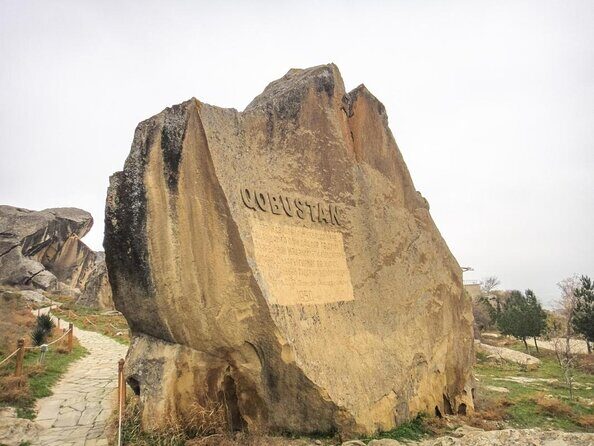
- Rock art you can actually connect with: ancient petrogliphs in Gobustan’s ravine zone.
- A short mud-volcano stop with a hands-on moment: cold mud you can touch, plus great photo potential.
- Admissions split how you’d expect: rock art isn’t included, mud volcano admission is included.
- Pickup and water make the logistics easy: bottled water plus an air-conditioned vehicle.
- Guide quality seems to matter a lot here: Aygul and Sadar come up for their helpful explanations.
- Weather can change the plan: the experience requires good weather.
Gobustan’s ravines: why this place feels different
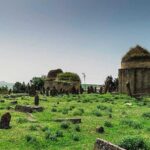
Gobustan sits 60 km south of Baku, on the south-eastern spur of the Great Caucasian Range. It’s a monticulate semi-desert area cut up by gullies and ravines, and the name roughly points to that: ravine land. In plain terms, it doesn’t feel like a polished stop. It feels like a real natural setting where humans have been recording life for a very long time.
That matters because the rock art doesn’t sit in a perfectly controlled gallery. You’re seeing ancient drawings in a terrain that still has those sharp breaks and dry channels. Even if you’re not the type who studies history all day, you’ll probably find your eyes adjusting fast—because the setting does part of the storytelling for you.
Then comes the twist: mud volcanoes. Not lava. Not heat. Just cold mud bubbling up from natural vents. The contrast between these two sites is part of why this tour works so well as a short day trip. One stop gives you long time depth; the next gives you a hands-on, weirdly fun “wait, that’s really happening” moment.
You can also read our reviews of more tours and experiences in Baku.


First visit: Gobustan rock art and what to plan for
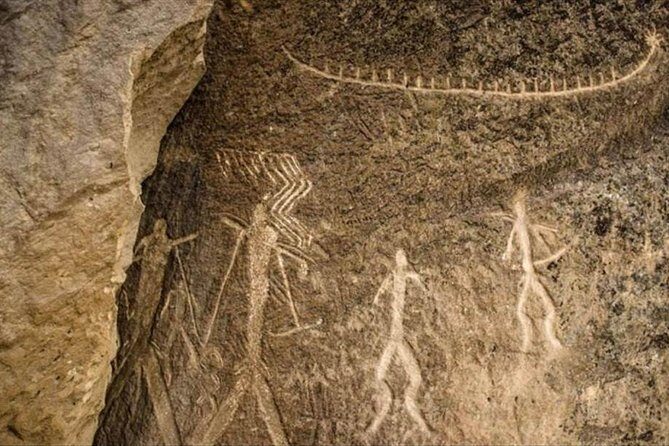
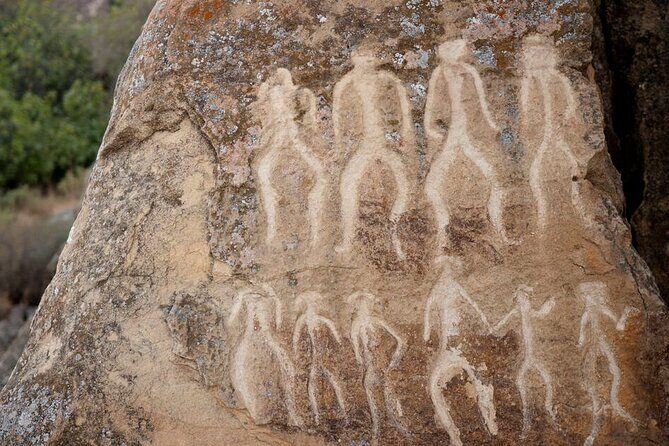
You’ll head to the Gobustan rock art area first for about an hour. This is where you’ll see ancient petrogliphs—carvings or etched images left by people long ago. The main practical point: the admission ticket for this rock art stop isn’t included in the tour price you see.
So what should you do with that information? Bring a bit of cash or have a card ready for the ticket purchase so you don’t lose time at the start. Since the time here is about an hour, you don’t want any extra delays.
What I like about starting here is that it sets the theme of the day. The mud volcano part is fun and visual, but the rock art is what gives the trip meaning. If you take a minute to look closely—rather than just snapping quick photos—you’ll start noticing how the images relate to movement and daily life. The environment also helps: the ravines and rock surfaces make it easier to imagine how people used the area and how they would have found usable surfaces for carving.
The possible drawback is simple: the museum time is limited. If you’re someone who wants to read every label or linger for two hours, this one-hour window might feel short.
Mud volcanoes: cold mud, easy photos, and a reality check
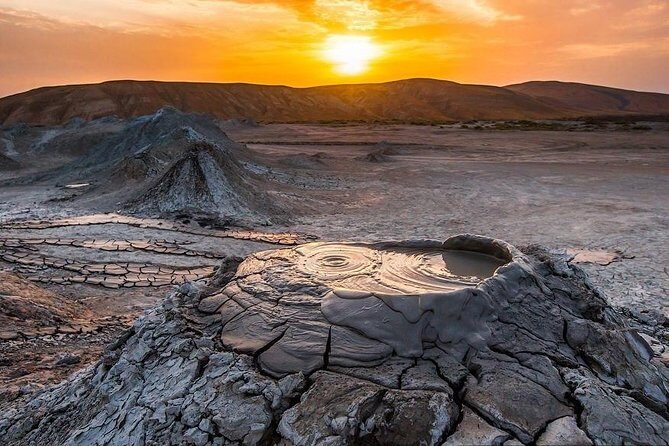
Next you’ll go to the mud volcanoes for about 30 minutes, and here the admission ticket is included. This is the part many people look forward to because the tour is clear about the best part: the mud is cold, and you can touch it.
That hands-on detail changes the experience. It’s not just looking at something from a fence. You get a sensory moment—textures, the look of the seep, the little irregularities that make the vents feel alive. It also makes the photos easier because you’re not just photographing from the sidelines. You can step into a better position and capture the vent area while you’re there.
Here’s the reality check: mud volcanoes can be smaller, and the amount of mud coming out can depend on recent rains. If you go right after a dry spell, the scene may look less dramatic than your photos in your head. Still, you’ll likely get a good photo op because the setting and vent openings are what they are. Just don’t expect a constantly erupting “wow” every minute.
If you want to keep it comfortable, wear shoes you don’t mind getting slightly dirty. You’ll be in an outdoor, semi-desert environment, and even small amounts of mud can transfer when you’re close to the features.
Getting there smoothly: pickup, A/C, and the 3–4 hour rhythm
This tour is built for efficiency. Pickup is offered, and you’ll ride in an air-conditioned vehicle. For many visitors, that’s the biggest silent win: you don’t have to figure out transport and timing on your own.
The whole tour runs about 3 to 4 hours, which is a sweet spot in Baku. It gives you enough time to see both major sights, without draining your entire day. Since lunch isn’t included, I’d treat this like a morning or early-day outing and plan to eat afterward.
A small planning tip: because the itinerary is timed—rock art first, mud volcanoes second—you should arrive ready to move. Bring water (you’re provided bottled water) and keep your phone charged for photos. The stops aren’t long, so you’ll want to use your time inside each window, not just on transitions.
Price and value: what $60 buys you in practice
At $60 per person, you’re paying for a guided group day trip that includes bottled water and an air-conditioned vehicle. You’re also getting a structure that reduces your stress: you show up around the start time (9:30 am), and you leave with two key Gobustan experiences done.
Admission is mixed: rock art admission isn’t included, while mud volcano admission is included. That means your final spending isn’t purely the $60. But the breakdown is reasonable because it matches how visitors typically buy site tickets anyway.
Where the value becomes more than the math is in the guidance. The reviews highlight that Aygul organized everything smoothly and that Sadar helped explain what you were seeing and the people behind it. When the guide is good, you spend less time guessing and more time understanding. That’s when a short outing starts to feel worth it, even if the stops themselves are brief.
If you’re already comfortable navigating on your own, you might find Gobustan easier to DIY. But if you want transport help and context without planning headaches, this price feels fair for what’s included.
Guide quality: why Aygul and Sadar matter
One of the most praised parts of this experience is the people running it. Aygul’s organization comes up clearly, including the idea that she checked in to make sure everything was going right. Then there’s Sadar, the guide credited with making the day trip feel memorable by sharing helpful information about Azerbaijan and about the people.
That kind of guidance matters most at Gobustan, because the sites can feel disconnected if you don’t have a thread. Rock art is powerful, but without context it can become a set of photos. Mud volcanoes are fun, but without explanation they can feel random. A good guide stitches the story together so you understand why these sites belong on the same day.
So when you book, don’t think of this as just transport to two attractions. Think of it as a guided explanation of two very different natural-human stories.
Weather and the rain factor you should respect
This experience requires good weather. That’s not just fine print. Gobustan is outdoors, and poor weather can make rock surfaces harder to view and mud zones less pleasant to move around in.
Also, remember the rain dependency for the mud volcanoes. If there hasn’t been recent rain, the amount of mud may be less. That doesn’t make the site useless—it still gives you vents and the signature cold-mud interaction—but it can affect how dramatic the “eruption” looks.
If you can choose travel dates, go on days when the forecast looks stable. And if the operator cancels due to poor weather, you’ll typically be offered a different date or a full refund.
Who should book this Gobustan & Mud Volcano tour
This tour is a great fit if you want:
- A short, focused day trip from Baku with pickup and A/C transport
- The key Gobustan experiences in one go: rock art plus touchable mud volcanoes
- Helpful guidance that explains what you’re seeing, not just instructions to look
It might not be for you if:
- You want a long museum-style experience with lots of reading time
- You prefer a guaranteed dramatic mud flow every single minute
Most travelers can participate, and it’s a private tour/activity, meaning only your group joins.
Should you book it?
Yes, if you want an efficient, high-value Gobustan day without logistics stress. The mix of ancient petrogliphs, a hands-on mud volcano moment, and strong guide support (Aygul’s organization and Sadar’s explanations) is exactly what makes short trips in and around Baku work.
Just go in with the right expectations: it’s about two sites in a few hours, not an all-day deep dive. And treat weather and rain as part of the experience—especially for the mud volcano intensity.
If that sounds like your style, book it and enjoy the combo: old art in rugged ravines, then cold mud you can touch.
FAQ
What is the duration of the Gobustan & Mud Volcano tour?
It runs about 3 to 4 hours.
Where is this tour located?
It’s in Baku, Azerbaijan, with Gobustan about 60 km south of Baku.
How much does it cost?
The price is $60.00 per person.
What time does the tour start?
The start time is 9:30 am.
Is pickup included?
Pickup is offered.
Are tickets included for both stops?
Rock art admission is not included. Mud volcano admission is included.
What’s included in the tour price?
Bottled water and an air-conditioned vehicle.
Is lunch included?
No, lunch isn’t included.
Is this a private tour?
Yes. It’s private, so only your group participates.
What’s the cancellation policy?
Free cancellation is available up to 24 hours in advance for a full refund. If you cancel less than 24 hours before the start time, there’s no refund. The experience requires good weather, and if canceled due to poor weather, you’ll be offered a different date or a full refund.