REVIEW · BAKU
Baku: Gobustan, Mud Volcano, Fire Temple & Burning Mountain
Book on GetYourGuide →Operated by XPLORE HOLIDAYS SOUTH ASIA · Bookable on GetYourGuide
Azerbaijan burns and breathes in one day. This guided outing stitches together Gobustan rock art with the Ateshgah Fire Temple, plus quick, important Baku stops that give the whole day a sense of place.
I love the slow-breath feeling of time at Gobustan, where carvings are said to be over 20,000 years old. I also like getting close enough at Ateshgah to feel the eternal flame heat instead of just reading about it.
One drawback to plan around is cost and timing: depending on your ticket option, you may pay site fees on arrival, and the day’s schedule can stretch when roads get busy.
In This Review
- Key things to know before you go
- A Heat-and-History Route Just Outside Baku
- Gobustan Rock Art: Petroglyphs That Outlast Empires
- Mud Volcanoes and the 4×4 Factor
- Bibi-Heybat Mosque and Baku’s Islamic Landmark Stop
- From the 1846 Oil Well to Yanardag’s Burning Mountain
- Ateshgah Fire Temple: Feel the Eternal Flame
- Budget, Tickets, and Timing You Can Actually Plan Around
- Who Should Book (and Who Might Want to Skip)
- Should You Book This Baku Tour?
- FAQ
- How long does the tour take?
- Where is the pickup in Baku?
- How far is Gobustan from Baku?
- What’s included in the tour price?
- If I don’t choose the all-inclusive option, what tickets might I need to buy?
- Is lunch included?
- Is there an English-speaking guide?
- What should I bring with me?
- Is alcohol allowed during the tour?
- Can I cancel for a refund?
Key things to know before you go
- Gobustan rock art is the star with petroglyphs described as over 20,000 years old
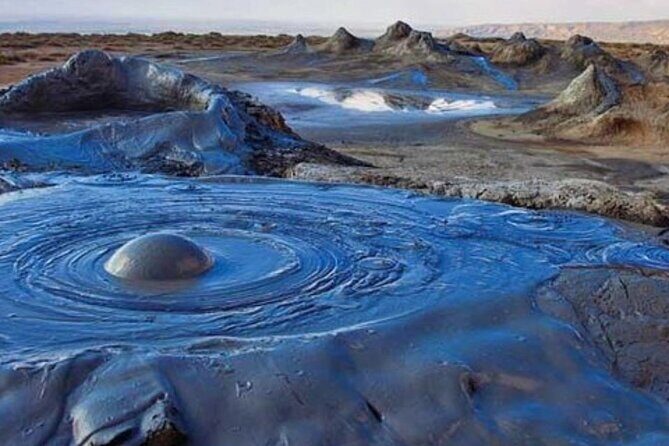
- Mud volcano access is practical because the 4×4 charge is included
- You feel the fire at Ateshgah where an eternal flame burns at the temple
- Early oil history gets a real-world stop at the world’s first mechanically drilled oil well (1846)
- Guide quality matters on this route and some guides, like Javid, can be very multilingual and attentive
A Heat-and-History Route Just Outside Baku
This is one of those Baku days that doesn’t just stack attractions. It links them. You start with ancient people at Gobustan, move to living geology at the mud volcanoes, and then shift to religion and industry at sites tied to oil and flame. It’s the same peninsula, the same weather, the same landscape mood—but the stories keep changing.
The tour runs about 6–7 hours and is roughly 40–60 minutes from Baku. That means it’s long enough to feel like a proper excursion, but short enough that you’re not stuck on the road all day. You’ll ride in an air-conditioned vehicle and have an English-speaking guide, plus a 4×4 charge included for the mud volcano stop.
The practical part: wear comfortable shoes. A lot of the important moments here are outdoors, and you’ll want solid footing for uneven ground around the geothermal areas and reserves. Bring cash too, especially if you choose the option that doesn’t bundle all entry tickets.
You can also read our reviews of more tours and experiences in Baku.
Gobustan Rock Art: Petroglyphs That Outlast Empires
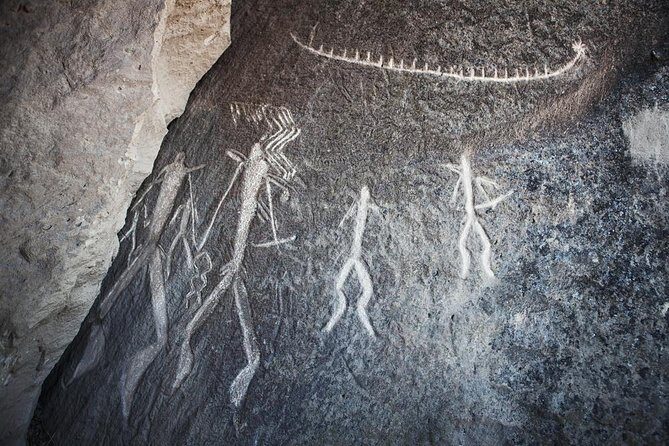
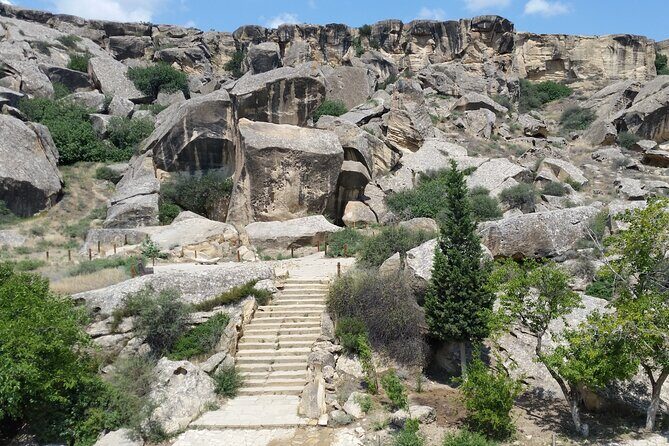
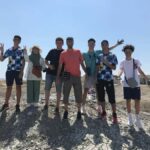
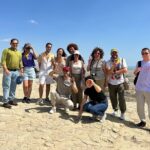
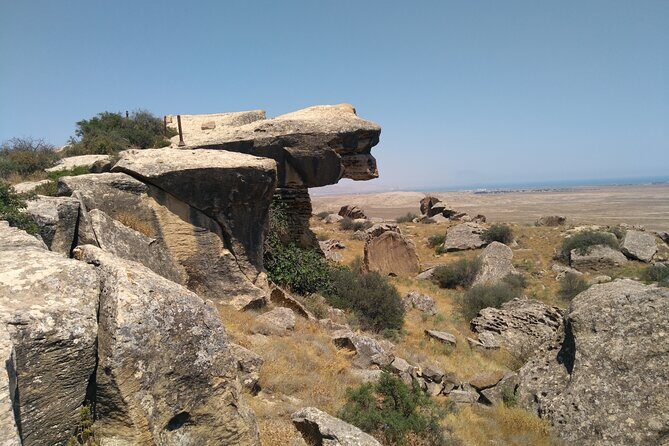
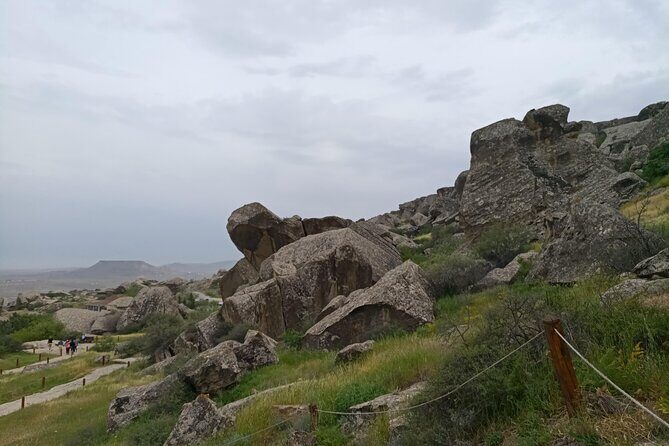
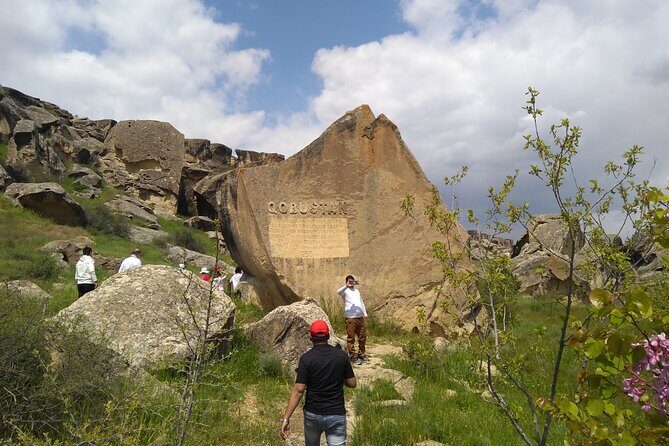
Gobustan is where the day earns its wow-factor early. You’ll start at the Gobustan Settlement area and get guided time around the rock art. The carvings are described as some of the oldest in the world, with ages stated as over 20,000 years. Even if you don’t obsess over dates, it hits differently when you’re standing in front of marks that old.
What you’ll like here is the way a guide can point out details you’d otherwise miss—animal shapes, human figures, and scenes that feel more like snapshots than random scratches. This stop is also a nice reset for the rest of the day because it’s calm. You’re not racing between rooms. You’re looking at stone.
Watch your timing inside Gobustan. The tour gives you about an hour here, so you’ll want to move at a steady pace: a quick photo sweep, then slow down for the carvings the guide highlights. If you’re traveling with kids, this is often the easiest stop to keep them engaged because it feels like a mystery you can solve just by staring.
Mud Volcanoes and the 4×4 Factor
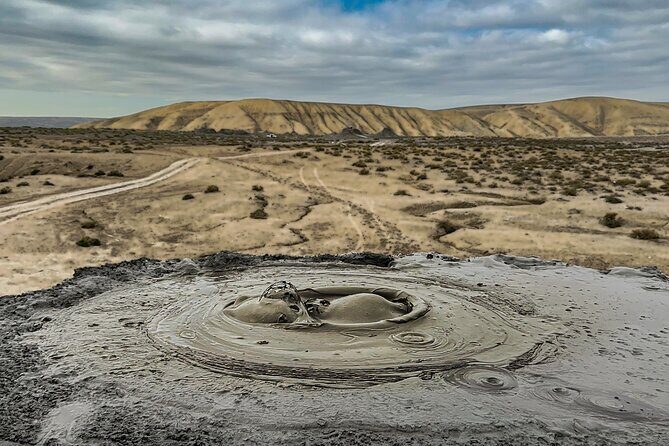
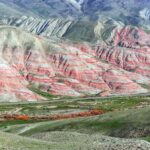
After Gobustan, you’ll head to the mud volcanoes—and yes, the name is exactly what you’re picturing. Azerbaijan is famous for these geothermal features, and this stop is designed to explain not just what you’re seeing, but why they happen.
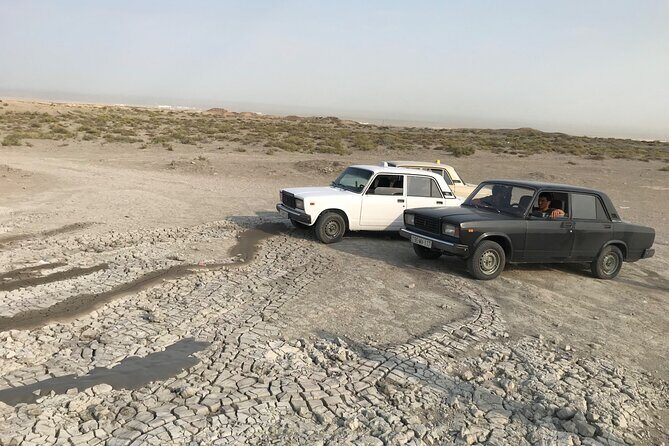
The practical win: the tour includes the 4×4 charge for reaching the mud volcano area. That matters because getting to the best viewpoints often isn’t a simple walk-off-the-road situation. When a tour includes the 4×4 cost, you’re less likely to get hit with surprise add-ons mid-day.
What to expect from the mud volcano stop is a mix of science talk and walking around active-looking terrain. The ground can feel odd underfoot and it may be messy around the edges, even if things look dry from a distance. Comfortable shoes aren’t optional here—they’re your best friend.
If you’re sensitive to rough surfaces, just take your time. You don’t need to race for photos. The best approach is to pick a viewpoint, let the guide explain what you’re looking at, then step around slowly to compare angles and textures.
Bibi-Heybat Mosque and Baku’s Islamic Landmark Stop
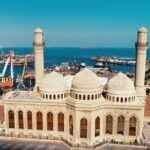
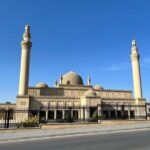
Then the day pivots into faith and architecture. You’ll stop at Bibi-Heybat Mosque, with time for photos and a short guided visit. This is one of Baku’s key Islamic monuments, and it gives you a cultural break from the geothermal scenery.
Even if you’re not a mosque expert, you’ll appreciate this stop for its calm rhythm. It’s shorter than the outdoor sites, so you’re not overwhelmed by rules or long walks. Still, treat it respectfully: you’ll want to dress appropriately for a religious site and keep voices down while people are praying or moving quietly.
This stop also helps you understand Baku beyond oil. Yes, the city is famous for petroleum history, but you can’t ignore the religious and cultural backbone. Bibi-Heybat makes that shift feel natural.
From the 1846 Oil Well to Yanardag’s Burning Mountain
Next comes the part of the day that ties industry to place: you’ll visit the site connected to the world’s first mechanically drilled oil well from 1846. You’re not just looking at an exhibit behind glass. You’re standing where the story began—one of the biggest reasons modern Baku became what it is today.
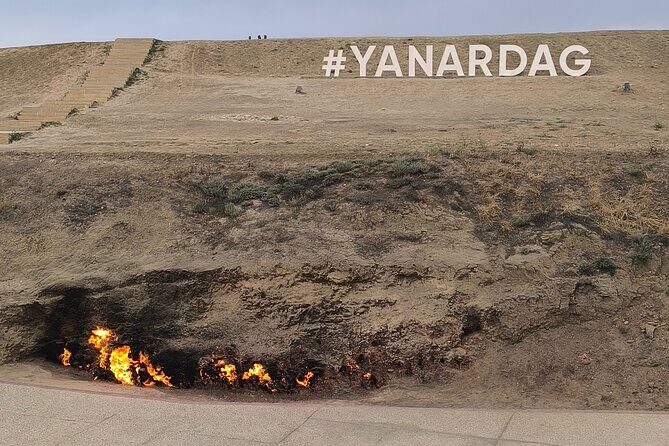
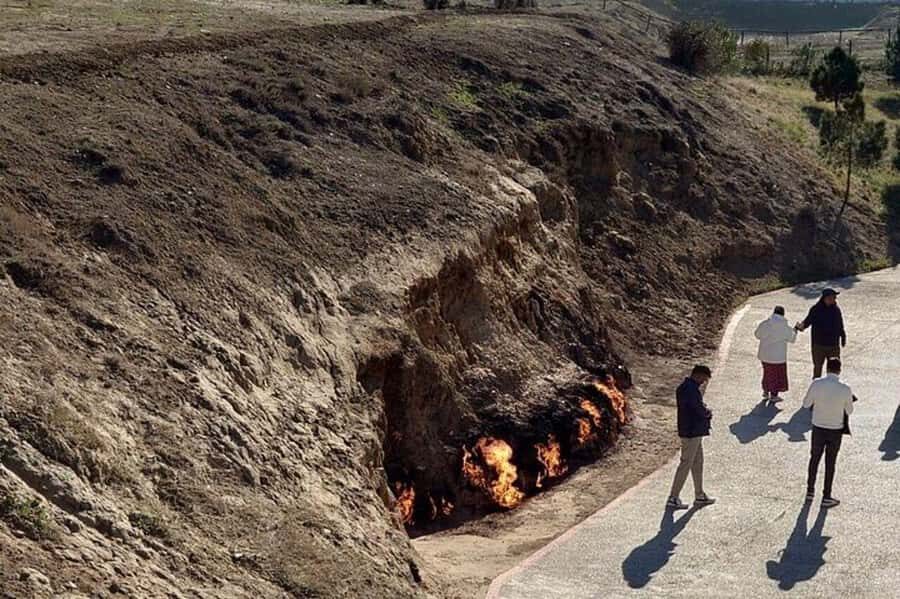
After that, you’ll move toward Yanardag (often linked with Burning Mountain). The idea here is to connect the earlier oil story with present-day natural “fire” phenomena around the reserve. You’ll get guided time and photo stops, then continue onward as part of the broader Yanardag area experience.
Yanardag is less about a single building and more about atmosphere—smoke and flame effects, views from viewpoints, and that eerie feeling of seeing something dramatic happening without a soundtrack. If you like travel that mixes facts with atmosphere, this is where the day starts to feel cinematic.
One note to keep you sane: this portion involves more outdoor viewing and waiting for the right angle. If you’re the type who hates lingering, bring patience. The best photos tend to happen when everyone slows down for a few minutes.
Ateshgah Fire Temple: Feel the Eternal Flame
Now we reach the emotional headline. At Ateshgah of Baku, you’ll experience the flame’s presence in a direct way. This is the stop where the tour description promises you’ll actually feel the heat—and that’s the point.
Instead of just seeing fire from across a walkway, you’re close enough for the experience to register physically. Even if you’ve seen fire temples in other countries, the “eternal flame” concept lands differently when it’s framed as a living natural phenomenon right there on site.
You’ll spend about 45 minutes here, with guided time plus sightseeing/photo stops. That’s enough time to understand the background, look around, and take the kind of photos that don’t feel like you’re rushing through a gift shop line.
After Ateshgah, the tour continues into the Yanardag area and includes time linked to the village of Mammadli for guided exploration. That helps keep the day from feeling like a string of “look, snap, move on” moments. You’re getting a sense of how people live around these phenomena, not just visiting them like science props.
Budget, Tickets, and Timing You Can Actually Plan Around
Let’s talk value. The tour price is about $27 per person for a half-day excursion that includes transport, guide time, and key access. That’s not just “cheap tour math.” The included piece that matters most is the 4×4 charge for the mud volcanoes, plus the air-conditioned vehicle and an English-speaking guide.
Where people can overpay is choosing the wrong ticket option for how flexible they are.
- If you choose an all-inclusive package, it can include lunch and entry tickets (per the option you select).
- If you choose a cheaper option, entry may not be bundled. In that case, you should budget for Gobustan entry (10 AZN) and an Ateshgah Fire Temple and Burning Mountain combo ticket (15 AZN).
A simple strategy: if you can use cash, and you don’t mind buying tickets on the spot, you may find your final cost works out better. If you don’t want any uncertainty, pick the option that includes tickets so your day runs on autopilot.
Timing: the tour is listed as 6–7 hours, but your comfort level depends on how you handle driving time and breaks. Some travelers have had days where schedules didn’t match the cleanest expectations, especially when things like lunch depend on traffic and stop order. Your best protection is to treat lunch as flexible. If you’re the type who gets grumpy without food, pack a small snack just in case.
Pickup and drop-off are also worth paying attention to. You’ll usually be picked up from your Baku hotel, and the day ends with drop-off near the Heydar Aliyev Cultural Center area (including 191 Tolstoy, Baku). That’s a good location for people staying around central Baku, but it’s smart to plan your return logistics accordingly.
Finally, guide and driver quality can make or break a day like this. Some guides, such as Javid, have been praised for being multilingual and attentive. The flip side is that communication quality can vary, so if you’re relying on the guide for details, ask questions early and don’t hesitate to request clarification.
Who Should Book (and Who Might Want to Skip)
This tour is ideal for all ages and is especially fun for kids because the mud volcanoes and fire effects are visual and weird in the best way. If you’re traveling with teenagers, they’ll likely like the mix of science-ish stops and dramatic “fire mountain” imagery.
That said, it’s not suitable for people over 70 based on the tour’s guidance. Also, anyone with mobility issues should think twice because you’ll spend time walking around outdoor sites that can be uneven.
If you love a day that mixes ancient art + natural phenomena + cultural landmarks + oil history, this fits your style. If you want a slow, museum-style day with minimal driving, you might find this format a bit intense.
Should You Book This Baku Tour?
I’d book it if you want one day to show you how Baku connects geology, belief, and industry. Gobustan gives you the oldest layer. Mud volcanoes give you a living, active layer. Ateshgah gives you the spectacle layer you can feel. And the oil well stop gives you the modern layer that explains why all the other layers matter.
Don’t book it if you can’t handle schedule slippage or you require very predictable meal timing. Also, if you’re not comfortable paying for extra tickets on arrival, choose the all-inclusive option so you don’t have to make decisions mid-day.
If you go, bring cash, wear good shoes, and give yourself permission to slow down at Gobustan and Yanardag. The best moments here aren’t the “fast photos.” They’re the ones where you pause long enough to notice details.
FAQ
How long does the tour take?
It runs about 6–7 hours.
Where is the pickup in Baku?
Pickup is from your Baku hotel. There’s also an option for private car pickup for you or your group.
How far is Gobustan from Baku?
Gobustan is about 40–60 minutes from Baku.
What’s included in the tour price?
You get an air-conditioned vehicle, an English-speaking guide, and the 4×4 charge for the mud volcanoes. Lunch and entry tickets are included only if you select an all-inclusive package.
If I don’t choose the all-inclusive option, what tickets might I need to buy?
Gobustan entry is listed as 10 AZN, and the Ateshgah Fire Temple and Burning Mountain combo ticket is listed as 15 AZN.
Is lunch included?
Lunch is included only if you select the all-inclusive package option. If not selected, lunch is not included.
Is there an English-speaking guide?
Yes, the tour includes an English-speaking guide.
What should I bring with me?
Bring comfortable shoes and clothes, plus cash.
Is alcohol allowed during the tour?
No. Alcohol and drugs are not allowed.
Can I cancel for a refund?
Yes. Free cancellation is available up to 24 hours in advance for a full refund.