REVIEW · BAKU
Full Day Trip in Baku (Gobustan & Absheron)
Book on Viator →Operated by Guided Azerbaijan · Bookable on Viator
Ancient rock and burning gas, all in one day. This full-day Baku trip strings together Gobustan rock art and the Absheron Peninsula’s natural flames, using hotel pickup so you spend less time organizing and more time looking around.
What I like most is the way the guide helps the stops click into place. You start with the Gobustan Museum, then you go see the real carvings outside, plus you get context for everything from Soviet-era damage to religious sites and why Baku has fire where other places have roads.
One watch-out: several entrances are not included, and a couple of stops are short. Also, the mud volcano segment is time-boxed and a bit hands-on, so come ready for some mess and bring small-change patience.
In This Review
- Key highlights at a glance
- A practical route from modern Baku to stone-age art
- Gobustan Rock Art and the Museum that makes it readable
- Mud Volcanoes: quick, quirky, and a little chaotic in the best way
- Bibi-Heybat Mosque: a 13th-century complex with scars of history
- Ateshgah Fire Temple: natural gas flames and a 1713–1810 story
- Yanar Dag Fire Mountain: a flame that keeps burning
- Heydar Aliyev Cultural Center: a design-photo finish in Zaha Hadid style
- Price and what feels like value at $180 per person
- What it’s really like on the ground
- Who this day trip suits best
- Should you book this tour?
- FAQ
- What’s the duration of the Baku full day trip?
- Is hotel pickup and drop-off included?
- Is this a private tour?
- What entrance fees are included?
- Are meals included?
- Is transportation included for getting around the sites?
- What about mud volcano costs and taxi fees?
- Is it easy for families and kids?
- FAQ
- Is there free cancellation?
- When will I receive confirmation after booking?
- Who provides the guide?
Key highlights at a glance
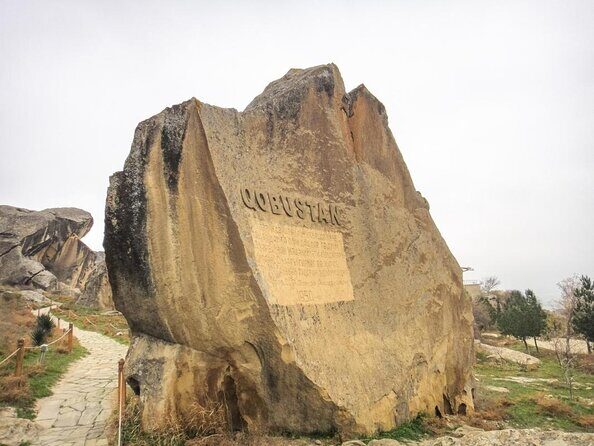
- Gobustan Museum + the actual rock carvings: museum context, then the outside art where it was carved
- Mud volcano fun in Soviet Lada cars: quick, quirky, and very Baku in spirit
- Fire Temple (Ateshgah) and Yanar Dag: natural gas flames with a long timeline and a strong sense of place
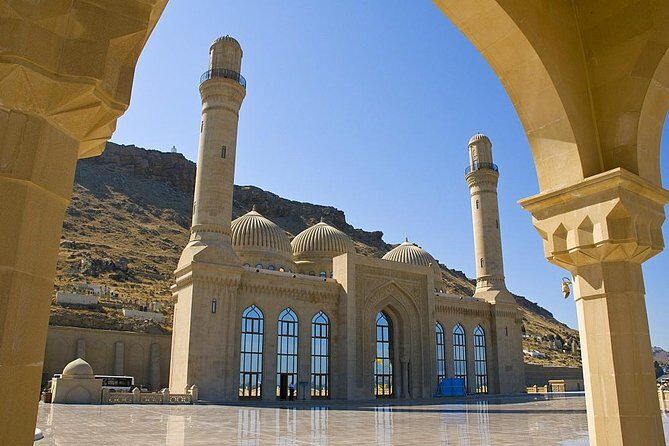
- Bibi-Heybat Mosque history: 13th-century roots, Soviet-era disruption, and important graves
- Zaha Hadid’s Heydar Aliyev Center photos: a clean end to a day of ancient and weird
- Private, guide-led pacing: you’re not stuck in a bus-group rhythm
A practical route from modern Baku to stone-age art
This is the kind of day trip that saves you effort without turning into a speedrun. You start with pickup and move in a private vehicle with a licensed guide, so the trip feels structured but not rigid. The whole arc of the day makes sense: ancient human marks in Gobustan, a geothermal side show with mud volcanoes, then the Absheron Peninsula’s fire sites.
The duration is about 6 to 8 hours, so it’s a true full-day outing, not just a quick glance. You’ll be out long enough that you’ll want snacks, water, and shoes that can handle uneven ground.
A few more Baku tours and experiences worth a look
Gobustan Rock Art and the Museum that makes it readable
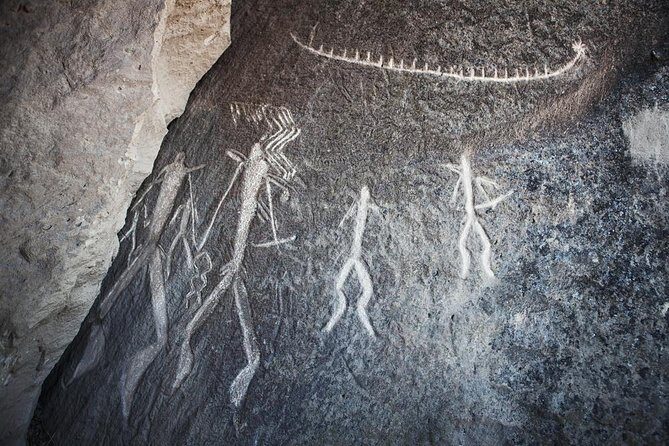
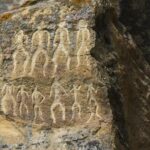
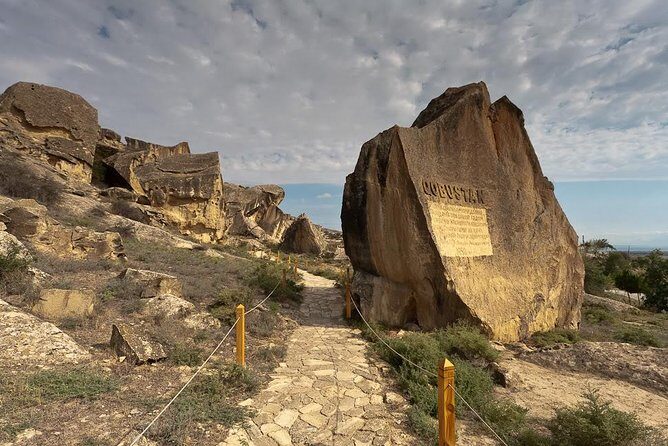
Gobustan sits about 56 km from Baku, and it’s a standout for a simple reason: the area preserves some of the earliest human storytelling in Azerbaijan. The rock art was discovered in 1939–1940, and researchers recorded over 3,500 human and animal depictions plus other markings. There are also identified shelters around the reserve, including around 20 suburban shelters.
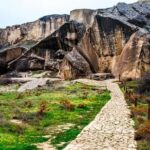
In the Gobustan Museum, you get the background that helps the outdoor carvings stop looking like random scratches. You’ll see artifacts tied to Mesolithic monuments, plus the idea that primitive people carved figures into caves, rocks, and stony lumps. The museum visit is about getting your eyes tuned before you head to the Rock Mountain area where you can see the carvings in their natural setting.
Then you switch from indoors explanation to outdoors reality. The Rock Mountain stop is where you get that wow factor, because you’re looking at the actual surfaces where people marked time, animals, and human scenes.
Timing matters here. The museum-plus-carvings approach works well because you don’t just take photos. You also leave with a mental map of what you’re seeing.
Mud Volcanoes: quick, quirky, and a little chaotic in the best way
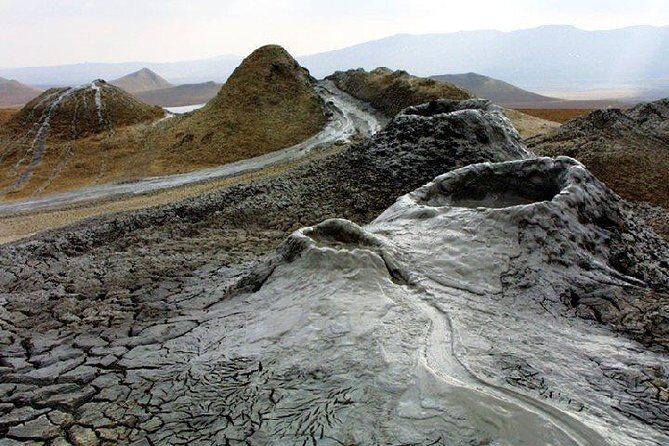
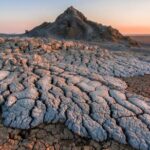
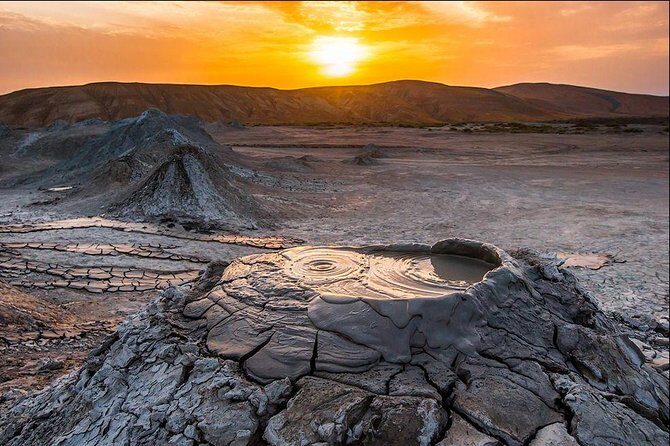
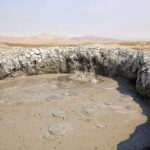
After Gobustan, the tour shifts gears to a very different natural phenomenon: mud volcanoes. These are small-scale geothermal vents, and your stop is about 1 hour. The transport changes here to Soviet Lada cars, which adds character and also means this is not a fully comfort-first segment.
The tour gives you a practical window: spend around 10 minutes around the volcanoes, then you head back to the car. That’s short enough to keep it manageable, but long enough that you’ll feel like you actually did the thing, not just watched it from a distance.
You also get optional, bring-your-own mess. If you want to collect mud, the tour notes you can bring strong plastic bags and take some mud away, since it’s said to be good for the skin. I’d treat that as a folk belief rather than a medical promise, but it does explain why the volcano stop attracts such strong reactions.
What to do so you enjoy this: wear shoes you don’t mind getting splashed and bring a wipe or two. If you hate grime, you’ll still be fine, but the whole point is that it’s a hands-on, weird nature stop.
Bibi-Heybat Mosque: a 13th-century complex with scars of history
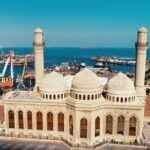
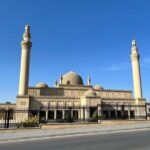
On the return journey, there’s a short stop at Bibi-Heybat Mosque. This is a 13th-century mosque that was later destroyed by the Bolsheviks during the Soviet period’s struggle against religion. Now, it’s a complex rather than just a single building, with graves and tombs of revered people.
One important name here is Ukema khanum, whose grave is treated as a significant monument of Islamic architecture in Azerbaijan. It’s not a long stop, about 15 minutes, but it’s meaningful. You get a quick look at how layers of time stack in Baku’s religious sites: original build, political damage, and later restoration and reverence.
This is also a nice breathing pause after the outdoor intensity of Gobustan and the mud volcano segment. Even if you’re not a history-hunter, it’s the kind of place that makes you slow down.
Ateshgah Fire Temple: natural gas flames and a 1713–1810 story
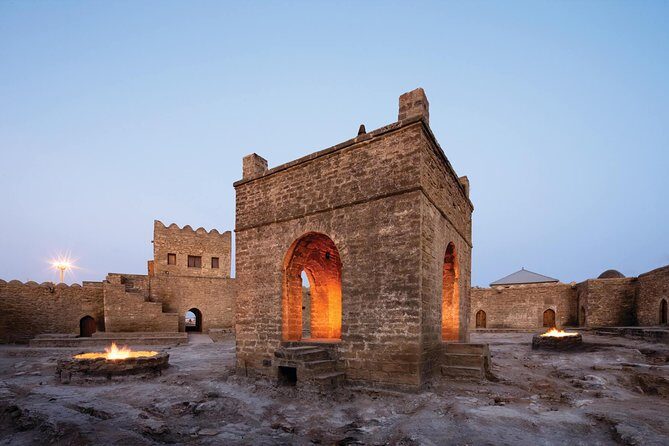
Next comes the Absheron Peninsula’s famous fire sites, starting with Ateshgah, also called the Fire Temple. It’s built between the 17th and 18th centuries on top of natural gas outlets where flames burn when the underground gas meets oxygen.
The earliest temple building here dates to 1713. The central temple was built later, in 1810, with funding from merchant Kanchanagara. What makes this stop interesting is the note that the temple was sanctified by different religious communities over different times, including Zoroastrians, Hindus, and Sikhs.
This area is about natural phenomenon as much as architecture. The site’s power comes from the ground itself, with burning gas outlets near Surakhani settlement, about 30 km from Baku. The tour connects that to the Baku-based Hindu community linked to Sikhs, which helps explain why the site looks like a spiritual landmark rather than just a curiosity.
The stop is about 1 hour, which is enough time to walk around, take photos, and understand what’s happening without feeling rushed.
A few more Baku tours and experiences worth a look
Yanar Dag Fire Mountain: a flame that keeps burning
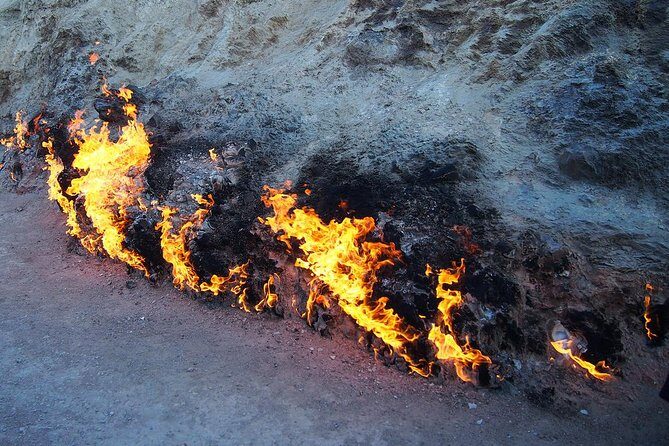
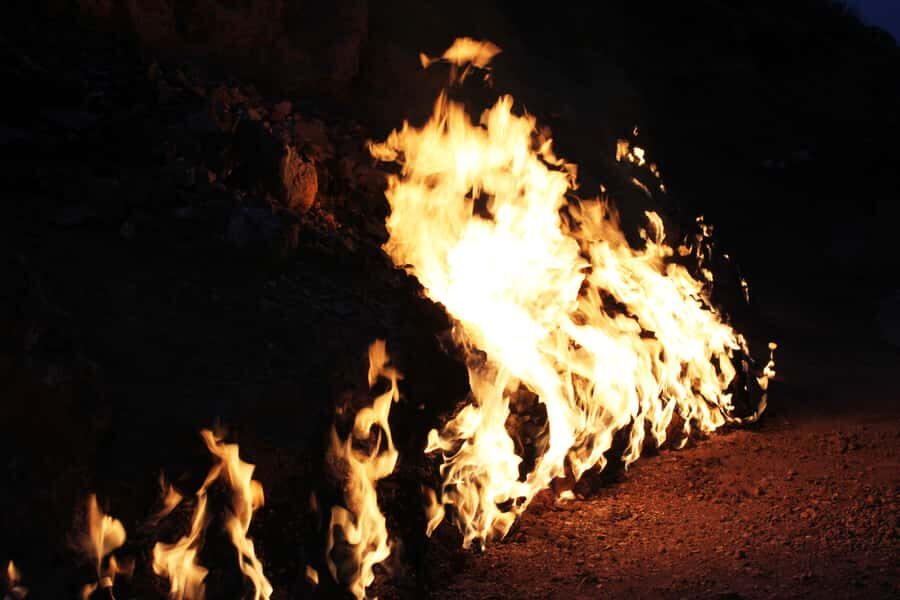
After Ateshgah, you head to Yanar Dag, often translated as Fire Mountain. It’s about 25 km north of Baku in Mehemmedi village, and since 2007 it’s been declared a state-protected conservation area.
The core idea is simple: natural gas comes up at the foot of the hill, and the flame keeps burning. The tour notes it burns nonstop for about 4 millenniums, even during rain and snow, and that gas roots reportedly reach as far as the Caspian Sea. Take that as the story the site tells, not something you need to measure for it to feel real.
Your time here is short, around 30 minutes. That’s actually perfect. You’ll likely spend the whole window looking, comparing camera angles, and waiting for the light to do its thing.
Heydar Aliyev Cultural Center: a design-photo finish in Zaha Hadid style
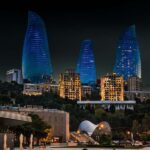
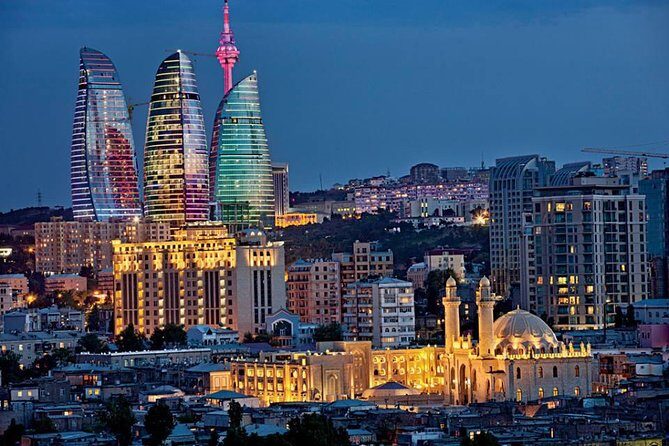
To wrap the day, you stop at the Heydar Aliyev Cultural Center for photos from outside. This one is about style and modern Baku identity: the building was designed by Iraqi-British architect Zaha Hadid.
The signature look is its flowing, curved shape that avoids sharp angles. The tour also frames the building shape as an eternal cycle connecting past with present, and it mentions that it houses things like a conference hall, gallery halls, and museums. You get about 10 minutes here, plus a handy photo moment in front of the I LOVE BAKU sign.
It’s a good ending because it shifts you from natural forces and ancient carvings back to the contemporary city. Even if you only take a couple photos, it gives you a clear last impression of where Baku is headed.
Price and what feels like value at $180 per person
At $180 per person, this trip is not the cheapest way to see the sights, but it’s also not trying to be a bargain flight to nowhere. You’re paying for a licensed guide, pickup and drop-off, and private vehicle transport across multiple sites that are spread around the Absheron Peninsula.
The big value point is that the day is structured into coherent themes, so you don’t have to stitch together tickets, timing, and explanations yourself. The guide helps you connect the museum to the outdoor carvings, and the fire temples to why Baku’s region has these natural flame stories.
Two cost gotchas to know up front: meals and all entrance fees are not included. The tour notes admission ticket costs are not included for some stops, while the Bibi-Heybat Mosque stop is free. Also, taxi fees to Mud Volcanoes are not included. That means your final number depends on what you choose to pay on-site.
If you’re okay with that and you like having someone handle the routing, the price starts to make sense.
What it’s really like on the ground
This is a private tour, meaning it’s just your group, not a shuffle with strangers all day. That often improves the experience because the guide can adjust pacing when you want extra time on a carving or when photos run longer at a fire site.
You should expect a mix of indoor and outdoor time. Gobustan has the museum, then you’re outside on rock surfaces. Mud volcano time is short, but you’re dealing with uneven terrain and mud splashes. Fire sites are outdoors too, and they’re weather-sensitive only in the sense that you’ll want light layers for walking and photo time.
Comfort tips that actually help:
- Wear closed shoes with grip for Gobustan and mud volcano areas
- Bring a small water bottle and a snack since meals are not included
- Bring something for quick cleanup if you want to touch the mud
- Expect a day with multiple short stops, not one long linger
Who this day trip suits best
This trip fits best if you like unusual geography and cultural sites that are tied to real physical forces. Gobustan is for the “I want to understand what I’m looking at” crowd. The fire temple stops and Yanar Dag are for anyone who likes nature that refuses to behave like normal nature.
It also works well for first-time visitors who want to cover more ground than a half-day. And it’s ideal if you’d rather ride in a private vehicle with guidance than try to self-drive and translate history on the fly.
If you hate getting dirty, you can still do the mud volcano stop, but you’ll want to stay mindful about splashes and bags. If you need long museum-style pacing, you may find a couple stops feel brief, especially the 10-minute Heydar Aliyev Cultural Center photo stop.
Should you book this tour?
I’d book it if you want a one-day sampler of what makes the Baku area weird in the best way: ancient rock art, geothermal mud volcanoes, and natural flame sites. The guide-led flow is the main reason to choose it, because the day is more than a checklist. It becomes a story about place.
Skip it only if entrance fees and extra on-site costs would upset your budget, or if you prefer long, unhurried time in fewer locations. Otherwise, this is a strong way to spend a day around Baku.
FAQ
What’s the duration of the Baku full day trip?
The tour runs about 6 to 8 hours.
Is hotel pickup and drop-off included?
Yes. Pickup and drop-off from your hotel are included.
Is this a private tour?
Yes. It’s private, so only your group participates.
What entrance fees are included?
Entrance tickets are not included. The tour notes that the Bibi-Heybat Mosque stop is free, while other stops list admission tickets as not included.
Are meals included?
No. Any meals and drinks are not included.
Is transportation included for getting around the sites?
Yes. You’ll travel by air-conditioned vehicle, and the itinerary specifically mentions changing transportation to Soviet Lada cars for the mud volcanoes segment.
What about mud volcano costs and taxi fees?
Taxi fees to the mud volcanoes are not included.
Is it easy for families and kids?
Children must be accompanied by an adult, and most travelers can participate.
FAQ
Is there free cancellation?
Yes. You can cancel for a full refund with free cancellation up to 24 hours in advance of the experience start time.
When will I receive confirmation after booking?
Confirmation is received at the time of booking.
Who provides the guide?
The tour includes a professional licensed guide, offered by Guided Azerbaijan.