REVIEW · BAKU
Gobustan,Mud Volcanoes & Absheron Peninsula full day tour
Book on Viator →Operated by Best Baku Tours · Bookable on Viator
Mud volcanoes and fire in one day.
This full-day outing is built around two of Azerbaijan’s most unusual natural shows: mud volcanoes and Yanar Dag, a hillside flame fed by underground gas. You also get ancient rock art at Gobustan, a quick stop at a famous mosque, and the Ateshgah Fire Temple, all tied together with the practical comfort of hotel pickup and an English-speaking driver.
What I like most is the way the tour handles real-world terrain. Getting to the mud volcanoes isn’t a simple bus ride; they switch to specific vehicles made for rough roads. I also appreciate the site mix: the day pairs raw geology with human stories, from carving-covered rock to places built around fire.
One consideration: the exact depth and language of the guide can vary during stops, so if you really want detailed explanations at every site, plan to ask questions and be ready with a few follow-ups.
In This Review
- Key things you’ll remember
- From Baku to mud volcano terrain: what the logistics really mean
- Mud volcanoes: the bubbling ground and why gas turns into fire
- Gobustan Rock Art: carvings, reserve history, and what to look for
- Bibi-Heybat Mosque: a short pause with a famous setting
- Yanar Dag Burning Mountain: what a “natural fire” actually looks like
- Ateshgah Fire Temple in Surakhani: how fire worship ties to fuel
- Timing, comfort, and what $102 really covers
- Who should book this tour, and who should consider alternatives
- Should you book the Gobustan, Mud Volcanoes & Absheron Peninsula tour?
- FAQ
- How long is the Gobustan, Mud Volcanoes & Absheron Peninsula full day tour?
- How much does the tour cost?
- Do I get hotel pickup and drop-off?
- What transport do you use for getting to the mud volcanoes?
- Is the tour private?
- Are entrance fees included?
- Are food and drinks included?
- Is there a mobile ticket?
- What if I want to cancel?
- What language support is provided?
Key things you’ll remember
- Special transport for the mud volcano road so you’re not stuck watching the scenery from afar
- Mud volcanoes with natural bubbling and flame from underground gas and hydrocarbon activity
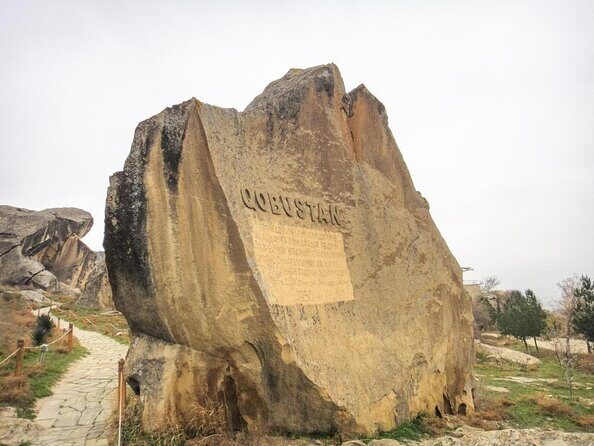
- Gobustan State Reserve rock art with over 6,000 carvings preserved since 1966
- Yanar Dag Burning Mountain with a steadily burning natural gas flame on Absheron
- Ateshgah Fire Temple in Surakhani, tied to Hindu, Sikh, and Zoroastrian worship traditions
- Pickup and drop-off included which keeps the day moving smoothly in Baku
From Baku to mud volcano terrain: what the logistics really mean
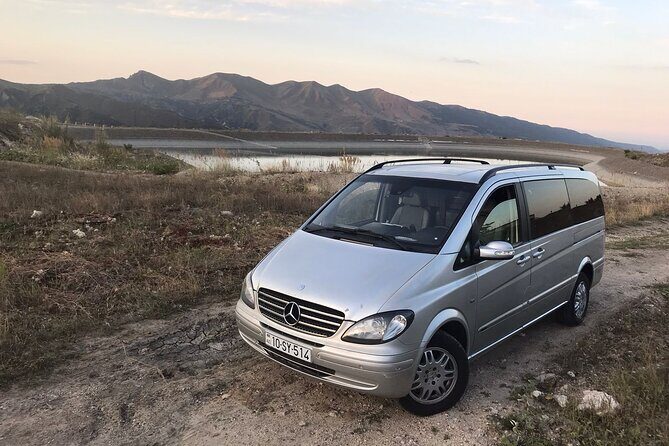
This is the kind of tour where the schedule looks straightforward on paper, but the “how” matters. Your day starts with hotel pickup and drop-off, plus a comfortable car and an English-speaking driver. That helps a lot if you’re trying to pack geology, archaeology, and religious sites into one day without wrestling with local transport.
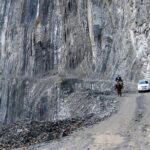
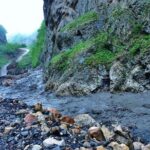
Then comes the key detail: once you reach the Gobustan area, the road to the mud volcanoes is described as in bad condition. The tour changes transport and uses special vehicles designed for difficult terrain. That’s a big deal, because the mud volcano area isn’t an easy stroll from a neat parking lot. If you’ve ever been on a day trip that treats rough roads like an afterthought, you’ll appreciate this preparation.
The time you spend at each stop is relatively tight, so the day feels like a guided road trip through Azerbaijan’s “why is that happening here?” moments. You’re not just sightseeing—you’re moving between different types of “natural phenomenon zones.”
A few more Baku tours and experiences worth a look
Mud volcanoes: the bubbling ground and why gas turns into fire
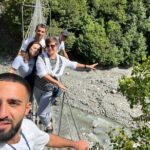
The star stop is the Mud Volcanoes area. You’ll get about 30 minutes here, with admission noted as free in the stop info. It’s not long, but it’s enough time to take in the main features and understand the basic story the site tells.
Azerbaijan is famous here because the region is home to nearly a third of the world’s mud volcanoes. Instead of lava, you get messy bubbling—sometimes even explosive-looking activity—because of how underground materials behave. Mud volcanoes connect to hydrocarbon and petrochemical stores underground. Gas and other components try to escape upward to the surface, and some gas leaks can burn constantly, producing small perpetual flames.
A helpful way to think about what you’re seeing: this is not a controlled “attraction.” It’s active geology with a human-made interpretation layered on top. If you like natural science explanations, this stop will feel extra interesting. If you don’t, it can still be a memorable visual because it looks unusual enough to be hard to forget.
Practical tip: plan to dress for wind and dust. Even if it’s not scorching, these open areas can feel dry and exposed.
Gobustan Rock Art: carvings, reserve history, and what to look for
After the mud volcano stop, you head back to the car and then move into Gobustan. This is the part of the day that shifts from “physics happening under your feet” to “people documenting life on stone.”
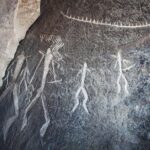
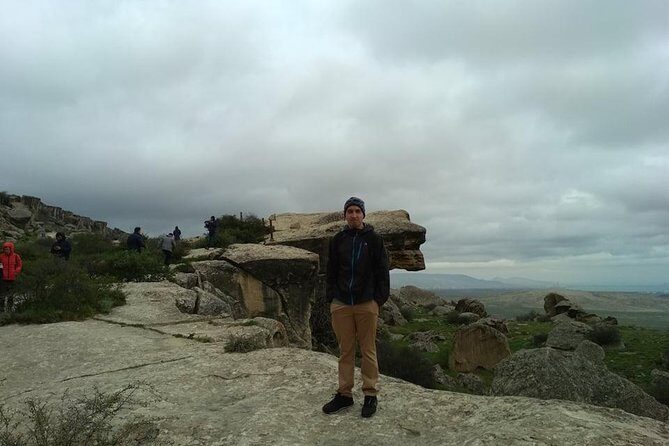
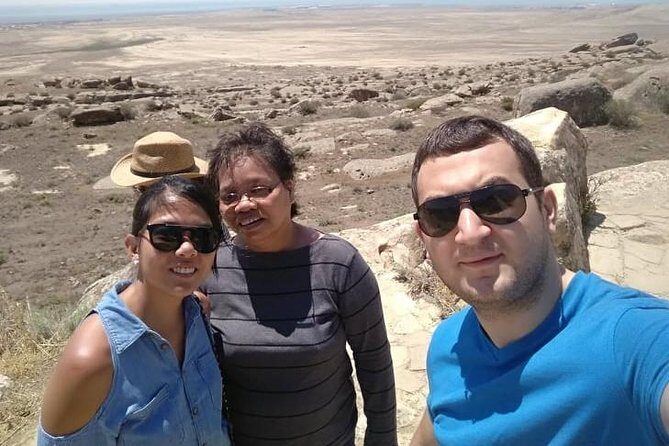
First you visit the Gobustan museum area, then you go on to the open-air Gobustan Rock Art. The stop timing is about 1 hour 30 minutes total at this part of the day. Unlike the mud volcano stop, admission is marked as not included for this segment, so you should expect that to add to your day’s cost.
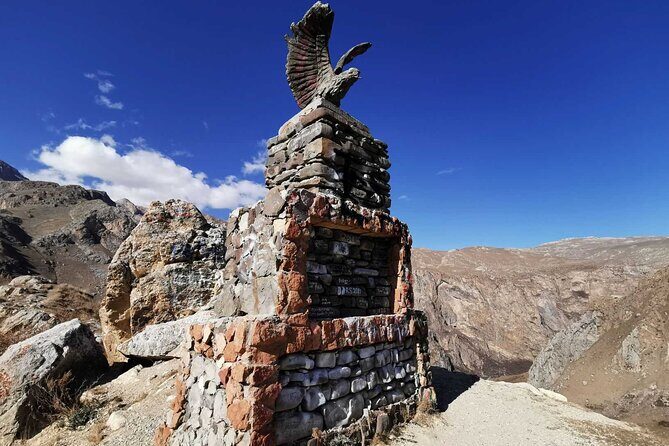
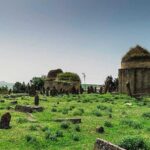
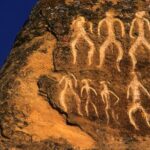
Here’s what makes Gobustan worth your time. The Gobustan State Reserve sits west of the settlement of Gobustan, about 40 miles southwest of Baku, and it was established in 1966 when the area was declared a national historical landmark to preserve ancient carvings and the surrounding features. The reserve includes more than 6,000 rock carvings, showing what primitive people and animals looked like to them.
What you should focus on during your time:
- Look for scenes that show animals and daily life, not just single figures.
- Pay attention to carving placement—some panels feel like they were chosen to be seen in a certain way.
- Take a moment to compare styles across different panels. Even with limited time, you’ll start to see variety.
This is also a good “breather” stop after the mud volcanoes. You’ll be on your feet, but it’s calmer than climbing around uneven terrain while trying to photograph bubbling ground.
Bibi-Heybat Mosque: a short pause with a famous setting
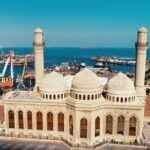
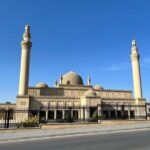
On the return drive, you’ll pass through Bibi-Heybat Mosque and stop for around 15 minutes. Admission is marked as free for this stop.
In a day packed with geologic spectacle and religious sites shaped by belief in fire, a quick mosque visit works as a balance. You get a sense of the broader religious and cultural landscape of the Baku area without the schedule turning into a long detour.
Because the stop is short, treat it as an exterior-and-quick-look moment. If you want deeper time inside, this tour’s pace may not be your best match.
Yanar Dag Burning Mountain: what a “natural fire” actually looks like
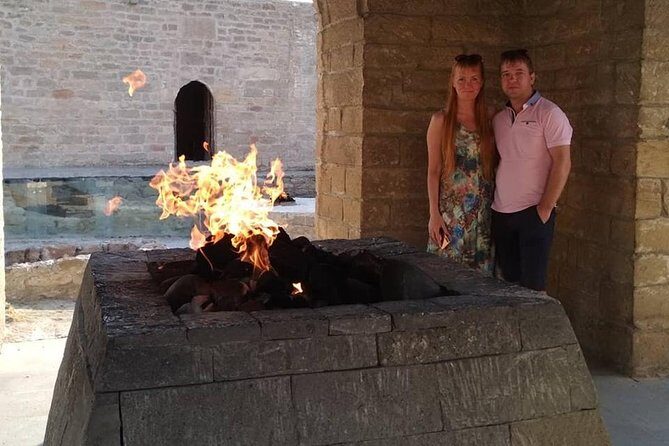
Next up is Yanardag (Yanar Dag), also called the Burning Mountain. The stop time is about 20 minutes, and admission is listed as not included.
Yanar Dag is a natural gas fire on a hillside on the Absheron Peninsula near the Caspian Sea. Unlike mud volcano flames that may seem irregular or connected to active releases, the Yanar Dag flame is described as burning fairly steadily. That steady feel comes from a steady seep of gas from the subsurface.
There’s also a story tied to it: the flame was only noted when accidentally lit by a shepherd in the 1950s. Whether you take the tale literally or as folklore, the point is clear: this is a phenomenon that looks like art but is driven by geology.
What I’d do in your 20 minutes:
- Find a good viewing angle first, then spend the rest of the time just watching. The flame effect changes with position and light.
- Take a photo, but don’t spend the whole stop camera-first. You’ll miss the slow “alive” quality of something burning steadily.
This is one of those stops where it’s worth keeping your expectations practical. You’re not walking into a themed exhibit. You’re seeing nature at work, with a human story attached.
Ateshgah Fire Temple in Surakhani: how fire worship ties to fuel
The final major cultural stop is Ateshgah – the Fire Temple in Surakhani, a suburb in Baku. You’ll spend about 50 minutes and admission is listed as not included.
The Ateshgah complex is described as castle-like and built as a religious site associated with multiple traditions. Based on Persian inscriptions, it served as a place of worship for Hindu, Sikh, and Zoroastrian communities. The name is linked to the Persian word for fire: “atash.”
Architecturally, the site is pentagonal, with a courtyard and monk cells, plus a tetrapillar altar in the middle. It was built during the 17th and 18th centuries, then abandoned in the late 19th century, likely because of a dwindling Indian population in the area.
Here’s the most important detail for understanding the “fire” part of the story: the natural eternal flame went out in 1969 after petroleum and gas exploitation in the area. The flame you see now is lit by gas piped from the nearby city.
So what does that mean for you, as a visitor? It means the site is both religious architecture and an example of how human industry can change the original conditions that inspired worship. That makes it more interesting than a “look and leave” stop, because it gives you a bigger picture of cause and effect.
Timing, comfort, and what $102 really covers
At $102 per person for about 7 hours, this tour is priced like a full-day bundle: pickup and drop-off, a comfortable car, and a driver who handles routing across Baku and Absheron.
What’s included:
- Comfortable car with an English-speaking driver
- Hotel pickup and drop-off
- A mobile ticket
- The tour is listed as private (only your group)
What you should budget for beyond that:
- Food and drinks (not included)
- Entrance fees at key sites listed as not included: Gobustan museum/rock art, Yanar Dag, and the Fire Temple
Even without exact entrance amounts, the pattern is clear: the day is a “pay-as-you-go on sites” experience. If you don’t like surprise extras, eat before you go or bring a simple snack plan so you don’t have to scramble mid-day.
Also, remember that the tour includes at least one transport change to reach the mud volcanoes via specialty cars. That adds complexity for the provider, but it’s also what keeps the experience from turning into a partial viewing day.
Who should book this tour, and who should consider alternatives
This day tour fits best if you want variety without planning every move yourself. You’ll like it if you:
- Want a single day that mixes mud volcano geology, rock art, and fire-themed sites
- Prefer pickup and an English-speaking driver over public transit hopping
- Don’t need long museum time, because the stops are time-boxed
It may feel less ideal if you:
- Want deep, stop-by-stop lectures for every location. Even with an English-speaking driver, the level of explanation can vary, and some stops may get brief coverage.
- Hate paying extra at multiple sites. Several entrances are not included, and you’ll likely pay more than you expect when you add food and tickets.
Should you book the Gobustan, Mud Volcanoes & Absheron Peninsula tour?
Yes, if your goal is to see Azerbaijan’s “fire and stone” highlights in one efficient day. The big value is the combination: you get mud volcanoes (with nearby flames tied to underground gas), Gobustan’s carving tradition, and Absheron’s Burning Mountain and Ateshgah Fire Temple—all connected with pickup and practical transport planning for rough road conditions.
I’d book it when you’re visiting Baku with limited time and you want to cover more than just the city. Just go in with a realistic mindset: it’s a packed day, entrance fees and meals are on you, and you should be ready to ask questions if you want more detail at each stop. If that sounds like your kind of day, this tour is a strong fit.
FAQ
How long is the Gobustan, Mud Volcanoes & Absheron Peninsula full day tour?
It runs about 7 hours (approx.).
How much does the tour cost?
The price is $102.00 per person.
Do I get hotel pickup and drop-off?
Yes. Hotel pickup and drop-off are included.
What transport do you use for getting to the mud volcanoes?
The tour changes transport when reaching the Gobustan area because the road to the mud volcanoes is in bad condition, so specialty cars are used to reach the area.
Is the tour private?
Yes. It is listed as private, meaning only your group will participate.
Are entrance fees included?
No. Entrance fees are not included for the Gobustan museum/rock art, Yanar Dag, and the Fire Temple. Admission at the mud volcanoes and Bibi-Heybat Mosque is listed as free in the stop info.
Are food and drinks included?
No. Food and drinks are not included.
Is there a mobile ticket?
Yes. The tour includes a mobile ticket.
What if I want to cancel?
You can cancel for free up to 24 hours in advance for a full refund.
What language support is provided?
The tour includes a car with an English-speaking driver.