REVIEW · BAKU
Gobustan & Absheron Tour with Free Old City Walking Tour
Book on GetYourGuide →Operated by Baku Fire Tour · Bookable on GetYourGuide
Baku’s fire story starts in the rocks. This full-day tour strings together Gobustan UNESCO petroglyphs, the Absheron Peninsula’s fire sites like Yanar Dag, and ends with a free Old City walking tour through Icherisheher. It’s a lot for one day, but it stays focused on the big ideas: how people lived, what they believed, and how nature put on a show.
I especially like two things about this route. First, you get a guided run at Gobustan’s ancient carvings, plus time at the modern interactive museum so you’re not just looking at stones—you’re understanding what they depict. Second, the tour ties Azerbaijan’s fire heritage to real places: Ateshgah and then the continuous natural flames at Yanar Dag.
One heads-up before you book: the headline price is low, but entrance fees are not included by default, and the mud volcano stop has a mandatory cash fee that still applies in rain. Also, food and drinks are on you, so you’ll want to plan for snacks and water.
In This Review
- Quick hits
- How the 12-hour route works from Baku
- Gobustan National Park: petroglyphs you can almost read
- Mud volcanoes: plan for the dirt, even if it rains
- Ateshgah Fire Temple: how fire worship became a meeting place
- Yanar Dag’s natural flames: why the site still matters
- Baku Old City Icherisheher: the free walking tour you should plan for
- Price and entrance fees: where the value actually comes from
- What to pack and how to stay comfortable for a long day
- Who this tour fits best (and who should rethink it)
- Should you book this Gobustan & Absheron tour?
- FAQ
- How long is the tour?
- Where does the tour start?
- Is the Old City walking tour included?
- Do I need to pay entrance fees?
- What are the entrance fees for Gobustan, Ateshgah, and Yanardagh?
- Is the mud volcano stop optional?
- What should I bring for the mud volcanoes?
- What happens if it rains?
- Are food and drinks included?
- What languages are available for the live guide?
Quick hits
- UNESCO Gobustan petroglyphs paired with an interactive museum stop
- Ateshgah Fire Temple explained in the context of fire worship and Silk Road travelers
- Yanar Dag natural hillside flames that keep burning for centuries
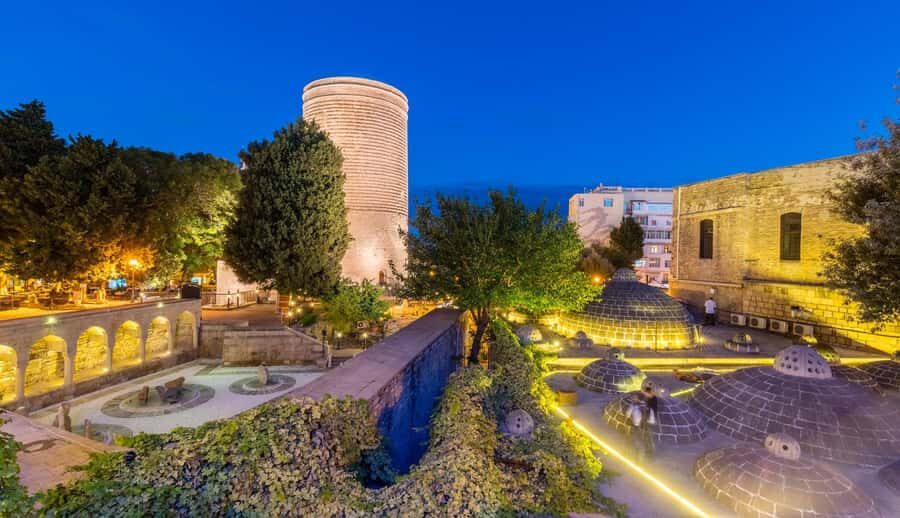
- Free Icherisheher Old City walk with major landmarks like the Maiden Tower and Shirvanshahs’ Palace
- Mud volcanoes fee applies even in rain, plus a chance to collect mud as a souvenir
How the 12-hour route works from Baku
This is a full-day, guided tour built around a smooth, “big sights in one day” order. You get hotel pickup and drop-off plus transportation, so you’re not solving logistics after a long drive. The schedule is timed to cover Gobustan in the morning range, then the Absheron Peninsula fire sites, and finally the free Old City walking tour in Baku.
You’ll start with Gobustan National Park, then move to Absheron for Ateshgah and Yanar Dag, and finish the day with the Old City area (Icherisheher). A pro English-speaking guide runs the main tour, and the Old City walk is included at no extra cost.
Language options are practical too: you can be guided in English, Russian, or Arabic (your guide will match the group).
You can also read our reviews of more walking tours in Baku

Gobustan National Park: petroglyphs you can almost read
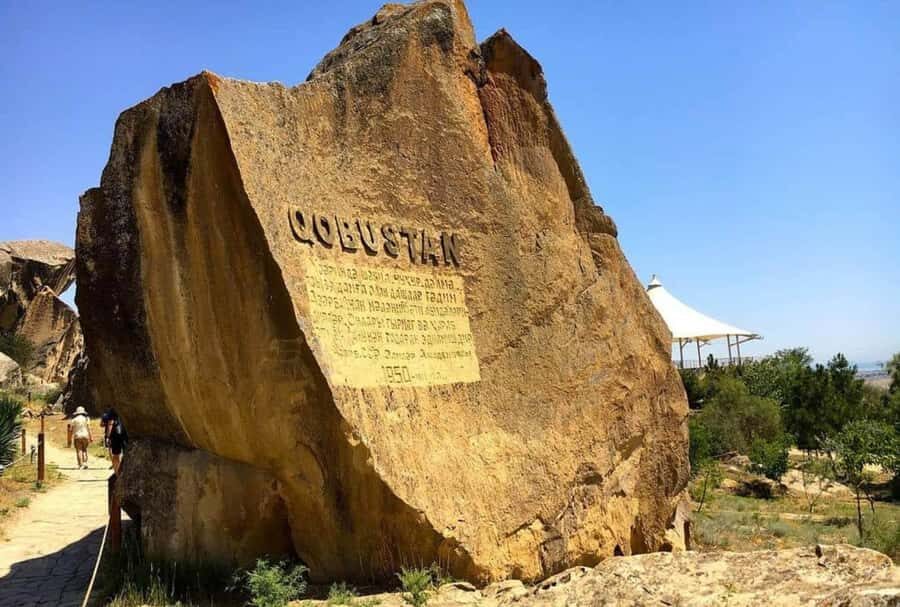
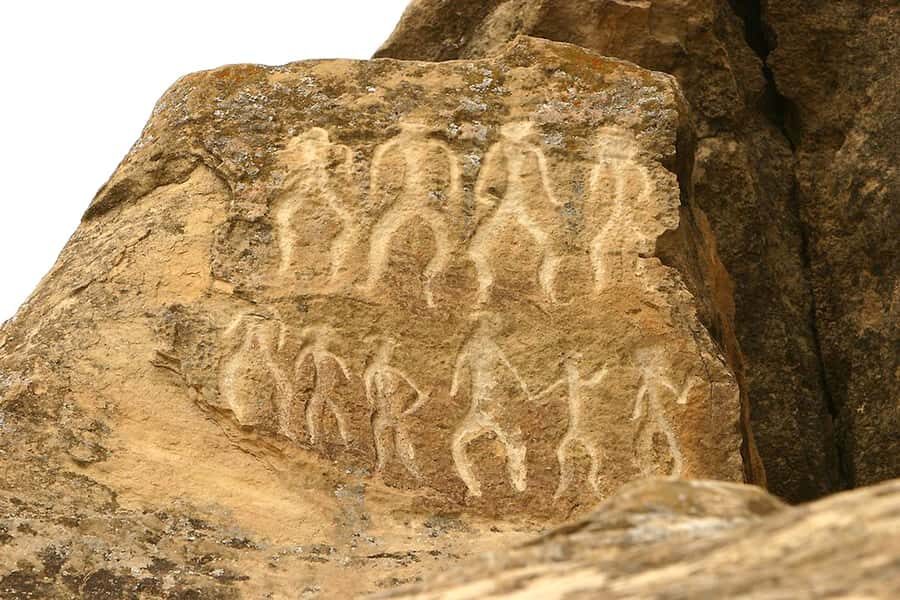
Gobustan is the reason this day feels special. It’s a UNESCO World Heritage Site known for prehistoric rock carvings—petroglyphs—created tens of thousands of years ago. Standing near these panels, you get that rare “time squeeze” feeling: the same hillside landscape that supported ancient life is still here, just quieter.
What you’ll do on this part:
- Walk among ancient carvings showing early human life, hunting scenes, and ritual-style depictions
- Stop for the modern interactive museum so the symbols make more sense than they would on your own
This museum piece matters. Without it, petroglyphs can look like random scratches. With guidance, you learn how to read the story—how people moved, what they hunted, and what kinds of activities they marked in stone.
Practical note: the tour also accounts for the day’s conditions. Depending on weather and road conditions, you may also make it to the mud volcano area (more on that next). So don’t assume the day will be identical every time.
Mud volcanoes: plan for the dirt, even if it rains
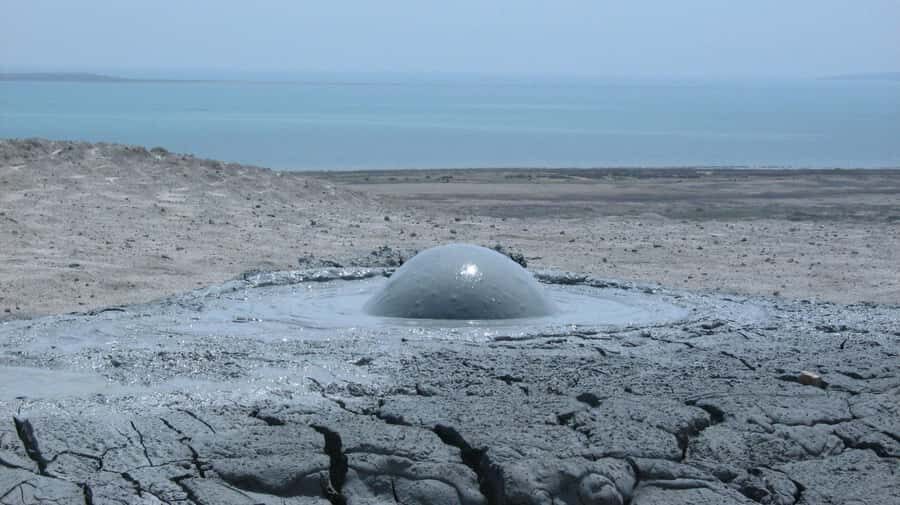
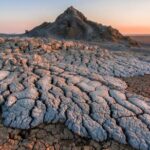
Mud volcanoes are one of Azerbaijan’s oddball natural wonders, and this tour gives you a real chance to see them. The key point is that the Mud Volcanoes fee is mandatory: 30 AZN (cash). Even if it rains and the itinerary shifts to the mud volcano complex, the fee still applies.
That “cash and mandatory” detail is your biggest planning takeaway. If you want the mud volcano stop, bring the right money ahead of time. If rain hits, the tour can redirect you there—so you’re not stuck just waiting out weather.
A fun tip you’ll hear on this kind of stop: bring an empty bottle. You can collect mud as a souvenir, which is much easier (and messier) than it sounds. Wear clothes you don’t mind getting marked up.
Also, shoes matter. The terrain can be uneven, and you’ll be standing and walking on ground that doesn’t behave like a city sidewalk.
Ateshgah Fire Temple: how fire worship became a meeting place
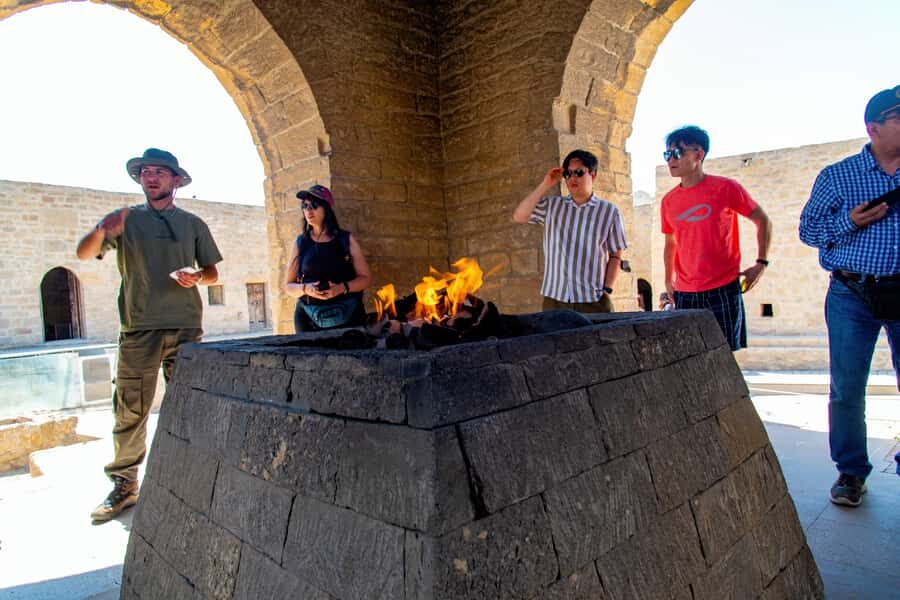
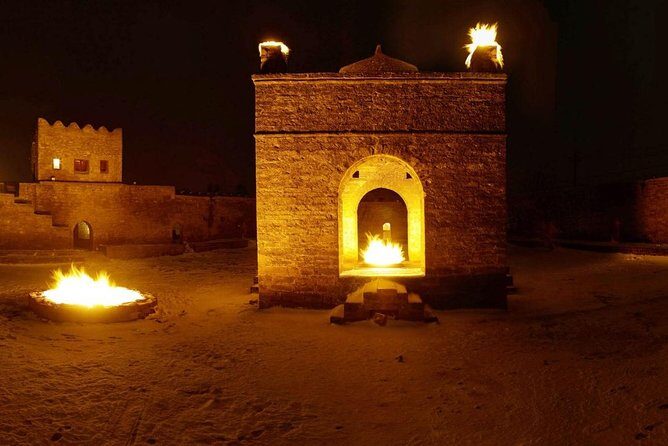
Next comes Absheron’s fire heritage, and the first big stop is Ateshgah Fire Temple. This historical religious complex is associated with Zoroastrian fire worship practices, and it also connects to traders traveling along the Silk Road.
This stop works for you if you like history with a sense of place. You’re not just hearing that people worshipped fire. You’re seeing a site tied to the idea that fire was more than a tool—it had meaning, and it shaped how communities gathered.
Why Ateshgah fits so well after Gobustan:
- Gobustan shows you what people marked in stone
- Ateshgah shows you how belief and movement of people (especially Silk Road trading routes) could shape a landscape
In other words, the tour doesn’t jump randomly. It builds a theme: humans interpret nature, and they leave culture behind—sometimes in carvings, sometimes in temple sites.
Yanar Dag’s natural flames: why the site still matters
Then you’ll head to Yanar Dag (Burning Mountain), where natural gas flames have been burning continuously from the hillside for centuries. The visual is the headline: a steady flame effect on a slope, tied to natural gas seeping underground.
The tour frames this as part of why Azerbaijan is called the Land of Fire. That connection is more than marketing. It’s a reminder that the “fire story” isn’t only religious. It’s also geological, and it’s part of how the country’s people historically explained and used what they saw.
This is also where a good guide helps. You’ll likely get context about how the fire sites fit into wider beliefs, trade, and daily life—so you leave with a reason for the spectacle, not just a photo.
If you care about understanding symbolism, this is the moment that clicks. Fire becomes a shared language across centuries: nature produces it, people interpret it, and architecture and travel routes respond.
You can also read our reviews of more city tours in Baku
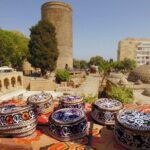
Baku Old City Icherisheher: the free walking tour you should plan for
The bonus is a free Old City walking tour through Icherisheher, a UNESCO World Heritage Site. This part is worth your time even if you’ve seen Baku before, because it slows you down just enough to read the city.
You’ll stroll narrow stone streets and cover major medieval landmarks such as:
- Maiden Tower
- Shirvanshahs’ Palace
- Ancient city walls
- Caravanserais
- Traditional architecture
What makes this section feel real is the pacing. Instead of racing between big stops, you get a guided walk where your guide helps you spot patterns: how buildings relate to each other, where power sat, and how the city’s trade life shaped its layout.
From guide descriptions and experiences people shared, the Old City tour can include small detours. One example from a recent booking: a stop toward Little Venice and then finishing with tea at a nearby restaurant. That’s not guaranteed as a formal promise, but it matches the tour’s style—small flavor stops that don’t blow up your schedule.
Also, this is where the guide’s personality shows. Some guides, like Gaya (and guides people described as doing the run with extra energy), bring the monuments to life with history tied to what you’re looking at right then. Another guide name that came up was Aydın—people specifically highlighted that he answers questions promptly and has strong knowledge of the sites.
Price and entrance fees: where the value actually comes from
The listed price is $3.00 per person, and that number is so low it’s easy to assume everything is included. Here’s the more useful way to think about value: the tour price covers the guided experience, transport, and hotel pickup/drop-off, but entrance fees are not included by default.
Plan for these on-site fees:
- Gobustan National Park: 10 AZN
- Mud Volcanoes: 30 AZN (mandatory, cash)
- Ateshgah & Yanardagh: 15 AZN
So yes, the base price is a bargain. But you’re also paying for access to specific sites. If you want less hassle, the tour offers an Entrance Fees Included option. That’s the choice if you’d rather not manage AZN payments and receipts between stops.
Two practical value tips:
- If you hate surprises, go for Entrance Fees Included.
- If you’re budget-minded, keep the on-site fees in mind and bring the cash you’ll need.
Food and drinks aren’t included either, so budget for a meal or snacks on your own. This matters because the day is long enough that hunger will affect your energy.
What to pack and how to stay comfortable for a long day
A 12-hour day can be very doable if you pack like a realist.
Bring:
- Comfortable, sturdy shoes for uneven terrain (especially if the mud volcano stop happens)
- An empty bottle if you want the mud souvenir option
- A layer for the day, since you’re moving between outdoor sites
- Water and simple snacks, since food and drinks aren’t included
Wear:
- Clothes you don’t mind getting dusty. The mud volcano area can be messy, even if it isn’t a full-on mudbath.
Timing and pace:
- Expect walking time in the park areas and a guided stroll in the Old City afterward. The day isn’t just “sit and watch.” It’s more active than it looks on paper.
The tour runs with a professional English-speaking guide (plus other language options by group), and that’s a big part of the comfort factor: you’re not guessing what you’re seeing.
Who this tour fits best (and who should rethink it)
This is a great fit if you want a high-contrast day:
- Ancient carvings plus modern interpretation at Gobustan
- Religious/cultural context at Ateshgah
- A real natural flame phenomenon at Yanar Dag
- Then a human-scale finish with a free Old City walk
It’s also a strong pick if you like guided context. The route doesn’t just list stops; it teaches you what the stops mean.
You might want to rethink it if:
- You dislike paying on-site entrance fees and prefer all-inclusive pricing
- You have little interest in walking outdoors for long stretches
- You’re not comfortable with a required cash fee for the mud volcanoes stop
If you’re okay with a long day and you plan ahead for fees, it’s excellent value.
Should you book this Gobustan & Absheron tour?
If your goal is to understand why Azerbaijan gets described as a “Land of Fire,” this is one of the most efficient ways to experience it in a single day. You get UNESCO-era storytelling at Gobustan, then fire sites that connect belief and geography, and you still end with a free Old City walk through Icherisheher.
Book it if you:
- Want top highlights without stitching together multiple tickets on your own
- Like guided explanations (especially at Gobustan and the Old City)
- Can plan for on-site fees and bring cash for the mud volcanoes stop
Skip or choose another option if you want fully included entrances or you prefer a lighter pace.
FAQ
How long is the tour?
The duration is 12 hours.
Where does the tour start?
It runs from Baku, with hotel pickup and drop-off included.
Is the Old City walking tour included?
Yes. A free Old City walking tour in Icherisheher is included.
Do I need to pay entrance fees?
Entrance fees are not included in the standard price. You can buy them on-site unless you choose the Entrance Fees Included option.
What are the entrance fees for Gobustan, Ateshgah, and Yanardagh?
Gobustan is 10 AZN, and Ateshgah & Yanardagh are 15 AZN (combined as listed).
Is the mud volcano stop optional?
It has a mandatory fee of 30 AZN (cash), and the fee still applies even if it rains and the tour redirects to the mud volcano complex.
What should I bring for the mud volcanoes?
Bring comfortable shoes for uneven terrain, and bring an empty bottle if you want to collect mud as a souvenir.
What happens if it rains?
Rain can redirect the tour to the Mud Volcanoes Complex, but the mud volcano fee remains the same.
Are food and drinks included?
No. Food and drinks are not included.
What languages are available for the live guide?
The live tour guide is available in English, Russian, and Arabic.