REVIEW · BAKU
Discover Gobustan and Absheron History, Mud Volcanoes and Nature
Book on Viator →Operated by Alov Travel · Bookable on Viator
Mud, fire, and 40,000-year carvings in one day. This Gobustan and Absheron route strings together Bibi-Heybat Mosque, UNESCO rock art, bubbling mud volcanoes, and two famous flame sites: Yanar Dag and Ateshgah.
I like that the day keeps a tight rhythm—history to geology to fire, without long dead time. I also like the small-group setup (up to 14 people) with an air-conditioned vehicle and a guide who helps you make sense of what you’re seeing, including guides like Aydin, Nuzlan, and Wadeen who have been named in past experiences.
One drawback to plan around: entrance fees and lunch are not included, and pickup timing can be a weak point if your driver is delayed—so stay reachable and be ready at the meeting spot.
In This Review
- Key highlights worth your time
- A one-day Gobustan and Absheron plan that actually makes sense
- Stop 1: Bibi-Heybat Mosque for a strong start by the Caspian
- Stop 2: Gobustan Rock Art and the shock of 40,000 years
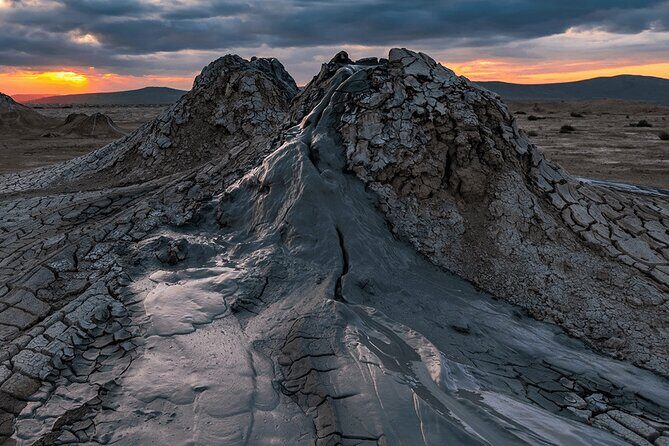
- Stop 3: Mud Volcanoes for a geology show you can’t fake
- Stop 4: Yanar Dag for the natural fire that keeps going
- Stop 5: Ateshgah Fire Temple for the ritual side of the flame
- How the day flows: pace, group size, and what comfort buys you
- Price and budgeting: what $49 covers, and what to expect extra
- Who should book this Gobustan and Absheron day trip
- Should you book this tour?
- FAQ
- What is the duration of the Gobustan and Absheron history tour?
- Where is the meeting point?
- Does the tour include transportation?
- Is a guide included?
- Do I need to buy tickets for the stops?
- Is lunch included in the price?
- How big is the group?
- What ticket format is used?
- What is the price per person?
- Is there free cancellation?
Key highlights worth your time
- Gobustan’s petroglyphs: UNESCO rock art with carvings dating back over 40,000 years
- Mud volcanoes: a rare Absheron phenomenon with bubbling craters in a lunar-like setting
- Yanar Dag: a hillside natural fire that has burned for centuries
- Ateshgah (Fire Temple): flames tied to Zoroastrian-style ritual practice
- Up to 14 people: easier pace and more room to ask questions than big buses
- Bibi-Heybat Mosque included: a quick stop with free admission at a dramatic Caspian Sea viewpoint
A one-day Gobustan and Absheron plan that actually makes sense
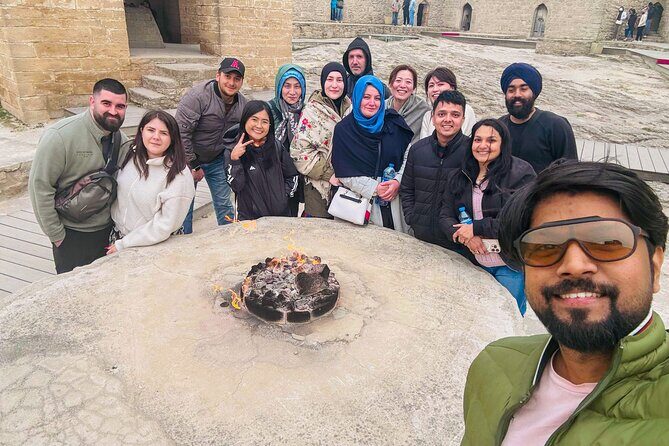
This is the kind of day trip I like: it’s built around a clear theme. You’re not just touring random sights around Baku. You’re moving through Azerbaijan’s signature “story of land and belief,” where stone engravings, seeping earth, and long-burning flames all point to the same region.
The route is also practical. You start with a landmark you can see right away, then shift to the UNESCO site at Gobustan, and keep going to the Absheron natural attractions. Finally, you wrap with a fire-temple site that ties the day together. If you’re short on time, this is one of the better ways to pack in variety without feeling rushed every 10 minutes.
One more plus: you’re traveling with roundtrip transportation in an air-conditioned vehicle. On an 8-hour day, that comfort matters, especially if you’re traveling during warmer months.
You can also read our reviews of more historical tours in Baku


Stop 1: Bibi-Heybat Mosque for a strong start by the Caspian
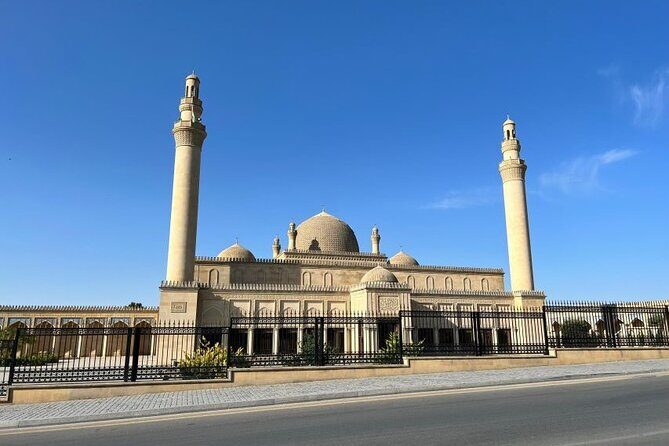
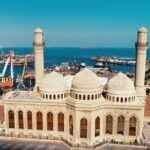
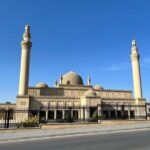
You kick things off at Bibi-Heybat Mosque, a spiritual landmark overlooking the Caspian Sea. The stop is short—about 25 minutes—but it’s a good way to get your bearings fast. Even if you’re not a big mosque-tour person, the setting helps. The water view gives the architecture context, and the site feels important in a way that photographs don’t always show.
Admission here is free, so it’s an easy win with minimal logistics. Since the stop is brief, wear shoes you can move in comfortably, and keep your camera handy—you’ll want a few photos from the best angles.
I’d treat this as your warm-up: observe, take a couple pictures, then mentally shift from “Baku city” into “Absheron story.” The rest of the day is far more outdoors and nature-focused.
Stop 2: Gobustan Rock Art and the shock of 40,000 years
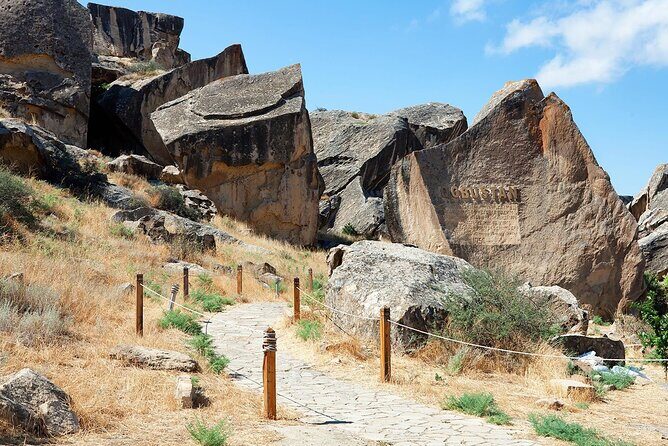
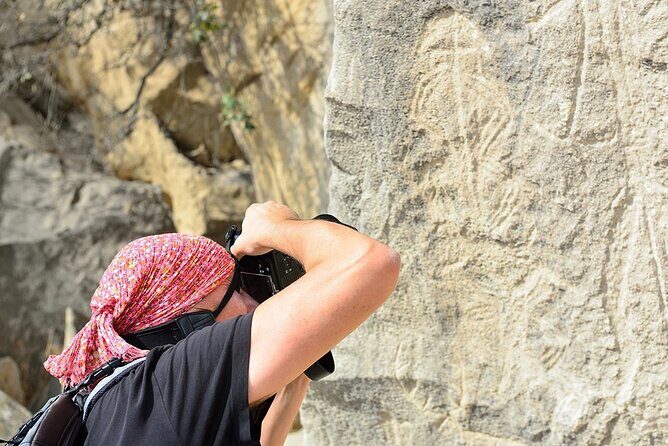
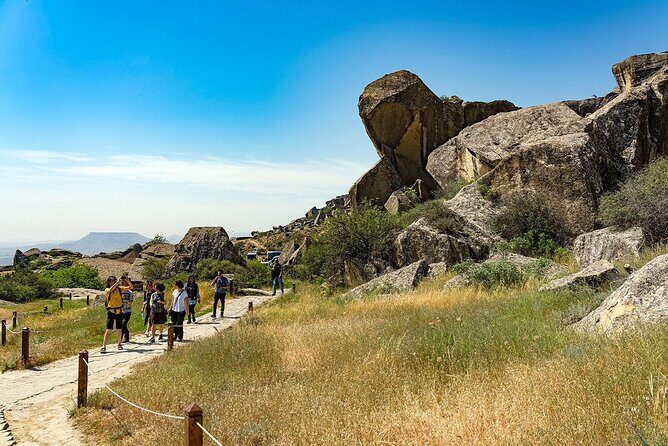
Then you head to Gobustan Rock Art, a UNESCO World Heritage site known for petroglyphs. The time here is about 1 hour, and it’s the centerpiece of the whole tour for many people. The big draw is scale and age: thousands of rock carvings that can date back over 40,000 years.
Here’s what I think makes Gobustan special for you, not just for your Instagram feed. When you stand near these carvings, you’re looking at evidence of early life and movement in the region—marks left by people who didn’t have written history. A good guide can help you connect the carvings to real human activity, instead of treating them like random drawings on stone.
One practical heads-up: the Gobustan admission ticket is not included. That doesn’t make the tour a bad deal—just plan for it. If you hate surprise costs, you’ll appreciate budgeting a little extra at the start of the day.
Because the stop is one hour, you won’t get lost in museum-style pacing. You’ll see enough to feel the big picture, and then you’ll be ready to move on to the landscape-type sights.
Stop 3: Mud Volcanoes for a geology show you can’t fake
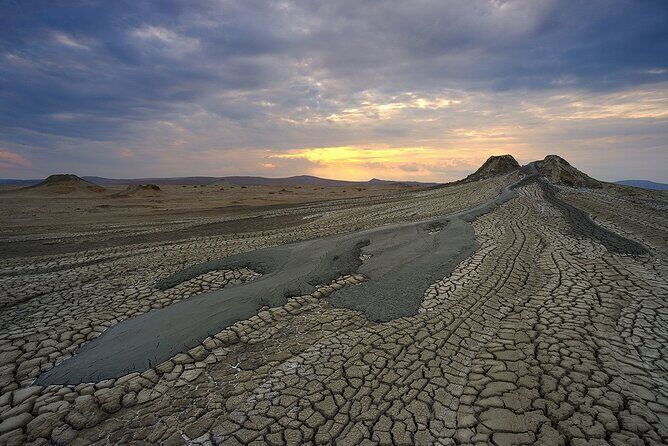
Next up: Mud Volcanoes. This is an Absheron signature, and it’s genuinely unusual. The schedule sets aside about 40 minutes, which is long enough to watch the craters and take in the strange terrain without turning it into a slog.
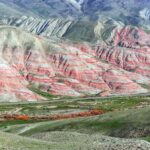
The core experience is the bubbling, thick mud rising from craters—almost theatrical, but driven by real earth processes. Azerbaijan’s mud volcano phenomenon is rare enough that it feels like a destination, not a roadside stop.
Admission here is not included, so again, expect a ticket cost outside the tour price. Also, because this is a nature site, conditions can affect comfort. Bring water, and wear clothes and shoes that handle outdoor terrain well.
I like this stop because it gives you a different kind of storytelling. Gobustan is about human marks on stone. The mud volcanoes are about nature marking the land itself.
Stop 4: Yanar Dag for the natural fire that keeps going
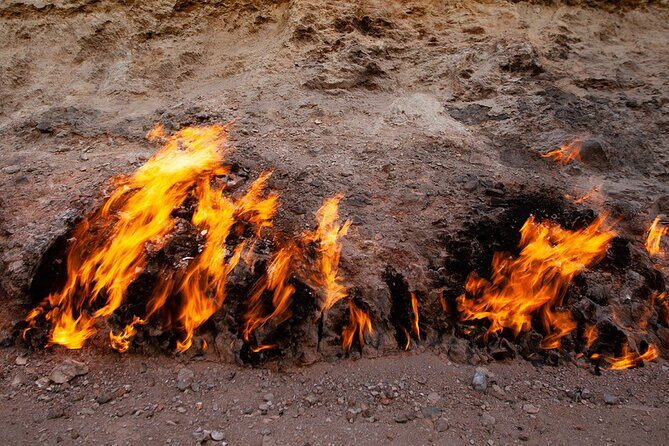
After the mud, you go to Yanar Dag, often described as the hillside natural fire. Your time here is about 40 minutes. This is one of those places where you can feel the “Land of Fire” idea in your bones—without needing a museum label.
What makes Yanar Dag worth your attention is persistence. The fire has been burning for centuries, and it’s part of why people associate Azerbaijan with flame mythology and practical energy forces at the same time. A helpful guide can connect what you see to the wider cultural framing of fire in the region.
Admission isn’t included here either, so budgeting matters. If you’re the kind of traveler who loves visuals, plan to get a few angles, not just one quick photo. The hillside setting changes how the fire looks depending on where you stand.
Also, if you’re sensitive to smoke or strong odors, treat this like an outdoor flame viewpoint: keep your distance as the site allows, and pay attention to your surroundings.


Stop 5: Ateshgah Fire Temple for the ritual side of the flame
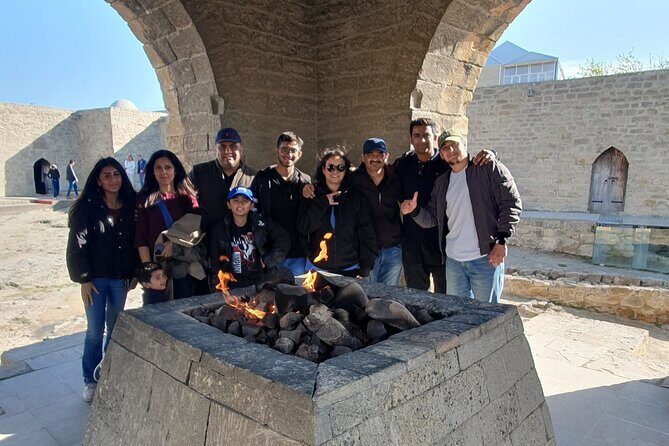
You finish at Ateshgah – Fire Temple, a site tied to ancient flame worship traditions. The time is about 40 minutes, and it’s a strong closing chapter after Yanar Dag because it shifts from natural fire to human ritual around fire.
This is where you learn the cultural angle. The flames at Ateshgah were once connected to Zoroastrian-style rituals, and the site is known for centuries of significance. If your interest is history rather than geology, this stop will likely feel like the most satisfying payoff.
Admission isn’t included, and that’s the theme of the day: the tour price covers transport and guide time, while site tickets and lunch sit outside the bundle.
One small tip: since the stop is finite, don’t spend the first five minutes only taking photos. Give the guide a chance to explain what to notice, then go back for pictures. That approach usually makes the site stick in your memory longer.
How the day flows: pace, group size, and what comfort buys you
This is an 8-hour day trip with roundtrip transportation. The meeting point is Gosha Gala Square, 47 Kichik Qala, Baku, and you end back at the same spot. That roundtrip structure matters: you’re not solving Baku logistics between stops.
The group size is up to 14 travelers, which is a big reason people tend to like days like this. With smaller groups, guides can keep the rhythm without herding people constantly, and you can ask questions without feeling like you’re competing for attention.
Communication quality is a real factor. In past experiences, guides such as Aydin, Nuzlan, Wadeen, Rufat, Rasul, and RO have been named for doing a strong job explaining what you’re looking at. When you get a talkative guide, the day feels like a narrative. When you get a quiet one, you might end up doing more self-reading and less connecting the dots.
So here’s my practical advice: be ready to ask simple questions. If you want history context, ask for the story behind one stop. If you want geology context, ask what causes the mud or why the fire burns. That one move can turn a “sightseeing day” into a “learn something” day.
Price and budgeting: what $49 covers, and what to expect extra
At $49 per person, this tour is mostly about value through transportation and guided time. You get roundtrip transport, an air-conditioned vehicle, and a multilingual guide or an English-speaking driver depending on the option chosen.
But here’s the honest math: entrance fees aren’t included, and lunch isn’t included. So the true cost is tour price plus site tickets plus whatever you want to eat. The good news is you do get at least one site where admission is free (Bibi-Heybat Mosque), so you’re not paying at every stop.
If you hate surprises, budget for tickets at Gobustan, the mud volcanoes, Yanar Dag, and Ateshgah. Also budget time and money for lunch, because there isn’t one included in the package.
For me, the decision comes down to this: if you’d otherwise try to assemble these stops on your own in Baku’s traffic, paying for organized transport and a guide is what makes the day realistic.
Who should book this Gobustan and Absheron day trip
This tour fits you well if you want one day that covers a lot of ground in a structured way. It’s especially good for:
- First-time visitors to Baku who want the Absheron region quickly
- History + nature travelers who don’t want to pick only one theme
- People who like guided explanations at outdoor sites (not just photos and walking)
- Anyone who wants the cultural fire story to connect from nature to ritual
If you’re the type who hates ticket add-ons, you’ll need to plan for separate admissions at most stops. And if you’re very picky about guide style, you’ll want to be proactive with questions. Some guide experiences have been described as strongly engaging, while others have been reported as less talkative, so your expectations matter.
Should you book this tour?
I’d say yes if your goal is a well-organized day that connects Azerbaijan’s signature themes: ancient rock art, unusual geology, and fire symbolism that’s both natural and cultural. The mix of Gobustan petroglyphs, Absheron mud volcanoes, and the Yanar Dag plus Ateshgah ending is a smart way to spend a limited number of hours outside Baku.
I’d say book with eyes open if you’re budgeting carefully. The tour price covers transport and guiding, but you should expect to pay admission for several stops and choose your own lunch.
If you do book, do this: come ready at Gosha Gala Square, bring comfortable outdoor shoes, and ask your guide at least one question you actually care about. That’s how you turn a good checklist day into a memorable one.
FAQ
What is the duration of the Gobustan and Absheron history tour?
It runs for about 8 hours.
Where is the meeting point?
The tour meets at Gosha Gala Square, 47 Kichik Qala, Baku, Azerbaijan.
Does the tour include transportation?
Yes. It includes roundtrip transportation in an air-conditioned vehicle.
Is a guide included?
Yes. You’ll get a multilingual guide or an English-speaking driver, depending on the option chosen.
Do I need to buy tickets for the stops?
Admission is free at Bibi-Heybat Mosque. Admission tickets are not included for Gobustan Rock Art, Mud Volcanoes, Yanar Dag, and Ateshgah.
Is lunch included in the price?
No. Lunch is not included.
How big is the group?
The tour has a maximum of 14 travelers.
What ticket format is used?
You receive a mobile ticket.
What is the price per person?
The tour is priced at $49.00 per person.
Is there free cancellation?
Yes. You can cancel up to 24 hours in advance for a full refund.