REVIEW · BAKU
Baku: Gobustan, Volcanoes, Fire Temple and Yanardag Day Trip
Book on GetYourGuide →Operated by Baku City Tours · Bookable on GetYourGuide
Gobustan plus Yanardag is a rare one-day combo. I love how the tour strings together UNESCO rock art and the surreal drama of mud volcanoes, and I also like the way it shifts into Zoroastrian spiritual sites with the Ateshgah fire temple. One possible drawback: on rainy days the mud volcano stop can be skipped for safety.
This is a practical no-shopping-stop day out of Baku, built around guided time at the places that actually matter. You get hotel pickup and drop-off, a live guide in English or Russian, and transportation that keeps you from doing the logistics yourself.
In This Review
- Key highlights at a glance
- From Baku pickup to Gobustan’s oil-and-cavern start
- Bibi-Heybat and the first industrialized oil well
- Gobustan Museum of Petroglyphs: where stone age people left records
- Mud volcanoes on the Absheron coast: the eruptions you came for
- Lunch at a local Azerbaijani buffet stop (plan for the cost)
- Ateshgah Temple: the fire-worship site at Absheron’s edge
- Yanardag: the burning mountain that keeps going
- Guides and the small details that make the day work
- How much time this really takes (and how to not feel rushed)
- Price and value: what $29 really buys
- Should you book this Gobustan–Volcanoes–Fire Temple day trip?
- FAQ
- How long is the day trip?
- Is lunch included in the price?
- What languages are the live guides available in?
- What happens on rainy days?
- Do I need to buy tickets at the museum?
- Where do I meet the guide?
Key highlights at a glance
- A UNESCO day in Gobustan National Park with ancient petroglyphs and rock drawings
- The first industrialized oil well, tied to the Bibi-Heybat area
- Mud volcanoes on the Absheron coast, known for eruptions from many natural vents
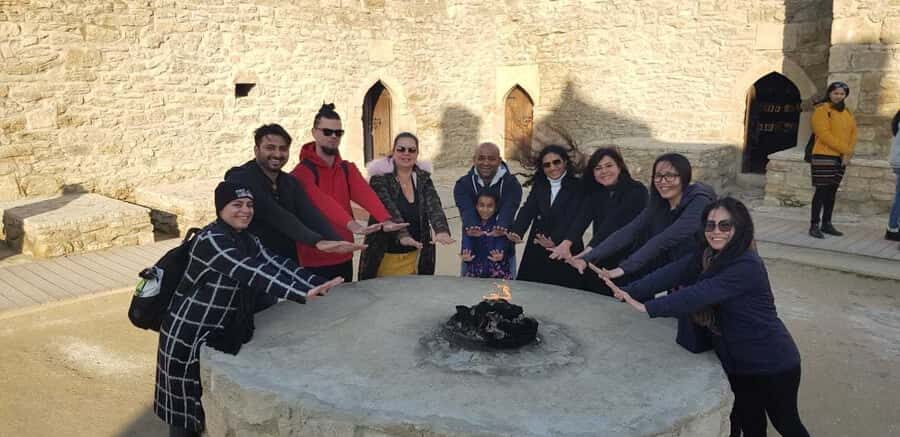
- Ateshgah Temple, a former fire-worship site linked to Zoroastrian tradition
- Yanardag’s burning hillside, where natural gas flames continue on-site
From Baku pickup to Gobustan’s oil-and-cavern start
The day begins with morning pickup from a long list of central Baku locations, so getting on the bus or van is usually easy even if you’re staying slightly off the main hotels. Once everyone’s aboard, you head in the direction of Absheron and Gobustan, with early stops that set up the main themes of the trip: humans, fire, and the land’s strange natural energy.
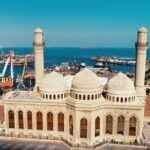
The first “wow” is close to the Bibi-Heybat Mosque area: a visit to an industrialized oil well. It’s a short stop, but it’s a smart opener because it frames Azerbaijan’s modern identity through oil while you’re still fresh and awake.
If you can, treat the oil-well stop like your warm-up. You’ll be better at noticing the parallels later, when the day turns from industry to deep time (stone age carvings) and then to geologic spectacle (mud volcanoes and eternal flames).
A few more Baku tours and experiences worth a look
Bibi-Heybat and the first industrialized oil well
This is the kind of stop that’s easy to skim if it’s squeezed in between longer attractions. The guide’s job matters here, because the point isn’t just that oil exists—it’s that the region became central to industrial oil history early on.
You’re visiting an industrialized oil well near Bibi-Heybat, and that proximity to a famous mosque area also gives you a quick sense of how different layers of culture sit close together in Baku’s wider region. Even if your main interest is ancient art or fire temples, this oil-history moment gives you context.
Time-wise, expect this as a brief guided visit before you move on. It’s enough to plant the idea, not enough to turn the day into a full oil museum.
Gobustan Museum of Petroglyphs: where stone age people left records
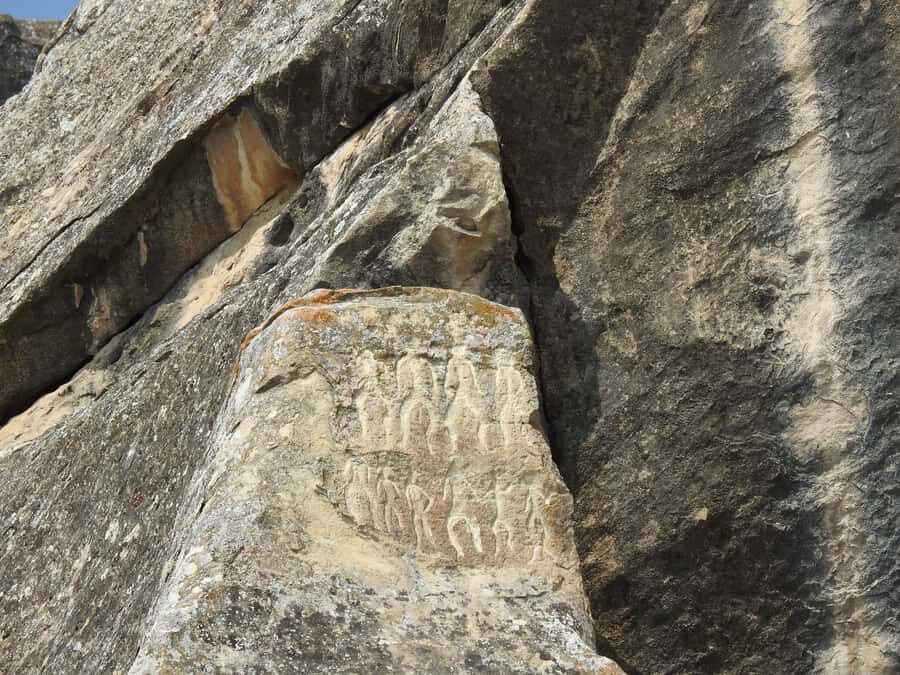
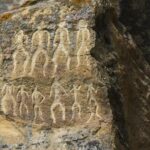
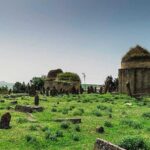
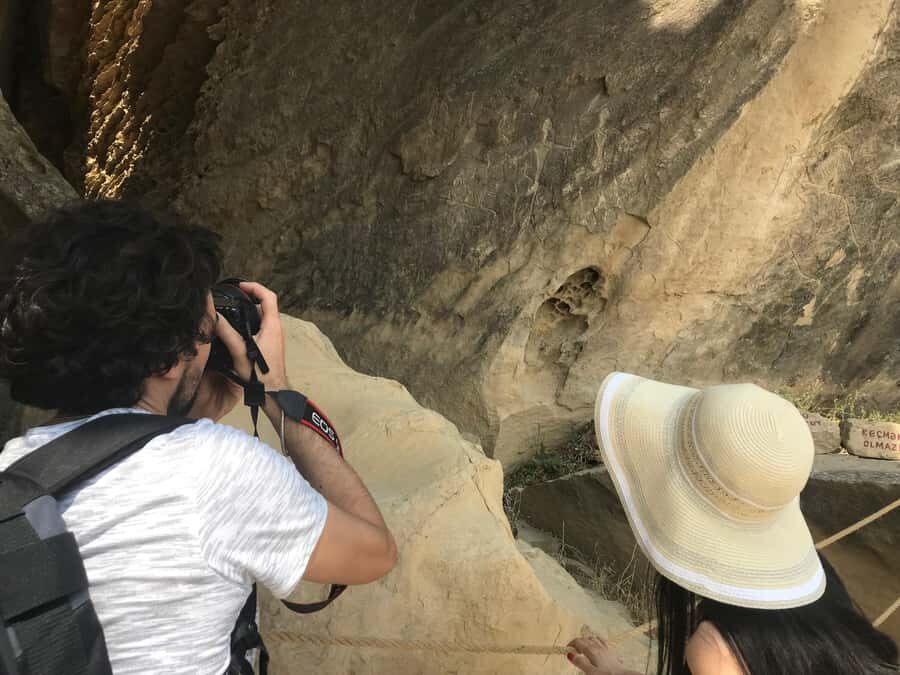
Gobustan National Park is the UNESCO anchor of this trip, about 70 kilometers from Baku. The main stop is the Gobustan Museum of Petroglyphs, which mixes indoor context with outdoor rock surfaces where you can actually see the carvings where they were made.
This is one of those places where a good guide changes everything. The carvings and petroglyphs aren’t just “old pictures.” They reflect ancient daily life—ideas about the world, the economy, and what people noticed enough to mark on stone. With a guide, you’ll spend your viewing time with a purpose instead of just trying to decode shapes.
Also pay attention to the setting. Gobustan isn’t presented as a single hall. You’re moving through museum spaces and then looking at rock art embedded in the landscape. That structure helps you understand the scale of time involved: people carved here, for reasons, across long periods.
A practical note: Gobustan can feel crowded at times, so arrive mentally ready to share sight lines and work with the group. If you want sharp photos, try to use the guide’s timing—wait for pauses before you step forward.
Mud volcanoes on the Absheron coast: the eruptions you came for
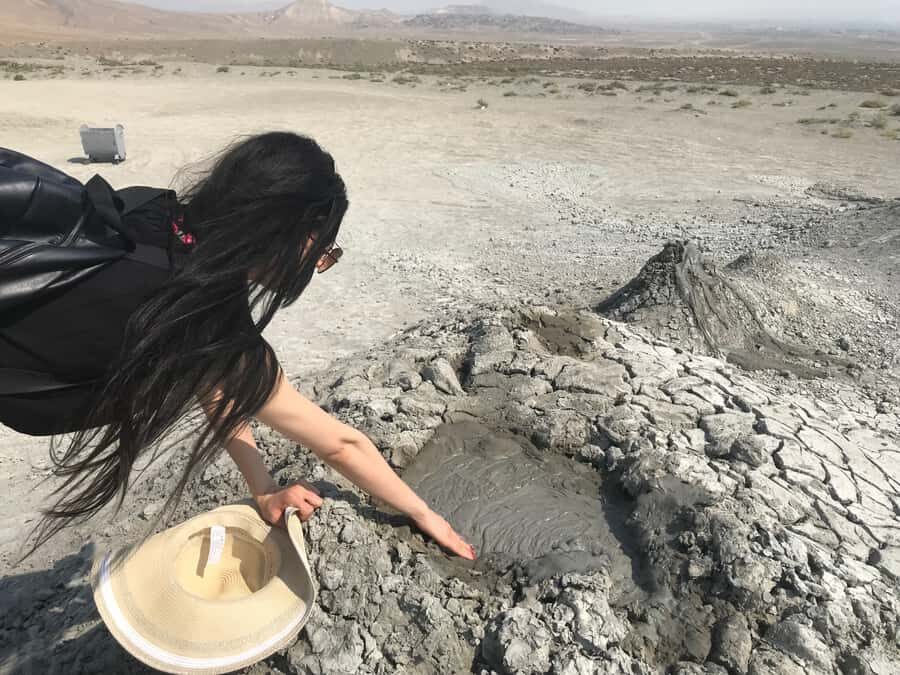
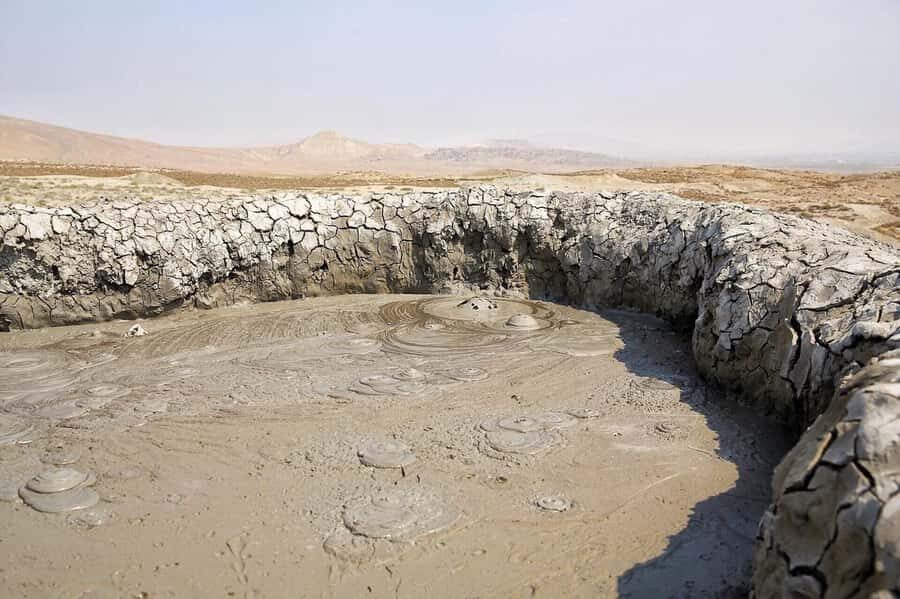
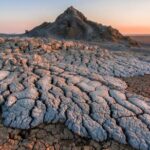
After Gobustan, the tour heads toward the coastal Absheron region, where you’ll see mud volcanoes. This area is famous for the number of vents—around 400 mud volcanoes in the broader region—so you’re not looking at just one oddity. It’s a whole natural system.
The guided time here is short, but the subject is so visual that even brief viewing can feel like a full event. The key is to watch for eruption activity and changes in bubbling and texture. If you see anything active, it tends to feel like the land is breathing.
Here’s the important catch: on rainy days, the mud volcano portion can be skipped for safety. That doesn’t mean the day collapses—it just means your geologic highlight changes. If you’re visiting in a season where rain is possible, keep your schedule flexible and mentally accept that weather can edit the itinerary.
What to expect on-site is mainly outdoors, so you’ll want shoes that handle uneven ground. Bring a light layer too; coastal weather can shift.
Lunch at a local Azerbaijani buffet stop (plan for the cost)
Lunch isn’t included in the $29 price. Instead, you stop at a buffet-style restaurant where you can purchase lunch for about $8–12 USD.
I like this approach because it keeps the tour from turning every meal into a tourist surcharge. You also get to eat Azerbaijani dishes while you’re in the region, not just on the way to the next stop.
The trade-off is simple: you’re paying for lunch separately, and the lunch time can feel like a moving piece in a packed day. If you have dietary restrictions, it’s smart to be ready to ask what’s available.
Ateshgah Temple: the fire-worship site at Absheron’s edge
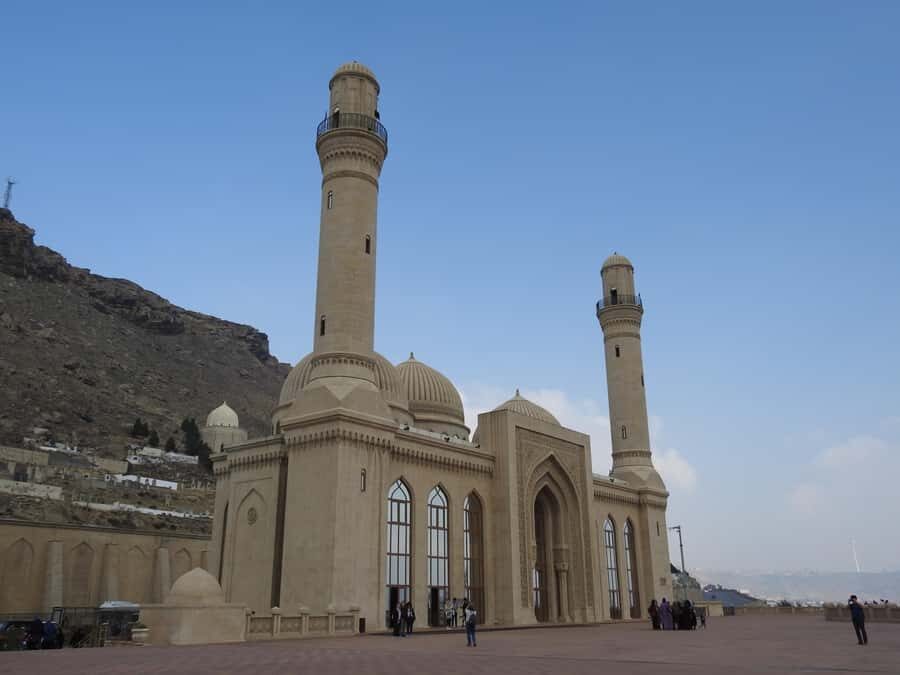
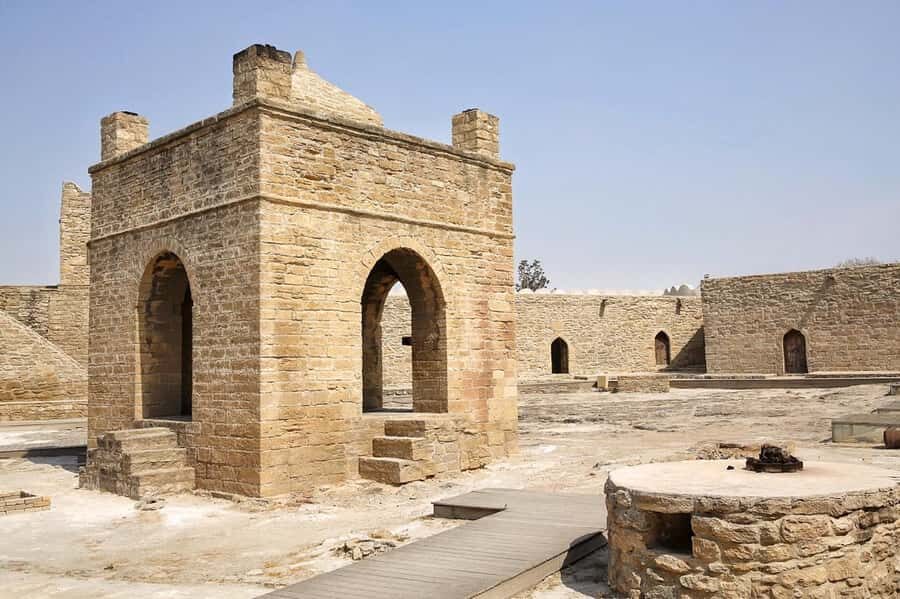
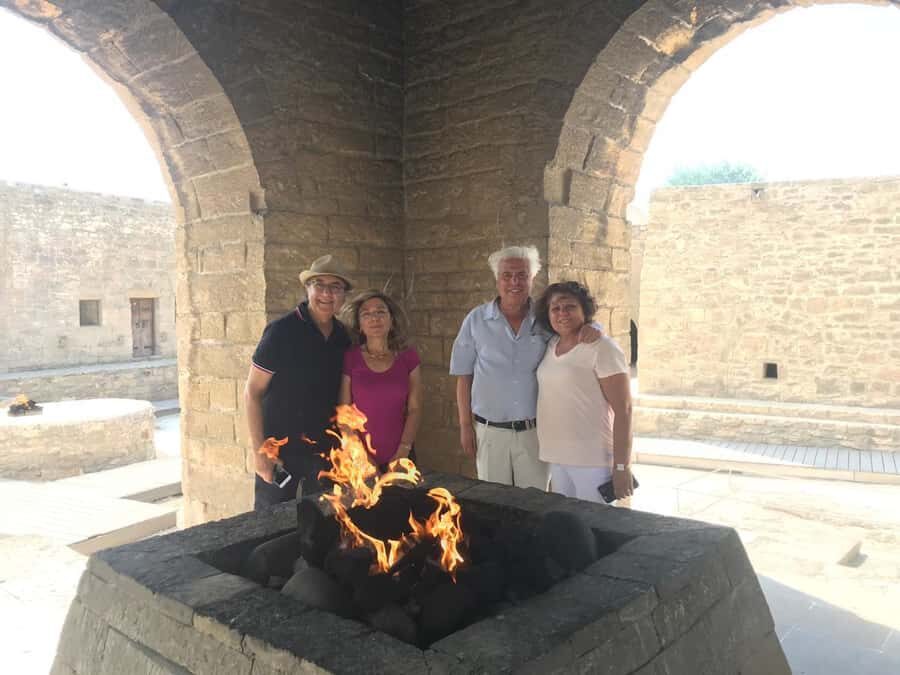
After lunch, the tour moves to the Ateshgah Temple, also known as Ateshgah of Baku. This is a former holy place for fire-worshippers, tied to Zoroastrian tradition.
The value here is that the site connects belief systems to the physical world. You’re not just being told that people worshipped fire—you’re standing at a place that was used by fire worshippers, where the spiritual idea and the geography make sense together.
Guided time is around 40 minutes, which is a good balance. You get enough time to walk the grounds, understand what the site represents, and ask questions without feeling rushed.
If you’re the kind of person who likes “why this place mattered,” you’ll probably appreciate how the guide links the story of Ateshgah to the theme of fire running through the whole day.
Yanardag: the burning mountain that keeps going
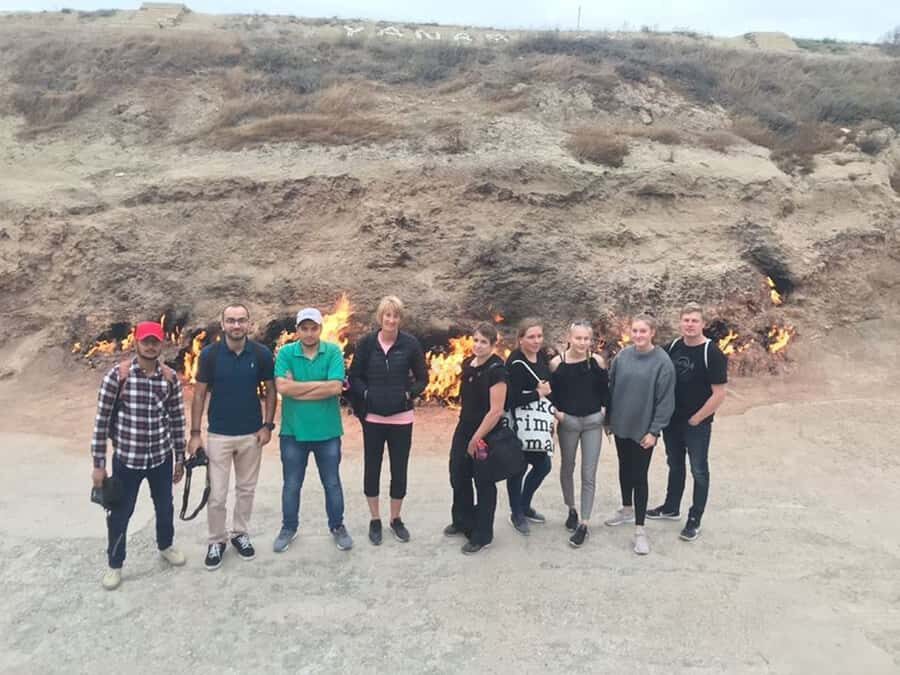
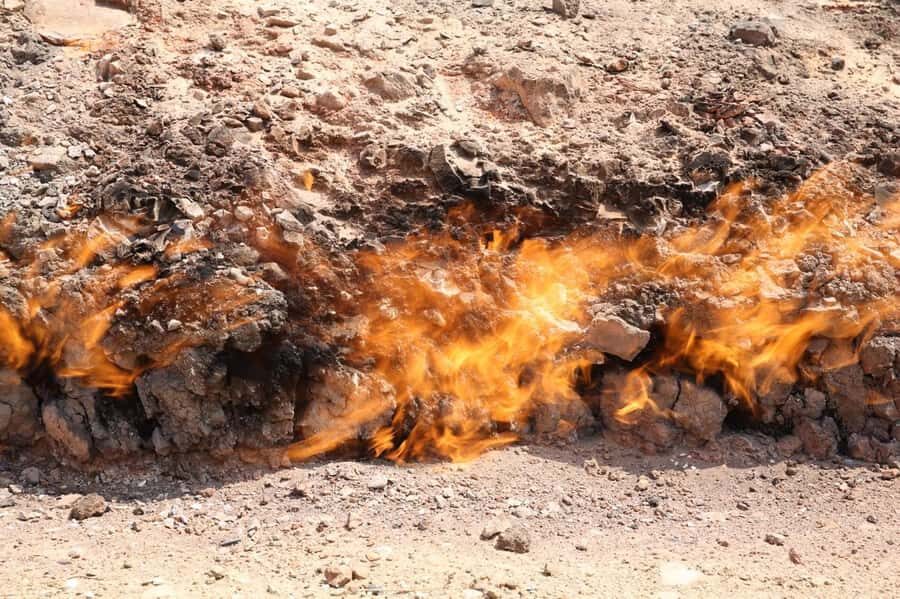
The final major stop is Yanardag, the burning mountain on the Absheron Peninsula. Yanardag is famous because natural gas fires blaze continuously on a hillside.
This one is less about history-walls and more about direct observation. You can see the flame effect for yourself, and you get that eerie sense of something that doesn’t need human help to keep burning. It’s the perfect closing image after Ateshgah, because both stops deal with fire—one as a spiritual site, one as a natural phenomenon.
Time here is about 30 minutes with a guide. That’s usually enough to understand what you’re seeing and still have time to watch the flame behavior and take photos.
If you care about photos, come prepared for lighting. The fire is bright, and that can mess with phone cameras if you try to shoot too fast. Give yourself a moment to frame slowly.
Guides and the small details that make the day work
A lot of the day’s success comes down to the guide. The guides you might meet are often praised for being friendly, funny, and ready to answer questions. Names you may see attached to this tour include Mahabat, Sayed, Elcan, Aqil, Musa, Asaf, and Leyla—so if you’re booking and you have the option to request a guide or note preferences, it’s worth asking.
Language matters too. The guide is available in English and Russian, so you should feel comfortable even if your Azerbaijani is limited.
Group size is another practical factor. The tour can run as private or small groups, which generally helps with pacing and photo opportunities. In bigger groups, you’ll likely move a bit faster and spend less time at each stop. Either way, the timing is built around getting you to all main sights in one day.
Transportation is included, and you can expect a bus or van style setup depending on group size. Comfort matters on a day that’s 6–8 hours long, especially once you factor in road time.
How much time this really takes (and how to not feel rushed)
On paper, it’s 6–8 hours. In practice, think of it as a full day where you’re balancing short guided museum time, a scenic outdoor stop, a meal stop, and then two fire-related sites.
A few things can make it feel tight if you’re the type who likes to linger:
- Gobustan and the petroglyph areas can be visually dense.
- Yanardag’s flame is fascinating, but the stop is still time-limited.
- Mud volcanoes may be weather-dependent.
So my advice: treat each stop like a highlight, not a deep research project. If you want extra time in one place, plan to return later on your own, or pair this with a separate Gobustan visit if you’re serious about archaeology.
Also bring basic comfort items. Water is a smart idea since it’s an outdoor day and you’re moving around. A small umbrella can be useful if there’s any hint of rain.
Price and value: what $29 really buys
At $29 per person, the tour’s value comes from two things: the guided coverage and the included logistics.
You’re paying for:
- Hotel pickup and drop-off
- Transportation to the Absheron and Gobustan areas
- A professional guide (English or Russian)
- Museum tickets and entrance fees if you choose the option with them
- Guided time at each major stop
Lunch is separate (around $8–12 USD), so your real out-of-pocket total is more than $29 once you eat. But even with lunch added, you’re still getting a lot of ground covered in one shot, especially if you’d otherwise have to hire a car or arrange multiple day trips.
If you’re short on time in Baku, this is the kind of outing that gives you a full “region identity” in a day: ancient people in Gobustan, natural geology in the mud volcano area, and fire as both belief and physics.
Should you book this Gobustan–Volcanoes–Fire Temple day trip?
Book it if you want one efficient day that mixes UNESCO rock art, unusual geology, and fire-related sites without wasting time on shopping stops. It’s ideal if you like variety—prehistory, natural science, and spiritual history in the same route—and if you value guided interpretation.
Skip or reconsider if:
- Rain is likely during your dates and you really care about seeing the mud volcanoes (they can be skipped for safety).
- You prefer unhurried museum time. The day is designed to cover the highlights, not to let you linger for hours at one location.
- You don’t want a full day away from central Baku. This runs long enough that you’ll feel it.
If you do book, do yourself a favor: come with comfortable shoes, a charged phone, and the mindset that you’re collecting moments. This is the kind of trip where the most memorable images come from a few very specific scenes—petroglyphs carved into stone, mud erupting from the earth, and fire burning where it shouldn’t.
FAQ
How long is the day trip?
It runs about 6 to 8 hours.
Is lunch included in the price?
No. Lunch is available at a buffet-style restaurant where you can purchase it for about $8–12 USD.
What languages are the live guides available in?
The guide provides live commentary in English and Russian.
What happens on rainy days?
On rainy days, the tour to the mud volcanoes will be skipped for safety reasons.
Do I need to buy tickets at the museum?
The tour includes museum tickets and entrance fees if you select the option with tickets, and it also says it can help you skip the ticket line.
Where do I meet the guide?
Pickup is included from listed Baku locations, and you meet your guide at your hotel lobby. The provider confirms the pickup time the day before.