REVIEW · BAKU
Gobustan National Park & Mud Volcanoes Tour
Book on Viator →Operated by Private Tours Baku · Bookable on Viator
Gobustan turns Earth into a museum. A private guide helps you make sense of the UNESCO petroglyphs and then you hit mud volcanoes by off-road car, but plan for the museum part to feel a bit long—especially with kids.
I like that the whole day is built around your time: hotel pickup, a set route, and English-speaking attention while you’re looking at 3,500+ carvings and fossil-like mud activity. On the logistics side, the big win is hassle-free transport from Baku—the drawback is you’ll still need to budget for museum entry since it’s not included.
In This Review
- Key highlights you’ll actually feel
- Why Gobustan is worth your time from Baku
- Gobustan Rock Art: entering the UNESCO story at the museum
- Petroglyphs in the open: what you’ll look for (and why a guide matters)
- Mud volcanoes by Soviet Lada: short, off-road, and surprisingly memorable
- Bibi-Heybat Mosque and the Heydar Aliyev Center: a cultural palate cleanser
- Price and logistics: does $75 feel fair for a private 4–5 hours?
- The kind of day this is: who will love it most
- Practical tips to make it smoother on the ground
- Should you book the Gobustan National Park & Mud Volcanoes Tour?
- FAQ
- How long is the Gobustan National Park & Mud Volcanoes tour?
- Do I get hotel pickup and drop-off from Baku?
- What does the tour price include?
- Are museum and rock site entry fees included?
- What transport is used for the mud volcanoes?
- Can I collect mud from the volcanoes?
- Do I need to buy food or drinks separately?
- Does the tour include Bibi-Heybat Mosque and the Heydar Aliyev Center?
- What kind of ticket do I receive?
- What is the cancellation policy?
Key highlights you’ll actually feel
- Private guide attention so you’re not just staring at rocks wondering what you’re seeing
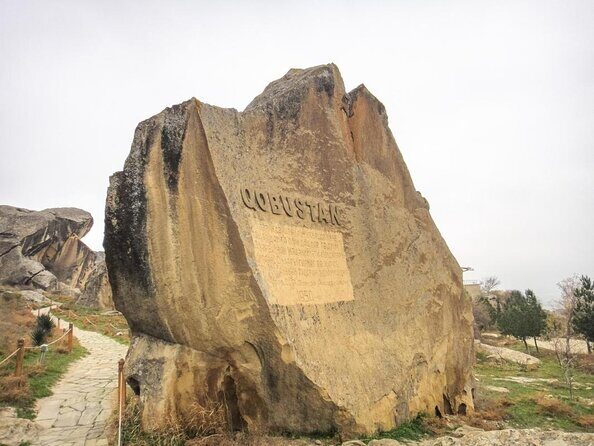
- UNESCO-listed rock art with real context tied to Mesolithic monuments and shelters
- Off-road mud volcano time using Soviet Lada cars (short, fun, and messy if you want it)
- Easy Baku add-ons with a stop at Bibi-Heybat Mosque and a brief look at the Heydar Aliyev Center
- Good value for time: round-trip transport is included, and you skip the public-transport headache
Why Gobustan is worth your time from Baku
Gobustan sits about 56 km from Baku, and that distance matters. Public transport can get you partway, but getting right up to the petroglyph area and then on to the mud volcano zone usually means extra effort or awkward connections. This tour fixes that with a private, round-trip plan that keeps you in motion without the constant taxi-or-bus puzzle.
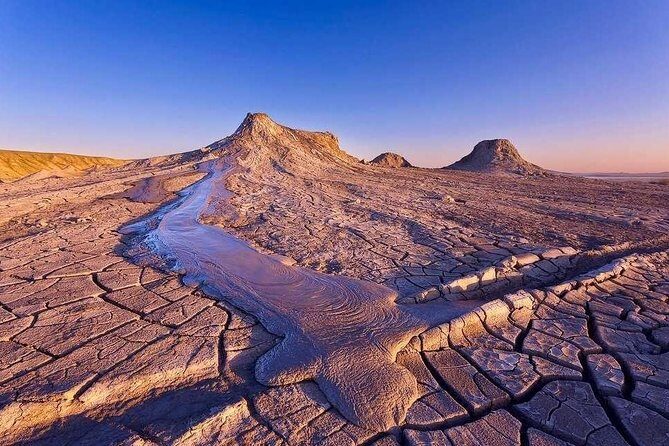
What makes Gobustan special is how layered the place feels. You’re not just seeing one thing. You’re moving from rock art—human and animal markings carved across thousands of years—into an active natural oddity where mud erupts. Even if you’re not a “history person,” it lands because it’s visual and physical.
Also, the experience is designed for focus. You’re in a small private group (only your group participates), and that changes the pace. You can stop, ask, and look longer without waiting for the next person to catch up.
You can also read our reviews of more tours and experiences in Baku.

Gobustan Rock Art: entering the UNESCO story at the museum
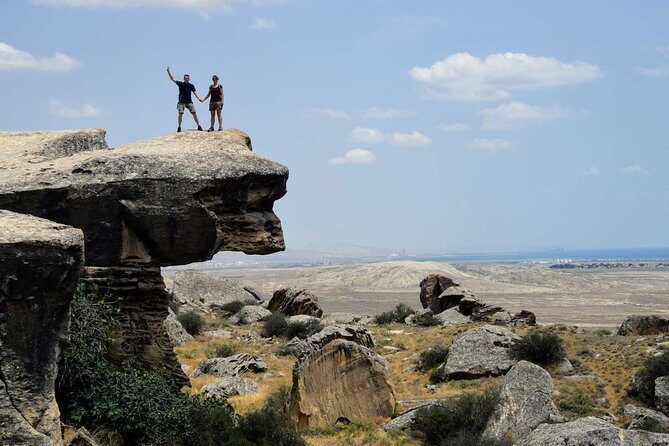
Your tour starts with hotel pickup and a drive out to the Gobustan area. The first big stop is the Gobustan Museum, where you get the visual and cultural setup before you head to the rocks. This is one of the best ways to visit because the petroglyphs can look like random scratches if you don’t know what you’re looking at. A guide’s job is to connect the marks to what they mean.
One practical heads-up: the museum entry fee is not included, so you’ll want to plan for that cost. The time allocation is also long enough that it’s not a quick “grab and go” stop. It’s about 2 hours 30 minutes, and one thing I’d watch for is attention span. If you’re traveling with kids, the museum can feel like a lot.
Still, the museum portion is where you learn the core details that make later outdoor viewing more satisfying:
- researchers documented more than 3,500 human and animal paintings and other markings
- the discoveries date back to 1939–1940
- the reserve includes 20 suburban shelters, plus caves and springs
- many carvings belong to Mesolithic monuments
If you’re the type who likes meaning in your photos (rather than just scenery), this museum-first approach is a strong choice.
Petroglyphs in the open: what you’ll look for (and why a guide matters)
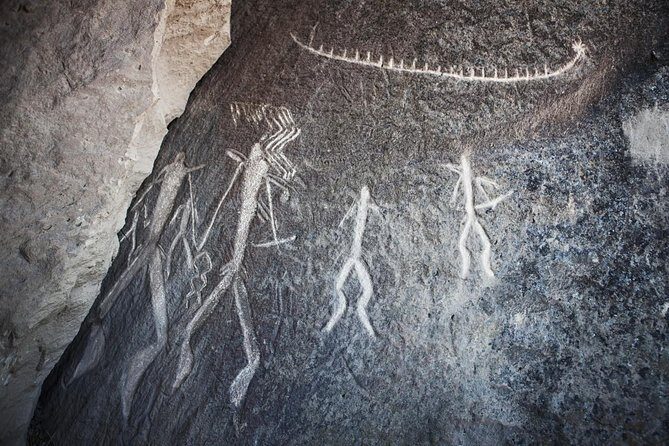
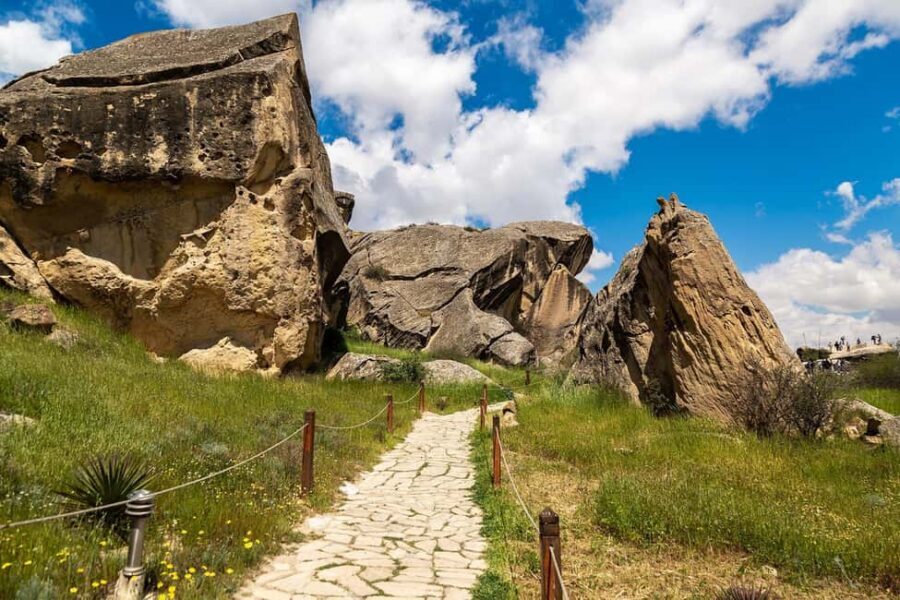
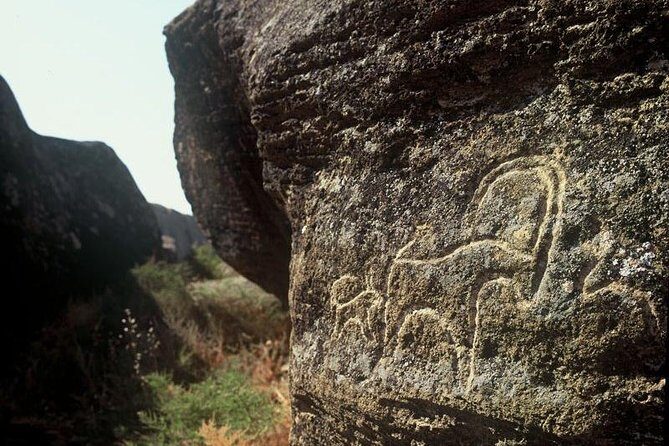
After the museum, you’re guided through the outdoor rock area where the petroglyphs live on cave walls, rocks, and carved stony surfaces. This is where Gobustan clicks. The art isn’t behind glass, and you’re seeing it in the setting it belongs to—which makes the scale feel real.
Here’s what I’d pay attention to while you’re there:
- Human and animal figures: this is central to the recorded carvings
- Repeated symbols: patterns tend to mean something more than decoration
- Shelter traces: the area includes identified shelters, so look for signs of how people lived nearby
- Carved caves and springs: the setting is part of the story, not just a backdrop
A private guide helps because they can point out what you’d otherwise miss. Without context, you might spend your time trying to “decode” everything alone. With a guide, you move from puzzling to understanding faster.
And yes, it’s a hot-day destination. The tour format helps you manage that because you’re moving at set times rather than staying stranded at the edge of the site when the weather turns.
Mud volcanoes by Soviet Lada: short, off-road, and surprisingly memorable
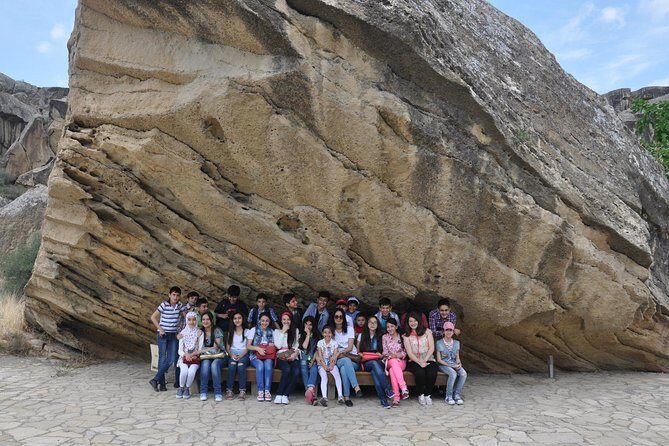
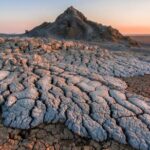
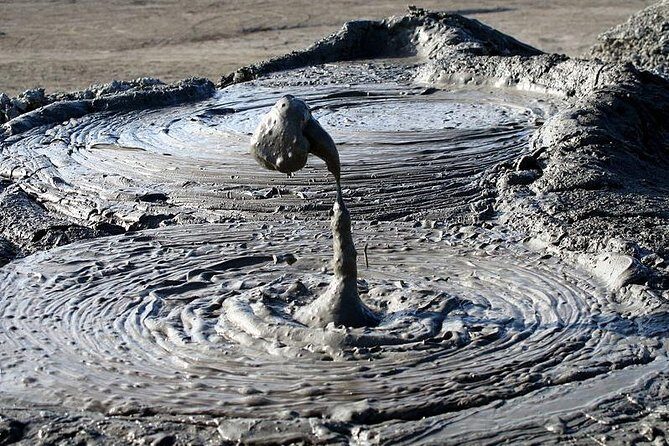
Then comes the mud volcano portion—Gobustan’s most unusual send-off. The transfer changes to Soviet Lada cars for the off-road drive. If you like low-key adventure, this is the moment that makes the day feel different from a standard museum tour.
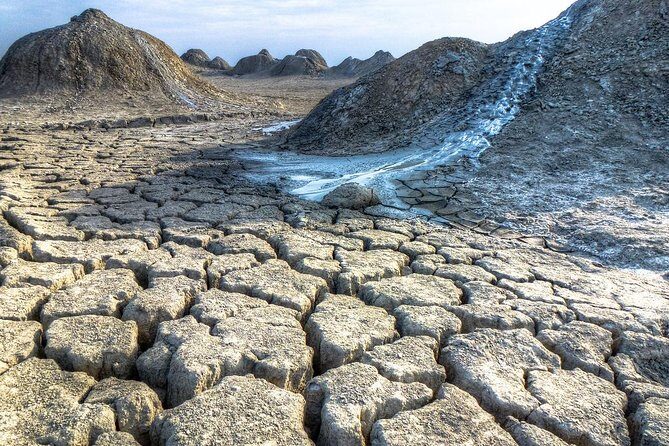
Expect about 40 minutes focused on the volcano area, with around 10 minutes on-site around the volcanoes. That timing is deliberate: it’s long enough to understand what’s happening, but short enough that you’re not stuck waiting for an erosion loop.
What to know before you go:
- The tour notes that some mud can be collected if you bring strong plastic bags
- The mud is said to be good for the skin, but treat that as a local claim, not a medical promise
- You’re likely to get dirty, so avoid your best outfit
Also, the tour notes that you’re transferred back to your car after the brief volcano time. That reduces friction—no hunting for routes or trying to time your own ride back.
One more practical point: mud volcano sites can be messy underfoot. Wear footwear you don’t mind getting splashed or dusty.
Bibi-Heybat Mosque and the Heydar Aliyev Center: a cultural palate cleanser
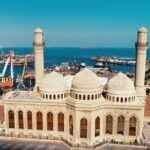
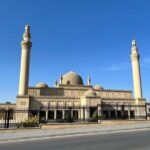
On the way—after the volcano stops—you’ll make time for a short visit at Bibi-Heybat Mosque. This is a quick stop (about 10 minutes), but it’s detailed enough that it doesn’t feel like a rushed checkpoint.
Here’s what stands out about Bibi-Heybat Mosque:
- built in a classic oriental style
- white marble with dome-colored glass
- internal decorative beauty, including green interior décor
- a mosaic where Surat al-Nisa is written in glass
- about 5 meters high and designed to accommodate roughly 3,000 people
There’s also an interesting oil history connection mentioned as part of the stop: the First Industrial Oil Well on Earth, opened for use in 1846. That link makes the stop feel more than just architectural—like you’re seeing how Azerbaijan’s story includes both art and energy.
The tour summary also includes brief stop-offs at the Heydar Aliyev Center. Time here is short by design, so think of it as a quick visual introduction rather than a deep museum visit.
If your day already includes a museum, petroglyphs, and volcanoes, these cultural stops help balance the outing. You get architecture and place identity without turning the day into a sprint.
Price and logistics: does $75 feel fair for a private 4–5 hours?
At $75 per person, this tour is priced like a “time saver with a guide,” not like a budget day trip. And for once, that comparison makes sense.
You’re paying for:
- hotel pickup and drop-off
- an English-speaking guide
- a professional driver
- a private format (only your group)
- air-conditioned transport
- included taxes and handling charges
- a mobile ticket
The value part is that it removes the biggest pain point: getting to Gobustan’s actual targets. You’re also not waiting around for other groups. The tour’s flow is designed to move you from museum context to outdoor rock art to mud volcanoes in one coherent block of time—about 4 to 5 hours total.
Now, the costs you should plan for:
- Gobustan Museum entry and rock mountains entry are not included
- food and drinks aren’t included
- taxi fees to mud volcanoes are listed as not included
That last line can sound confusing because transport is included. My practical advice: assume you might need extra local payment only if your day includes any additional taxi moves beyond what’s covered. If you want zero surprises, ask your provider what portions are fully covered and what might require cash.
A final value marker: the experience has a 4.8 rating from 17 reviews, with 94% recommending. That doesn’t make it perfect for everyone, but it does suggest the private-guide format is working.
The kind of day this is: who will love it most
This is a great match if you:
- want a straightforward plan with pickup from your hotel
- have limited time in Baku and don’t want to figure out the last-mile transport to Gobustan
- like seeing meaning behind what you’re photographing
- enjoy off-road fun, even if it’s short and slightly chaotic
It also suits mixed ages because it’s not a multi-day expedition. Still, I’d treat the museum as the potential friction point. One note from experience feedback is that the museum can feel long for kids, while the outdoor rock art and volcanoes land better with younger travelers.
Because it’s a private tour with your own group, it can also be a calmer option if you’re traveling with friends or family who want the pace to match everyone’s comfort level.
Practical tips to make it smoother on the ground
A little prep goes a long way at Gobustan, especially on a warm day.
- Bring water with you even though food and drinks aren’t included. You’ll feel better during the museum-to-outdoor switch.
- Wear shoes that can handle rocky paths and mud.
- If you want to collect mud, pack strong plastic bags ahead of time.
- Bring sun protection. Outdoors portions can take longer to feel comfortable in.
- If you’re paying museum entry separately, plan your budget for that upfront. It’s the main un-included cost that changes the true all-in price.
One more small “feel-good” detail: guides and drivers seem to run the day with confidence. Names like Nazir (driver) and guides such as Ell and Fuad show up in feedback, and that points to a consistent emphasis on clear explanations and professional pacing.
Should you book the Gobustan National Park & Mud Volcanoes Tour?
I’d book this tour if your priorities are ease, context, and getting to the real sites without wasting energy on transport puzzles. The private format is the key. It turns Gobustan from a “drive out and look” outing into an experience where the petroglyphs actually make sense.
I would skip it (or ask a lot of questions first) if you dislike museum time or you’re traveling with very young kids who melt down in indoor exhibits. The tour includes a museum-first start, and that can be the hardest part of the schedule.
If you can handle a longer museum stop and you’re okay with a bit of mess at the volcanoes, this is one of the more satisfying ways to spend half a day from Baku.
FAQ
How long is the Gobustan National Park & Mud Volcanoes tour?
It runs about 4 to 5 hours.
Do I get hotel pickup and drop-off from Baku?
Yes. Hotel pickup and drop-off are included.
What does the tour price include?
Included are professional driver service, air-conditioned vehicle transport, hotel pickup and drop-off, an experienced English speaking guide, and all taxes and handling charges.
Are museum and rock site entry fees included?
No. Entry fees to Gobustan Museum & Rock Mountains are not included.
What transport is used for the mud volcanoes?
The tour changes transport to Soviet Lada cars for the volcano area.
Can I collect mud from the volcanoes?
The tour information says that if you want to, you can bring strong plastic bags to collect some of the mud.
Do I need to buy food or drinks separately?
Yes. Food and drinks are not included.
Does the tour include Bibi-Heybat Mosque and the Heydar Aliyev Center?
Yes. You’ll have brief stop-offs at Bibi-Heybat Mosque and the Heydar Aliyev Center.
What kind of ticket do I receive?
You get a mobile ticket.
What is the cancellation policy?
You can cancel for a full refund up to 24 hours in advance of the experience start time. Cancellation within 24 hours does not receive a refund.