REVIEW · BAKU
Gobustan+Absheron Day Trip
Book on Viator →Operated by Amazing Azerbaijan · Bookable on Viator
Gobustan and Absheron in one long day works. You’ll see 40,000 years of rock art at Gobustan and then follow the region’s theme of fire, gas, and mud. Admissions are built in, so the day feels less like paperwork and more like moving from one real-world wonder to the next.
I especially liked how well this tour manages the big distances. Hotel pickup/drop-off plus an air-conditioned ride and a small group cap (18 people) means you’re not stuck waiting around.
One thing to consider: the mud volcano drive is bumpy, and you’ll switch to local taxis to get closer. If you’re sensitive to rough roads, pack accordingly.
In This Review
- Key things to know before you go
- A 6–8 Hour Route That Actually Feels Focused
- Price and What Makes the $60 Feel Fair
- Meeting Point, Pickup Rhythm, and Group Size
- Gobustan Rock Art: A 40,000-Year Record in Stone
- Mud Volcanoes and the Taxi Transfer That Saves the Day
- Yanar Dag: Why This Burning Mountain Keeps Burning
- Ateshgah Fire Temple: A Castle of Fire and Faith
- The Extra Two Sites: How the Day Reaches Six Stops
- Lunch, Water, and Small Comfort Wins
- Who This Tour Suits Best
- Should You Book Gobustan and Absheron for $60?
- FAQ
- How long is the Gobustan and Absheron day trip?
- Where does the tour start and end?
- What’s included in the $60 price?
- Is lunch included?
- Do I need to pay admission fees during the tour?
- Why is there a taxi transfer for the mud volcano stop?
- How many people are in the group?
- Is this tour easy to join if I’m near public transit?
- Can I cancel for free?
- Is the tour suitable for most people?
Key things to know before you go
- Admissions included: You won’t be hunting for tickets at each stop.
- A small group: Maximum of 18 people keeps the pace human-sized.
- Bumpy mud-volcano access: The plan includes a local taxi transfer because the road is not smooth.
- Four big stops, six sites total: Gobustan, mud volcanoes, Yanar Dag, Ateshgah, plus additional Absheron stops.
- Fire and gas stops: You’ll compare Yanar Dag and Ateshgah’s flames and how they work.
- Water on board: Bottled water and an air-conditioned vehicle are included.
A 6–8 Hour Route That Actually Feels Focused
This isn’t a slow, meandering “see a bit of everything” day. It’s a purposeful route across two areas—Gobustan and the Absheron Peninsula—where the terrain is the star: rock art, mud volcanoes, burning gas, and a fire temple.
The total time runs about 6 to 8 hours, starting at 9:00 am and ending back at the meeting point. That structure helps you plan the rest of your day in Baku without guessing.
You’ll also get a steady rhythm: a short drive, one main stop, then another quick shift. That’s a big plus when you want the highlights without turning the day into a long logistics headache.
A few more Baku tours and experiences worth a look
Price and What Makes the $60 Feel Fair
At $60 per person, the value comes from what’s included up front. Admission tickets for the main sights are included, so you can budget without surprise add-ons.
The tour also includes an air-conditioned vehicle and bottled water, which matters in Azerbaijan when you’re out for hours. On top of that, the mud volcano approach is handled with a taxi transfer included (because the road is bumpy), so you don’t have to negotiate or estimate the local cost.
One note to double-check: a buffet lunch with vegetarian and vegan options is mentioned as part of the day, but the “not included” list also calls out lunch. If you’re counting on lunch being included in the price, confirm at booking so you don’t get stuck deciding last minute.
Meeting Point, Pickup Rhythm, and Group Size
The tour meets at Qala Qapısı Restoranı, Cavadxan, Bakı and returns you to the same spot. Pickup is offered (and drop-off is part of the convenience factor), but the day still anchors itself to that meeting location.
The group size is capped at 18, which keeps the stops from turning into a stampede. You’ll usually have enough breathing room to read, take photos, and get your questions answered as you move from one site to the next.
You’ll get a mobile ticket, and confirmation is received when you book. The meeting point is also described as near public transportation, which can help if you prefer to get yourself there and then let the group handle the rest.
Gobustan Rock Art: A 40,000-Year Record in Stone
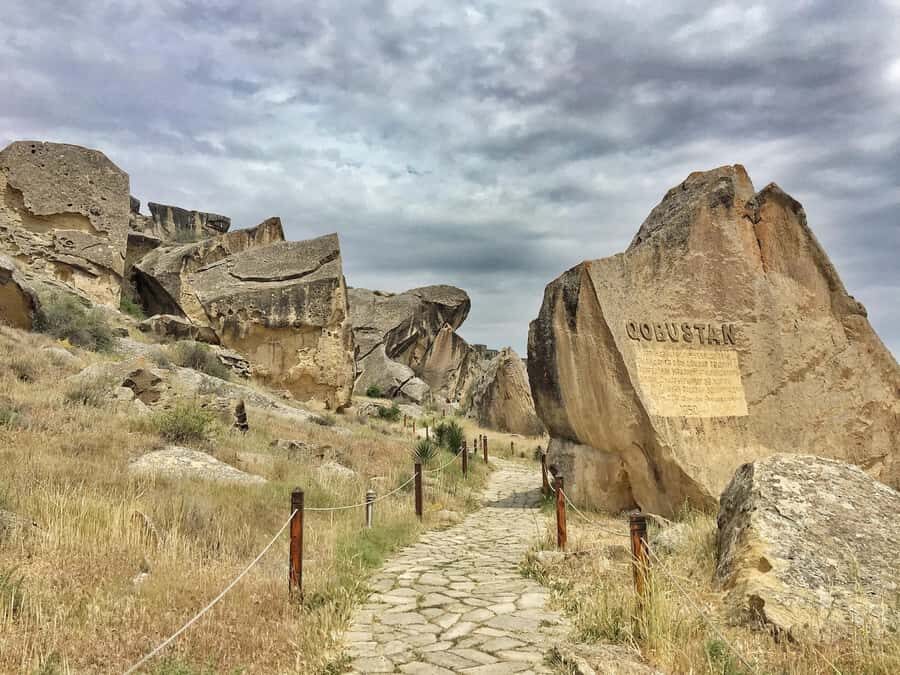
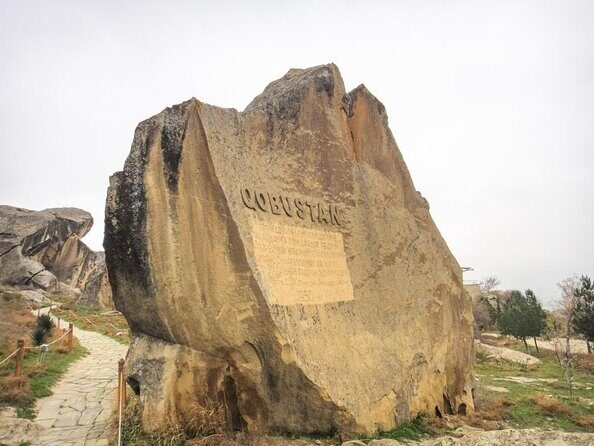
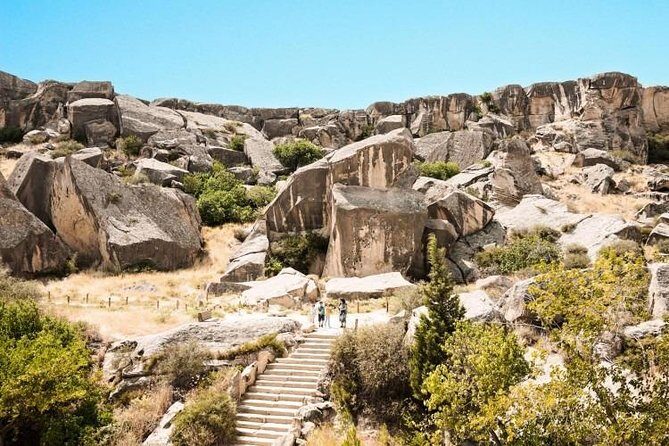
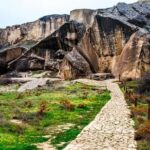
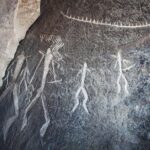
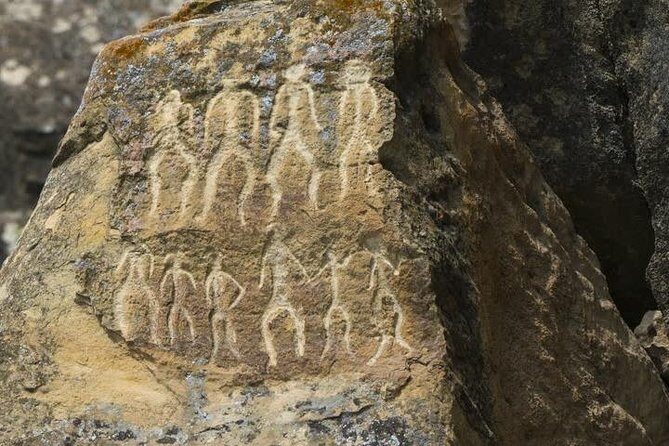
Gobustan Rock Art Cultural Landscape is the kind of stop that makes the rest of the day click. The site covers a large area—537 hectares—and includes more than 6,000 rock engravings.
What makes it meaningful is that it’s not just decoration. The engravings, plus nearby traces like inhabited caves, settlements, and burials, reflect continuous human use from the Upper Paleolithic through the Middle Ages. In other words, you’re looking at evidence of how people lived and how the environment changed after the last Ice Age.
You’ll get about 1 hour here. That’s long enough to see the major interpretation points and get oriented, especially if you’re curious about what the marks might represent. Don’t rush the explanations—Gobustan is easier to enjoy when you understand what you’re looking at.
Potential drawback: since the time is capped, you might want to focus on the most important panels rather than trying to photograph everything. If you go full camera mode, you can lose context.
Mud Volcanoes and the Taxi Transfer That Saves the Day
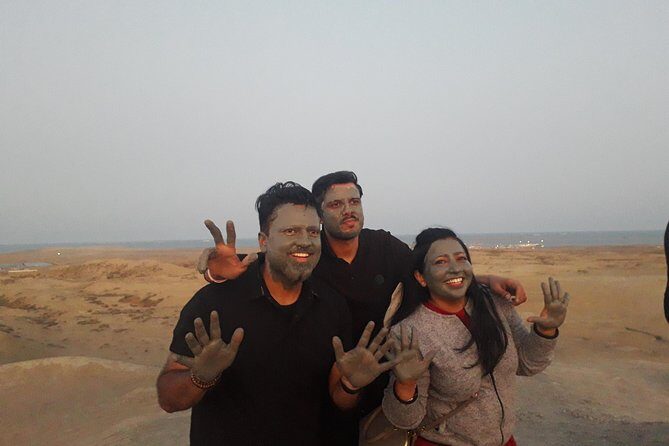
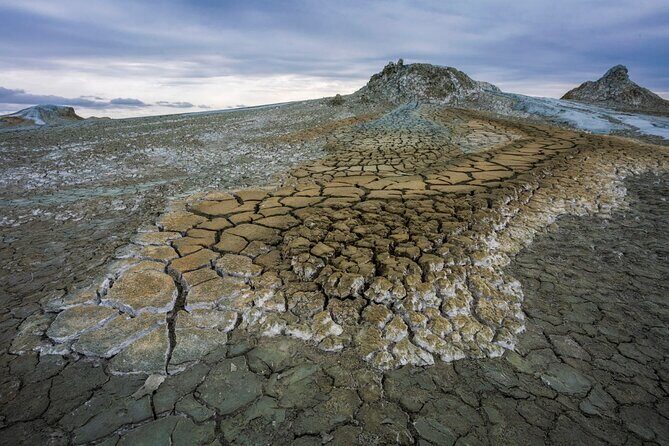
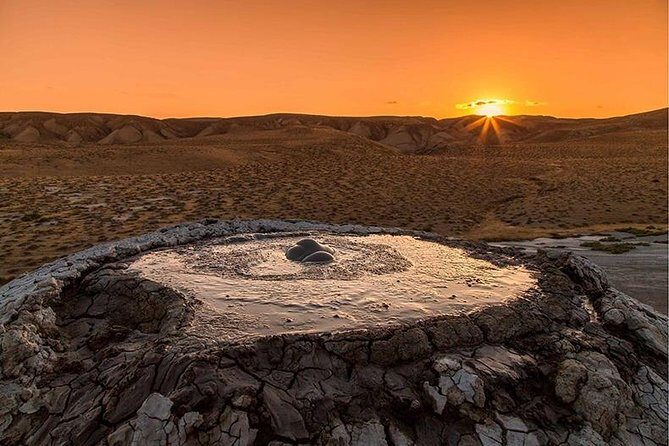
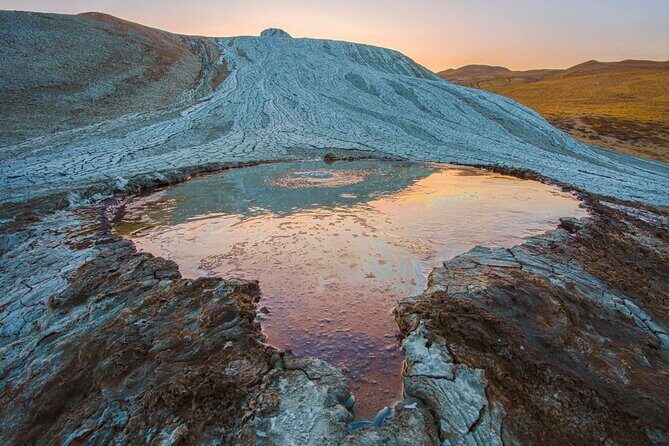
Absheron and Azerbaijan’s wider region are famous for mud volcanoes. The numbers here are striking: Azerbaijan has 350 of the world’s 800 mud volcanoes.
Locals use colorful names for them—yanardagh (burning mountain), pilpila (terrace), gaynacha (boiling water), and bozdag (grey mountain). That’s a reminder that people experience these features in everyday terms, not just as science facts.
You’ll spend about 30 minutes at the mud volcano area. The plan includes an important detail: because the road is bumpy, you’ll be transferred to local taxis, and the taxi cost is included. This is one of those smart choices that keeps the experience smoother for most people.
What to expect on your body: the surface isn’t gentle. Wear shoes you’d be comfortable walking in, and keep your phone securely tucked if you’re on a rough ride.


Yanar Dag: Why This Burning Mountain Keeps Burning
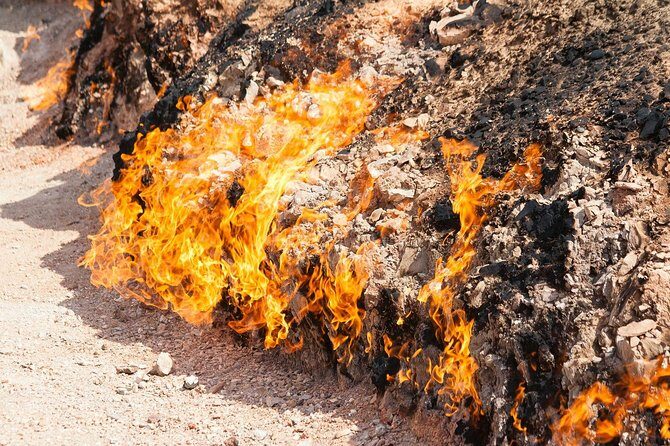
Yanar Dag is a different kind of flame than the mud volcanoes. Instead of mud and liquid, it’s a natural gas fire that burns continuously on a hillside near Baku.
The flames can reach around 3 meters (about 9.8 feet), jetting up from a thin, porous sandstone layer. It’s steady because the gas seep is steady—so unlike volcanic activity, this is a more constant “burning mountain” effect.
You’ll have about 30 minutes here. That’s enough time to watch the flames and connect the science idea to what you’re seeing. You also get a neat story element: it’s claimed the flame was only noted after accidentally being lit by a shepherd in the 1950s. Even if you treat that as folklore, it still gives you a human entry point into the site.
Good to know: the tour contrasts Yanar Dag with nearby mud volcano areas, including Lökbatan and Gobustan, where mud or liquid is part of the experience. If you’re a fan of cause-and-effect, this stop delivers.
Ateshgah Fire Temple: A Castle of Fire and Faith
Ateshgah—often called the Fire Temple of Baku—is where the day shifts from geology to religion and culture. The site is in Surakhani (a suburb in the Baku area), and the complex is described as castle-like and pentagonal.
Based on inscriptions, the temple was used by Hindu, Sikh, and Zoroastrian communities. The meaning of the name connects directly to the purpose: Atəşgah comes from Persian roots tied to fire, with “atash” meaning fire.
Architecturally, it has a courtyard surrounded by cells for monks and a central altar area (described as a tetrapillar-altar). You’ll also learn that the complex dates to the 17th and 18th centuries, and that it was abandoned in the late 19th century, likely tied to changes in the local Indian population.
Then comes the modern twist: the “eternal flame” went out in 1969 after petroleum and gas exploitation, and it now burns again thanks to gas piped from the nearby city. It’s a striking reminder that even ancient practices can get reshaped by modern energy realities.
You’ll get around 40 minutes at this stop, which is a solid chunk for reading, looking around the courtyard, and understanding what you’re seeing.
The Extra Two Sites: How the Day Reaches Six Stops
The tour plan is built to hit six sites in one day, even though the headline features you’ll remember most are the ones you already know: Gobustan rock art, mud volcanoes, Yanar Dag, and Ateshgah.
You’ll also pass through additional Absheron sights and shorter stop points to complete the total count. The full schedule is designed so you’re not just bouncing between two locations—you’re seeing the region as a set of connected places rather than disconnected “photo stops.”
One practical tip: keep your expectations aligned with the time budget. Those extra sites may be shorter than Gobustan or the fire temple, so use your energy wisely. If something feels less urgent, take a quick look, then refocus on the places with more interpretive value.
Lunch, Water, and Small Comfort Wins
You’ll have bottled water included and you’ll ride in an air-conditioned vehicle. That’s the comfort side of the plan, and it helps you stay sharp for stops that require walking and looking.
As for food: the day is described as having a buffet lunch with vegetarian and vegan options, but the “not included” list also says lunch isn’t included. That doesn’t mean the meal isn’t offered; it means you should verify whether it’s included in the price you’re paying.
What I’d bring, just to be safe: a light snack for between stops, especially if you’re the kind of person who gets hungry while taking photos. Also pack a layer, since the day includes drives plus time outside at each site.
Who This Tour Suits Best
This tour fits best if you want a focused sampler of what makes this region unusual. If you like geology with context—rock art, natural flames, and the human meaning attached to them—you’ll appreciate how the stops connect.
It’s also a good choice for time-strapped visitors in Baku. You get pickup-style convenience and a tight schedule without trying to coordinate drivers, entry fees, and route timing yourself.
If you hate group pacing or prefer slow, deep stays at one location, this may feel a bit compressed. Each major stop has a set time, and you’ll be moving on, even if you could spend more.
Should You Book Gobustan and Absheron for $60?
I’d book this day trip if you want the biggest hits—Gobustan’s rock art, the mud volcano phenomenon, Yanar Dag’s steady flame, and Ateshgah’s fire temple—with admissions handled and a small group size.
I’d think twice if lunch being included is a must-have for you, since lunch is mentioned as part of the day but also listed as not included. Also consider the bumpy road segment on the mud volcano approach if you’re sensitive to rough rides.
If you’re okay with a packed schedule and you want the story behind Azerbaijan’s fire-and-mud reputation, this is a strong way to spend your day in Baku.
FAQ
How long is the Gobustan and Absheron day trip?
It’s about 6 to 8 hours.
Where does the tour start and end?
It starts at Qala Qapısı Restoranı, Cavadxan, Bakı, Azerbaijan and ends back at the same meeting point.
What’s included in the $60 price?
The tour includes an air-conditioned vehicle and bottled water, plus admission tickets for the listed stops. The taxi transfer to the mud volcano area is also included.
Is lunch included?
Lunch is described as part of the day (buffet with vegetarian and vegan options), but the provided details also list lunch as not included, so check what your booking covers.
Do I need to pay admission fees during the tour?
No. Admission tickets for the stops are included, so you won’t need to pay on the spot.
Why is there a taxi transfer for the mud volcano stop?
The road to the mud volcanoes is bumpy, so you’ll be transferred to local taxis, and that taxi cost is included.
How many people are in the group?
The tour has a maximum of 18 travelers.
Is this tour easy to join if I’m near public transit?
The meeting point is described as near public transportation.
Can I cancel for free?
Yes. You can cancel up to 24 hours in advance for a full refund.
Is the tour suitable for most people?
The information says most people can participate.