REVIEW · BAKU
Baku’s Ancient Heart
Book on Viator →Operated by Guide Baku Heydar · Bookable on Viator
Baku’s Old City feels like a living museum on foot. This 2-hour guided walk packs big UNESCO landmarks and small street legends into one smooth route through Baku’s maze of cobblestones. I like how the stories connect the Silk Road past to what you see today, and I also like the guide style: Heydar blends history with humor and keeps the pace friendly for real conversations.
One thing to plan for: the route is compact and involves stairs and uneven old-street walking, so comfortable shoes matter—especially if you choose the Maiden Tower climb.
You’ll start at one of Azerbaijan’s best-known icons and end up understanding why Baku’s “ancient heart” became a crossroads for merchants, rulers, and faiths. Along the way you’ll pass caravanserai ruins, underground bath history, and several mosques with different roles in daily life. A possible drawback is that you do not go inside the Palace of the Shirvanshahs (it would take longer), so if you want a deep palace visit, you may need a separate ticket and time.
In This Review
- Key highlights that make this Old City walk work
- Arriving in Baku’s Old City: why this walk feels efficient
- Maiden Tower: your first lesson in Baku’s skyline and symbolism
- From grave stones to merchants: the open-air museum moment
- Caravanserais: Multan and Bukhara in the same stone story
- Legends break the pattern: Lovers and Cats
- House of Baku Khans: a power center you can almost feel
- Yeraltı hamam: the 17th-century underground bathhouse
- Ali Shamsi workshop and street art details you might miss alone
- Palace of the Shirvanshahs: what you see, and why you don’t go inside
- Miniature books: a Guinness-record kind of detour
- Vahid Monument and the Tree of Life idea
- Aptek Museum and Bathhouse: Soviet film lore plus a living hamam
- Wine stop if you want it: pomegranate sharab
- Vagif Mustafazadeh house museum: Mugam meets jazz
- Mosques with different roles: Muhammad, Juma, and Lezgi
- Price and pacing: what $25 buys you on this route
- What to bring and how to enjoy the route better
- Should you book Baku’s Ancient Heart?
- FAQ
- How long is the Baku’s Ancient Heart Old City tour?
- Where does the tour start?
- Is it a mobile ticket?
- What languages does the guide speak?
- How big is the group?
- Do you go inside the Palace of the Shirvanshahs?
- Is there an option to go to the top of the Maiden Tower?
- Are there entrance fees for the stops?
- What if the weather is bad?
- Is free cancellation available?
Key highlights that make this Old City walk work
- Maiden Tower start gives you instant orientation and skyline views over the Old City and the modern city
- Free stop sequence across caravanserais, mosques, baths, and small museums keeps value high at $25 per person
- Caravanserai backstory connects Multan and Bukhara names to Silk Road travel patterns and later history
- Underground Yeraltı hamam adds a cool, unusual 17th-century angle right next to the old-city entrance
- Miniature book museum includes Guinness World Records context and insanely small book collections
- Local legends moments (Lovers and Cats, broken-tower mosque lore, and poet symbolism) keep the walk fun, not just factual
Arriving in Baku’s Old City: why this walk feels efficient
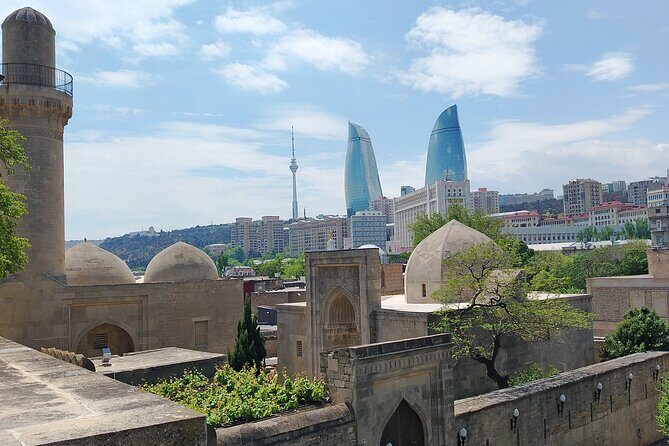
Baku’s Old City is compact, but it can still feel confusing the first time you walk into it. This tour helps you “read” the place fast. You’re not just moving from landmark to landmark—you’re getting the why behind it: where the Silk Road traders paused, how different rulers shaped what’s left, and how faith communities left their mark in stone.
The time structure is part of the appeal. The tour is listed at about 2 hours, and that can be true if your group keeps a steady pace. In at least one experience report, the walk went closer to 4 hours, which tells me the guide is happy to slow down for questions and extra context. That flexibility is a big plus for people who hate being rushed.
Cost-wise, $25 per person is a solid deal if you value a licensed guide plus a route where many stops are free. The tour price covers the walking tour itself, with a licensed English and Russian-speaking guide, and it runs with a small max group size (up to 15). The result is a calmer feel than big coach tours.
You can also read our reviews of more tours and experiences in Baku.



Maiden Tower: your first lesson in Baku’s skyline and symbolism
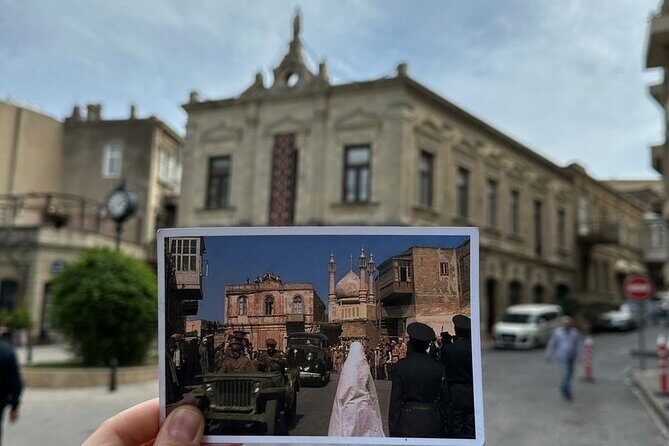
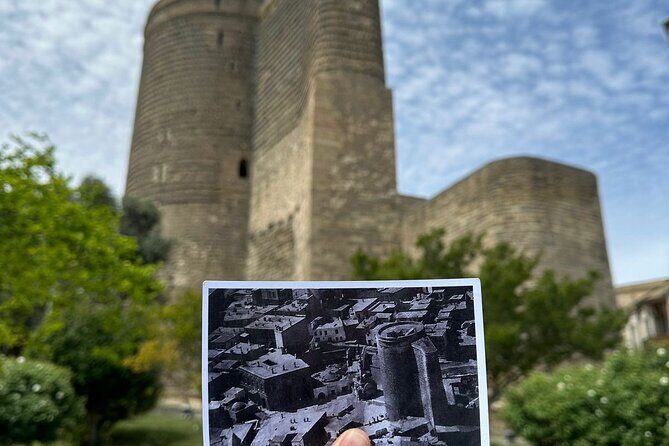
You begin at the Maiden Tower, and it’s a smart move. It’s one of Azerbaijan’s most famous sights, and it gives you instant orientation because you can see both the Old City details and the modern city beyond.
The stop includes a basic admission setup, and there’s an option: if you want, the guide can help you get a ticket to go up to the top. Two practical notes matter here:
- The tower has a narrow upstairs and no elevator, so it’s not a casual walk-in.
- Even if you skip the top, the value is still strong because you’re starting with context instead of ending with it.
This tower also anchors the UNESCO thread. The Old City landmarks—especially the Maiden Tower and the Palace of the Shirvanshahs—sit within the area recognized for its historic importance. Starting here makes the rest of the route feel like one story.
From grave stones to merchants: the open-air museum moment
Right next to the Maiden Tower area, you’ll see the Open Air Museum, tied to the remains of Saint Bartholomew chapel. The main detail I’d highlight is the scale and what it suggests: more than 50 grave stones were found here. Locals call this place a kind of market place.
It helps to think of it as a “trading memory.” Even when you’re standing in a quiet museum-like corner, the guide’s explanation points you toward the idea of movement—people arriving, settling temporarily, and leaving traces. For me, that’s one of the reasons these Old City walks feel rewarding: you don’t just look at objects, you understand why they were placed where they were.
Caravanserais: Multan and Bukhara in the same stone story
Then you hit the Multani Caravansarai, tied directly to Silk Road travel. In the past, merchants from Multan (as described for this history) stayed inside this little fortress near the Maiden Tower. The idea is simple but powerful: it’s not romantic trivia. Caravanserais were practical—security for people and protection for goods.
A few minutes later, you’ll see the Bukhara Caravanserai. Why Bukhara? The tour connects the name to the period when Tatar-Mongol troops and Tamerlan affected the region, which then influences the naming connected to modern-day Azerbaijan. You’ll notice how the Old City holds these layered time stamps in its street plan.
Even though these are short stops, they matter because they give you a framework for reading the rest of the Old City: this area was built for transit, not just for permanent residents.
Legends break the pattern: Lovers and Cats
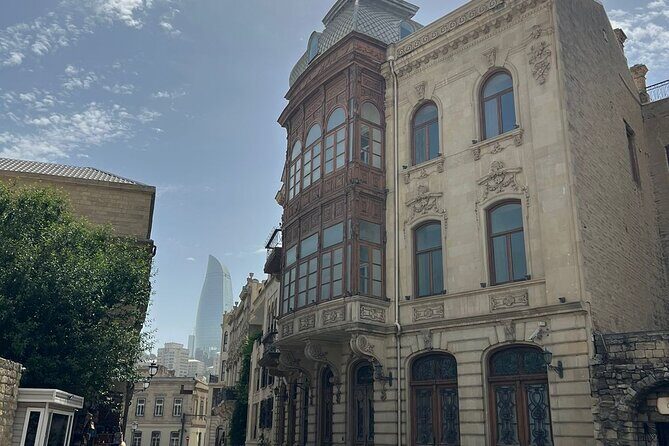
Next comes a quieter, more playful stop: the Monument to Lovers and Cats. This is one of those moments where you’re not learning a date first—you’re learning a set of legends, some sad and some about love. It’s the kind of story stop that helps you connect architecture to human imagination.
I like these breaks because they keep the walk from turning into a checklist. When you remember legends, you remember the places longer.



House of Baku Khans: a power center you can almost feel
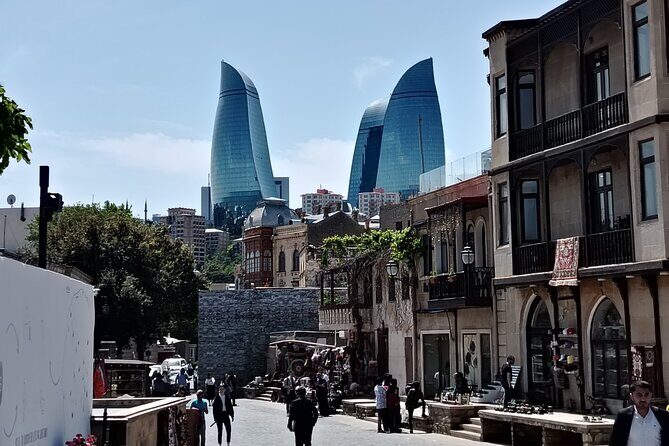
The House of Baku Khans takes you from trade routes to political life. The tour explains that in the period after the city became annexed by the Russian Empire (19th century timeframe mentioned), local rule within the city still mattered—khans were ruling parts of Baku before that shift.
The key time window given here is specific: khans lived there from 1747 to 1806. Standing near the building, that timeline helps you picture more than just “old architecture.” You can imagine the daily life of a ruling family and the servants who supported the system.
If you’re into how power changed in stages rather than single turning points, this stop works well.
Yeraltı hamam: the 17th-century underground bathhouse
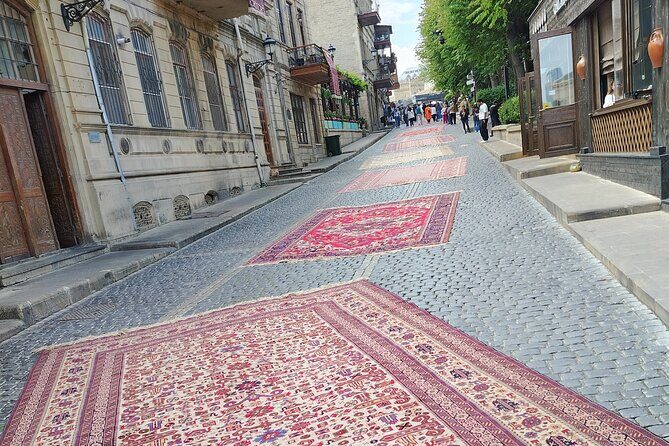
Right near the main entrance of the Old City, you’ll find Yeraltı hamam (Underground Bath). This is a 17th-century underground bathhouse, and the location is convenient: it’s described as being right next to the main entrance area.
This stop adds a different kind of history. Mosques and towers connect to religion and state identity, but baths connect to everyday life—hygiene, routine, and social space. Even without going into deep detail, it’s a reminder that cities are shaped by the routines people needed.
If you’re sensitive to temperature changes, plan for a bit of coolness and cover up lightly. Not because the info says anything specific, but underground places often feel cooler than open streets.
Ali Shamsi workshop and street art details you might miss alone
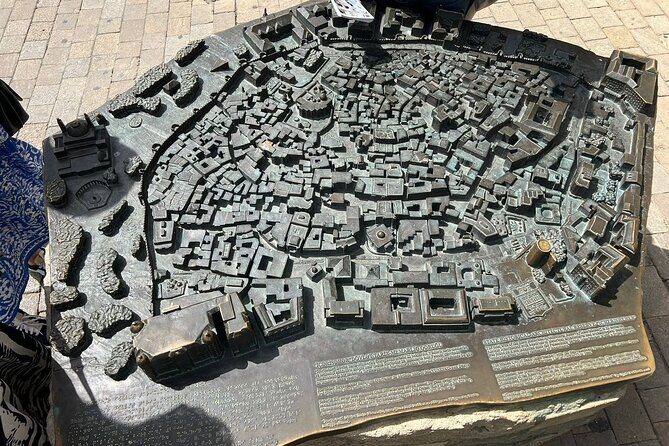
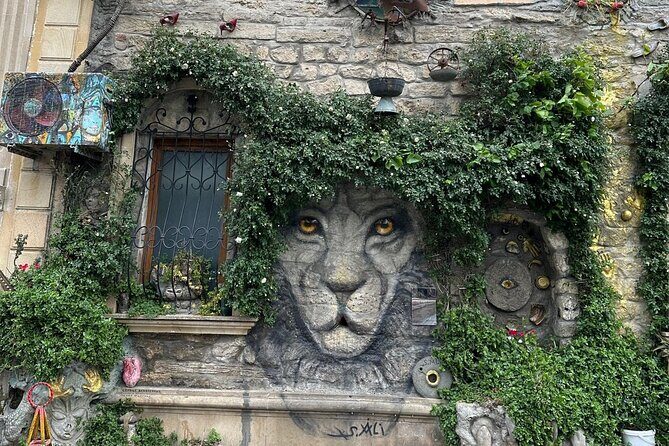
Along the walk, you’ll pass the Workshop Ali Shamsi, linked to an art gallery. The recognizable element described is a wall depiction featuring a big lion head.
This is a good stop for anyone who likes texture—small art markers and street craftsmanship. When you’re walking independently, you might speed past it. With a guide, it becomes a clue: you start noticing how many local creative touches exist in ordinary-looking walls.
Palace of the Shirvanshahs: what you see, and why you don’t go inside
You reach the Palace of the Shirvanshahs, tied directly to the UNESCO story. The tour mentions it was built between the 12th and 15th centuries, suffered damage over time, and was restored in 2004.
Here’s the practical choice: during the tour, you do not go inside the palace. The reason given is time—the area is more than a hectare, and it needs at least an hour for a proper inside visit.
I actually respect this decision. A walking tour with tight stops needs focus. But it also means you should not treat this as your only palace time. If you love palace interiors and museum-style browsing, plan a separate visit after the walking tour.
The good part is that you still build context. By the time you see Shirvanshahs after seeing Maiden Tower, you understand how the palace fits into the same UNESCO footprint.
Miniature books: a Guinness-record kind of detour
At the Baku Museum of Miniature Books, you’ll see books so small they’re described as even smaller than a fingernail scale. The tour says that since 2014, it’s included in the Guinness World Records as the biggest collection of miniature books in the world.
One detail that grabs attention: the museum includes the smallest Holy Koran of the 17th century, as stated here. Whether you’re religious or not, the point is the craftsmanship and precision—tiny pages, tiny format, big effort.
This stop is valuable because it’s not the typical Old City pattern. You’re used to towers, mosques, and caravanserais. Here you get something that feels more like a “Baku specialty.”
Vahid Monument and the Tree of Life idea
Next is the Vahid Monument, connected to Azerbaijani poet Aliagha Vahid. The statue description includes a Tree of Life theme—how life begins and ends—depicted in the head area.
Even if sculpture isn’t your thing, it helps to have a narrative attached. Instead of “we saw a statue,” you understand that the symbolism is part of how the culture talks about time and meaning.
Aptek Museum and Bathhouse: Soviet film lore plus a living hamam
The walk then turns to Aptek Museum and Bathhouse. This stop includes a fun cultural note tied to Soviet cinema. Russian-speaking guests may ask about the place known as Damn it, tied to the most popular part of the Soviet comedy movie Brilliant Hand shot in 1968.
This matters if you like film trivia, but it’s also part of how the Old City stays relevant: the same streets and spaces can appear in modern popular culture.
The other big element here is the hammam situation. The tour notes that several bathhouses exist in the Old City, but one still functions as a bathhouse. The time range given is from the 18th century until the present. That living continuity is what makes the bath theme feel more than a theme.
Wine stop if you want it: pomegranate sharab
At Absheron Sharab Wine Shop, the tour mentions Azerbaijan’s pomegranate wine. You may stop to visit and taste if you wish.
This is one of the few points where your personal choice matters. If you like tastings, it can add a memorable local flavor moment. If you do not, no stress—you can treat it as a short photo-and-sniff stop rather than a commitment. Just note that tastings may involve extra cost, since the tour price description says it includes only the walking tour itself.
Vagif Mustafazadeh house museum: Mugam meets jazz
The House Museum of Vagif Mustafazadeh is short but meaningful. The tour explains that Vagif Mustafazadeh had a short life but became famous for mixing Azerbaijani folk music of Mugam with American jazz.
That cultural bridge is a great reminder that tradition isn’t frozen. It can evolve, mix, and still stay rooted. If you’re a music person, this stop alone can make the walk feel like more than sightseeing.
Mosques with different roles: Muhammad, Juma, and Lezgi
Three mosque stops form a strong section of the walk, and the distinctions are the point.
- Muhammad Mosque: described as the oldest mosque in the Old City, built in the 11th century. The tour connects it to the possible location of an earlier Zoroastrian fire temple, with traces of fire under the prayer hall. Locals call it the broken tower in the tour’s explanation, and you’ll hear the reasoning during the stop.
- Juma Mosque: said to be the single mosque where women are allowed to pray inside the Old City, and also the biggest mosque there. Built in the 12th century and restored in the early 20th century.
- Lezgi Mosque: under reconstruction at the time of this route description, built in the 12th century by Ibragim Ashur, known as Lezgian mosque. The tour also notes that once there were 28 mosques in this small city, but now only some remain visible or accessible.
Even if you are not big on religious sites, the different roles help you understand the social fabric of the area.
Price and pacing: what $25 buys you on this route
At $25 per person, you’re paying for a guided walk with licensed English and Russian speaking support and a route that repeatedly gives you free admission-type stops. In the itinerary details, most stops list admission as free, which changes the math compared with tours where you pay entrance fees on top.
Also, the group limit matters. With a max of 15 travelers, you’re less likely to feel lost or pushed through. In the experience reports, the guide is repeatedly described as patient and willing to explain key points in detail, and one report even notes the tour felt more like conversation than lecture style.
Time is the main tradeoff: many stops fit into a short walk. If you want longer museum time at every stop, you might find it brisk. If you’re the type who likes highlights plus a guide’s context, this format is usually perfect.
What to bring and how to enjoy the route better
Because this is a walking tour through old streets, I’d plan like you’re in a real neighborhood, not a theme park.
- Wear comfortable shoes for cobblestones and short stair climbs.
- Bring water, especially if the weather is warm. The tour requires good weather, so you’ll likely be outdoors.
- If you want the tower top option, be ready for a narrower ascent and no elevator.
Also, consider what you want most:
- If you love architecture and symbolic storytelling, you’ll enjoy the Maiden Tower plus Shirvanshahs context.
- If you want everyday culture angles, the hamam and bathhouse stops are a strong match.
- If you like quirky culture stops, miniature books and the Lovers and Cats legend make the day more memorable.
Should you book Baku’s Ancient Heart?
Book it if you want a well-guided Old City walk that connects sights into one readable story—trade routes, rulers, everyday life, and legends. I especially think it’s a good choice for first-timers who want to see a lot without feeling like you’re sprinting.
Skip or plan extra time elsewhere if you’re the type who needs long museum visits at one site, because the Palace of the Shirvanshahs isn’t entered on this route and there are many short stops. Also, if you dislike stairs or narrow spaces, you may want to skip the optional Maiden Tower top.
If you match the vibe—history plus humor plus a calm small group—you’ll likely leave with that rare feeling that Baku’s Old City makes sense, not just looks impressive.
FAQ
How long is the Baku’s Ancient Heart Old City tour?
It’s listed at about 2 hours, and it returns to the meeting point at the end.
Where does the tour start?
The tour starts at Asəf Zeynallı küç, Bakı, Azerbaijan, and it ends back at the meeting point.
Is it a mobile ticket?
Yes. The tour uses a mobile ticket.
What languages does the guide speak?
The guide is licensed and speaks English and Russian.
How big is the group?
The tour has a maximum of 15 travelers.
Do you go inside the Palace of the Shirvanshahs?
No. The tour does not go inside the palace because the area is large and would need extra time.
Is there an option to go to the top of the Maiden Tower?
If you want, the guide may help arrange a ticket to go up to the top, where you can observe the Old City and the new city.
Are there entrance fees for the stops?
The tour information lists admission as free for most stops, with the walking tour itself included in the $25 price. Some optional activities, like tasting at a wine shop, may involve extra choices.
What if the weather is bad?
The tour requires good weather. If it’s canceled due to poor weather, you’ll be offered a different date or a full refund.
Is free cancellation available?
Yes, you can cancel up to 24 hours in advance for a full refund. If you cancel less than 24 hours before the start time, the amount paid is not refunded.