Fire has a whole geography in Baku. This half-day group tour strings together Yanar Dag’s natural gas flame with the historic Baku Ateshgah Fire Temple so you see how Azerbaijan’s fire story shows up in both nature and religion.
What I like most is how the experience stays focused: you get a solid look at both places in about 4 hours 30 minutes, without turning it into a full-day slog. The second big win for me is the shared-group setup with an air-conditioned vehicle and a guide who makes the background easy to follow. The one catch to think about is that each stop is timed tightly, so you’ll have to enjoy the sites at a “good pace,” not a slow, linger-for-every-detail pace.
In This Review
- Key highlights
- Baku’s Fire Theme in Two Stops
- Yanar Dag Burning Mountain: Natural Gas, Steady Flames
- Baku Ateshgah (Ateshgah) Fire Temple: A Meeting Point of Faiths
- The 4½ Hours on an AC Van: Pace, Timing, and Comfort
- Value at $50: What’s Included and What You Should Budget
- Who Should Book This Tour (and Who Might Pass)
- FAQ
- How long is the Burning Mountain and Fire Temple tour?
- What are the two main stops on the tour?
- Is admission included?
- What time does the tour start in Baku?
- Where do you meet and where do you end?
- Is this tour a group experience?
- Do you get an air-conditioned vehicle?
- How do you receive the ticket?
- Can I cancel for free?
- Should You Book This Burning Mountain & Fire Temple Tour?
Key highlights
- Yanar Dag: a steady natural gas flame jetting from a thin, porous sandstone layer
- Ateshgah: a castle-like fire temple tied to Hindu, Sikh, and Zoroastrian worship
- Two stops in one half day: practical if you want value without committing the whole day
- Admission included at both locations, so your budget stays predictable
- Small group size (max 18) with an air-conditioned vehicle
Baku’s Fire Theme in Two Stops
If you’ve ever wondered why people in this region talk about fire as if it’s part of the landscape (in the literal sense), this tour answers it fast. You start with Yanar Dag, a hillside where gas burns continuously, and then you shift to Ateshgah, a temple complex built around fire traditions.
This pairing works because it shows two sides of the same theme. One stop is nature doing its thing: a natural gas fire that’s been burning steadily. The other is humans shaping a sacred space around that idea, using architectural layout and ritual points to express belief.
You’ll also learn how the timing of history connects to what you see today. For example, the Ateshgah complex has clear clues from different religious traditions, and it even reflects changes in the area’s gas and oil use over time. By the time you’re done, the fire theme stops feeling like a slogan and starts feeling like a real thread linking geology, religion, and local history.
You can also read our reviews of more tours and experiences in Baku.
Yanar Dag Burning Mountain: Natural Gas, Steady Flames
Your first stop is Yanar Dag, also written as Yanar Dağ. The name itself tells you what to expect: burning mountain. Here, the flame is caused by natural gas that seeps from beneath the hillside, and it burns fairly steadily rather than flickering like a campfire.
A few details make this place more than just something to photograph:
- The flame jets up about 3 metres from a thin, porous sandstone layer.
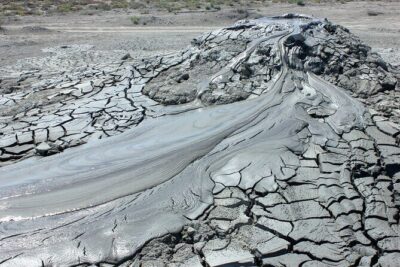
- The burning is tied to a steady gas seep, which is different from the nearby mud volcano areas such as Lökbatan or Gobustan, where you can get mud or liquid activity instead.
- It’s claimed the steady flame was noticed in the 1950s when it was accidentally lit by a shepherd.
When you’re at the site, the focus is simple: watch the flame, take in the hillside setting, and let your guide connect the dots between geology and the name Azerbaijan is often given—land of fire. Even if you’ve seen fire effects elsewhere, this has a distinct feel because you’re looking at ongoing natural combustion, not a recreated exhibit.
How to make the most of your time at Yanar Dag: stay present and listen closely during the explanation. The most memorable part is usually the story of why it burns consistently and why it’s different from other nearby natural phenomena. Since your time here is around 30 minutes (and admission is included), you won’t get stuck long waiting for the moment—your guide will help you see what matters quickly.
Baku Ateshgah (Ateshgah) Fire Temple: A Meeting Point of Faiths
Next comes Baku Ateshgah, often called the Fire Temple of Baku. The temple sits in Surakhani, a suburb area of Baku, in the Suraxanı raion. It’s built like a fortress-style religious complex, and the layout hints that this place was designed for ceremonies and for people connected to religious life.
This stop is especially interesting because the temple’s purpose wasn’t limited to a single tradition. Based on Persian inscriptions, it was used as a place of worship for Hindu, Sikh, and Zoroastrian communities. Your guide should help you understand the shared “fire” idea across these traditions, and also how inscriptions and historical records were used to identify the temple’s role.
Here are the details you should picture as you walk around:
- The complex is pentagonal.
- There’s a courtyard surrounded by cells that were used for monks.
- In the middle is a tetrapillar altar area.
- It was built during the 17th and 18th centuries.
The temple also has a clear historical arc. It was abandoned in the late 19th century, which is often linked to a dwindling of the Indian population in the area. Then, the natural eternal flame went out in 1969 after petroleum and gas exploitation in the region. Today, the flame is lit again by gas piped from the nearby city.
That last part matters. When you see the flame now, it’s not the same setup as centuries ago, but it’s still an attempt to keep the fire element alive. It turns the temple into a place where history isn’t frozen in time—it’s been affected by industry, then adapted to continue the tradition.
Your time here is around 40 minutes, with admission included. With that shorter window, I suggest you focus on the bigger story: who used the site, how the layout supported worship, and why the flame changed from natural to piped gas.
The 4½ Hours on an AC Van: Pace, Timing, and Comfort
This is a half-day group tour, starting at 1:00 pm and running about 4 hours 30 minutes. You’ll move between two sites without needing to plan routes, arrange tickets separately, or figure out timing on your own.
You begin at Qala Qapısı Restoranı, Cavadxan, Bakı, Azerbaijan, and the tour ends back at the same meeting point. That round-trip structure is helpful if you’re trying to keep your day flexible—especially if you don’t want to end up far from where you’ll be later.
Logistically, the tour is built for convenience:
- You ride in an air-conditioned vehicle.
- The group max is 18 people, so you’re not fighting for attention.
- You use a mobile ticket, so you don’t have to worry about paperwork.
- The departure point is described as easy to find and near public transportation.
Because the schedule is compact, the main thing to watch is how you personally like to travel. If you want slow museum-style pacing, this won’t be that. If you want a concentrated “see the highlights and learn the meaning” day, it’s a great fit.
One more practical note: this kind of fire-focused route works best when you’re mentally ready to switch modes—from looking at a natural flame to walking through a structured temple complex. Both are fascinating, but the experience is strongest when you pay attention to the explanation in each place.
Value at $50: What’s Included and What You Should Budget
At $50 per person, the headline number looks straightforward, but the value comes from what you’re actually getting for that price.
You’re not just paying for transportation. The tour includes admission tickets for both stops—Yanar Dag and Baku Ateshgah—and you’re also covered with an air-conditioned vehicle. In other words, you don’t have to price-shop two separate sites after you’re already in Baku.
The one detail to keep in mind is what’s not included: all fees and taxes. So if you’re budgeting tightly, your real total may land a bit above the base price once the final add-ons show up. Still, compared with booking two attractions separately, this shared-group format often feels easier to manage.
Also consider timing value. You’re getting two major fire-related stops in one half day. That can be a big deal if you’re working with a limited schedule in Baku or you have another plan later in the day. I like tours like this when I want a meaningful story with minimal time tax.
Who Should Book This Tour (and Who Might Pass)
This tour fits best when you like:
- Nature-meets-culture experiences (fire from the ground, then fire as sacred architecture)
- A guide who can connect names, inscriptions, and physical details into one clear narrative
- Efficient half-day plans that don’t eat your whole day in Baku
It’s also a strong choice if you’re traveling solo and want a structured way to fill time without building a complicated itinerary. In places like Baku, that kind of plan helps you avoid ending up with too many “what do I do now” hours.
On the other hand, you might want to pass if you:
- Prefer to stay at one site for a long time and don’t like timed stops
- Want a deep-detailed museum experience (this tour is built for highlights and key explanations)
- Have a schedule that absolutely can’t handle being away for most of the afternoon
FAQ
How long is the Burning Mountain and Fire Temple tour?
It runs about 4 hours 30 minutes.
What are the two main stops on the tour?
You’ll visit Yanar Dag and Baku Ateshgah (the Fire Temple of Baku).
Is admission included?
Yes. Admission tickets are included for Yanar Dag and Ateshgah.
What time does the tour start in Baku?
The start time is 1:00 pm.
Where do you meet and where do you end?
You meet at Qala Qapısı Restoranı, Cavadxan, Bakı, Azerbaijan, and the tour ends back at the same meeting point.
Is this tour a group experience?
Yes. It’s a group tour with a maximum of 18 people.
Do you get an air-conditioned vehicle?
Yes. An air-conditioned vehicle is included.
How do you receive the ticket?
You use a mobile ticket.
Can I cancel for free?
Yes. Free cancellation is available. You can cancel up to 24 hours in advance for a full refund.
Should You Book This Burning Mountain & Fire Temple Tour?
If your goal is a smart half-day in Baku focused on fire, I’d book it. The combination of Yanar Dag’s steady natural flames and Ateshgah’s fortress-like temple complex gives you variety without wasting time, and the fact that admission for both is included makes budgeting easier than doing it all on your own.
Just go in with realistic expectations about pace: you’ll see the key parts and learn the story, but you won’t have hours to wander slowly. If that fits how you like to travel, this is a clean, cost-friendly way to understand why fire is such a big part of Azerbaijan.