REVIEW · BAKU
Baku: Atashgah Fire Temple & Burning Mountain Half-Day Tour
Book on GetYourGuide →Operated by Baku City Tours · Bookable on GetYourGuide
Fire in the open air, no match needed.
This half-day tour takes you to Ateshgah and Yanardag, two Absheron-area sites where natural gas turns into dramatic flame displays, and the stories around them go back centuries. It’s a compact way to see why Baku earned its nickname as a place tied to fire.
What I like most is that the visit to Ateshgah Fire Temple isn’t just a quick photo stop. You get a guided walk that explains how the temple formed around a natural gas flow, plus what the ritual spaces look like inside the walled, fortress-like courtyard.
The other big win: you then head to Yanardag, where the main attraction is a constantly burning wall of flames on a hill. One thing to think about is timing and pickup logistics. Some people reported delays or last-minute pickup confusion, so you’ll want to confirm details and keep a little schedule cushion.
In This Review
- Key highlights worth your attention
- Ateshgah Fire Temple: the gas-powered story you can see
- What you’ll notice inside the temple: cells, center fire, rooftop flames
- Yanardag Burning Mountain: why the flames keep burning
- Half-day timing in real life: 3 hours can be tight
- Price and value: what $23 buys you here
- Pickup, meeting points, and how to avoid the common hiccups
- Who should book this tour, and who should not
- Should you book Baku City Tours for Atashgah and Yanardag?
- FAQ
- How long is the Baku Atashgah Fire Temple & Burning Mountain tour?
- How much does the tour cost?
- What places does the tour include?
- How do I get between Ateshgah and Yanardag?
- How long does it take to reach Yanardag from Ateshgah?
- What languages are available for the guide?
- Is the tour wheelchair accessible?
- Can I get a refund if I cancel?
- Is there a private group option?
Key highlights worth your attention
- Ateshgah Fire Temple’s natural gas source: built around a permanent gas flow from beneath the ground
- The temple’s layout: a small fortress feel, with enclosed spaces inside the courtyard
- A fireplace that works as a focal point: a large central flame with smaller rooftop flames
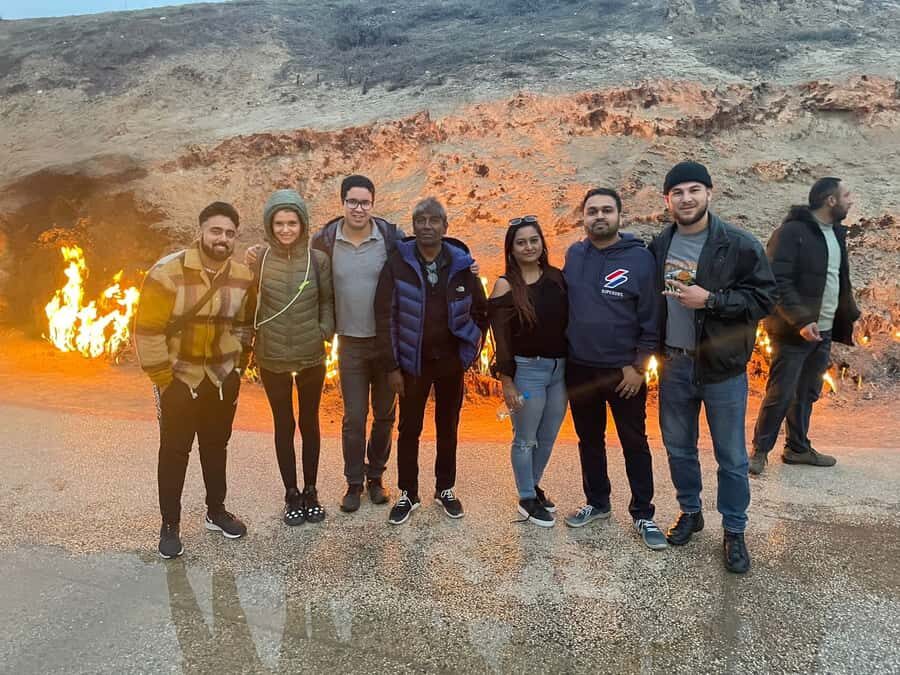
- Yanardag’s burning wall: a hillside where gas leaks keep the flames going
- Route efficiency for 3 hours: you hit both sites without a full-day commitment
Ateshgah Fire Temple: the gas-powered story you can see
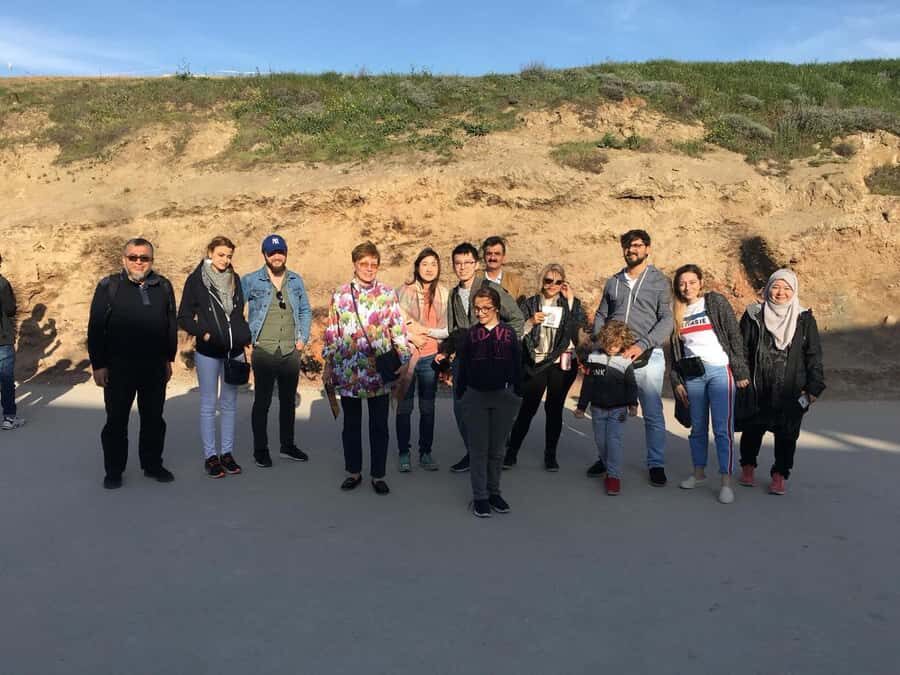
Ateshgah sits about 21 km east of Baku, and it feels oddly practical once you’re there. Instead of relying on torches or lanterns, the temple’s core idea is the natural gas coming up from the ground. That’s the whole premise, and the place is built to keep that fire visible, contained, and meaningful.
The temple complex traces to the 18th century, when Indian merchants built around the existing gas phenomenon. If you’re the type who likes your travel with a clear “how it works” explanation, this stop delivers. You can actually connect the legend to a physical cause: gas flow beneath the site.
And the look is memorable. Ateshgah resembles a small fortress, with stone fencing and cells inside the courtyard. It doesn’t feel like a big, open museum. It feels like a working spiritual space with boundaries, clear movement paths, and defined spots for the fire-focused rituals.
Practical note: wear shoes you can trust on uneven ground. Courtyards and enclosed structures can mean lots of short walks, turns, and stairs, depending on your group’s path.
A few more Baku tours and experiences worth a look
What you’ll notice inside the temple: cells, center fire, rooftop flames
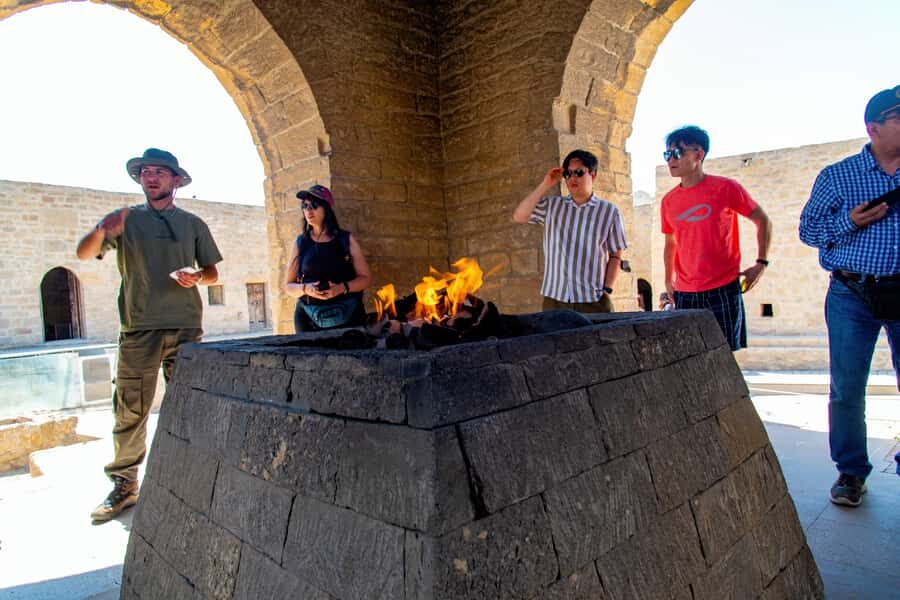
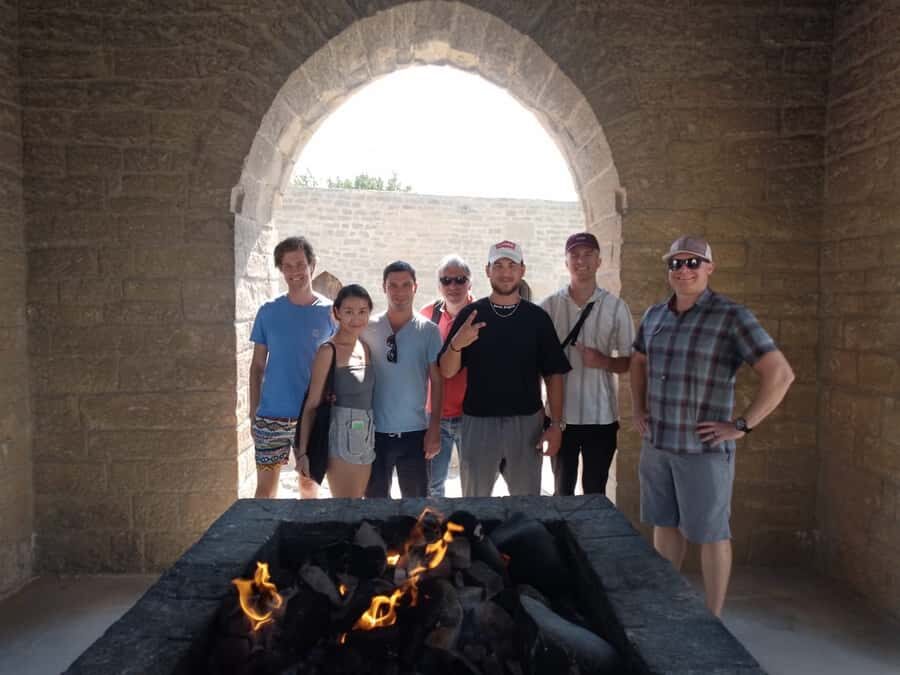
This isn’t just a building; it’s a layout designed for ceremony. The main fireplace sits in the center, where natural gas ventilation helps create the fire effect. From there, you’ll see a large central fire and four smaller fires on the rooftop corners. That symmetry matters. It turns the building into an instrument for keeping flame visible from multiple angles.
One of the most interesting details is how the space is organized for worshippers. You’ll also see small cells associated with ascetic believers and pilgrims, arranged around the central fireplace. The idea is that people could circulate around the flame without breaking the structure’s focus.
If you’re wondering what to do with all that information, here’s my suggestion: don’t try to memorize the religious background in one go. Instead, take a simple approach. Stand where the main fireplace lines up visually, look for how the cells face or wrap around the central area, and then let your guide fill in the meaning. It makes the architecture click.
Also, keep in mind you’re visiting a site where faith traditions are part of the atmosphere, even if you’re there for sightseeing. Dress neatly enough that you feel comfortable, and keep your voice down in enclosed areas.
Yanardag Burning Mountain: why the flames keep burning
After the fire temple, the tour moves to Yanardag State Historical, Cultural and Natural Reserve. The drive is roughly 35 to 40 minutes, so it’s long enough to feel like a real change of scenery, but short enough to stay within the half-day pace.
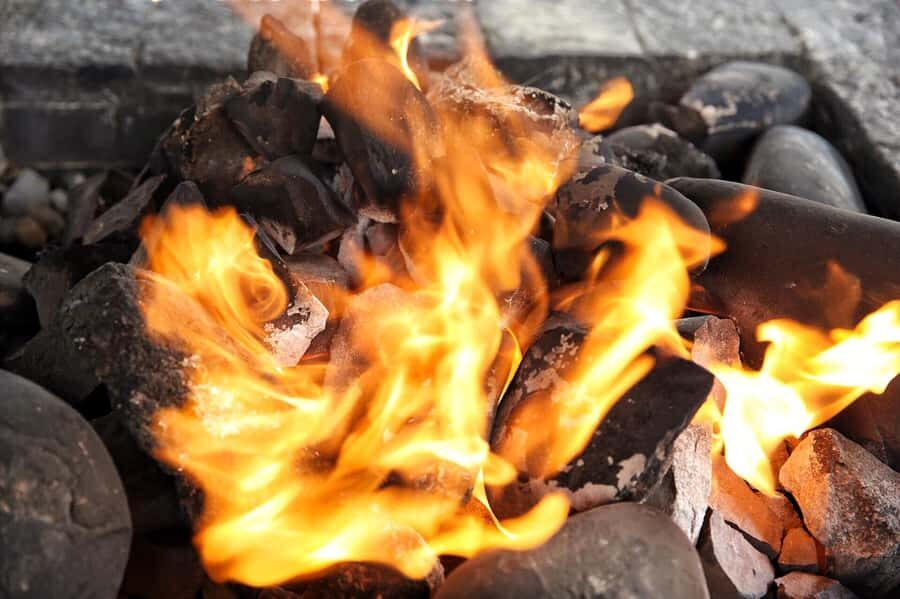
Yanardag literally means burning mountain, and the visual is the point. The main attraction is a hill with a constantly burning wall of flames. The explanation is geology: tectonic shifts and volcanic material under the earth create gas leaks from the rocks, and the flames keep going because the fuel keeps showing up.
The story also has famous-name weight. Marco Polo mentioned the flames during his travels to Baku and its surroundings. Whether you treat that as legend or travel report history, it underlines something important for you: this phenomenon has been attracting attention for a very long time, long before modern tourism made it a structured stop.
When you’re standing there, don’t overthink it. Focus on two things:
1) the consistency of the flames, and
2) how the hillside setting makes fire look almost “attached” to the rock.
That combination is what makes Yanardag feel different from a theatrical flame show.
Half-day timing in real life: 3 hours can be tight
This tour is listed as 3 hours, which sounds generous until you factor in travel time between sites. You do get a clear flow: Ateshgah first, then a drive of around 35 to 40 minutes to Yanardag. That means you’ll likely spend less time at each site than you’d get on a full-day route.
In my view, this is the tradeoff that determines whether you’ll enjoy it. If you like fast, high-impact sightseeing, 3 hours can be a sweet spot. You’ll get the big highlights—gas-fire temple architecture and the burning mountain—without turning your day into logistics.
If you’re the type who likes to linger and read every sign, you might feel rushed. One review even suggested extending time just to explore more freely. So if you want slower pacing, consider that you may need to add extra time on your own after the tour ends.
Also, watch the schedule buffer. Some reports mention delays on shorter tours, including late starts. Even if you personally plan carefully, a half-day format can leave you with little slack.
Price and value: what $23 buys you here
At $23 per person, this half-day tour is priced like a “starter course” to Absheron’s most distinctive flame-related sights. What makes the value feel more solid is that it includes an English-speaking guide, transportation (minivan or van), and entry tickets.
So you’re not paying just for driving. You’re paying for interpretation and guided context—especially at Ateshgah, where understanding the layout and the gas-fire idea helps you make sense of what you’re seeing. Without that, it’s still impressive, but you’d likely spend more time guessing and less time connecting the dots.
That said, value isn’t only about features. It’s also about experience reliability. Some reviews praised the guide quality and smoothness. Others described confusing pickup timing and delays that pushed the actual experience later than expected. If you’re strict about meal times, tours later in the day, or early departures, plan with a little cushion.
Pickup, meeting points, and how to avoid the common hiccups
Here’s the honest takeaway from the feedback you provided: the guide can be excellent, but organization can vary. A couple of people reported that pickup details weren’t clearly shared in advance, and some described big delays for a tour that’s only 3 hours long.
What this means for you is simple: don’t assume the schedule will run exactly as printed. Do these two things:
- Confirm the pickup time and location before the day starts (not just when you book).
- If your day is tight, keep a buffer so a late start doesn’t ruin the rest of your plans.
If you end up joining a larger group or a day-tour extension, that could affect when you actually arrive and how long you wait. You can’t control that from your side, but you can protect yourself by planning like a pro: arrive a bit early, be ready for possible waiting, and treat the half-day label as “plus or minus.”
One more practical tip: bring a small bottle of water and wear sun protection. Even in the half-day window, you’re outdoors for key moments, especially once you’re at Yanardag.
Who should book this tour, and who should not
This tour fits best if you’re:
- a first-timer in Baku who wants Absheron highlights without a full-day commitment
- curious about how natural phenomena can shape culture, worship spaces, and architecture
- the kind of traveler who likes a guided explanation to turn “cool sights” into “I get it” moments
It may be less ideal if you:
- have very tight timing later in the day and can’t tolerate delays
- dislike tours where pickup logistics might change last minute
- need long, unstructured time on-site (this is compact by design)
In other words: if you want two iconic flame-related stops with a guide, this works. If you need everything to be perfectly clockwork, you’ll want extra buffer.
Should you book Baku City Tours for Atashgah and Yanardag?
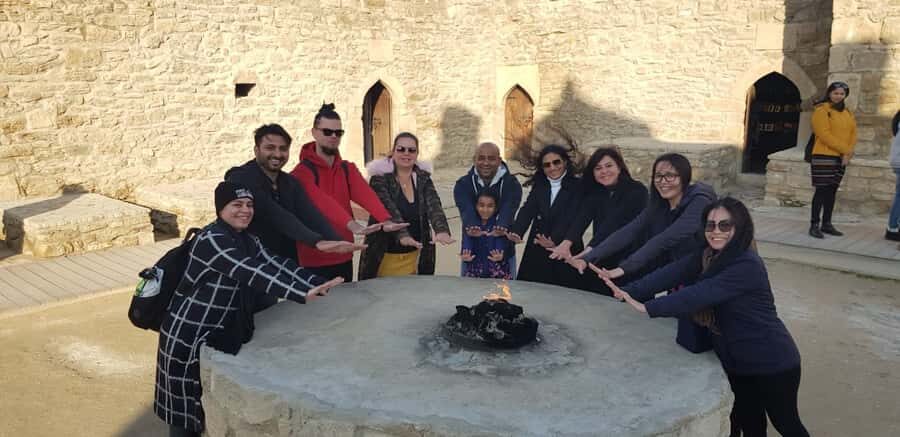
I’d say yes—with one condition: go in with realistic timing expectations. The core experience has clear strengths. The Ateshgah Fire Temple stop is visually striking and structured around natural gas, and the guide-led context helps you notice the details that make it special. Then Yanardag delivers the main event: a burning mountain with flames that keep going, backed by the natural-gas explanation and even old travel mentions.
If you’re flexible enough to handle possible pickup delays and you want the highlights packed into 3 hours, booking is a solid value at $23. Just confirm pickup info, keep a schedule cushion, and plan to enjoy the sites more than the clock.
If you do that, you’ll leave with two of Absheron’s most unusual sights—and a much clearer idea of why fire is such a big theme around Baku.
FAQ
How long is the Baku Atashgah Fire Temple & Burning Mountain tour?
The duration is 3 hours.
How much does the tour cost?
It’s $23 per person.
What places does the tour include?
It includes Ateshgah Fire Temple and Yanardag (Yanardag State Historical, Cultural and Natural Reserve), with entry tickets.
How do I get between Ateshgah and Yanardag?
The tour uses transportation by minivan or van.
How long does it take to reach Yanardag from Ateshgah?
The transfer takes around 35 to 40 minutes.
What languages are available for the guide?
The live tour guide is available in English and Russian.
Is the tour wheelchair accessible?
Yes, it is listed as wheelchair accessible.
Can I get a refund if I cancel?
Free cancellation is available up to 24 hours in advance for a full refund.
Is there a private group option?
Yes, private group availability is offered.