REVIEW · BAKU
Baku: Gobustan, Mud Volcanoes, Fire Temple, & Yanar Dag Tour
Book on GetYourGuide →Operated by Alov Travel Baku · Bookable on GetYourGuide
A fire that never goes out and carvings thousands of years old. I love how this tour stacks Gobustan UNESCO rock art, the mud volcanoes, and two different fire sites in one clear day. One thing to plan for: major entrance fees are not included, and the mud volcano stop uses an extra mandatory cash payment.
What makes it feel worth it is the pacing. You get focused time at each site (rock art, then mud volcanoes, then Ateshgah, then Yanar Dag) plus a Baku lunch break so you’re not stuck in the car the whole time. My only caution is guide quality can vary—some guides get praised for clear history, while others have been criticized for rushed explanations.
If you like science-meets-culture stops—ancient life marks, natural gas fires, and a temple with layered religious roots—this is a good match. And if you want easy planning, choose the option that includes entrance fees, since you’ll already know the costs before you go.
In This Review
- Key things to know before you go
- Gobustan Rock Art: UNESCO petroglyphs with real scene-setting
- Mud Volcanoes: the messy natural wonder (and the cash rule)
- Ateshgah Fire Temple in Surakhany: Zoroastrian roots and later layers
- Yanar Dag Burning Mountain: the natural gas fire that keeps going
- Price and value: the $6 base fare plus real-world entrance costs
- Guide quality can make or break the day
- What the timing adds up to (and how to plan your day)
- What to bring (this is not a sit-on-the-bus kind of day)
- Who should book this Baku tour?
- Should you book the Gobustan, Mud Volcanoes, Fire Temple & Yanar Dag tour?
Key things to know before you go
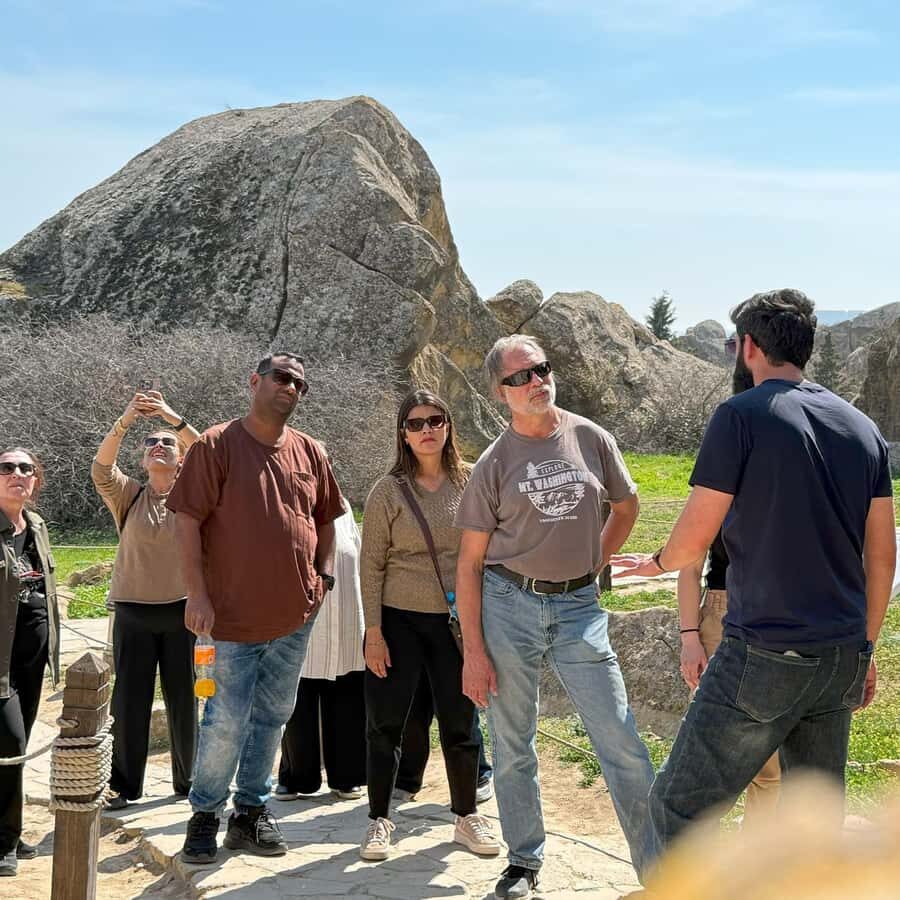
- Gobustan Rock Art (UNESCO): You’ll see petroglyphs tied to hunting, daily life, and ritual scenes dated roughly 5,000–20,000 years.
- Mud volcanoes off-road access: The visit includes an off-road car fee (25 AZN cash) collected at the start.
- Ateshgah Fire Temple in Surakhany: A pentagonal, castle-like complex connected to Iranian and Indian inscriptions and multiple religious traditions.
- Yanar Dag Burning Mountain: A natural gas flame that keeps burning on the Absheron Peninsula, with jets rising roughly 3 meters.
- Rain changes the mud volcano plan: If it rains, you’ll still pay the 25 AZN fee and go to the Mud Volcanoes Complex instead.
- Guide choice matters: Names like Vahid show up in positive feedback, while weaker English or rushing has been flagged with other guides.
Gobustan Rock Art: UNESCO petroglyphs with real scene-setting
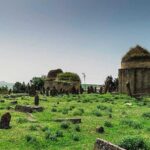
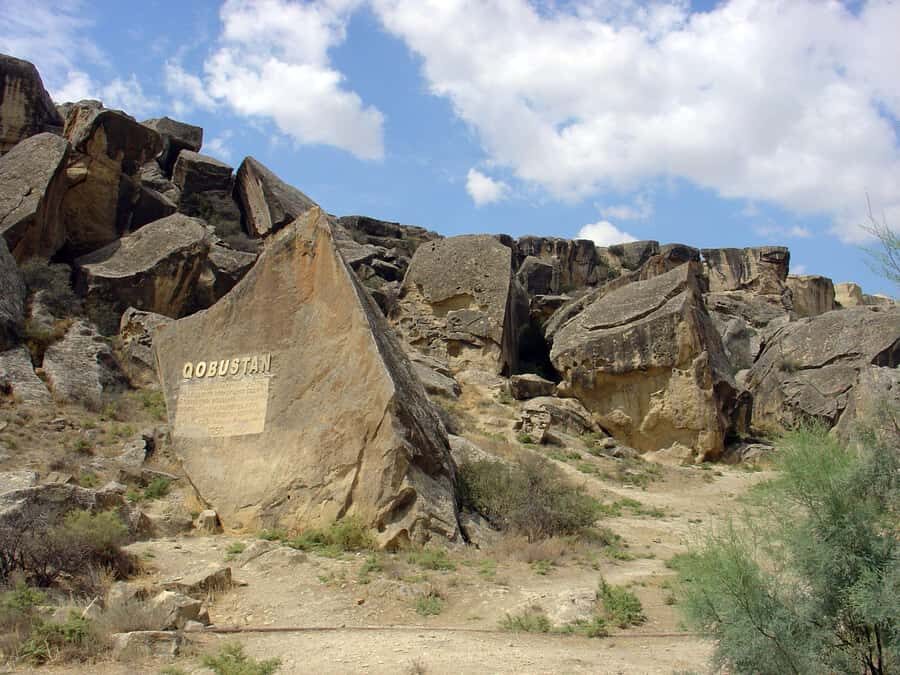
Your day starts with pickup in Baku, then you head to Gobustan National Park on the Absheron Peninsula. This is where the tour earns its keep fast: the Gobustan Rock Art Cultural Landscape is UNESCO-listed, and the rock carvings are the main reason you’re here.
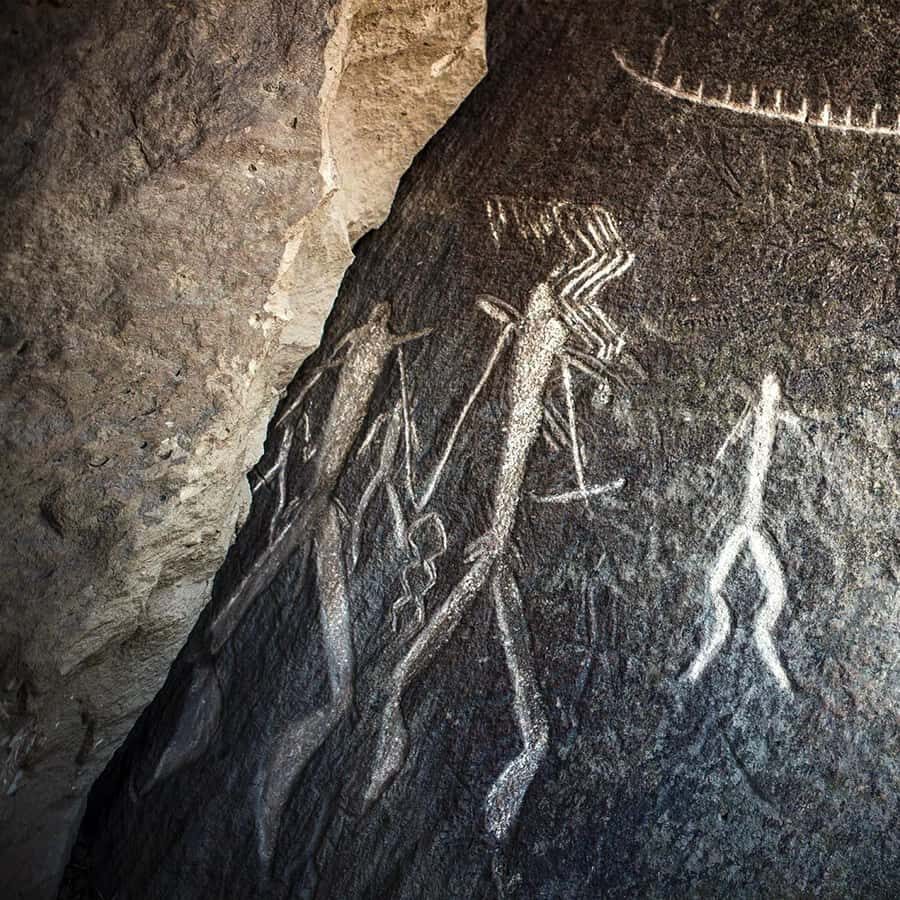
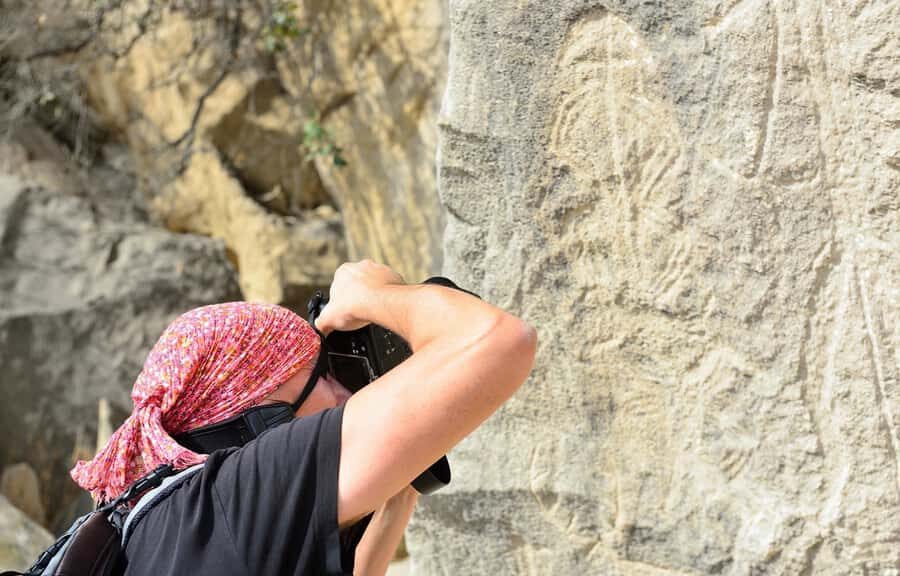
What I like about Gobustan is that the rock art isn’t just decorative. You’ll see scenes that feel like snapshots of prehistory and later periods: hunting moments, ritual dances, men holding lances, animal depictions, and even bull-fight-type scenes. There are also images of the sun and stars. It’s a mix of everyday life and belief systems—so instead of guessing what people did here, you’re looking at what they chose to show.
Time matters here. You’ll get about an hour for the guided exploration. That’s usually enough to walk the key areas, ask questions, and connect the dots without turning the stop into a grind. The park can feel open and bright, so wear comfortable shoes and bring a hat and sunscreen. If you hate heat, plan to treat this as your “get your bearings fast” stop—do it early, drink water, and then settle into the day.
One small drawback: if you’re the type who wants to read every carving like a museum exhibit, 60 minutes may feel tight. But for most people, the guided format is the sweet spot: you get meaning quickly, then you can take photos and move on.
You can also read our reviews of more tours and experiences in Baku.
Mud Volcanoes: the messy natural wonder (and the cash rule)
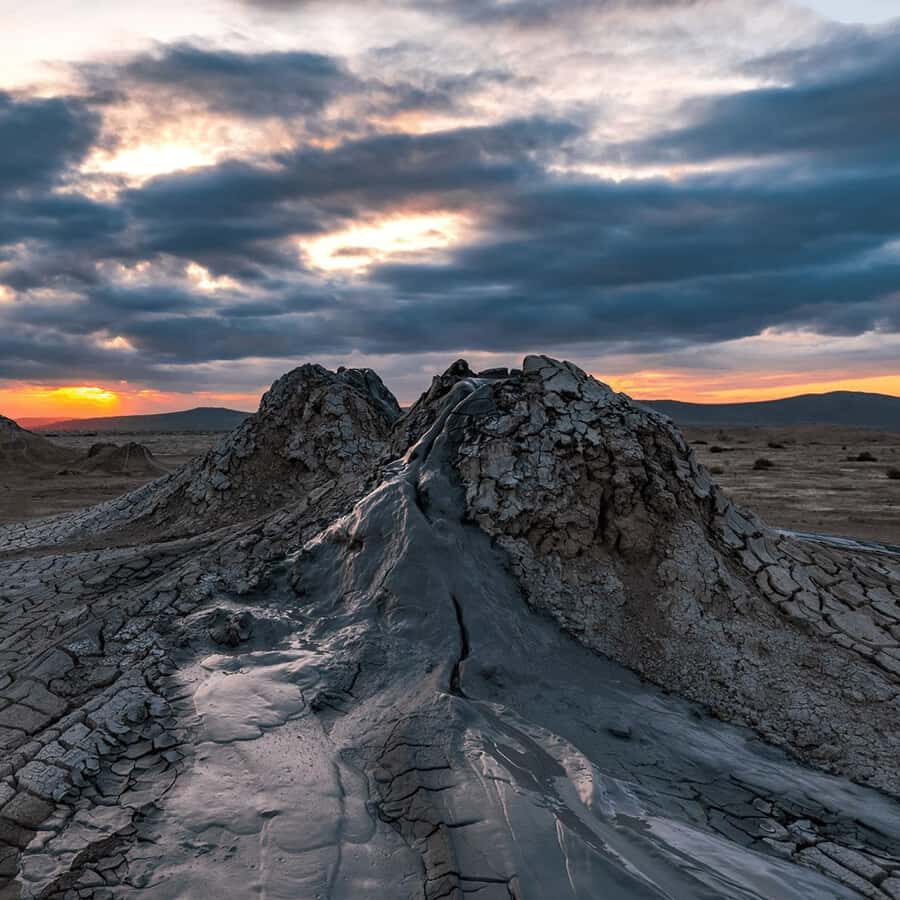
After Gobustan, the tour heads to the mud volcanoes. Azerbaijan has a lot of them—one reason this stop is so famous is the sheer concentration in the region. You’ll have about 20 minutes at this section, but it comes with an important detail: access involves an off-road car fee.
Here’s the practical part you should not ignore: the mud volcano visit requires a mandatory 25 AZN cash payment collected at the start. The reason is simple—getting close to the sites takes vehicles that can handle the terrain. And if it rains, the tour still keeps that 25 AZN fee, but instead of the typical out-on-the-ground approach, you’ll visit the Mud Volcanoes Complex.
So you should go in with the right expectations:
- You’re not signing up for a long hike with time to wander for hours.
- You’re signing up for a quick, guided “see it, understand it, move on” experience.
- You should keep your camera ready, because the setting is weird in a memorable way.
Also, bring water and expect uneven ground. Even if you don’t get muddy, the area tends to be the kind of place where shoes matter more than style. If you’re prone to slipping, slow down. The payoff is seeing how active these features can look in person—the mud and gas activity is not just a photo subject.
Ateshgah Fire Temple in Surakhany: Zoroastrian roots and later layers
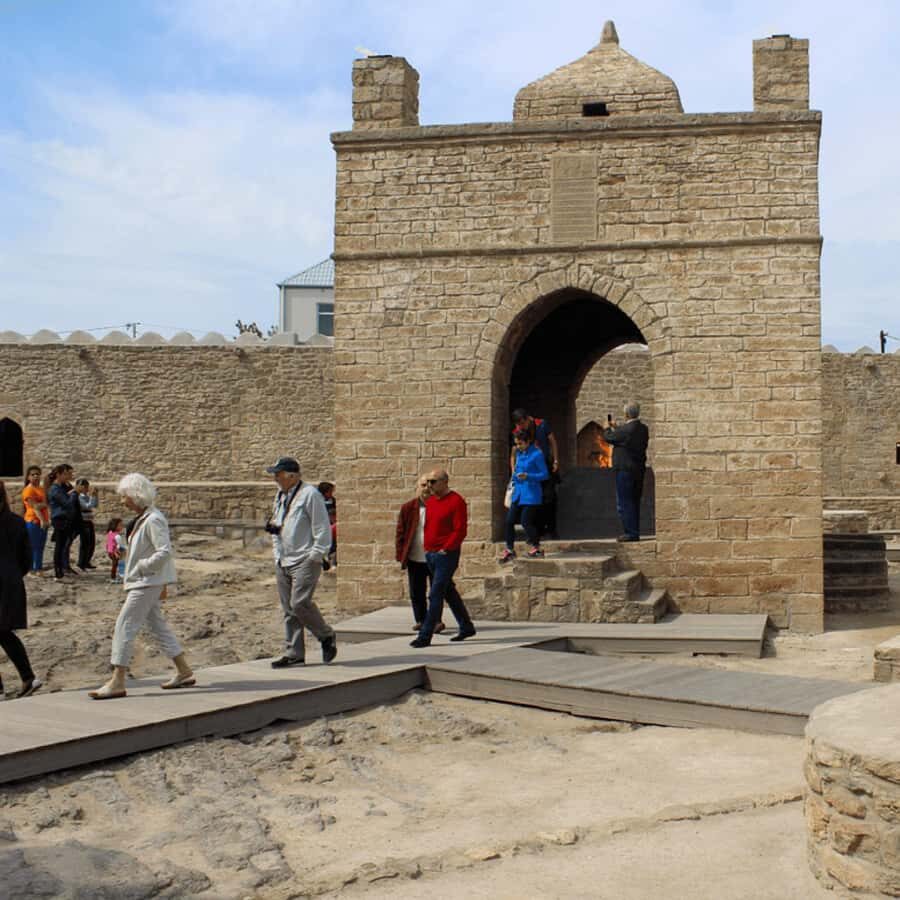
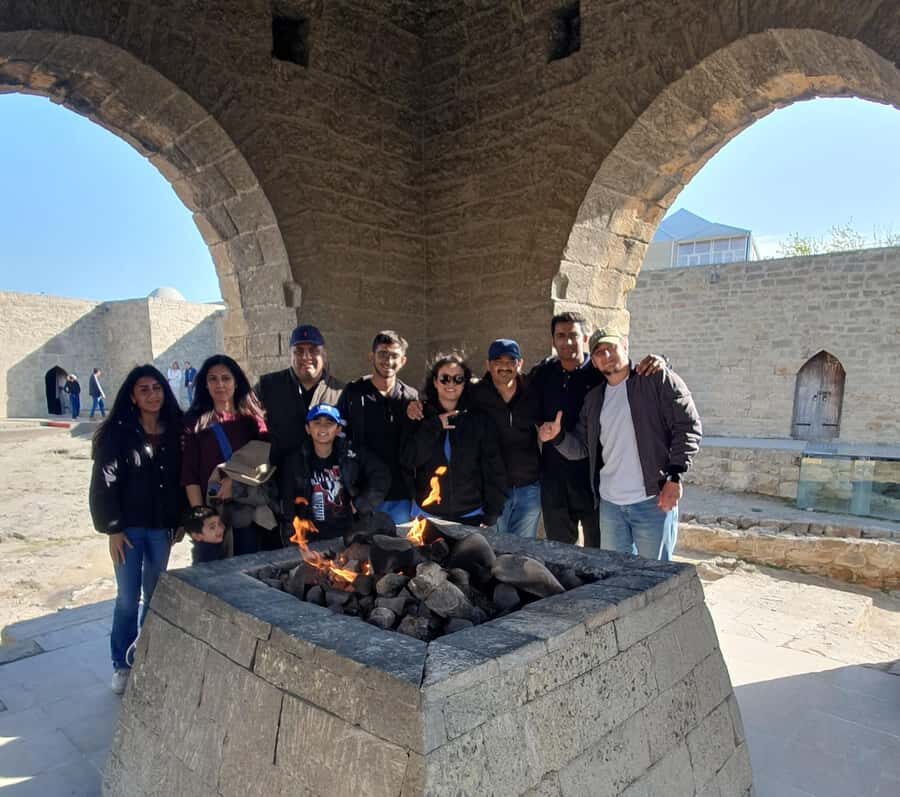
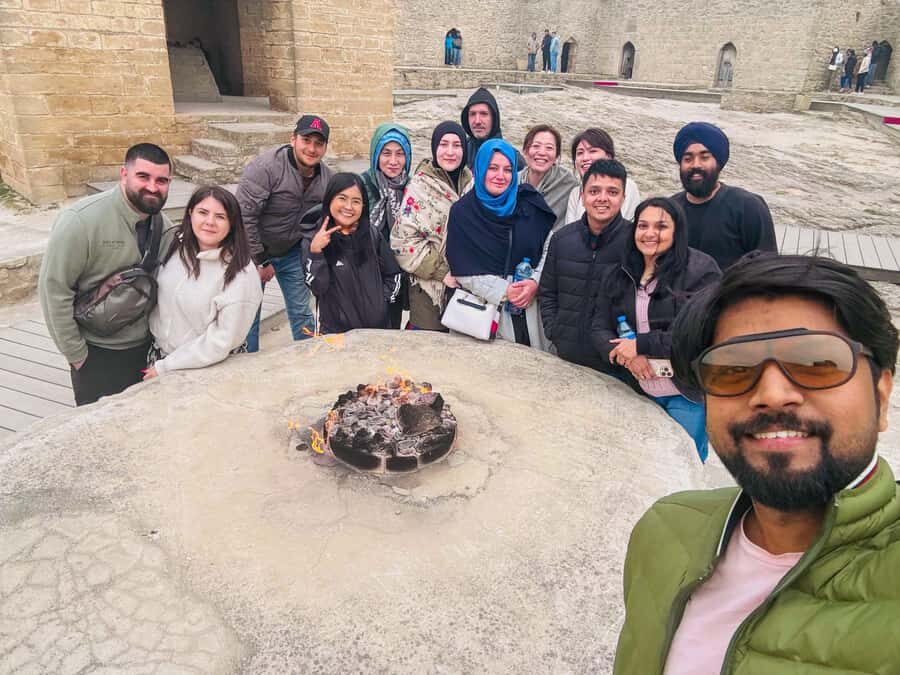
Next is the Ateshgah of Baku, often called the Fire Temple of Baku. This is in Surakhany town, and it’s a very different kind of “fire” stop than Yanar Dag. Instead of a flame driven by geology, you’re looking at how people built worship around that idea.
Ateshgah is described as castle-like and pentagonal, with a courtyard surrounded by cells and an altar in the middle. The temple was built during the 17th and 18th centuries, and it’s tied to Iranian and Indian inscriptions. Those inscriptions help explain why the site is often presented as a place where religious traditions overlapped over time—used as a Hindu, Sikh, and Zoroastrian place of worship.
That layered story is the value here. It helps you see why “fire” mattered across different communities in the region. Even if you don’t study religion, the architecture plus the inscriptions give you enough context to understand what people found meaningful.
You’ll get about 45 minutes with a guided visit. That’s usually enough to appreciate the layout and absorb the basics without rushing. The drawback is that the temple can feel less dramatic than the natural flame sites, so if you’re only chasing spectacle, you may need your guide to connect the history to the physical space.
If you’re trying to maximize value, ask your guide a question you actually care about—how did the inscriptions influence the interpretation of who worshipped here, and what does the design tell you about rituals? A strong guide will make the time count.
Yanar Dag Burning Mountain: the natural gas fire that keeps going
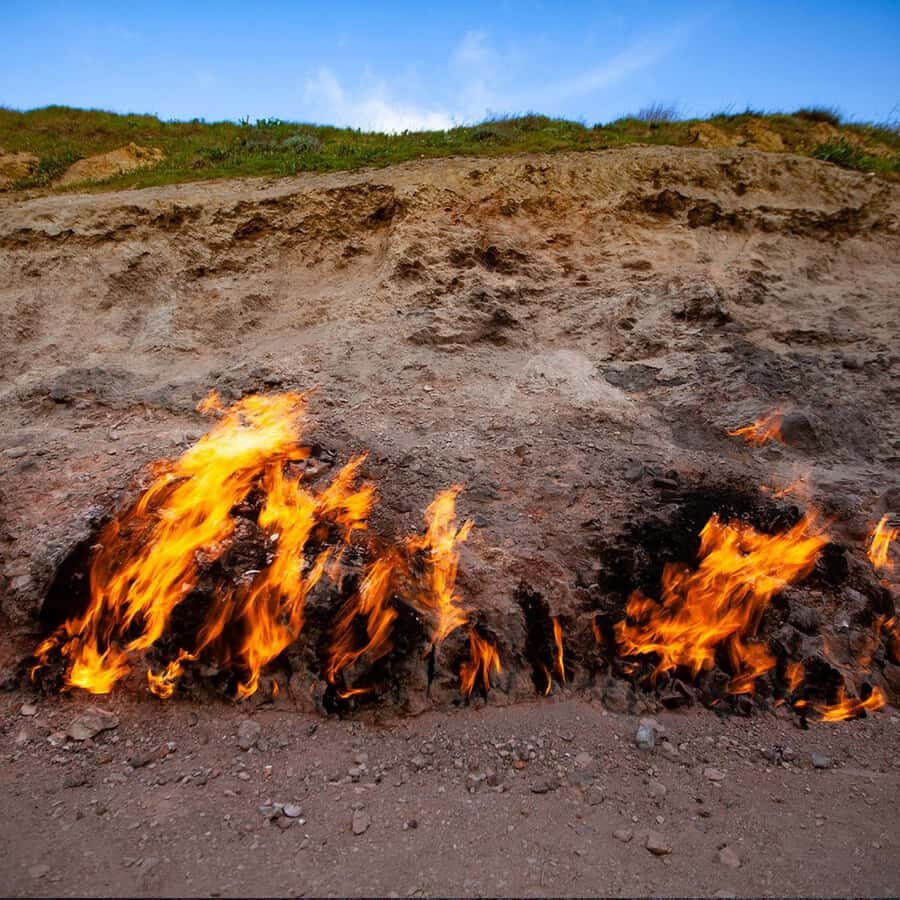
Then comes the star-ish stop for many people: Yanar Dag, also known as the Burning Mountain. This is a natural gas fire on the Absheron Peninsula near Baku, and it’s famous for one reason—its flames keep burning continuously.
The descriptions are vivid: flames jet roughly 3 meters into the air from a thin porous sandstone layer, and the fire is said to never go out. You can also expect a smell of gas around the open fireplace area. The flame sources come from vents in sandstone formations. At the base of a scarp, flames can rise to around 10 meters, with the fire concentrated within a wider hillside area.
The visit time is about 20 minutes. That sounds short, but it works because the spectacle is instant. You arrive, you see the flame structure on the hillside, you get photos, and you get your quick lesson on how natural gas makes this possible. There’s not much “walking museum time” needed for this one.
Practical tip: treat this as a photo stop, but stay aware. You’re near an active flame and gas environment, so follow your guide’s instructions, don’t wander into restricted areas, and keep moving when needed so you don’t get stuck waiting for a clear shot.
Compared with Ateshgah, Yanar Dag feels more like nature showing you something it doesn’t care about your calendar. That’s why it tends to land better—less explanation required, more wonder delivered.
Price and value: the $6 base fare plus real-world entrance costs
The tour price is listed as $6 per person, and that’s the part that looks like a bargain. But the tour is also very clear that you’ll pay separate entrance tickets for the main sites.
Here are the entrance fees you should plan for:
- Gobustan Rock Art: 10 AZN
- Mud volcanoes off-road cars: 25 AZN cash (mandatory), with the same fee even if it rains (Mud Volcanoes Complex instead)
- Ateshgah and Yanardagh: 15 AZN
So the true cost isn’t just the base fare. The value comes from the fact that the fee structure is predictable and the main sites you want—rock art, mud volcanoes, Fire Temple, and Burning Mountain—are all included as stops with guided time and transport.
If you want to reduce decisions during the day, choose the option that includes entrance fees. It also mentions a complimentary Baku Old City Tour, which can add extra value if you’re staying in Baku long enough to use it.
Bottom line: this is good value if you show up ready to pay the local site fees. If you hate the idea of cash at the start for the mud volcano access, then this tour might feel less “cheap” than it looks on the first screen.
Guide quality can make or break the day
A tour like this lives and dies by the guide’s ability to connect clues into a story. The good news is that the guide experience in the feedback you provided includes strong names and clear praise.
For example, Vahid is mentioned with positive notes like being knowledgeable and helpful, with lots of information at each stop. Aqil shows up in more critical feedback: weak English, short explanations, and even pushing for positive reviews has been flagged. The car itself has also been criticized in one case for being dirty on the outside, which can affect how comfortable the ride feels.
So here’s how to play it smart:
- If possible, pay attention to who your guide is before you settle in mentally.
- Bring 1–2 questions per stop. Even a weaker guide can sometimes answer direct prompts better than broad explanations.
- Don’t assume the day will be perfectly described. If your guide looks uncertain about details, ask something focused like the meaning of a specific carving theme at Gobustan or how the temple layout relates to worship.
The tour can still be worth it even with a mid guide, because the sites are powerful on their own. But your enjoyment will be higher with someone who can translate what you see into something you’ll remember.
What the timing adds up to (and how to plan your day)
You’ll see time blocks that add up to several hours of sightseeing:
- Gobustan Rock Art: about 1 hour
- Mud volcanoes: about 20 minutes
- Lunch break in Baku: about 1 hour
- Ateshgah: about 45 minutes
- Yanar Dag: about 20 minutes
The drive time between stops isn’t listed in detail, but you should assume the day includes transit to and from Absheron Peninsula sites. The “Duration: 8 minutes” detail in the booking area is likely about how the system handles availability selection, not the full day in the field—so don’t let that number confuse your expectations. Use the itinerary times above as the real guide to how much you’ll be moving.
Lunch is not included. You’ll have a break time in Baku of about 1 hour, so plan to grab food that’s quick and not too spicy if you’re getting heat fatigue. Bring water for the earlier stops, because you’ll be outside for Gobustan and Yanar Dag.
What to bring (this is not a sit-on-the-bus kind of day)
Bring practical basics because you’re outside for most of the highlights:
- Comfortable shoes
- Hat, sunscreen
- Camera
- Water
- Credit card (not required for fees if you pay cash at mud volcanoes, but helpful)
- Cash (important for the 25 AZN mud volcano off-road access)
And keep your day rules in mind. Smoking and alcohol/drugs are not allowed, and there are restrictions on pets and electric wheelchairs. Also, the tour isn’t suitable for wheelchair users and people over 95 years, based on the tour’s own suitability notes.
Who should book this Baku tour?
This tour fits best if you want variety without complexity. You’ll get:
- Ancient rock art that connects people, animals, and rituals
- A natural spectacle with the mud volcano features
- A Fire Temple tied to real inscriptions and layered worship
- A natural flame you can literally watch at Yanar Dag
It’s a smart choice for first-timers who want a full Abseron taste from Baku. It also works for travelers who don’t want a long, exhausting hike—time at each stop is capped, and transport handles the logistics.
If your travel style is slow and text-heavy, you may want more time at Gobustan or choose a different format. But for most people, guided timing is exactly what makes the day feel manageable.
Should you book the Gobustan, Mud Volcanoes, Fire Temple & Yanar Dag tour?
I’d book it if you like natural oddities and cultural stops, and you’re okay paying the local entrance fees on top of the low base price. The biggest reasons to go are the mix: UNESCO rock art, mud volcano access with a clear cash fee, and two “fire” experiences that explain the region from different angles.
Choose it especially if:
- You want one guided day that hits Gobustan + Ateshgah + Yanar Dag
- You don’t mind a short stop at each highlight in exchange for variety
- You can come with cash ready for the mud volcano off-road part
Skip or reconsider if:
- You really dislike extra payments on-site (even though the fees listed are clear)
- You’re worried about guide English or pacing—there are signals that guide quality can vary a lot
- You need wheelchair access or you fall outside the age suitability note
If you’re flexible and prepared, this is one of those tours where the places do most of the work—your job is just to show up with the right shoes, the right mindset, and cash in hand for the mud volcano ride.