REVIEW · BAKU
Baku Old Town Walking Tour
Book on GetYourGuide →Operated by Guide 4 U! · Bookable on GetYourGuide
Old Baku rewards slow steps. This 90-minute to 2-hour walk through Icherisheher (Baku’s Old City) turns famous sights into something you can actually picture on the street, from the Maiden Tower to the Palace of the Shirvanshahs. I love how the tour is built around an expert local guide who gives clear context and lively stories as you move.
My other favorite part is the mix: big monuments plus smaller, off-the-main-route stops like caravanserais and the Miniature Book Museum. The one thing to keep in mind is that tickets are not included, so a couple of entrances may cost extra depending on what you want to go into fully, and the whole route is still a brisk walk in a compact area.
In This Review
- Key highlights worth planning around
- Maiden Tower as your starting signal
- Entering Icherisheher: what to notice right away
- Maiden Tower views and the legends behind the skyline
- Palace of the Shirvanshahs: power meets daily life
- Juma Mosque: an active site with a rebuilt past
- Caravanserais and the Silk Road story in stone
- Shopping for Azeri crafts without losing the plot
- City walls and defense towers: protection you can see
- Miniature Book Museum: the quirky detour I keep liking
- Caspian Sea viewpoints: where the old city breathes
- Final stroll through courtyards, tea, and side streets
- Price and value: is $20 a smart deal?
- Timing, pace, and group style (private or small groups)
- The guide experience: warm storytelling makes it stick
- Who should book this Baku Old City walk
- Should you book the Baku Old Town Walking Tour?
- FAQ
- Where does the tour start?
- How long is the Baku Old Town Walking Tour?
- What languages are available?
- What is included in the price?
- Are tickets included for the attractions?
- Is the tour private or small-group?
Key highlights worth planning around
- Maiden Tower first, so you start with a landmark and a sense of direction
- UNESCO Icherisheher gates and lanes, where the stonework sets the tone fast
- Palace of the Shirvanshahs route, linking palaces, courtyards, and worship spaces
- Juma Mosque stop, an active place of worship with centuries of rebuilding behind it
- Caravanserais like Multani and Bukhara, for the Silk Road story in physical form
- Miniature Book Museum, a quirky detour that breaks up the monument rhythm
Maiden Tower as your starting signal
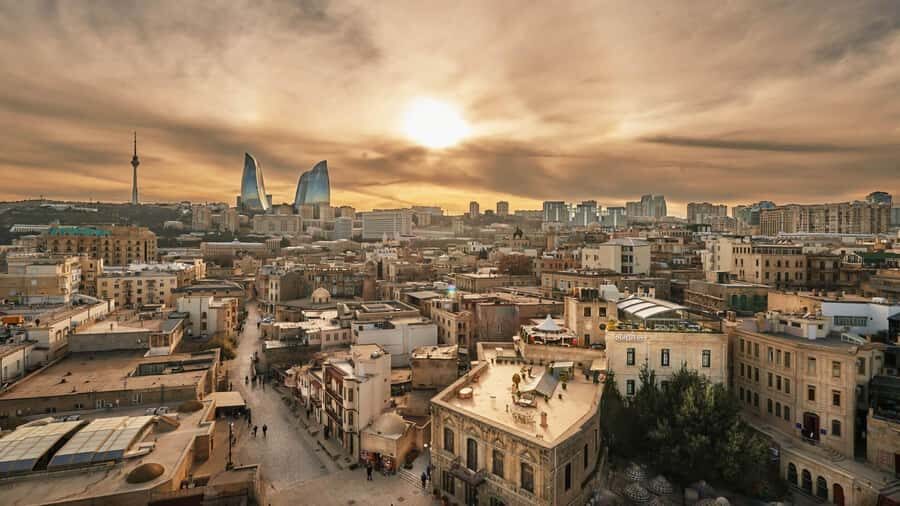
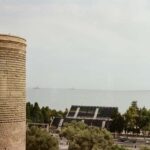
Starting at the Maiden Tower is smart, especially if you’re seeing Baku Old City for the first time. It’s instantly recognizable, and the tour’s flow makes you walk inward from a major landmark into the layered streets of Icherisheher.
It also helps with pacing. You get that first visual anchor before you start threading through narrow lanes, where it’s easy to lose your bearings without some structure.
You can also read our reviews of more walking tours in Baku
Entering Icherisheher: what to notice right away
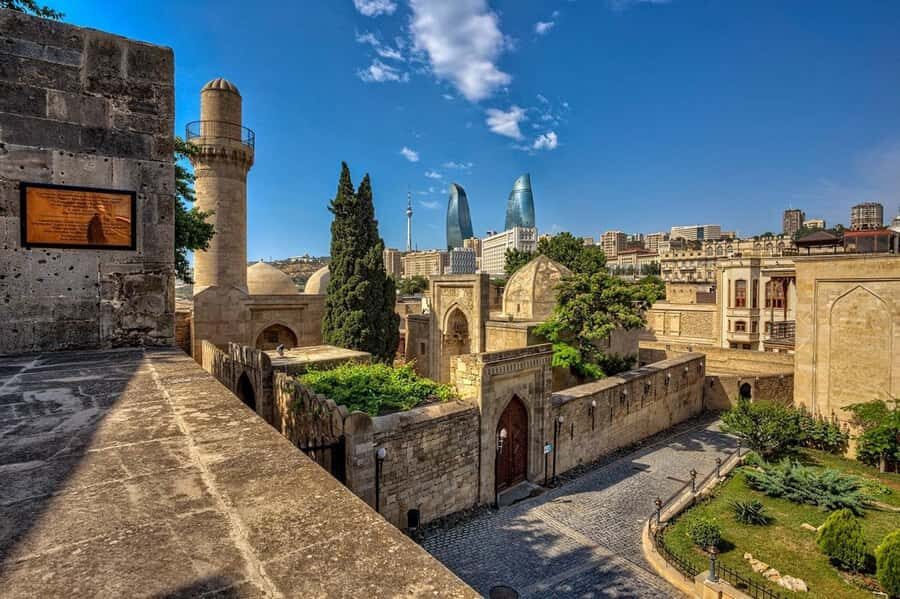
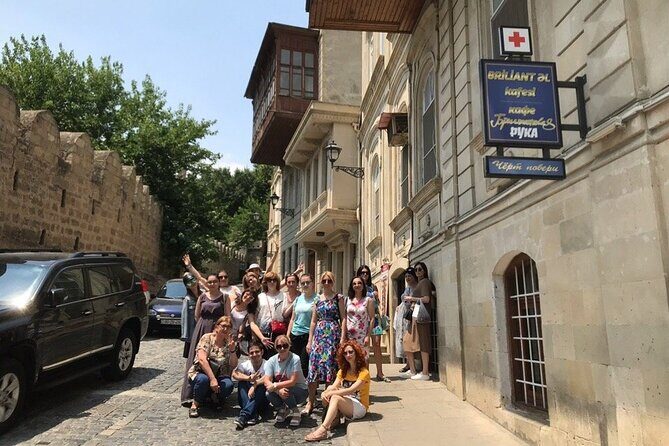
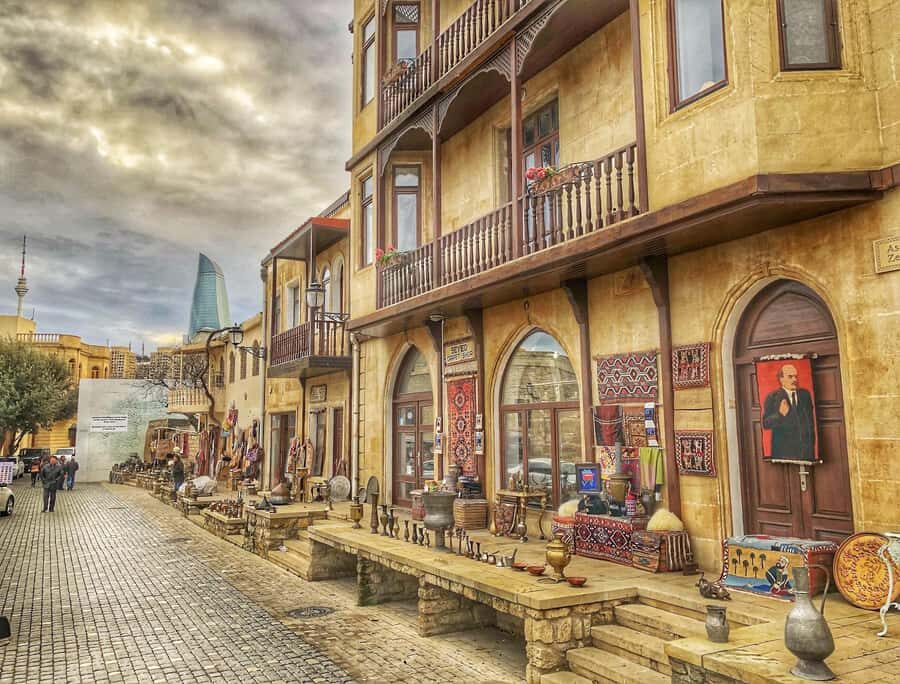
The tour begins with entry into Icherisheher, a UNESCO World Heritage Site. As soon as you pass through the old city gates, the scene changes from modern Baku to stone walls, tight streets, and that classic Old City feel.
Here’s what I’d watch for as you walk: how the streets bend and funnel you past key spots, and how the walls make the whole area feel protected and enclosed. Even if you’re not a history person, you’ll feel the difference in space and sound.
This part is also where a good guide matters. You’ll get local stories and historical framing right when your eyes are still calibrating, so everything clicks later at the major monuments.
Maiden Tower views and the legends behind the skyline
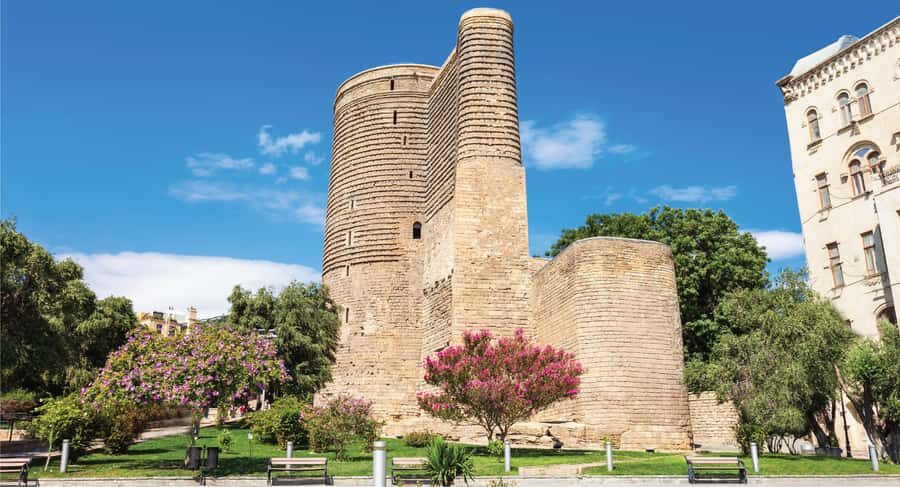
Next comes the Maiden Tower, one of Baku’s most iconic sights. It’s a 12th-century structure with the kind of mystery that makes you want to slow down, look closer, and ask questions.
A practical payoff: the tour includes time for panoramic views from the top. You’re not just ticking off a photo spot. You’re getting a sense of how the Old City sits above the rest of Baku and how the Caspian Sea fits into the story.
If you like architecture, this is a strong stop. The tower’s shape and the myths around it make more sense once you see the views that match the legends.
Palace of the Shirvanshahs: power meets daily life
After the tower, you move to the Palace of the Shirvanshahs, a 15th-century royal residence. What I like about this segment is the way it’s not treated like a single room and done. You’ll explore the inner chambers, courtyards, and religious spaces connected with the rulers’ world.
This palace stop works best when you pay attention to how the spaces connect. Courtyards and worship areas aren’t just decorative. They show you how authority, faith, and routine lived side by side in the same complex.
There may be ticket costs depending on what areas you choose to enter, since tickets aren’t included in the tour price. If you’re the type who wants to see everything accessible, build in a little extra budget so you don’t feel rushed.
Juma Mosque: an active site with a rebuilt past
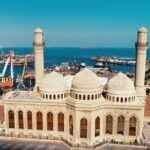
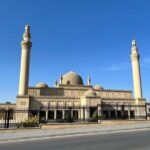
The route continues to the Juma Mosque, originally from the 12th century and reconstructed over the years. This is a “pause and look” stop because it’s still an active place of worship, not a museum set for tourists.
Practically, this gives your visit texture. You’re seeing a building that has continued to matter through time, and the guide’s historical context helps you connect the architecture to the idea of continuity and change.
If you prefer respectful, low-drama sightseeing, this stop is a nice change of pace from towers and palaces. Just be ready for a quieter moment and follow any on-site guidance you’re given.



Caravanserais and the Silk Road story in stone
Now you shift gears toward trade history, which is where Icherisheher stops being just about rulers and starts being about people on the move. The tour includes caravanserais such as the Multani and Bukhara Caravanserais, which historically provided shelter for Silk Road traders.
These buildings are fascinating because they show you infrastructure. You can almost imagine the rhythm of arrivals, departures, and negotiation. A good guide will connect this to Baku’s role as a crossroads, so the sites don’t feel like random stops you point at for a photo.
The value here is that you get “why it existed” alongside “what it looks like.” That’s what turns stone into story.
Shopping for Azeri crafts without losing the plot
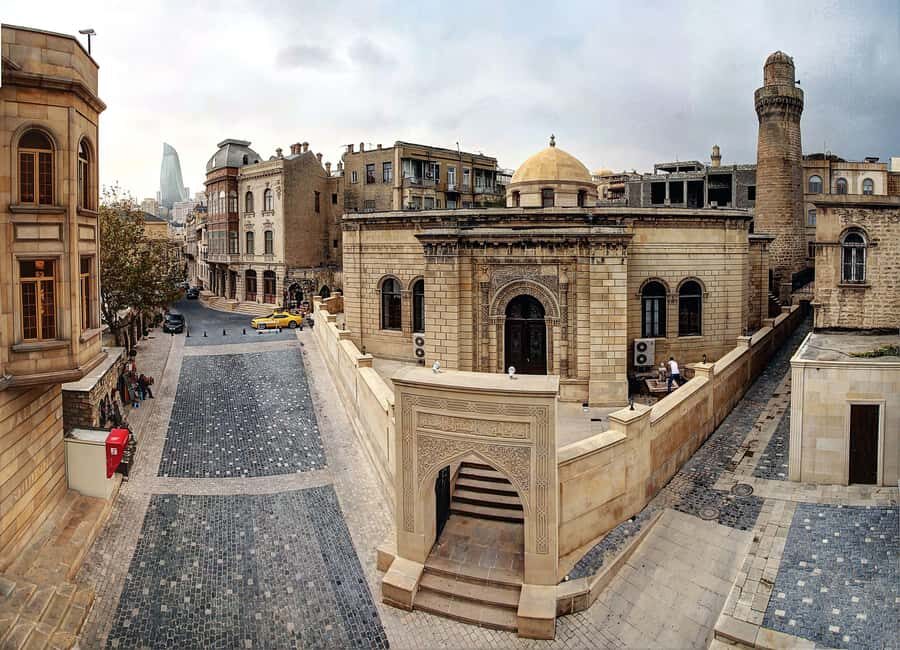
As you walk through the winding lanes, you’ll pass handicraft shops and art galleries. The tour mentions traditional Azeri rugs and ceramics, along with handmade goods, plus some modern Azerbaijani art in gallery spaces.
I don’t treat the shopping stops as a sales trap on this tour. Instead, it’s an opportunity to see how local craftsmanship fits into the historic setting. Even if you don’t buy anything, you’ll learn how materials and patterns connect to culture.
If you do want to shop, keep your expectations real. A walking tour in a historic area moves you along, so you’ll likely have short windows to compare items. My advice: set a simple goal before you start—like deciding what you’re willing to spend or what category you’re hunting—so you don’t get swept up.
City walls and defense towers: protection you can see
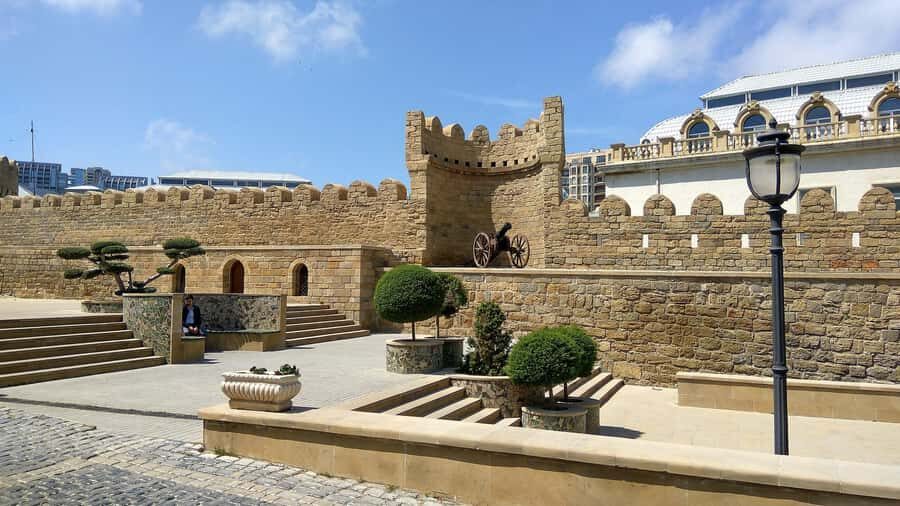
Next up are the fortified walls and defense towers that protected Icherisheher through history. Some portions date back to the 12th century, and that age matters because the construction is still part of how the Old City looks and feels today.
This stop helps you understand why the Old City is what it is. When you see defensive structures in place, the narrow streets make more sense and the idea of “contained” becomes more than a vibe.
It’s a good reminder that the Old City wasn’t just decorative. It was functional.
Miniature Book Museum: the quirky detour I keep liking
One of the most unique parts of the route is the Miniature Book Museum. It’s described as unique to Baku and features a collection of tiny books from around the world.
This is exactly the kind of stop that makes a short tour feel longer in a good way. Your eyes and brain reset from monuments, and then you carry that curiosity forward into the next streetscape.
If you’re the type who enjoys unusual cultural details, this will feel like a bonus rather than a detour. And even if you’re not, it adds personality to the overall walk.
Caspian Sea viewpoints: where the old city breathes
As you reach high points near the end of the route, you get panoramic views toward the Caspian Sea. This is one of those moments that makes the Old City feel tied to the rest of Baku instead of stuck in the past.
I like this segment because it turns photos into understanding. From these viewpoints, you can see how the modern city and the historical core overlap, which helps you plan the rest of your day if you’re staying longer.
Final stroll through courtyards, tea, and side streets
The tour concludes with a leisurely walk through the Old City streets, passing tea houses, traditional eateries, and hidden courtyards you might want to explore after the tour ends.
This ending is practical. By then, you’ve got context for what you’re seeing, so you can choose where to linger. You’re also in the right mindset to look for lanes and angles that you might otherwise miss.
If you want to keep momentum, this is a good moment to ask your guide for a quick recommendation for where to grab a bite or coffee nearby. Just remember your own pace matters more than checking every single spot.
Price and value: is $20 a smart deal?
At $20 per person for a 90-minute to 2-hour guided walk, this tour is priced like a solid, focused introduction rather than a long museum day. You’re paying mainly for a professional guide and a structured route that hits major landmarks plus cultural curveballs.
The main value variable is tickets. Since tickets aren’t included, your final spend may creep up if you choose paid entry areas or if you want maximum access at the palace and tower-related sections.
Still, if you want to see a concentrated set of Old City highlights without getting lost, the price-to-time ratio is fair. It’s also a good fit when you only have part of a morning or afternoon in Baku.
Timing, pace, and group style (private or small groups)
The duration lands in a sweet spot for active sightseeing. You’ll be walking throughout, stopping often enough to learn and look, but not so long that you feel stranded in one area.
The tour also offers private or small groups. That matters because Old City walking can get crowded. A smaller group usually means better flow through tight lanes and more chance to ask questions without waiting your turn.
English, Russian, and Turkish are offered, so pick the language you’ll feel most comfortable asking follow-ups in. If you’re choosing between languages, I’d go with what lets you catch details like dates and the stories behind each building.
The guide experience: warm storytelling makes it stick
Good guiding is the difference between seeing buildings and understanding them. The tour is designed around stories and local perspectives that bring each stop to life.
In past experiences with this style of tour, guides such as Leyla or Agil have been described as open and warm, and the agency director Ismail has also been mentioned as part of the friendly operation. Even if your exact guide differs, the pattern to expect is a personable, story-driven walkthrough rather than a strict lecture.
Who should book this Baku Old City walk
This tour is a great match if you want:
- A clear route through Icherisheher without getting lost in the lanes
- The big landmarks plus the smaller culture stops that add personality
- A guide who connects buildings to how people lived, prayed, traveled, and traded
It may be less ideal if you prefer long independent time, heavy museum-style pacing, or you want to linger for long shopping sessions. The walk is structured, and the time moves.
Also consider your priorities. If your main goal is just one monument, you might feel you’re paying for variety. If your goal is a coherent Old City picture, this fits well.
Should you book the Baku Old Town Walking Tour?
I’d book it if you want a straightforward way to get oriented in Baku Old City and leave with a real sense of how the tower, palace, mosques, and trade sites connect. At $20, it’s a reasonable price for a guided, multi-stop walk that also includes a quirky detour like the Miniature Book Museum.
Just go in knowing that tickets may add cost, and that you’ll be walking through compact cobbled streets with a guided pace. If you’re okay with that, you’ll likely finish the tour feeling like the Old City finally made sense.
FAQ
Where does the tour start?
It starts at the Maiden Tower.
How long is the Baku Old Town Walking Tour?
The duration is about 90 minutes to 2 hours.
What languages are available?
The tour guide offers live guidance in English, Russian, and Turkish.
What is included in the price?
The price includes a professional guide and the tour itself.
Are tickets included for the attractions?
No. Tickets are not included.
Is the tour private or small-group?
It’s available as private or small groups.