REVIEW · BAKU
Gobustan and Absheron trip (Group or Private)
Book on Viator →Operated by Azerbaijan Travel · Bookable on Viator
Flames and fossils in one Baku day. This Gobustan and Absheron day trip strings together Azerbaijan’s strangest icons, from UNESCO rock art to mud volcanoes and burning-history stops across the Absheron Peninsula, all with hotel pickup and a small-group format (up to 17 people).
I love the small-group attention, so you’re not lost in a crowd while your guide turns each site into a real story. I also love the UNESCO-grade Gobustan rock art side of the day, with both an outdoor/indoor reserve experience and a modern interactive museum. One thing to consider: the mud volcano portion depends on weather, so the day can shift if conditions aren’t right.
In This Review
- Key things to know before you go
- Why Gobustan plus Absheron feels like the right one-day mix
- Price and logistics: what’s included, what you’ll still pay
- The pickup and pacing: small group can be a blessing (and a tight fit)
- Gosha Gala Tower: a quick start and a clean return point
- Mud Volcanoes in Gobustan: up close, but weather decides
- Gobustan Rock Art and museums: thousands of engravings, modern context
- The reserve experience
- The interactive museum stop
- Absheron lunch break: plan for the extra cost
- Ateshgah Fire Temple: Zoroastrian roots and later worship layers
- Yanardag Burning Mountain: the natural flames effect
- Bibi-Heybat Mosque: architecture, tomb, and spiritual center
- Should you book this Gobustan and Absheron day trip?
Key things to know before you go
- Small group (max 17): easier Q&A and more guide time than big buses.
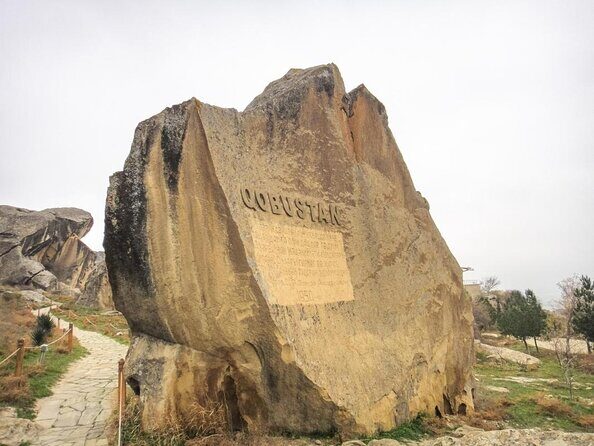
- Gobustan’s UNESCO rock art is the main event: expect thousands of engravings and multiple ways of seeing them.
- Mud volcanoes are weather-dependent: plan for possible changes on the day.
- Ateshgah and Yanardag are the fire-worship pair: one historical temple, one natural burning hill.
- Lunch is extra and on you to pay: the tour includes the stop, not the meal cost.
Why Gobustan plus Absheron feels like the right one-day mix
If you only have time for one full day around Baku, this is a good choice because it hits two totally different sides of the country in the same hours. You start with Gobustan’s Stone Age to medieval-era human marks—rock carvings, caves, and burial remains. Then you pivot to Absheron’s fire mythology, where “Land of Fire” goes from nickname to something you can actually stand near.
The structure matters. You’re not just hopping between scenic viewpoints. You’re pairing each big site with context: what you’re looking at, why it mattered, and how it connects to Azerbaijan’s story. In the best moments, the guide will slow the group down just enough for it to sink in.
Also, the cost-to-time ratio is strong. At $30 per person for an ~8-hour day with hotel pickup/drop-off and a guide, you’re paying a lot less for the logistics than many day tours elsewhere. The main trade-off is that several admissions and lunch are not included, so budget for those add-ons.
You can also read our reviews of more private tours in Baku
Price and logistics: what’s included, what you’ll still pay
At $30 per person, the “included” part is mostly the human and transportation pieces. You get:
- a professional guide (English and Russian)
- an air-conditioned vehicle
- hotel pickup and drop-off
Some stops list admission as free (like Gosha Gala Tower and Bibi-Heybat Mosque), but other parts explicitly say tickets are not included—most notably the mud volcanoes and Gobustan rock art museum experiences. Lunch is also extra.
So think of this day as a value bargain on transportation and guiding, with a few paid-on-site items layered in. If you’re the type who hates surprise costs, bring a little extra cash and a willingness to pay for entry when you arrive.
The day also runs with a mobile ticket setup, and the group stays small—max 17—so it’s not a chaotic stampede.
The pickup and pacing: small group can be a blessing (and a tight fit)
Hotel pickup and drop-off make the day easy. You won’t be figuring out buses or fighting your way through Baku traffic before your first stop. You also get a vehicle suited to long stretches out of town.
A small group is the big advantage here. In the same group size range, guides like Seb, Nazif, and Leyla were praised for staying on top of details and keeping the story moving site by site. That matters at places like Gobustan, where there’s a lot to look at and it’s easy to miss the meaning if you’re only snapping photos.
The trade-off is time. Some stops are short—often 15 to 30 minutes—and the overall day is packed. If your priority is lots of photo time at every viewpoint, you may feel a bit rushed in certain segments. You can still get great photos, but the schedule doesn’t run on your pace—it runs on the day’s sequence.
Gosha Gala Tower: a quick start and a clean return point
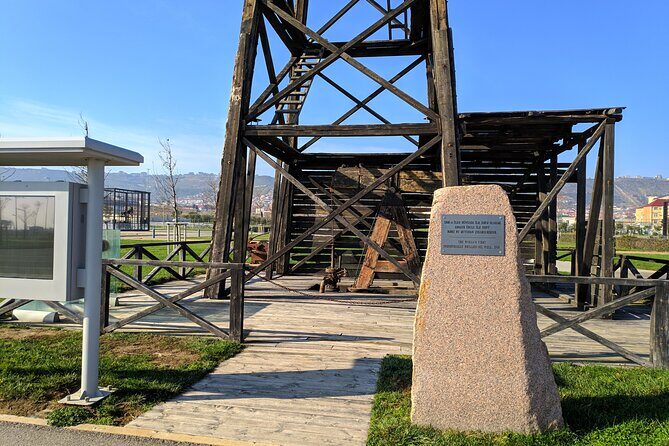
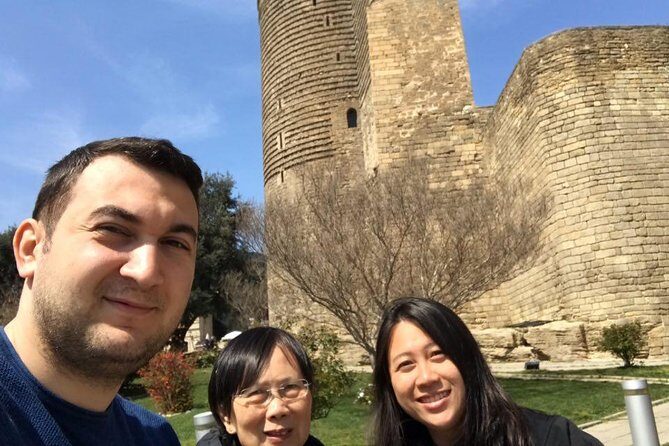
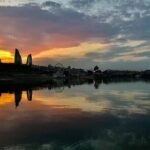
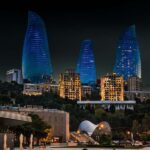
You’ll begin (and later return) at Gosha Gala Tower. The duration shown is short—about 15 minutes each time—and admission is listed as free. That makes it a useful “anchor” for the day. It’s how the tour keeps everyone together at the start and again at the end.
Practically, this stop is less about a long sightseeing moment and more about setup. You get your bearings, meet your guide and driver, and then roll out toward Gobustan. At the end, the return to the starting point keeps the day tidy—no wandering back across town after a long outing.
Mud Volcanoes in Gobustan: up close, but weather decides
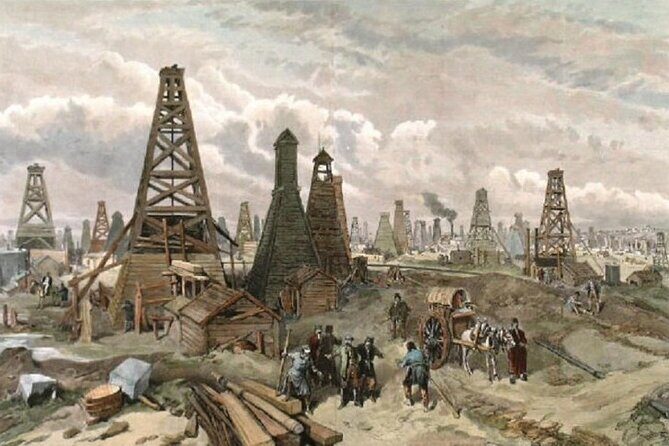
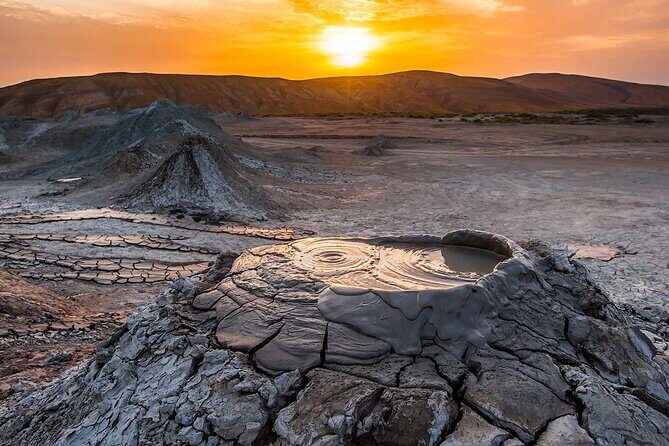
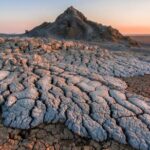
This is one of the most memorable parts because it’s unusual and physical. Mud volcanoes in Azerbaijan aren’t the classic red-lava kind. The story here is about natural gas and earth activity that creates eruptions of mud, and locals give them names tied to what you can see—burning mountain (Yanardagh), boiling water (gaynacha), and grey mountain (bozdag).
The scale is part of why the stop is worth prioritizing. The information you’ll hear emphasizes that Azerbaijan holds a large share of the world’s known mud volcanoes, with many in the Gobustan region. And the trip is designed to get you close rather than only looking from far away.
Transportation is tailored for the route. The day notes that they use special taxi due to road conditions, and then an additional car is mentioned—Soviet-era Lada 4×4 vehicles—to reach the volcano area. That detail hints at what your experience will feel like: this is not a smooth highway ride all the way, and it’s part of the adventure.
Two tips for managing expectations:
- the stop explicitly depends on weather
- it’s possible the exact access/viewing can change if conditions aren’t favorable
This is the key “maybe not perfect” factor on the day. If the weather is off, your guide will need to pivot, and that can affect how long you get to see the volcanoes.
Gobustan Rock Art and museums: thousands of engravings, modern context
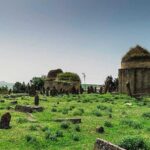
Gobustan is where the day earns its UNESCO status. You’ll spend time at both a local reserve experience and a modern interactive museum complex.
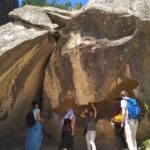
You’ll see engravings that represent an enormous span of human time—rock art connected to Upper Paleolithic through later periods, plus remains of inhabited caves, settlements, and burials. The information provided points to more than 6,000 rock engravings and a claim of 40,000 years of rock art. That’s not a “quick photo” type of site. The best moments happen when someone helps you read what you’re looking at.
The reserve experience
One part of the day is described as visiting the Gobustan local indoor and open-air museum with reserve territory strolling. The outdoor pieces are the real draw: you’re looking at engravings and the physical remnants tied to how people lived after the last Ice Age and through later eras.
The outdoor setting is important. You’ll feel the continuity: the art isn’t in a protected glass room—it’s in the same environment where it was made.
The interactive museum stop
Then you move into the modern museum complex. This is where the day balances “ancient” with “understandable.” The museum opened in 2011 after reconstruction and includes a large collection of archaeological materials—over 100,000 mentioned in the description.
Expect things like touchscreens and thematic sections with information in multiple languages. You’re also likely to see petroglyphs featuring the Azerbaijani Yalli round dance at the entrance. The point isn’t just entertainment. It’s wayfinding. You get help turning a confusing wall of figures into something you can actually interpret.
Because the stop durations are short, I’d treat this as a first viewing, not a deep study. You’ll likely want to come back someday if you get hooked, but for a single day tour, it’s a strong mix.
Absheron lunch break: plan for the extra cost
After Gobustan, you head into the Absheron region for lunch at a traditional restaurant. Lunch is listed as extra, even though the tour includes the stop and time (about 1 hour).
In one example from the guide experience, people paid around 20 manat per person for a lot of food. That gives you a rough sense of what to expect budgeting-wise. Since the tour doesn’t include lunch, your final cost depends on what you order and drink (alcohol is not included).
Practical advice: eat early in the hour if you can. The day keeps moving, and you don’t want to be late for the next religious-history stops.
Ateshgah Fire Temple: Zoroastrian roots and later worship layers
Ateshgah—often called the Fire Temple of Baku—is a castle-like religious site in Surakhani, a suburb of Baku. The “fire” part matters here because it’s tied to naturally burning flames that were worshipped by Zoroastrians.
The details you’ll hear connect multiple faith traditions across time. Based on Persian and Indian inscriptions, the temple was used as a Hindu and Zoroastrian place of worship. Historically, it’s described as a major pilgrimage site for fire-worshipping Hindus until the 1880s. Later, in the early 19th century, the complex took the form you see today.
This stop is fascinating for one main reason: it shows that fire wasn’t just folklore. People built rituals around what they experienced in the landscape, and that’s exactly what keeps the site relevant to visitors now.
Time is tight (about 30 minutes), so focus on the big story beats: why fire mattered, what the inscriptions imply, and how the architecture connects to worship.
Yanardag Burning Mountain: the natural flames effect
Yanardag—often translated as Burning Mountain—is one of Azerbaijan’s icons for a reason. It’s about 23 km from Baku’s Old Town and features a constantly burning wall of flames along a hill. The explanation given is grounded in natural gas leaks from rocks due to tectonic shifts and volcanic material below.
This is one of those places where your brain wants to say, okay, how is this real, and then you just stand there and watch it happen. The tour description even notes a travel reference: Marco Polo mentioned the flames in his travels to Baku and surroundings, and the implication is that the burning has been going on for a very long time.
To protect the area and manage tourism, the site was declared a historical, cultural, and natural reserve in 2007. That context helps you understand why you’re visiting within a protected framework rather than treating it like a random roadside spectacle.
The stop is short (about 20 minutes), but it’s the kind of short that works. You don’t need hours. You need your eyes to register what’s going on, and then move on.
Bibi-Heybat Mosque: architecture, tomb, and spiritual center
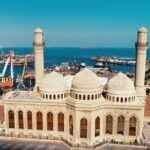
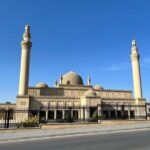
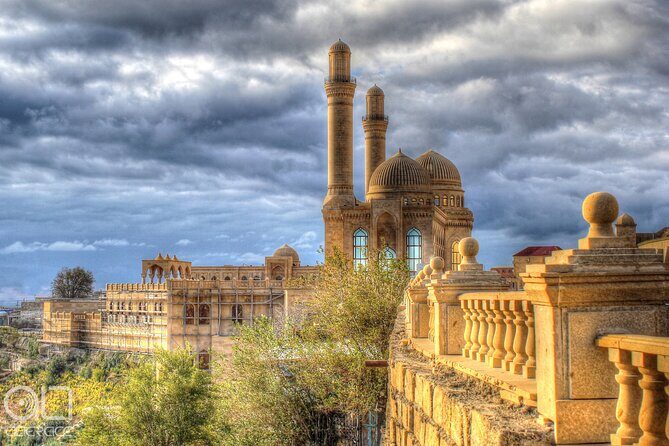
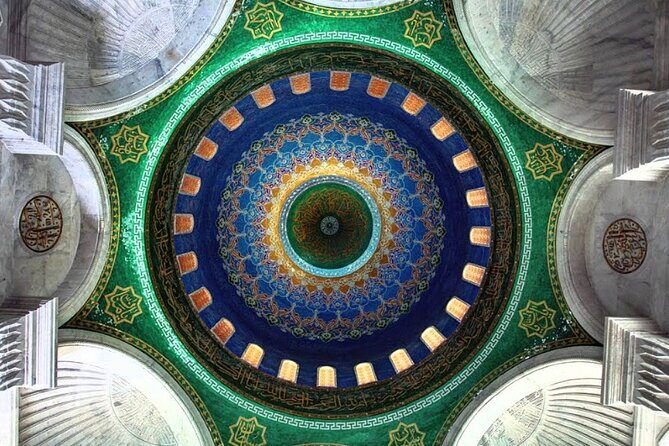
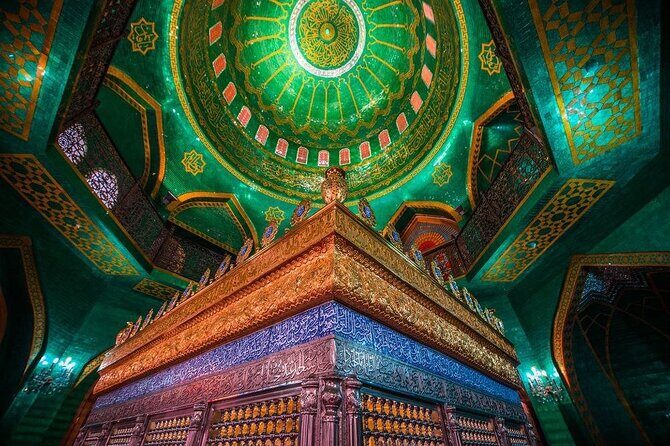
Next is Bibi-Heybat Mosque, built between 1267 and 1300. This is one of the major Islamic architecture monuments in Azerbaijan, and it’s described as having a spiritual role for Muslims in the region. Locally, it’s also known as the mosque of Fatima.
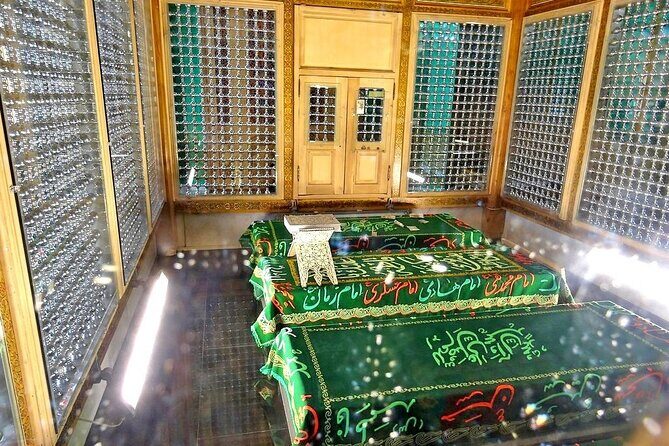
The mosque includes the tomb of Ukeyma Khanum, described as a descendant of Muhammad. That adds a layer of personal significance beyond dates and architecture.
One more wrinkle: the current structure was built in the 1990s as a recreation of the earlier mosque with the same name. That means you get a site with deep roots, but also a modern rebuilding story. It’s worth noticing because it explains why the look you see today isn’t necessarily the original medieval fabric.
Plan on about 15 minutes here. Use it for a calm reset after the more dramatic fire stops.
Should you book this Gobustan and Absheron day trip?
I’d book this tour if you want a single day that covers:
- UNESCO-level Gobustan rock art with both reserve views and a modern interactive museum
- close-up mud volcanoes (with the understanding that weather can affect access)
- the Absheron fire theme through Ateshgah and Yanardag
- a well-chosen mosque stop near Baku’s cultural heart
I’d skip it or choose another option if you dislike schedule pressure. Several stops are short, and you’ll be moving from one highlight to the next. Also, if your dream is only mud volcanoes at peak conditions, remember that the volcano segment is weather-dependent.
If you do book, come prepared with this mindset: the value is in the combination. You’re not just buying tickets to sights. You’re buying a guided way to connect Azerbaijan’s geology, ancient life, and fire myths into one coherent day.