Three fires, one tight route.
This VIP-style half-day is a fast education in Azerbaijan’s ancient fire worship and multi-faith past, with a chauffeured private vehicle and a real guide talking through what you’re seeing. I also like that the tour is run with clear timing and professional handling, which matches what I’ve seen praised about AzTerra Travel guides such as Farman and Karim (names show up in feedback, though your exact guide may vary).
The main thing to watch is practical: entrance tickets are not included for Ateshgah and the Gala Museum Complex, so budget a bit extra and plan your arrival with that in mind.
In This Review
- Key points worth knowing before you go
- How this 4-hour Absheron tour works in real life
- Ateshgah Fire Temple: where different faiths met around burning gas
- Gala (Qala) Archaeological and Ethnographic Museum Complex: tombs, mosques, and baths
- Yanar Dag: Azerbaijan’s burning hill and why dusk matters
- Price and logistics: is $95 good value here?
- What the best guides and smooth planning add to the day
- Who this tour suits best (and who may want to think twice)
- Should you book this private Ateshgah, Gala, and Yanar Dag tour?
- FAQ
- What time does the tour start, and how long is it?
- Is hotel pickup and drop-off included?
- Is this a private tour?
- Are entrance tickets included?
- Is food or drinks included?
- Is insurance included?
- Can I get a refund if I cancel?
Key points worth knowing before you go
- Front-door hotel pickup and drop-off keeps this Absheron loop easy, even if you’re not hiring a car.
- Three stops in about four hours means you’ll see a lot, but you won’t get a slow, linger-all-day pace.
- Ateshgah’s burning-gas story is the hook: natural gas outlets helped shape why this site mattered for different faiths.
- Gala (Qala) Complex covers huge time spans from the 3rd millennium BC to the 20th century, not just one era.
- Yanar Dag entry is free, and it’s the kind of place where timing affects what you notice.
How this 4-hour Absheron tour works in real life
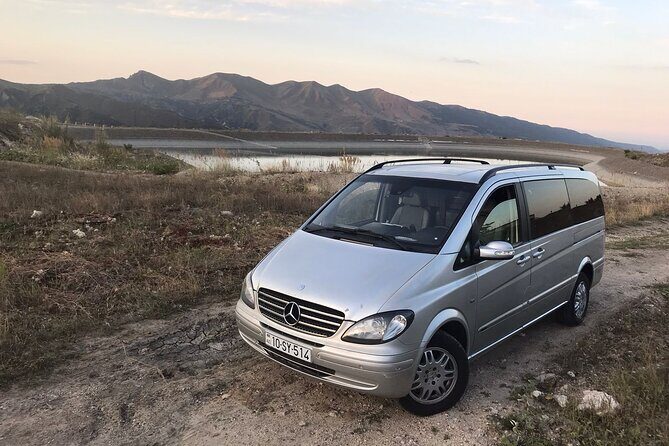
This starts at 9:30 am and runs about 4 hours, including travel and guided time at each stop. You’re in a private vehicle with a professional guide, and you’ll get hotel pickup and drop-off. That matters more than it sounds: Absheron Peninsula sites can be spread out, and doing it on your own usually means added stress—traffic, parking, and figuring out what to prioritize.
The pacing is structured. You’ll spend around 40 minutes at Ateshgah, 40 minutes at the Gala (Qala) Archaeological and Ethnographic Museum Complex, and about 30 minutes at Yanar Dag. So think of this as a guided highlights pass: enough time to understand the story, not enough time to read every label or return later.
You’ll also have a mobile ticket, which reduces friction when you arrive. And because it’s a private tour, it’s only your group—no mixing with strangers mid-day.
You can also read our reviews of more private tours in Baku
Ateshgah Fire Temple: where different faiths met around burning gas
Ateshgah is located on the Absheron Peninsula, about 30 km from central Baku, near the outskirts of Surakhani village. On paper, it sounds like a single religion. In reality, it’s a site tied to different eras and communities, including Zoroastrians, Hindus, and Sikhs.
What makes Ateshgah click fast is the reason people came: the region has burning natural gas outlets. The idea is straightforward but unforgettable—underground gas reaches the surface, mixes with oxygen, and ignites. The effect is not just symbolic. It’s physical, right there on the ground.
The temple you see today was constructed in the 17th–18th centuries, and it’s associated with the Baku-based Hindu community related to Sikhs. The complex is pentagonal, built around an open courtyard. At the center is the temple-altar, which was the focus for pilgrimage worshippers.
Practical note: you’ll have about 40 minutes here, and admission tickets are not included. So I’d treat Ateshgah as your first “buy the ticket, start the story” stop. If you don’t like paying on arrival, it’s still manageable—you just want to know it’s on your list.
One more small tip: this is an outdoor complex, so dress for sun and wind. Even on a half-day, weather can change what you notice about the site.
Gala (Qala) Archaeological and Ethnographic Museum Complex: tombs, mosques, and baths
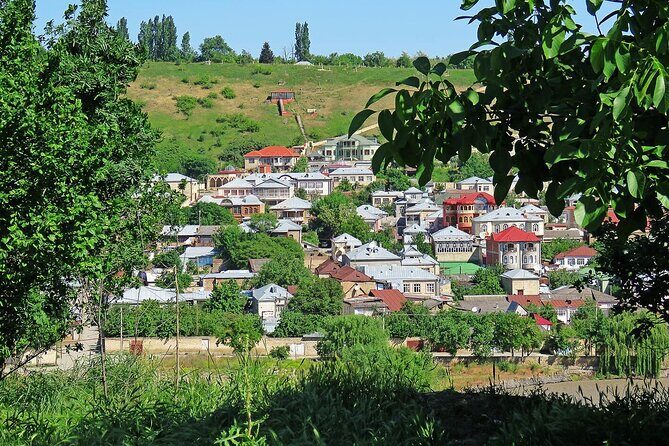
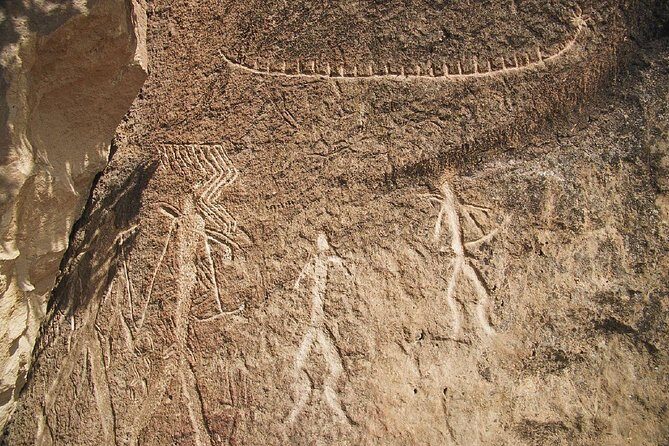
The Gala Archaeological and Ethnographic Museum Complex is the kind of place that rewards curiosity, even if your museum experience is minimal. Instead of one building and one timeline, you get a whole area showing layers of everyday life and burial practices across centuries.
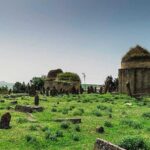
You’ll see features like burial mounds, tombs, houses, water storages, and even the ruins of an ancient castle. The site isn’t only secular history either. Within the complex, there are five mosques and three baths, which helps explain how a single location could keep getting reused as beliefs and needs shifted.
The time span is huge: it relates to the period from the 3rd millennium BC to the 20th century. That’s why this stop pairs well with Ateshgah. First, you get a story about worship and natural fire. Next, you get evidence of how people lived, planned for water, buried their dead, and built religious structures long after the oldest layers were already in place.
You’ll have about 40 minutes here. Admission tickets are also not included, so same advice: expect to pay separately, and don’t plan to skip reading or listening just because time feels short. A good guide can connect what you see—water storages, homes, baths—to a bigger idea: this peninsula wasn’t empty between “big moments.” People kept building.
Yanar Dag: Azerbaijan’s burning hill and why dusk matters
Yanar Dag is one of the most famous sites connected to Azerbaijan’s “eternal flame” idea. It’s positioned 25 km north of Baku, and it’s actually described as a hill rather than a mountain.
The mechanism here is natural gas again—this time, burning directly from the slope. You’ll hear about meter-long tongues of fire and flames licking across the earth in a band roughly 10 m wide. The heat is part of why people historically kept their distance; the description notes that those who approached too close could be seared.
What I like about Yanar Dag is that it’s simple to understand. There’s no need for deep background reading to grasp the spectacle: fire rising from the ground because nature gives it fuel.
From the year 2007, Yanar Dag has been declared a state-protected conservation area, which adds weight to the visit. This is not just a random roadside burn pile—it’s treated as something worth guarding.
Entry here is free, and your guided time is about 30 minutes. The catch is timing. Yanar Dag is said to be most effective to see in the evening, when the sight is stronger. Your tour schedule is fixed, so you may or may not hit true dusk. Still, when you arrive, look around and take in the lighting quickly. If you have even a little flexibility in how long you stand and where you stand, it will change what you notice.
Price and logistics: is $95 good value here?
The price is $95.00 per person for about 4 hours. For this amount, you get real convenience plus guidance: professional guide, hotel pickup and drop-off, transport by private vehicle, and fuel surcharge. You also get a mobile ticket, which helps with smooth arrivals.
Where the cost can feel uneven is that entrance tickets are not included for Ateshgah and the Gala Museum Complex. Yanar Dag is free, which offsets some of that.
So the value question isn’t just the $95. It’s what you’re buying: you’re paying to have transportation solved and interpretation handled. If you tried to do these three stops yourself, you’d spend time figuring out routes and timing, and you’d probably miss some of the “why this matters” connections a good guide can explain.
Also remember what’s excluded: food and drinks are not included, and insurance is not included. That’s normal for half-day tours, but it affects comfort. If you don’t want to think about lunch, bring water at minimum and plan where you’ll eat after.
What the best guides and smooth planning add to the day
This tour’s core value is guidance. You’re seeing two archaeological/cultural sites and one natural fire phenomenon. Without context, those can turn into three separate visits. With a guide, they become one story about place, resources, and belief.
In the feedback I’ve seen about AzTerra Travel, people often highlight organization, staying on schedule, and guides who explain clearly. Names like Farman and Karim come up in praise for tour guiding, and Jafar is mentioned in connection with calm, comfortable driving. I can’t promise the exact same team is with you on your date, but it does match the kind of experience this route needs: smooth logistics, plus interpretation at each stop.
In other words, you’re not just getting a ride. You’re getting help turning what you see into something you remember correctly.
Who this tour suits best (and who may want to think twice)
I’d book this if you want:
- A guided introduction to Azerbaijan’s ancient and multi-faith heritage in a short time
- A straightforward way to cover Ateshgah, Gala (Qala), and Yanar Dag without rental logistics
- A pace that’s active but not exhausting—about 40 minutes at two sites, 30 at the last one
I might think twice if:
- You want to spend hours in a museum setting or read everything slowly. This is a “see it, understand it, move on” format.
- You dislike paying separate entrance fees on arrival at two of the three locations.
- You’re sensitive to outdoor conditions. Ateshgah and the open-air parts of Gala involve standing and walking around.
Most travelers can participate, and because it’s private, you can usually handle your own comfort needs without the pressure of a larger group.
Should you book this private Ateshgah, Gala, and Yanar Dag tour?
Yes, if you want a clean, guided Absheron half-day that mixes architecture, archaeology, and natural fire without wasting time on transport. The $95 price makes sense because it covers the hardest part of these trips: getting around efficiently with a guide who can connect the dots.
Book it with a simple mindset: this is a highlights route. If you can handle short guided stops and you’re willing to pay entrance tickets for Ateshgah and the Gala Museum Complex, you’ll walk away with a much clearer picture of why this peninsula became so important across centuries.
If your priority is a slow museum day or you hate extra ticket costs, then you might prefer a different plan with fewer stops. But for most people visiting Baku and wanting real context fast, this one is a strong fit.
FAQ
What time does the tour start, and how long is it?
It starts at 9:30 am and runs for about 4 hours.
Is hotel pickup and drop-off included?
Yes. The tour includes hotel pickup and drop-off from your Baku hotel.
Is this a private tour?
Yes. It’s a private experience, so only your group participates.
Are entrance tickets included?
No. Admission tickets are not included for Ateshgah and the Gala Archaeological and Ethnographic Museum Complex. Yanar Dag is free.
Is food or drinks included?
No. Food and drinks are not included.
Is insurance included?
No. Insurance is not included.
Can I get a refund if I cancel?
Yes. Free cancellation is available if you cancel up to 24 hours in advance for a full refund.