REVIEW · BAKU
Qobustan rock arts, Mud Volcanoes, Fire temple Ateshgah, Yanardag
Book on Viator →Operated by Panorama Travel · Bookable on Viator
Fire on ground, art on stone, and mud vents. This 9-hour excursion from Baku strings together two big themes of Azerbaijan—real-world fire phenomena and human stories carved into rock—using a private group with a professional multilingual guide, air-conditioned transport, and WiFi on board. You also get a smooth pace for a short trip, since it’s built for people who want several top sights without planning a whole day of connections.
I especially like how the tour makes the stories feel practical: at Ateshgah, you see burning gas outlets that help explain why people once treated fire as sacred. I also love the way Gobustan’s UNESCO rock art (more than 6,000 drawings on 1,000 rocks) turns geology and archaeology into one easy-to-follow narrative with a local guide doing the heavy lifting.
One thing to consider: the schedule is tight at each site (for example, around 30 minutes at Ateshgah and about 15 minutes at Yanar Dag), and lunch isn’t included. Museum tickets aren’t included either, with the total shown as about $15 per person, so plan for that and for good weather.
In This Review
- Key things to know before you go
- A 9-hour loop that packs big ideas into a short visit
- Getting there from Baku: pickup, private comfort, and timing
- Ateshgah (Temple of Eternal Fire): where gas becomes meaning
- Yanar Dag: the short stop that makes the story click
- Mud volcanoes: geology you can walk toward
- Gobustan National Historical-Artistic Preserve Museum: UNESCO rock art in plain view
- Price and value: $250 per group plus a small ticket add-on
- Who should book this tour (and who might want a different format)
- The guide experience: clear, local, and easy to follow
- Should you book it?
- FAQ
- What sites are included in this tour?
- How long does the tour take?
- Is pickup from Baku included?
- What’s included in the price?
- Are museum tickets included?
- Is lunch included?
- Is this a private tour?
- Does weather affect the tour?
Key things to know before you go
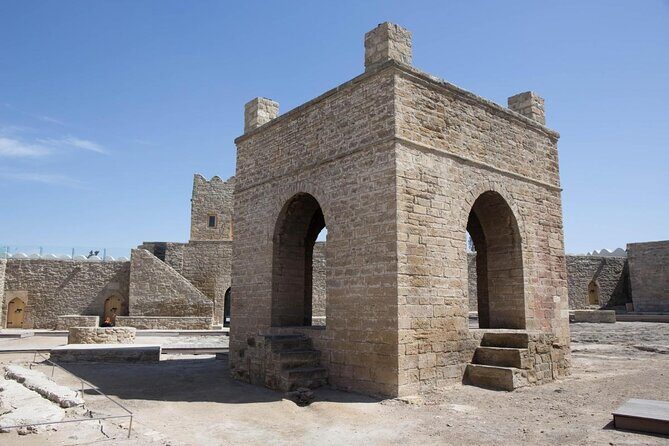
- Fire that’s visible, not just a legend at Ateshgah, where underground natural gas ignites where it reaches oxygen
- Azerbaijan’s famous “eternal flame” at Yanar Dag, a quick but iconic photo and viewpoint stop
- Mud volcanoes with real-world connections to oil and industry
- UNESCO-grade rock art at Gobustan with thousands of engravings and artifacts to make the area feel alive
- A professional multilingual guide who helps you connect the dots between religion, landscape, and ancient people
A 9-hour loop that packs big ideas into a short visit
This is the kind of tour that works well when you’re in Baku for a limited time. Instead of picking just one theme—only fire sites or only rock art—you get both, plus mud volcanoes, all in one day. The structure is straightforward: you move between sites by private vehicle, then rely on your guide to explain what you’re seeing so your brain doesn’t have to do all the translation.
Because it’s private and limited to up to 7 people, you’ll usually get a more conversational experience than a large bus tour. It also helps that the tour includes WiFi on board and uses an air-conditioned vehicle—useful when your day starts hot and you’re trying to keep energy for outdoor stops later.
The pace is “see the essentials, learn the meaning.” If you’re the type who likes to linger for an hour per viewpoint, you might wish for more time at certain stops. But if you want a smart hit list with context, this is a strong fit.
You can also read our reviews of more tours and experiences in Baku.
Getting there from Baku: pickup, private comfort, and timing
You’ll start in Baku with pickup offered, then ride out to the sites. The tour runs about 9 hours total, which is long enough to feel like a full day but not so long that it wipes out your evening plans.
It’s also built around comfort:
- air-conditioned vehicle
- private transportation (your group only)
- WiFi on board
That matters here because your stops include outdoor walking and open-air sites. You’ll be standing around to see flames and rock art, and you’ll want to arrive at each place with enough energy to pay attention.
Planning tip: wear shoes you’re happy to walk in on uneven outdoor ground. Bring something for sun protection. The stops are short, so you want to spend your time looking at the sites, not dealing with discomfort.
Ateshgah (Temple of Eternal Fire): where gas becomes meaning
Ateshgah is the main “fire temple” moment on this route. The idea is simple: underground natural gas seeps out and ignites when it contacts oxygen, so the fire you see is tied to a physical phenomenon, not only to symbolism.
The current temple structure dates to the 17th–18th centuries, built by a Baku-based Hindu community connected to Sikhs. But the sacred association is older. The site has been linked to Zoroastrians—fire worshippers—since roughly the beginning of the common era, when the flames were treated as something more than a trick of nature.
Here’s what I think makes this stop valuable: you get both layers at once. You can appreciate the architecture and the religious story, and you can also understand why people would build places of worship around a fire that seems continuous. In other words, it answers the big question behind the Azerbaijan name connected to fire, without turning it into pure mythology.
Practical considerations:
- Admission is stated as free for the visit, but museum or related tickets elsewhere still may add costs during the day.
- The time here is about 30 minutes, so you’ll want to focus on the flame-related areas and any explanation points your guide highlights.
If you enjoy cultural history, this is the stop that connects religion, migration communities, and the real environment of the Absheron region.
Yanar Dag: the short stop that makes the story click
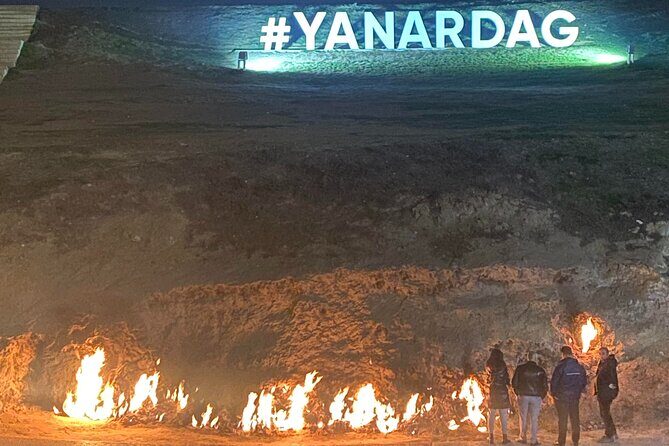
After Ateshgah, you’ll head to Yanar Dag, the famous “eternal flame” mountain. Even with limited time (about 15 minutes), it works because the sight is immediate. You don’t need a long lecture to understand what people come to see: flames on a mountainside, fed by natural gas in the ground.
This is where the guide’s explanations pay off. If Ateshgah feels like a temple, Yanar Dag feels like the source myth in action. It helps you connect the belief that fire sources were a manifestation of divine power—people would build altars and temples where fire was present.
Because the stop is brief, you’ll get the most out of it if you:
- choose your best viewing spot quickly
- listen for the key context (your guide usually frames what you’re seeing in the local story of Zoroastrian fire worship)
- take photos, then move so you don’t block others
Think of it as the “aha” moment. It’s fast, but it often lands hardest.
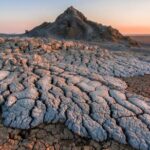
Mud volcanoes: geology you can walk toward
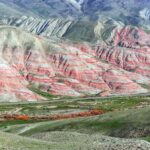
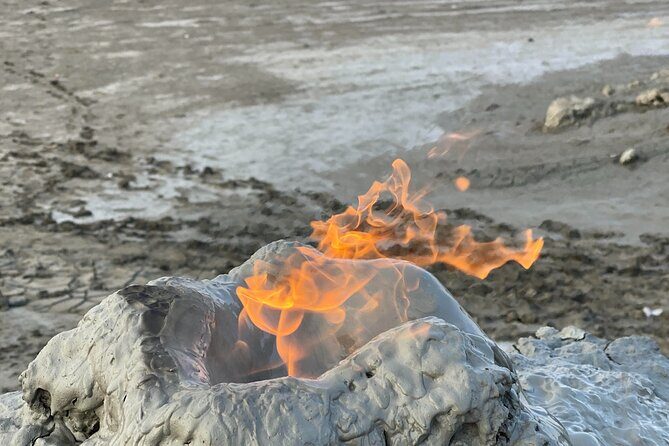
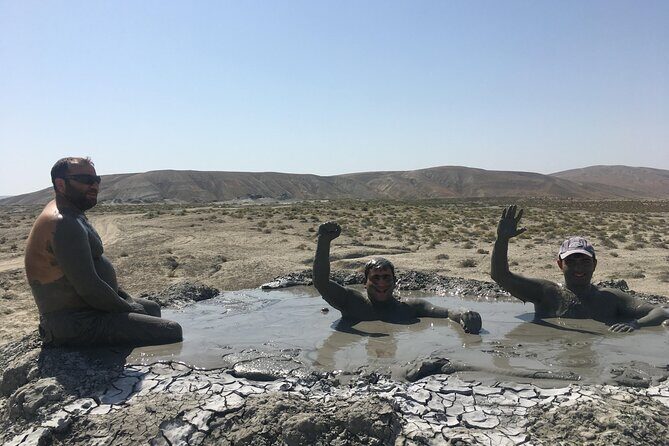
Mud volcanoes are one of those Azerbaijan facts that sounds surprising until you see them. The tour focuses on how the country holds a huge share of the world’s mud volcanoes—350 of 800 worldwide, according to the provided information.
What I like here is the link to everyday reality. Mud volcanoes are associated with oilfields, and areas connected to them include locations like Lokbatan and Garadgh (also Neft Dashlari and Mishovdagh are mentioned). That makes the phenomenon feel less like an odd roadside stop and more like part of the region’s energy story.
You’ll also learn why they matter beyond tourism. The eruptions—mud, lava-like material, and liquids—are used as raw materials in chemical and construction industries, and even mentioned in relation to pharmacology. That’s a reminder that geology can influence economies, not just scenery.
Time on site is about one hour. That’s enough to see the basic forms, take photos, and hear the story without rushing.
A small note on science: mud volcanoes also attract attention from planetary science because they offer analogs for processes that may happen on other planets. The tour text hints at NASA involvement studying Mars-type comparisons, which is a neat extra layer if you like that sort of cross-over.
Practical tips:
- Expect an outdoor, not-museum feeling.
- Bring clothes you don’t mind getting dusty or damp, depending on ground conditions.
Gobustan National Historical-Artistic Preserve Museum: UNESCO rock art in plain view
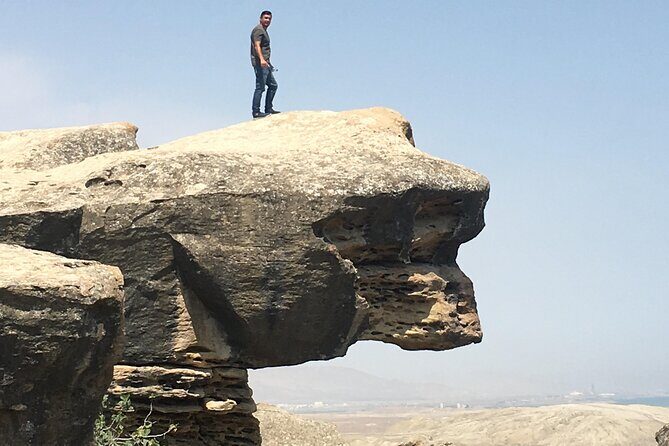
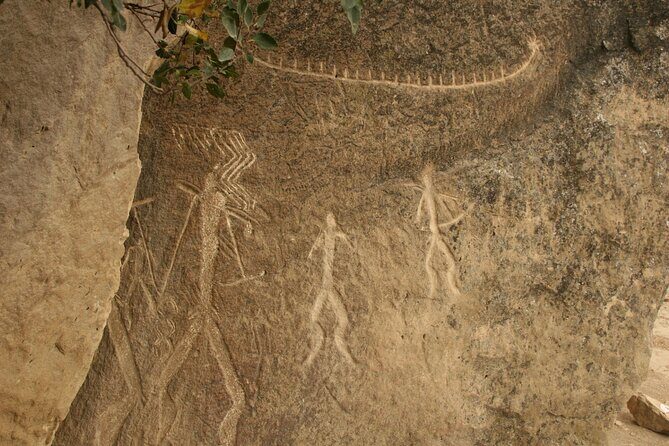
The Gobustan stop is the archaeological centerpiece. Gobustan is an open-air preserve and is recognized by UNESCO for the outstanding value of its rock art. What you’re looking at isn’t a handful of drawings—it’s a dense concentration: more than 6,000 drawings on 1,000 rocks, and over 100,000 artifacts referenced as part of the area’s record.
This is one of those places where your guide can change everything. With a local explanation, the engravings feel less like random marks and more like evidence—of how ancient people lived, hunted, traveled, and expressed belief or daily life in the material they had close at hand.
The preserve is around 60 km from Baku, so the ride matters. Once you arrive, it’s worth giving your eyes time to adjust. Rock art can be subtle until you know what to look for.
The museum visit is listed for about one hour, which means it should feel balanced: enough time to understand what you’re seeing outside, without turning the day into a museum marathon.
Why this matters for your trip: it’s a rare day where you get cultural depth in one easy arc—religion and fire phenomena first, then archaeology and human art. It makes Azerbaijan feel like a continuum of ideas tied to place.
Price and value: $250 per group plus a small ticket add-on
The price is $250 per group (up to 7 people). That’s important, because it changes the math. If you have a small group, you’re paying for a private vehicle, a professional multilingual guide, and a day-structured route that takes you out of Baku to multiple sites.
What’s not included is lunch, and museum tickets are listed as about $15 USD total for one person. So the true cost depends on how you handle food and on those entry costs.
Still, the value is strong if you want:
- door-to-door convenience (pickup offered)
- fewer planning headaches
- a guide to connect history, geology, and religious ideas
If you already know how you’ll cover transport and you love self-guiding, you might find cheaper options. But if your goal is to make a short trip feel complete, this is one of those “pay once, learn a lot” styles of day tour.
Who should book this tour (and who might want a different format)
This works best if you:
- are visiting Azerbaijan briefly and want multiple headline sights in one day
- like explanations that tie sites together (fire temples, flame mountains, and ancient rock art)
- prefer private comfort over group buses
- want a guide-led day without researching every detail yourself
You might choose something else if you:
- want long time at each location for slow photography or deep walking
- plan to do lunch on your own but don’t want to budget extra
- are sensitive to outdoor conditions, since the experience requires good weather
The guide experience: clear, local, and easy to follow
One theme comes through strongly: the guide approach tends to get high marks because the explanations are clear and the tone is friendly. For a day like this—where you’re juggling religion, science, and archaeology—having someone who can translate the meaning fast makes a big difference.
In practice, this is what you’ll benefit from:
- you’ll understand why fire mattered so much in Zoroastrian belief
- you’ll connect mud volcano activity to geology and oilfield context
- you’ll read Gobustan’s rock art with more confidence than if you were just looking on your own
That’s the best “value beyond logistics” part of the day.
Should you book it?
Yes, I’d book it if you want a compact, guided day that covers fire (Ateshgah and Yanar Dag), earth processes (mud volcanoes), and human history (Gobustan UNESCO rock art). It’s built for short stays, with private comfort and a guide who helps you connect what you see to why it matters.
Skip it or switch to a longer tour format if you know you want more than a quick stop at each site. Otherwise, this is a smart way to make your Baku time feel well-used, without turning your schedule into a stressful checklist.
FAQ
What sites are included in this tour?
You visit Ateshgah (the Fire Temple), Yanar Dag (the eternal flame mountain), the mud volcano area, and the Gobustan National Historical-Artistic Preserve Museum.
How long does the tour take?
The duration is approximately 9 hours.
Is pickup from Baku included?
Yes, pickup is offered.
What’s included in the price?
The tour includes an air-conditioned vehicle, a professional multilingual guide, private transportation, and WiFi on board.
Are museum tickets included?
No. Tickets to museums are not included, with the total listed as about $15 USD per person.
Is lunch included?
No, lunch is not included.
Is this a private tour?
Yes. It’s private, and only your group will participate (up to 7 people).
Does weather affect the tour?
Yes. The experience requires good weather. If it’s canceled due to poor weather, you’ll be offered a different date or a full refund.
If you want, tell me your travel dates and whether you’ll be in Baku for just a day or several days, and I’ll suggest the best order to fit this with the rest of your sightseeing.