REVIEW · BAKU
Baku Gobustan and Absheron guided tour + Free Airport Transfer
Book on Viator →Operated by SkyUp Travel · Bookable on Viator
Baku has a way of stacking time layers on top of each other, and this guided day does it fast. You’ll move from 20,000-year-old rock carvings at Gobustan to Absheron’s famous eternal fire sights, with enough stops to understand why this corner of Azerbaijan matters.
I love that the tour hits both natural weirdness and human storytelling: the mud volcano world feels rare, and the fire-temple stops explain a whole belief system.
One thing to note: it’s a long, busy 7–8 hours, and a few key entries aren’t included—plus the mud volcano off-road ride needs a cash fee upfront.
In This Review
- Key highlights worth your attention
- Why this Absheron-day feels different from a typical city tour
- Gobustan Rock Art: stepping into a World Heritage time machine
- Mud Volcanoes: the rare natural spectacle and a smart bottle tip
- Bibi-Heybat Mosque: a short stop with real spiritual weight
- Aquatic Palace, Deniz Mall, and the House of Government: Baku’s “power and progress” moments
- Ateshgah Fire Temple: Persian and Indian inscriptions behind the eternal flame idea
- Yanar Dag: watch natural gas flames that don’t care about the weather
- Heydar Aliyev Cultural Center: the famous design break between ancient stops
- The guide matters: names you’ll see in standout experiences
- Time, pace, and what to do with the “7–8 hours” reality
- Price and logistics: how $10 can still feel like good value
- Who this tour fits best (and who should think twice)
- Should you book this Gobustan + Absheron guided day?
- FAQ
- What is the duration of the tour?
- Does the tour include pickup?
- Is there a free airport transfer?
- Are tickets for Gobustan included?
- Do I need to pay for the mud volcanoes off-road ride?
- Are Fire Temple and Burning mountain tickets included?
- Is the Bibi-Heybat Mosque admission included?
- Is the Heydar Aliyev Cultural Center admission included?
- What weather conditions are required?
Key highlights worth your attention
- Gobustan World Heritage rock art you can actually stand in front of
- Mud volcanoes that keep moving, with a tip to bring an empty bottle
- Fire Temple (Ateshgah) tied to Persian and Indian inscriptions and the idea of eternal flame
- Yanar Dag natural gas flames that keep burning through rain and snow
- Modern Baku stops like the House of Government and the Heydar Aliyev Cultural Center
- Small group feel with a maximum of 15 people and a guide who handles questions
Why this Absheron-day feels different from a typical city tour
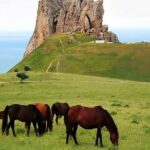
This is the kind of day trip that doesn’t just list landmarks. It connects geology, belief, and history in a way that makes Baku feel bigger than the Old City and the Flame Towers. You’ll be going beyond the usual “take photos and leave” routine, especially once you reach Gobustan and the fire sites.
The tour also has a practical advantage: you’re using an air-conditioned vehicle with a guide doing the navigation and explanations. And the group size stays small—up to 15—so it doesn’t feel like you’re trapped in a big bus wave.
You can also read our reviews of more guided tours in Baku

Gobustan Rock Art: stepping into a World Heritage time machine
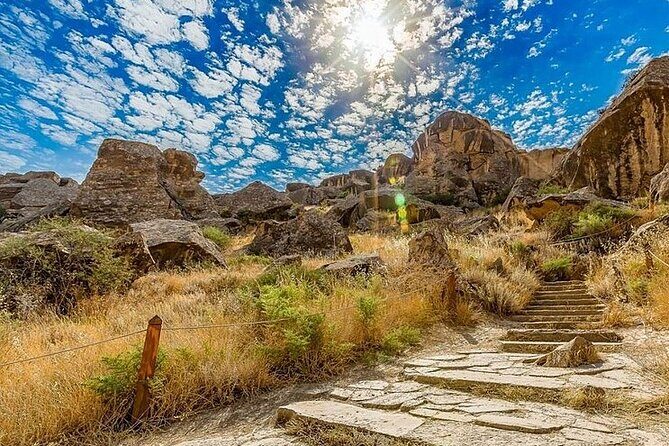
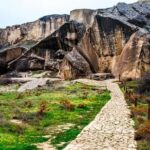
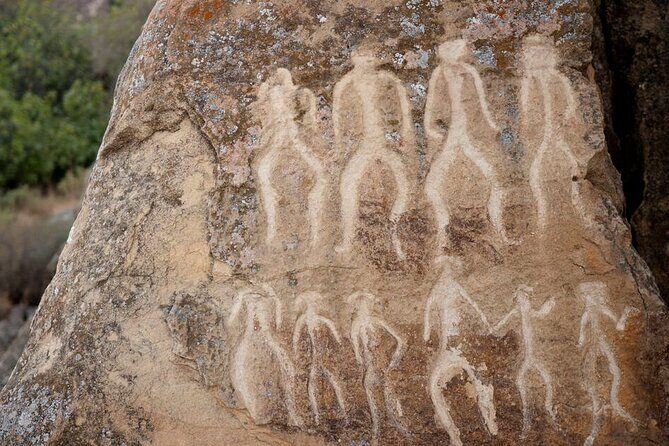
Gobustan is the headline stop for a reason. This World Heritage area includes some of the oldest evidence of human presence you can experience in Azerbaijan, with caves and rock surfaces marked by carvings. You’ll see rock art that’s described as going back to up to 20,000 years old.
Here’s what I like about doing Gobustan with a guide: the carvings can look like random markings at first. With a good explanation, you start noticing themes—how people used the landscape, and why this place became important long before modern cities existed.
At Gobustan, plan for about one hour on site. That’s usually enough time to see the key areas without feeling like you’re speed-walking. The only catch: the Gobustan entry ticket isn’t included, and you’ll want to budget accordingly.
Mud Volcanoes: the rare natural spectacle and a smart bottle tip
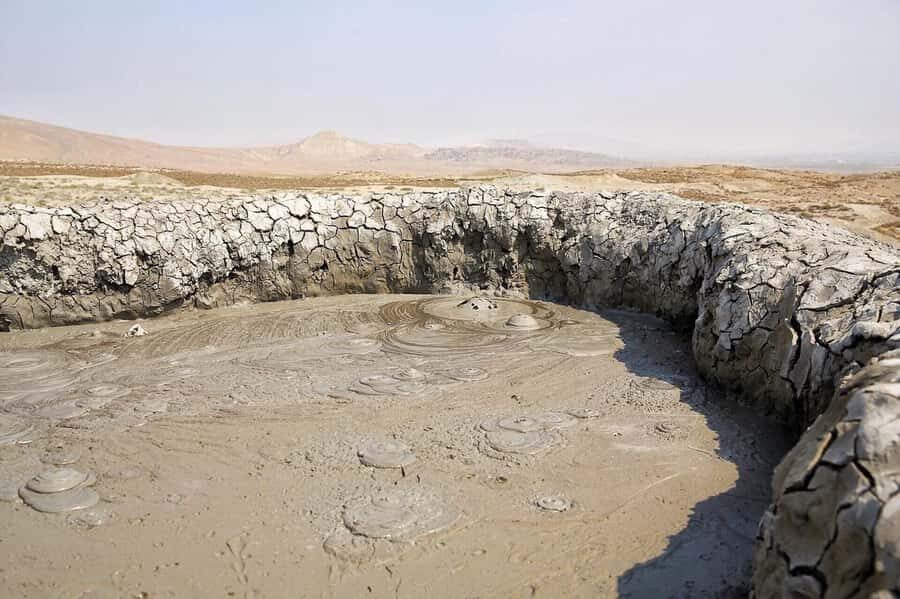
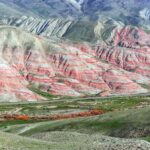
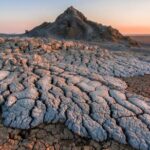
Mud volcanoes aren’t a common thing on most travel calendars, and that’s part of their pull. On this tour, you’ll visit mud volcano areas where the activity is described as continuing, and the minerals are part of why people talk about them.
The practical tip that makes this stop easier: bring an empty bottle to fill it with mud, as the tour information suggests doing. Even if you skip the souvenir idea, it’s still a nice window into local habits and how visitors engage with the site.
You’ll typically get about 45 minutes here. If you want to access spots in the mud-volcano zone, there’s an extra cost: an off-road car fee of 30 AZN cash, paid upfront before the tour begins. One review even described the drive as a fast, off-road style ride (a Lada race vibe), so keep your comfort expectations realistic and bring appropriate shoes.
Bibi-Heybat Mosque: a short stop with real spiritual weight
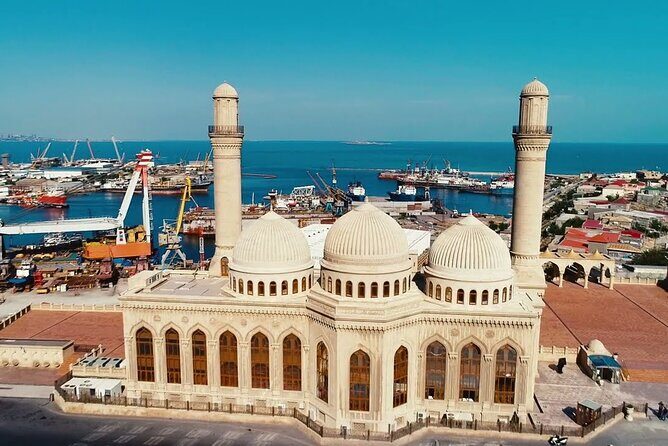
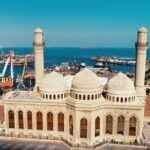
Not every stop needs to be long to matter. The Bibi-Heybat Mosque is a major monument of Islamic architecture and still functions as a spiritual center for Muslims in the region. You’ll have roughly 15 minutes there, which is enough for a focused look without turning it into a rushed checklist.
The value here is contrast. After Gobustan’s ancient markings and the mud volcanoes’ earthiness, this short pause puts you into a different layer of meaning—one tied to worship and community.
The good news: this stop is listed as admission-free.
Aquatic Palace, Deniz Mall, and the House of Government: Baku’s “power and progress” moments
Absheron isn’t only ancient. The route also includes stops that show how Baku thinks about wealth, industry, and modern identity.
You’ll pass by the Aquatic Palace, noted as linked to Baku’s oil history, and then you’ll have short viewpoints at places like Deniz Mall and the House of Government. These aren’t long museum-style visits. Think of them as quick scene changes that help you read the city like a local.
These are the stops I treat as “window dressing” in the best way. You don’t need much time, but you do get useful context for what you’ll see later around central Baku.
A few more Baku tours and experiences worth a look




Ateshgah Fire Temple: Persian and Indian inscriptions behind the eternal flame idea
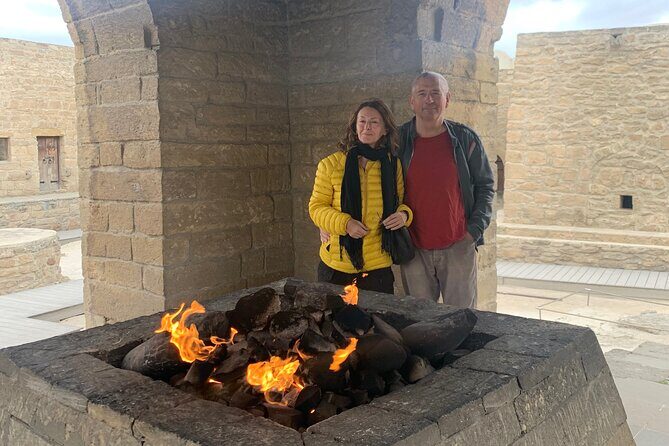
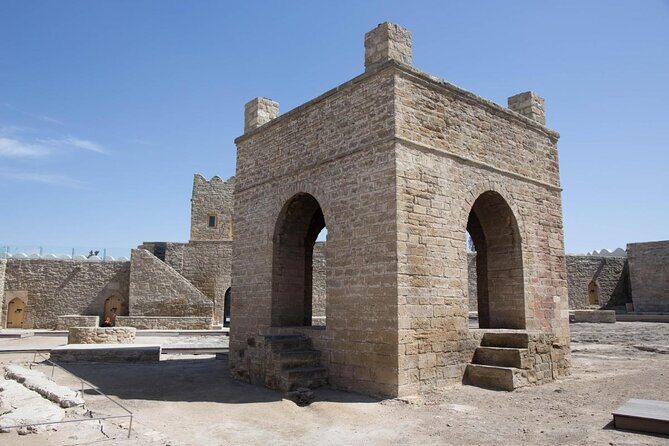
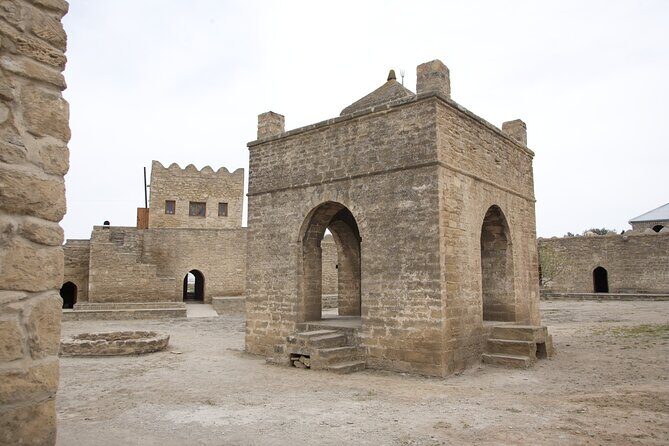
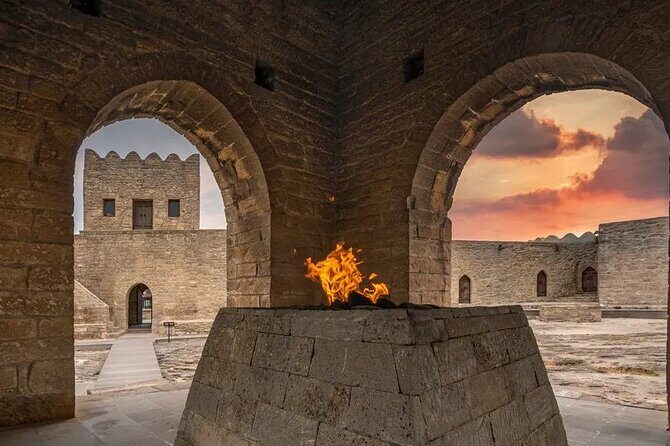
This is the moment many people are waiting for. Ateshgah (Fire Temple) is tied to inscriptions from Persian and Indian traditions, and the site is described as having been used as a place of worship across multiple faiths. It’s built during the 17th and 18th centuries, and it’s one of the best stops for understanding why fire has such a long cultural footprint here.
You’ll get about one hour for this visit. In that time, the guide can connect the dots—why a fire-related site would exist in this landscape and how the idea of long-lasting flame fits local belief.
Admission for the fire temple combo isn’t included. The information you have lists a combo ticket for Fire Temple and Burning mountain as 15 AZN per person (optional). If you care most about the fire story, this is usually the ticket you’d prioritize.
Yanar Dag: watch natural gas flames that don’t care about the weather
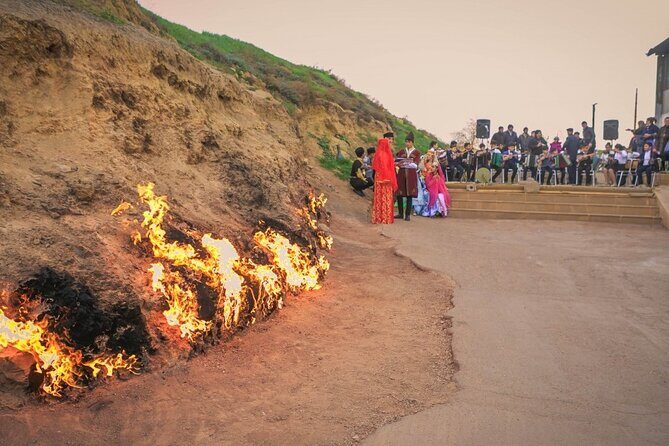
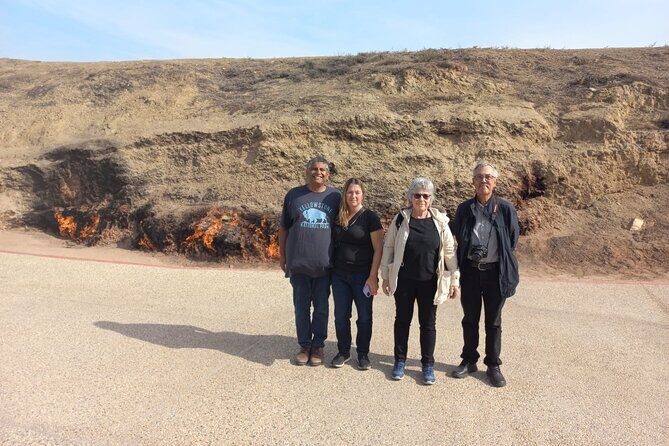
Yanar Dag is one of those “how is this real?” places. The tour describes natural gas feeding the flames, and it’s said to keep burning even in rain and snow, with the gas described as odorless.
You’ll spend about 45 minutes here. That’s enough time to see the flames in action and take photos without making it feel like a drive-by stop. It’s also a strong follow-up to Ateshgah: together, they turn the fire theme from a single site into a whole landscape pattern.
Like many of the key stops here, admission for this part isn’t included.
Heydar Aliyev Cultural Center: the famous design break between ancient stops
Between fire and earth, you get one more shift into modern Azerbaijan. The Heydar Aliyev Cultural Center is described as a top architectural pick for 2015, associated with the work of Zaha Hadid, and it operates as a museum.
Your time here is about 20 minutes—so it’s more of a quick visit than a deep museum day. Still, it’s a useful breather, and it gives you an easy “modern Baku” anchor to balance everything you saw earlier.
Admission is listed as not included for this center.
The guide matters: names you’ll see in standout experiences
What makes this tour work isn’t just the itinerary. It’s the people running it.
In the feedback you provided, Nazrin stands out for warmth and professionalism, with deep knowledge that turns history and culture into something you can follow. Murad is mentioned multiple times for being patient, attentive, and the kind of guide who makes sure an English-speaking solo traveler still feels fully included. Tural earns praise for good English and keeping the pace manageable—showing stops without the feeling of constant rushing.
Other guides like Arif and Adil also get called out: Arif for keeping the whole plan together even when traffic and street closures pushed things, and Adil for approaching history like a story you can picture. Even the “chilled” vibe shows up again and again, which matters on a long day.
If you can choose your guide at booking (not always possible), I’d take the same hint I take from the names: look for whoever you see described as patient, clear, and good at pacing.
Time, pace, and what to do with the “7–8 hours” reality
The tour is listed as 7 to 8 hours. The schedule includes a one-hour break, with the rest largely travel time between stops. That means you’re not staying long at every location, and in dense traffic conditions, the day can feel packed.
This is where I’d set expectations honestly. If you hate being rushed, build in a mindset of “see the highlights well, don’t try to master everything.” One review also flagged that the program can feel intense if traffic or timing tightens.
The upside is that this is an efficient way to experience Absheron and Gobustan without trying to stitch together transport on your own. The route covers areas in different directions from Baku, and doing that by public transit would be a hassle.
Price and logistics: how $10 can still feel like good value
The headline price is $10 per person, and that’s a big part of why this tour gets booked. For that money, you’re getting a guide, an air-conditioned vehicle, customer support, and a free airport transfer on your departure day.
But the real value calculation is about totals, not just the first number. A few costs are not included:
- Gobustan park ticket: 10 AZN per person (optional)
- Fire Temple + Burning mountain combo ticket: 15 AZN per person (optional)
- Mud volcano off-road car: 30 AZN cash mandatory upfront
- Admission for the Heydar Aliyev Cultural Center isn’t listed as included
So the smart move is to budget for the on-the-ground add-ons before you go. If you’re the type who skips optional tickets, you may pay less overall. If you want the fire story to feel complete (Fire Temple combo), plan that 15 AZN in advance.
Also, because the mud volcano off-road fee is cash-only and required upfront, I’d come prepared. That’s the one “logistics friction” point that can throw off an otherwise smooth day if you show up unready.
Who this tour fits best (and who should think twice)
This day trip fits best if you want a packed cultural and natural route in one go. I’d recommend it to you if you:
- are curious about ancient rock art and how people used landscapes
- want to see fire sites linked to long-lasting flame legends and natural gas phenomena
- prefer a guided route so you don’t spend your time solving transport issues
It might be less ideal if you:
- want slow, museum-level time at each stop
- dislike paying extra at multiple points (especially with the mud volcano cash fee)
- get stressed by long days and traffic timing
Should you book this Gobustan + Absheron guided day?
If your goal is to understand Azerbaijan’s “old meets new” identity, this tour is a strong choice. I like that it pairs places with clear themes—ancient carvings, active earth, and then the fire landscape—so the day doesn’t feel random.
Book it if you’re comfortable with a busy 7–8 hour schedule, and you plan ahead for optional admissions and the 30 AZN cash mud-volcano off-road requirement. If you do that, the day feels like a cost-effective way to see a lot that you’d otherwise struggle to combine.
If you’re picky about pace, you can still make it work—just mentally treat it as a highlights route, not a slow exploration day.
FAQ
What is the duration of the tour?
The tour runs about 7 to 8 hours, and the total time includes a 1-hour break plus travel time.
Does the tour include pickup?
Yes, pickup is offered. The tour also includes an air-conditioned vehicle.
Is there a free airport transfer?
Yes. Free airport transfer is included from your hotel or address on the day of your departure.
Are tickets for Gobustan included?
No. The Gobustan park entry ticket is listed as optional and costs 10 AZN per person.
Do I need to pay for the mud volcanoes off-road ride?
Yes. There is a mud volcano off-road car fee of 30 AZN that is cash mandatory and paid upfront before the tour begins.
Are Fire Temple and Burning mountain tickets included?
No. The Fire Temple and Burning mountain combo ticket is listed as optional and costs 15 AZN per person.
Is the Bibi-Heybat Mosque admission included?
Yes. The stop at Bibi-Heybat Mosque is listed as free.
Is the Heydar Aliyev Cultural Center admission included?
No. Admission to the Heydar Aliyev Cultural Center is listed as not included.
What weather conditions are required?
The experience requires good weather. If it’s canceled due to poor weather, you’ll be offered a different date or a full refund.