REVIEW · BAKU
Baku Soviet Architecutre Gudied Walking Tour
Book on Viator →Operated by Azerbaijan Traveller · Bookable on Viator
Soviet Baku clicks into place fast when you walk it with a guide. This is a small-group street tour that connects Soviet-era architecture to today’s Baku—shopping streets, theatres, and even pop-culture–style stories—plus you’ll get help navigating what you’re actually seeing. I especially like the way the route mixes famous downtown landmarks with less-obvious corners, and I like that the guide is happy to answer questions; the guide often mentioned by name is Gani. One thing to consider: it’s a walking tour, so if you’re sensitive to long pavement stretches, plan your pace and footwear.
In This Review
- What makes it more than photos and facts
- A route built for questions and city rhythm
- Key things I’d watch for
- Soviet architecture meets modern Baku on one walk
- Meeting at Karnaval-353 and how the group walk works
- Fountain Square: the oil-boom crossroads
- Nizami Street and Nasimi Monument: Stalinist edges of downtown
- Nizami Cinema and 28 May street: where nation-building gets explained
- Opera and Ballet Theatre plus Lev Landau: culture on a grand scale
- Khagani Street (formerly Molokanskaya): communities in the city’s layout
- Taghiyev’s residence turned National Museum of History
- Government House: Soviet scale in one look
- Baku Boulevard: the 1909 promenade along the Caspian
- Coffee and/or tea wrap-up: getting your questions answered
- Price and the value of a 2.5-hour guided storyline
- Who should book this tour (and who might not)
- Should you book this Baku Soviet architecture walking tour?
- FAQ
- How long is the Baku Soviet Architecture Guided Walking Tour?
- What does it cost, and what is included?
- Where is the meeting point?
- What time does the tour start?
- Is the tour small-group, and how many people can go?
- Do I need tickets for the stops?
- Does lunch come with the tour?
- Is the tour practical for most visitors?
- What if the weather is bad?
- Can I cancel and get a refund?
What makes it more than photos and facts
You get a guided storyline, not a list of buildings. Stops like Nizami Street and the Government House area come with context about how Baku grew during oil-boom years and through Soviet design thinking—and the tour ends with a tea break that feels like a natural wrap-up, not a random add-on. The main drawback is timing: while the tour runs about 2 hours 30 minutes, you should still budget roughly three hours so you’re not rushing back out.
A route built for questions and city rhythm
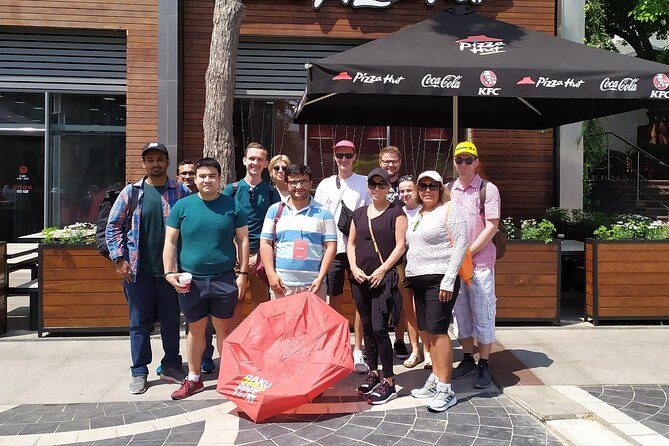
The sweet spot here is that you’re walking through places that locals actually use—busy intersections, central shopping streets, and the seafront promenade—so the city’s rhythm is part of the experience. The guide sets a small-group pace, and if you ask about legends, myths, and how different communities shaped daily life, you’ll usually get straight answers instead of vague pointers. If the weather is bad, this kind of walking plan can get adjusted, so keep an eye on your day’s conditions.
You can also read our reviews of more walking tours in Baku
Key things I’d watch for
- Small-group pacing: maximum 15 people, with time to ask questions as you go
- Soviet architecture + modern streets: you see the “now” and the “then” in the same afternoon
- Highly walkable downtown route: major stops cluster around central Baku
- Coffee and/or tea included: a calm finish at a local shop instead of leaving on an empty cup
- Street-level cultural context: the stories aren’t only about buildings, but about residents and identity
Soviet architecture meets modern Baku on one walk
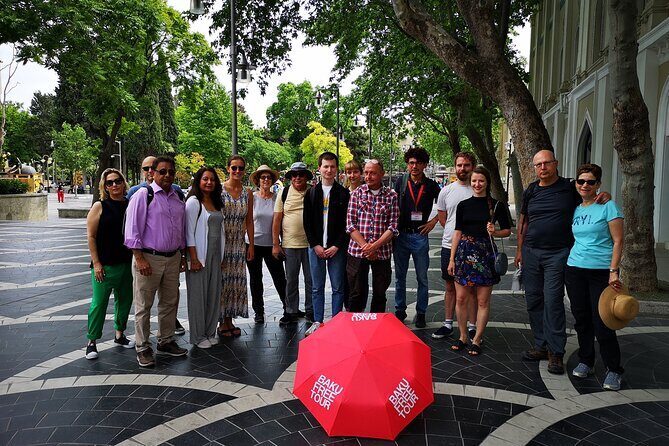
This tour is built for first-time visitors who want more than a quick sightseeing loop. You’re not just seeing Soviet-style facades; you’re learning how Baku’s oil-boom growth, Soviet planning, and modern-day cultural life overlap in the same streets. That matters because Baku can feel like a city of layers—and if you only wander alone, it’s easy to miss what connects those layers.
The format is also practical: it’s a group walk with a set route, and it’s short enough that you can keep the rest of your day open afterward. If you like cities where you can read architecture like a storybook—without needing museum tickets at every stop—this route fits.
You’ll also get a pop-culture lens. That doesn’t mean it’s just trivia. It means the guide tends to connect what you see (the streets, statues, theatres, parks) to how people talk about the last century and how that history shows up in modern habits.
Meeting at Karnaval-353 and how the group walk works
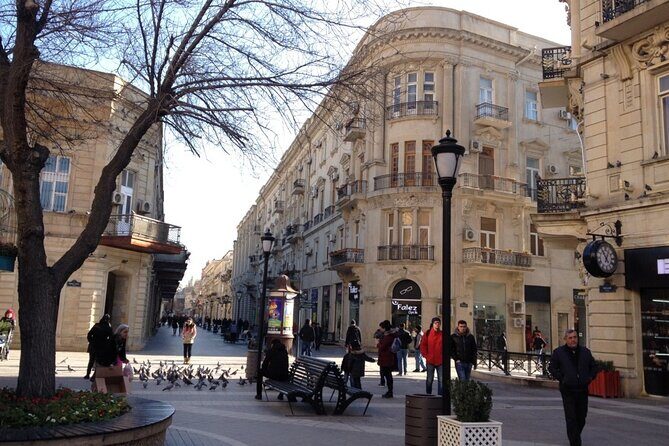
You meet at Karnaval-353 Istiglaliyyat, Baku 1005, Azerbaijan. The start time is 1:00 pm, and the tour ends back at the same meeting point, which makes it easier to plan your evening.
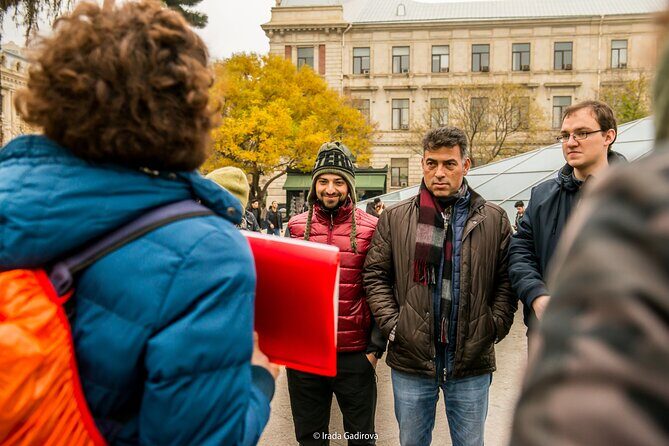
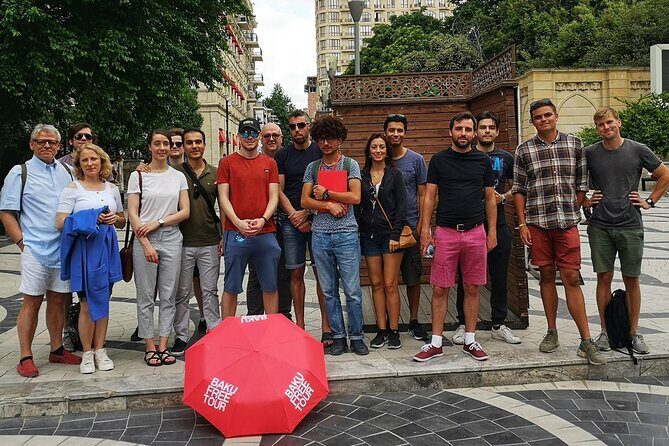
Duration is listed as about 2 hours 30 minutes, and the smart move is to plan around three hours total. That buffer helps because you’ll stop often for short explanations and photos, and you may want extra moments asking questions. The group is capped at 15 travelers, which helps keep things from turning into a slow conga line.
The walking is mostly central, with multiple stops placed close together. Still, bring comfortable shoes and drink water. Many of the stops are free to enter, but you’ll be doing plenty of street-walking either way.
Fountain Square: the oil-boom crossroads
You start and end in the downtown Fountain Square area, a leisure and entertainment hub that also has an older backstory. This neighborhood grew into a main trading street during the late 19th and early 20th century oil boom. That’s the key theme you’ll keep hearing throughout the tour: Baku’s wealth and momentum came from oil, then shaped everything from streets to spectacle.
In practical terms, Fountain Square is a good “starter stop.” It’s easy to orient yourself and it sets the tone for the architecture story you’ll follow next. If you’re the type who likes a reason behind the route, this first explanation helps you understand why later Soviet-era landmarks don’t feel random.
One small consideration: since it’s a downtown meeting point and leisure area, it can be lively. Expect normal city bustle and plan to take photos quickly when the group gathers.




Nizami Street and Nasimi Monument: Stalinist edges of downtown
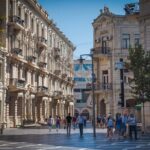
Nizami Street is your modern Baku spine. A major portion of it is traffic-free—an 800-meter stretch—and it’s one of the most active social zones, especially after work when people head to restaurants, shops, concert halls, and theatres. If you’ve ever wondered where people actually hang out in Baku, this is a strong answer.
The tour then zooms into a visual contrast: at the intersection of Samad Vurgun and Nizami streets, you get a view of Stalinist architecture from the 1950s. That quick shift is one of the tour’s best “aha” moments. You see how Soviet-era design can appear right beside everyday shopping life, not as a separate museum district.
If you’re worried that the Soviet theme will feel repetitive, it helps that Nizami Street shows the modern function of the same downtown space. You’re seeing both the aesthetic and the purpose—what buildings were built to do, and what streets are still doing today.
Nizami Cinema and 28 May street: where nation-building gets explained
Next you head toward Nizami Cinema and the area around 28 May street, a commemorative street tied to Azerbaijan’s first independence declaration in 1918. This stop works well if you like the way a city’s street names act like history prompts.
A statue of Qara Qarayev, a major composer of classic music, is also part of this area. The guide connects music and literature to nation-building, which is a smart angle—because architecture alone can’t explain how a country defines itself. You’ll hear how cultural achievements helped shape identity beyond politics and construction.
This is also a good stop to ask your questions. With the concentration of cultural references—composer, independence commemoration—the guide has plenty of narrative threads to follow based on what you’re curious about.
Opera and Ballet Theatre plus Lev Landau: culture on a grand scale
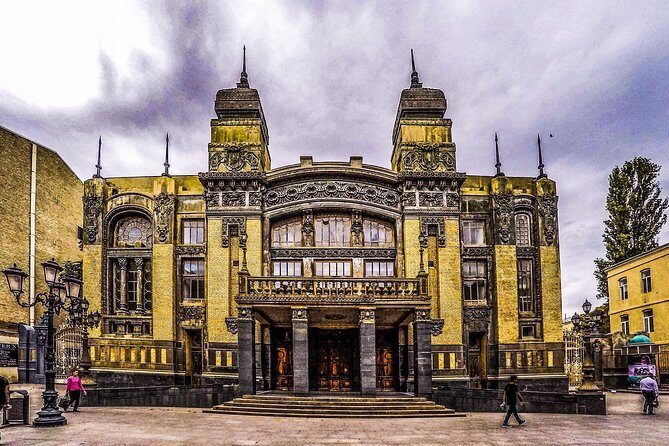
Half an hour (of walking) takes you through the cultural stretches along Nizami Street, where theatres, libraries, and civic arts spaces cluster together. The anchor here is the Azerbaijan State Academic Opera and Ballet Theater.
This stop isn’t just about admiring the building exterior. The tour links the arts scene to a broader story of Baku’s cultural heritage. One specific name that comes up in the route description is Lev Landau, the Nobel Prize winner. Hearing how a figure like Landau is tied to the city’s narrative helps explain why places like theatres and libraries matter in everyday civic life.
If you’re traveling with someone who likes arts and architecture but gets bored with long political lectures, this segment usually lands better. It keeps the tone human: culture as something people use, attend, and talk about.
Khagani Street (formerly Molokanskaya): communities in the city’s layout
Khagani Street has a layered backstory. Historically, the street and park were known as Molokanskaya, named after spiritual Christians exiled to Azerbaijan from Russia. Today, the area includes Khagani Park and the Russian Drama Theatre.
This is one of the more culturally specific stops on the walk. It doesn’t just tell you that Russians and Russian language existed in Baku. It gives you a sense of how communities left traces in street names, religious exile histories, and public cultural venues. The result is that the city starts feeling like a lived-in mosaic instead of a purely architectural timeline.
If you like photo ops, parks and theatre facades are easy wins here. If you’re more practical-minded, the main value is understanding why the street’s identity is different from the major shopping corridors nearby.
Taghiyev’s residence turned National Museum of History
The National Museum of History of Azerbaijan stop changes the pace just a little, because you’re dealing with a building that carries private-life history. The museum began as the private residence of Haji Zelnalabdin Taghiyev—described here as the father of the nation.
You’ll hear a rags-to-riches story, and the framing is important: this ornate residence wasn’t just pretty. It had interiors and spatial layout significant enough that modern historic events took place there. That makes the building more than a static backdrop. It becomes part of how Baku’s wealth and influence were translated into real social action.
One practical note: even when museums can be free-to-enter on a route like this, you may want to check your exact comfort with indoor time. If you’re doing multiple activities in Baku in the same day, this kind of stop can either anchor you (great for a break) or feel like it interrupts your walking rhythm.
Government House: Soviet scale in one look
Then comes a classic Soviet landmark moment: Government House. It’s described as gigantic and iconic, and the tour treats it as a focal point in the Soviet architectural story of Baku.
This is where scale matters. When you stand near big institutional buildings, you feel how Soviet design communicated authority—how it tried to make governance look permanent and massive. Even if you’re not an architecture fan, these buildings are still readable because the size and form do the storytelling.
The drawback? Because it’s a standout, it can also be a moment where you want more time than the short stop allows. If your dream is long photography sessions, consider planning extra time in the area later that day—use this tour as the orientation.
Baku Boulevard: the 1909 promenade along the Caspian
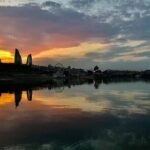
The tour closes at Baku Boulevard, known as Dənizkənarı Milli Park and running parallel to the seafront. The promenade dates to 1909, and the tour’s explanation ties it to when oil barons built mansions along the Caspian shore.
This is one of the best “you can feel the history” endings. You’re no longer stuck with street corners and institutional buildings—you’re walking a long public space shaped by the same oil-era rise, just expressed through leisure planning and an engineered seafront.
If you need a mental reset after the dense architecture segments, this is where you get it. Fresh air helps, and the promenade is easy to picture as a daily-life space rather than just a historic site.
Coffee and/or tea wrap-up: getting your questions answered
The tour includes coffee and/or tea, and it ends with a cup of local tea at a local coffee shop. This is a small detail, but it changes the experience. Instead of sprinting to your next plan, you finish with a pause that lets the stories settle in.
From the way the guide’s style is described in prior experiences, the Q&A part matters. Expect the guide to be comfortable handling questions about what you’ve seen—especially if you’re trying to connect the Soviet-era layers to today’s pop-culture, city habits, and where people go for nightlife and fun.
This is also a good moment to ask for practical suggestions for the rest of your afternoon and evening. The route itself covers key downtown highlights, but your guide can point you toward popular hangouts afterward, helping you avoid the common problem of wasting time searching for things that match your interests.
Price and the value of a 2.5-hour guided storyline
At $60 per person, this tour isn’t a budget-only option, but it can be good value for the type of experience you get. Here’s why:
First, you’re paying for more than walking. You’re paying for an organized narrative that connects many separate parts of central Baku—Fountain Square, Nizami Street, cultural venues, Soviet landmarks, and the seafront promenade—into one understandable timeline.
Second, a lot of the stops are described as admission-ticket free on this route. That means you’re less likely to lose time and money on entry fees, and more likely to keep moving while still getting meaningful context.
Third, the small-group cap of 15 travelers matters. On a city tour, that number affects how often you can ask questions, how long you wait at stops, and how well the guide can adjust pace. A longer bus-style group often turns into a passive ride. This is a walking model that stays interactive.
Booking-wise, it’s often reserved about 11 days in advance on average, so if your schedule is tight, don’t leave it to the last minute. Also, it runs at 1:00 pm, which can be a relief if you prefer not to start your day with tours.
Who should book this tour (and who might not)
I’d recommend this Baku Soviet architecture walking tour if you:
- want an easy first introduction to central Baku
- like architecture with human context (residents, communities, identity)
- enjoy guides who answer questions and keep a steady walking pace
- want a route that ends with tea so your afternoon feels complete
You might think twice if you:
- dislike walking as a primary activity
- need very long museum time or slow indoor exploration (the tour is built around outdoors and short stops)
- are traveling with mobility limits without flexibility in pacing, since the route is a downtown walk
Should you book this Baku Soviet architecture walking tour?
If you want a quick, guided way to understand how Baku went from oil-boom momentum to Soviet-era design, and then into today’s streets, this tour is a strong match. The route is focused, the group size stays human, and the guide approach—often associated with Gani in past tours—leans friendly and answer-focused.
Book it when: you’re arriving in Baku and you want your bearings. Skip it when: you already have a firm grasp on Soviet Baku and prefer self-paced exploring with fewer stops. Either way, plan for comfort on your feet and give yourself enough time after for your own wandering—because this tour will point you toward where you’ll want to go next.
FAQ
How long is the Baku Soviet Architecture Guided Walking Tour?
It runs about 2 hours 30 minutes, though you should plan around three hours so you have time for stops and questions.
What does it cost, and what is included?
The price is $60. Coffee and/or tea are included, and the tour finishes with a cup of local tea.
Where is the meeting point?
You meet at Karnaval-353 Istiglaliyyat, Baku 1005, Azerbaijan.
What time does the tour start?
The start time is 1:00 pm.
Is the tour small-group, and how many people can go?
It’s limited to a maximum of 15 travelers.
Do I need tickets for the stops?
The tour description lists admission ticket free for the listed stops.
Does lunch come with the tour?
No, lunch is not included.
Is the tour practical for most visitors?
Most travelers can participate, and service animals are allowed. It’s also near public transportation.
What if the weather is bad?
The experience requires good weather. If it’s canceled due to poor weather, you’ll be offered a different date or a full refund.
Can I cancel and get a refund?
Yes. Free cancellation is available up to 24 hours before the experience’s start time for a full refund.