REVIEW · BAKU
Baku: Gobustan National Reserve Guided Trip – Private
Book on GetYourGuide →Operated by Daily Baku Tours · Bookable on GetYourGuide
Gobustan is Azerbaijan’s time machine in half a day. In a few short hours you go from ancient human settlements carved into stone to mud volcanoes that look like the ground is breathing, then you end up with oil-era landmarks and a quick outside look at Bibi Heybat Mosque. It’s fast, yes, but it also feels tightly planned.
I especially love the way the tour leans on a professional local guide to connect the sites into one story instead of just moving you from one photo stop to the next. And I really like the mix: Gobustan Bio Museum (3D) plus the open-air rock museum, then mud volcanos, plus the world’s first industrially drilled oil well and even a James Bond movie photo point.
One drawback to keep in mind: this is an outdoors-heavy route, so you’ll want solid comfortable shoes, and the activity notes say it is not suitable for people with mobility impairments (even though wheelchair access is listed). If mobility is a concern, it’s worth double-checking before you book.
In This Review
- Key highlights worth your attention
- A half-day that moves through time
- How the private logistics make the day easier
- Gobustan Bio Museum: getting your bearings fast
- Open-air rock museum: ancient human marks you can actually see
- Mud volcanoes: the main event, up close
- World’s first industrially drilled oil well and the Bond photo spot
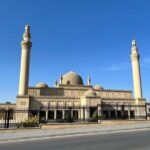
- Bibi Heybat Mosque: outside view on the route
- The real-ship shipping history exhibition (what it adds)
- Price and value: why $141 can make sense
- What it feels like with the guide (and why it matters)
- Who should book this Gobustan private tour
- Should you book the Gobustan private guided trip?
- FAQ
- How long is the Gobustan National Reserve guided trip?
- What’s included in the price?
- What is not included?
- Will I need to buy tickets on my own?
- Is this tour private?
- What languages are available for the live guide?
- Is hotel pickup offered, and how does it work?
- Is the tour suitable for people with mobility impairments?
Key highlights worth your attention
- 3D Gobustan Bio Museum: a structured start that helps you make sense of what you’re seeing outdoors
- Open-Air Rock Museum: ancient settlements and carved rock in a setting you can actually walk through
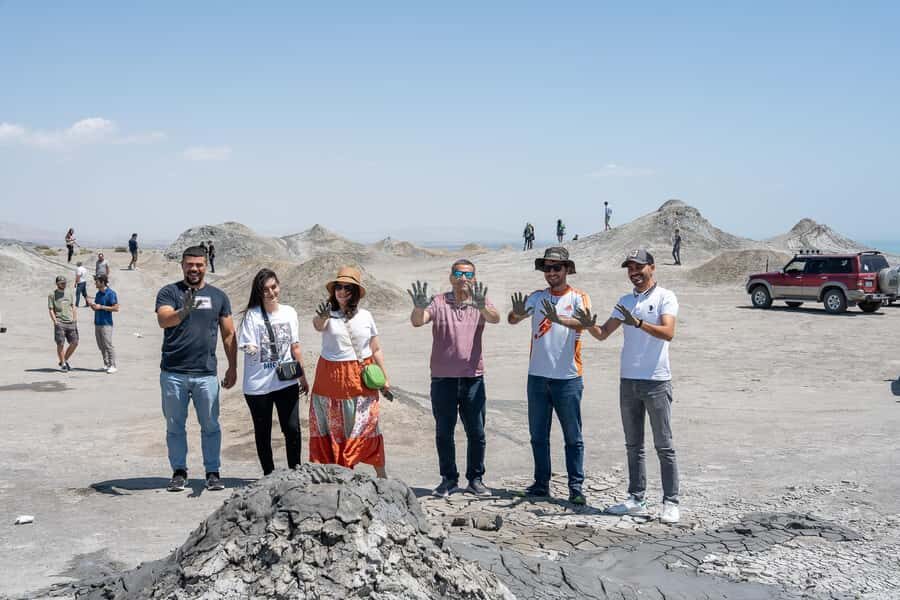
- Mud Volcanoes: the main event, with erupting mud formations that feel totally otherworldly
- Oil history stops: the world’s first industrially drilled oil well, plus a photo location tied to a James Bond movie
- Bibi Heybat Mosque outside view: a quick cultural add-on on the way through the city route
- Smooth private logistics: hotel pickup/drop-off, A/C transport, and a skip-the-ticket-line setup
A half-day that moves through time
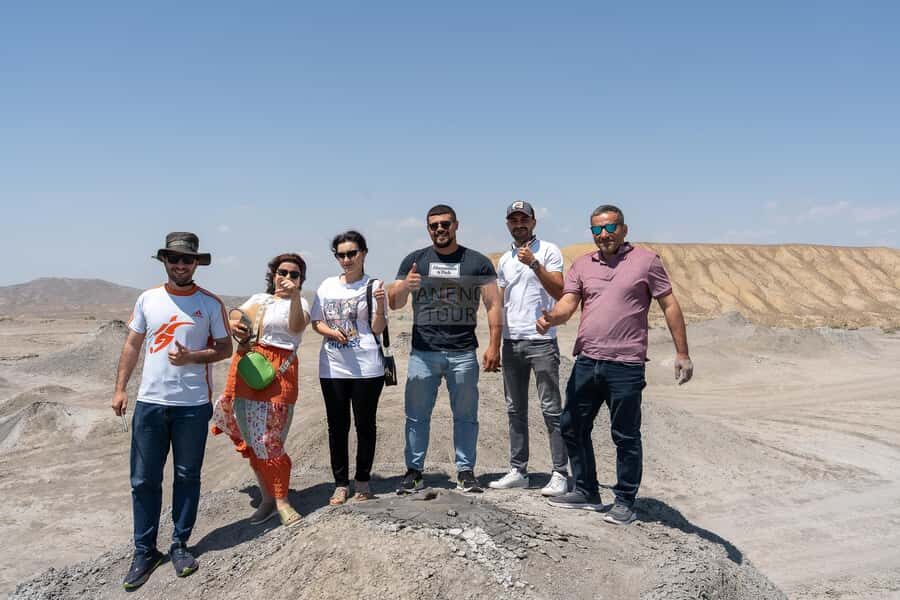
This is a 4-hour private Gobustan National Reserve tour based out of Absheron, with pickup and drop-off from any hotel or location in Baku. You’re not doing this to slow-walk ancient sites for a full day. You’re doing it to get the key layers of Gobustan—human, geological, and industrial—under your feet in one compact loop.
That timing matters because Gobustan is the kind of place where the first few minutes set your expectations. A good guide helps you look at rock art and landscape changes with a sharper eye, instead of treating everything like background. You’ll see a lot of outdoors terrain, so it’s also smart that the tour keeps the day tight rather than stretching into fatigue.
You can also read our reviews of more guided tours in Baku

How the private logistics make the day easier
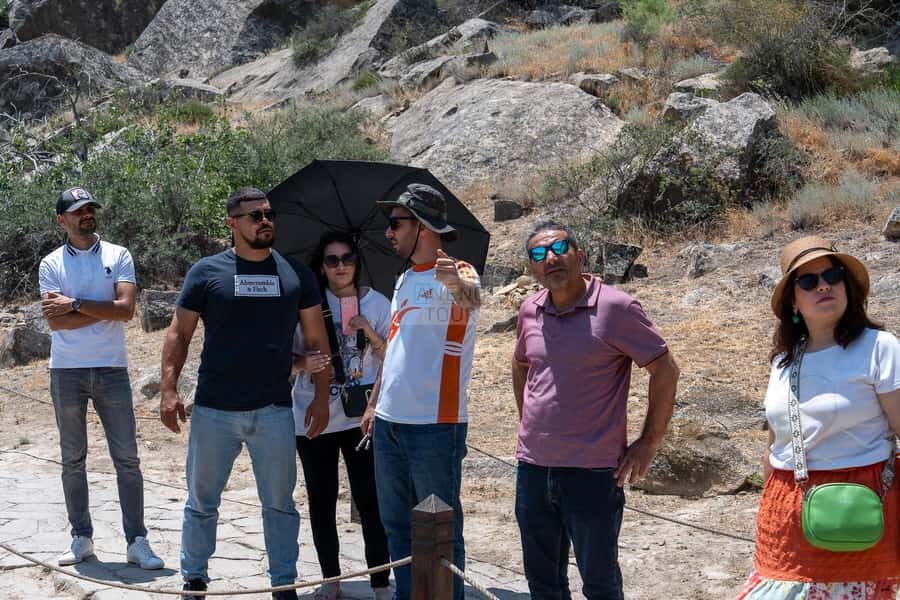
The tour is run as a private group, which means you’re not fighting for a spot at the front of a crowd. The transport is A/C, and you’re picked up from the hotel lobby—plan to be ready about 10 minutes before the scheduled pickup time. The driver will be holding a sign with the company logo, so you can get matched up quickly.
There’s also a big practical win: skip the ticket line plus entry tickets are included. That removes a common half-day headache, especially when you’re on a schedule and don’t want to burn time waiting at windows.
Languages are English, Turkish, and Russian. If you’re choosing based on language comfort, this is a solid point because it lets you pick a guide who can explain the sites clearly rather than resorting to vague summaries.
Gobustan Bio Museum: getting your bearings fast
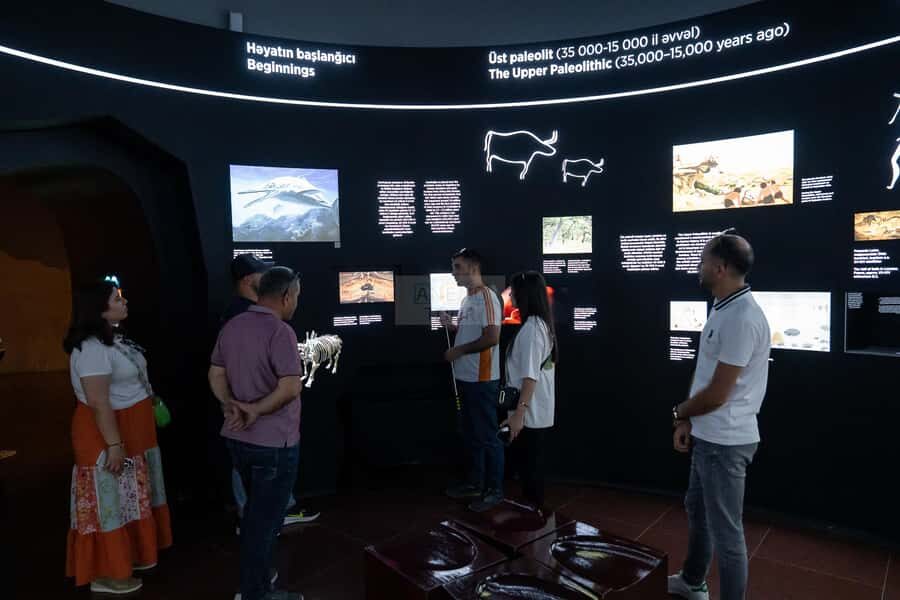
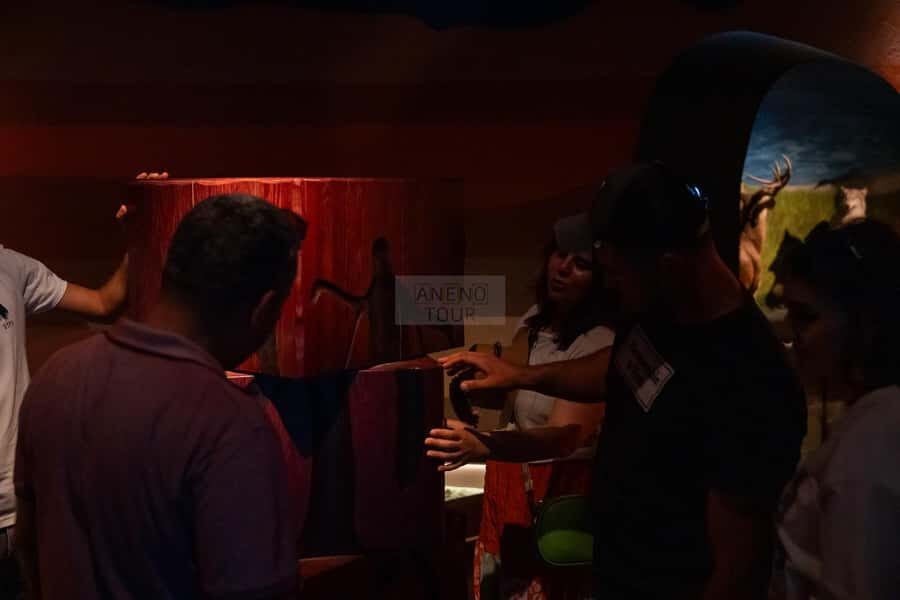
If you only remember one thing from the early part of this tour, make it this: the Gobustan 3D Bio Museum is there to help you read Gobustan before you walk into the open-air spaces.
The museum stop is included, and the 3D format is the right tool for a half-day itinerary. It gives you context for the natural features you’ll meet later—especially the geology behind the mud volcano area—and it helps connect what you see on the rocks to the bigger human story.
What this does for you as a visitor: it turns Gobustan from a collection of separate sights into one place with cause-and-effect. You’ll have a framework for the rest of the route, which makes the outside stops more rewarding.
Open-air rock museum: ancient human marks you can actually see
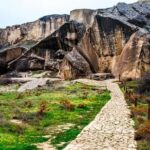
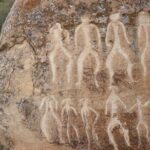
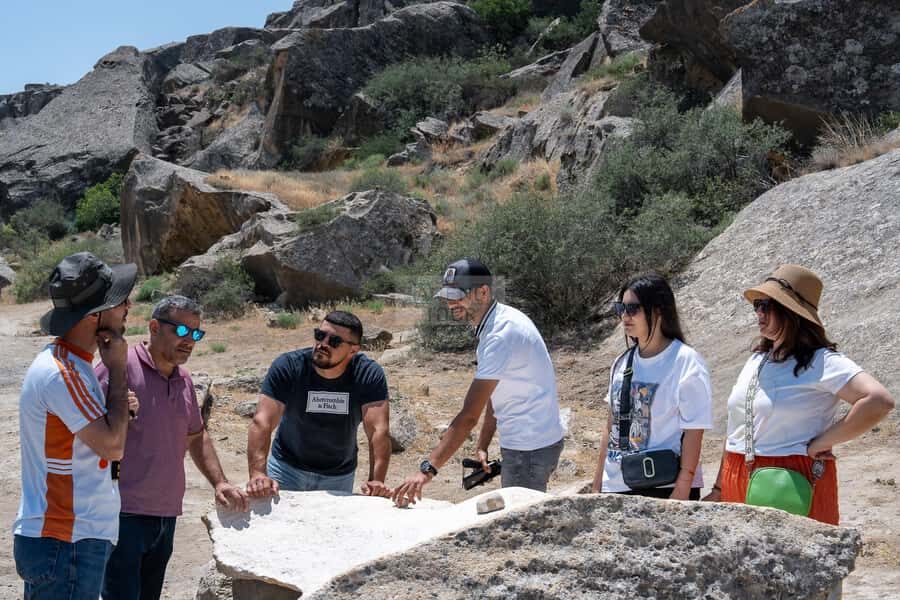
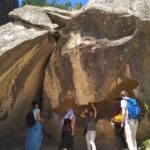
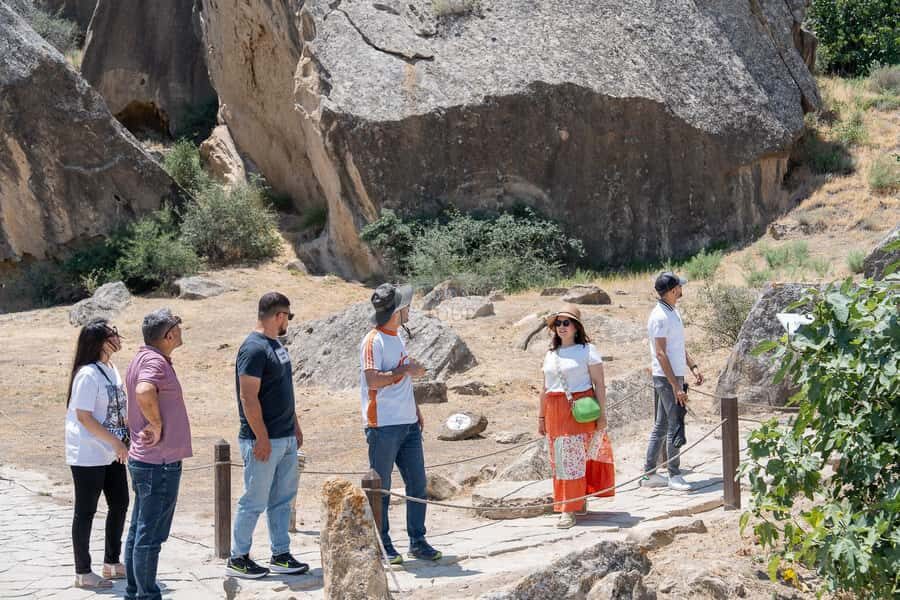
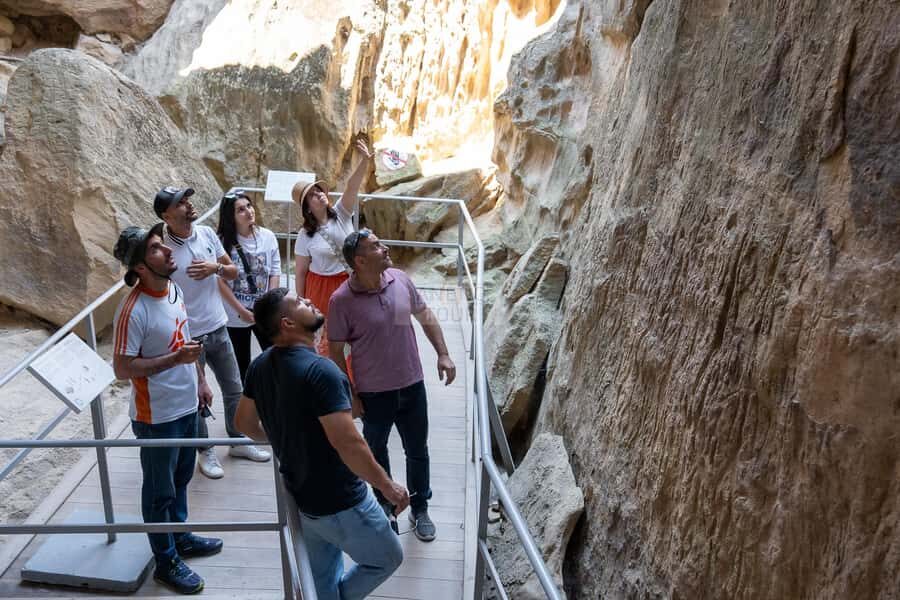
After the museum, you move into the Gobustan open air rock museum, where the sites are set up so you can spend real time looking at the rock surfaces and what’s been carved or marked there.
This is where the tour earns its “guided” part. Without context, rock art can feel like just lines and shapes. With a guide, you start noticing patterns—how people used the area, what kinds of marks stand out, and why certain rock surfaces matter. Your guide is the difference between snapping a photo and understanding what you’re looking at.
I also like that this stop isn’t presented as a quick drive-by. You get time to walk around the open-air exhibits, which is the best way to appreciate rock texture and placement. Bring sunglasses if the light is strong; outdoor viewing can get glaring fast.
Mud volcanoes: the main event, up close
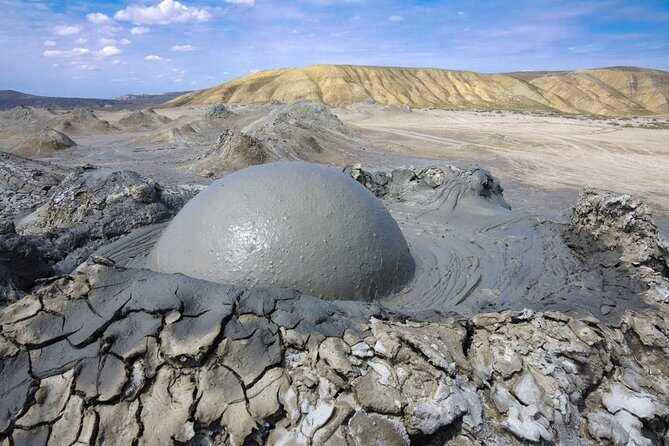
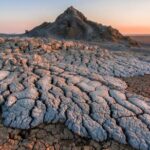
Then you hit the Gobustan mud volcanos, and this is usually where the whole tour clicks. These aren’t museum models; they’re real, active mud formations that can erupt and shift your sense of what the ground is doing.
Even if you’ve seen volcanic visuals before, mud volcanoes have a different feel. The sound, the smell, and the visual texture make it feel more like the landscape is working than like a static nature exhibit. A good guide also helps you understand what you’re seeing beyond the wow-factor—why mud behaves the way it does and what the area’s geology means.
Practical tip: wear comfortable clothes you don’t mind getting dusty. The area is outdoors and the ground can be uneven. And yes, you’ll probably want to take photos, but do it in a way that keeps you steady on your feet.
You can also read our reviews of more private tours in Baku
World’s first industrially drilled oil well and the Bond photo spot
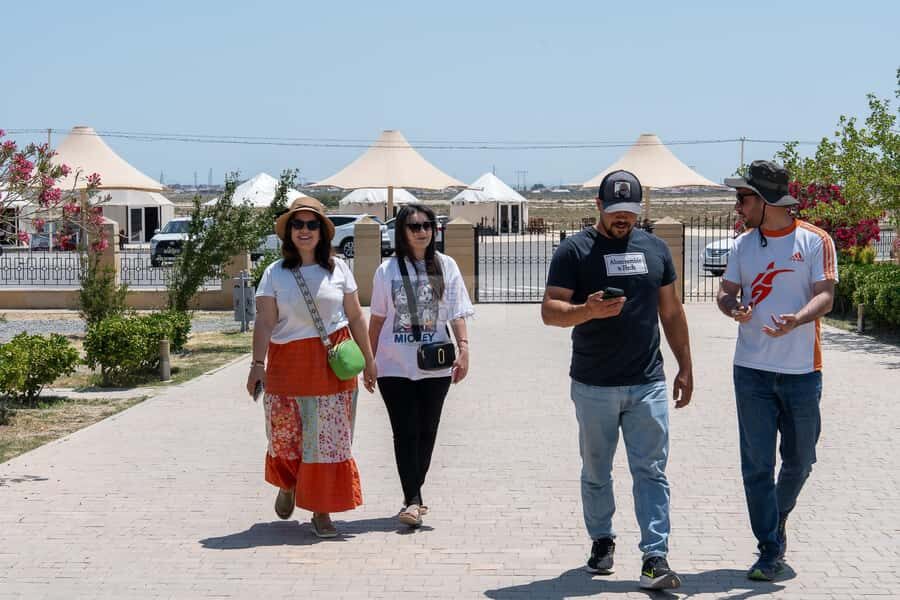
Gobustan isn’t only about ancient people and natural oddities. The tour also includes a stop at the world’s first industrially drilled oil well, which brings the story into the industrial era.
This is a genuinely interesting contrast point. You’re going from geology that produces mud eruptions to the moment humans started drilling at scale and changing the way the region was used and understood.
There’s also a photo moment tied to pop culture: you’ll stop at the location where the James Bond movie was shot and you can take a picture there. It’s not the scientific part of the tour, but it’s a fun reality check that the area has shown up in international media.
If you’re someone who likes travel that mixes serious and fun, this is one of the better add-ons. It keeps the tour from feeling like all lecture and no personality.
Bibi Heybat Mosque: outside view on the route
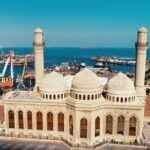
On the way, the tour includes Bibi Heybat Mosque as an outside view, with an entrance component noted as included. This stop gives you a quick cultural punctuation mark after Gobustan’s outdoor focus.
Even with the limited time, it helps you balance the trip. The mud volcanoes and rock museum are about earth and human marks in nature. A mosque stop—even as a brief outside-view segment—shifts your attention to Azerbaijan’s Islamic architectural heritage and place in the city route.
A small note for planning: since this is part of a route and not a long stand-alone mosque visit, it’s more about seeing and experiencing the setting than doing an extended explore.
The real-ship shipping history exhibition (what it adds)
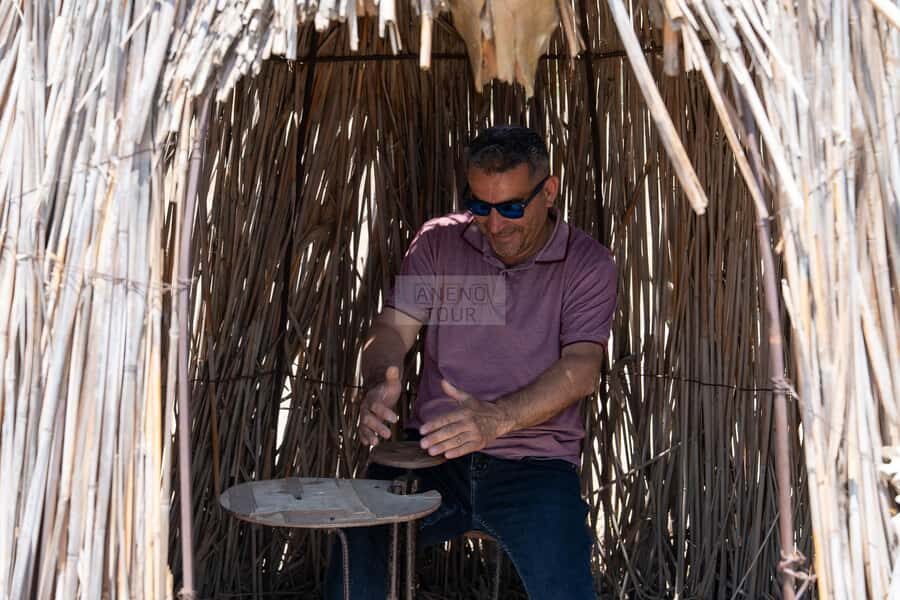
One extra piece woven into the plan is an exhibition of the shipping history of Azerbaijan on a real ship. That’s a different flavor from Gobustan, but it makes the half-day more complete.
I like this type of stop because it reminds you that Azerbaijan’s story isn’t only ancient rock and dramatic geology. There’s also trade, movement, and how people used waterways and ports. Even if you’re not a transport-nerd, the fact that it’s on an actual ship changes the feel compared with a typical indoor display.
You’ll likely want to keep your attention flexible here—some ship exhibits can be more about getting your footing and reading the display than soaking in details for long stretches.
Price and value: why $141 can make sense
At $141 per person for a 4-hour private guided trip, you’re paying for three things that add up quickly: private guiding, included entries, and hotel pickup/drop-off with A/C transport.
The value case is strongest if you count what’s included:
- Guided access to the Gobustan 3D Bio Museum
- The open-air rock museum
- Gobustan mud volcano area experience
- A certificated tour guide
- Entry tickets included
- Transportation and hotel pickup/drop-off
- No hidden charge
- Skip-the-line convenience
If you were to build this yourself, the cost would often creep upward once you add guides, tickets, and transportation time. Here, the tour wraps those pieces into one schedule and reduces decision fatigue. For a place like Gobustan, a guide can be the difference between vague sightseeing and a clear understanding of what you’re seeing.
The drawback is that it’s still a half-day. You won’t leave with a deep, slow mastery of every detail. But as a first or high-impact introduction, the pricing lines up with the amount of ground you cover.
What it feels like with the guide (and why it matters)
The guides on this kind of itinerary have to do real work: they need to translate rock art, geology, and oil-era context into something you can follow in a short time. Based on the guide quality people highlight, the experience tends to run smoothly and stays informative without feeling rushed.
One name that comes up is Habil, noted for being professional and knowledgeable, with a calm, clear style. That fits the trip well: Gobustan rewards steady observation. If your guide can explain what you’re looking at while also keeping the pace comfortable, you get the best kind of “wow”—the kind that comes with understanding, not just pictures.
If you’re booking and you care about language, remember the tour offers English, Turkish, and Russian. Choose based on comfort level so you don’t lose the meaning of the explanations.
Who should book this Gobustan private tour
This tour is a good match if you want a compact, guided route that hits the key Gobustan experiences and also adds Baku-area culture and history on the way.
You’ll likely enjoy it if:
- You prefer hotel pickup/drop-off and an easy plan
- You want a guide who can connect stops into one story
- You like variety: rock art, erupting mud volcanoes, and oil-era landmarks
- You’re traveling as a small private group and want flexibility
It may not be the best choice if:
- You need lots of time at each site to wander
- You have mobility limitations, since the notes say it’s not suitable for people with mobility impairments
- You’re expecting food to be provided (food and drinks are not included)
If you’re visiting in cooler or windy conditions, bring layers. Outdoor stops can change quickly with weather.
Should you book the Gobustan private guided trip?
I’d book this private Gobustan National Reserve guided trip if you want an efficient, well-structured half-day that mixes the big three Gobustan draws—open-air rock art, mud volcanoes, and museum context—plus oil history and a quick cultural stop.
Skip it if you want a long, slow day with no time pressure, or if mobility and outdoor footing are major concerns for you. For most people doing Baku as a base and trying to see more than just the city center, this is a smart use of time.
If you do book, do two small things that pay off: wear comfortable shoes and plan to keep your camera ready, because the oil well and James Bond photo spot are the kind of moments you’ll want to capture on the spot.
FAQ
How long is the Gobustan National Reserve guided trip?
The tour duration is 4 hours.
What’s included in the price?
Hotel pickup and drop-off, entry tickets, Gobustan 3D Bio Museum, the open-air rock museum, Gobustan mud volcanoes, a certificated tour guide, A/C transportation, and no hidden charge.
What is not included?
Food and drinks are not included, and tipping is not included.
Will I need to buy tickets on my own?
No. Entry tickets are included, and the tour also notes a skip-the-ticket-line setup.
Is this tour private?
Yes, it’s listed as a private group.
What languages are available for the live guide?
Live tour guide languages are English, Turkish, and Russian.
Is hotel pickup offered, and how does it work?
Yes, pickup is available at any hotel or location in Baku. You should wait in the hotel lobby 10 minutes before your scheduled pickup time, and the driver will hold a sign with the company logo.
Is the tour suitable for people with mobility impairments?
The information includes a wheelchair-accessible note, but it also states it is not suitable for people with mobility impairments. If mobility is a concern for you, it’s safest to confirm directly before booking.