REVIEW · BAKU
Gobustan-Mud Volcan-Fire Temple and Mountain Tour/Entrance inc
Book on Viator →Operated by Baku Heritage Tours · Bookable on Viator
Gobustan to fire flames in one day. This tour ties natural oddities to ancient culture, with hotel pickup, a small group (max 15), and a guide who helps you connect the dots between sites. I like that the schedule is packed but not totally chaotic, and you also get built-in stops for views and photos.
I also like the value angle. At $30, you’re paying for more than bus time: there’s guided storytelling, bottled water, and admission included for key parts of the day (based on the option you choose). That’s the difference between seeing a few sights and understanding why they mattered.
One thing to think about: this is a long, full-day drive in Baku traffic. If you’re sensitive to delays, or you want total control over entrances and lunch timing, plan to be flexible and double-check what your exact ticket package includes.
In This Review
- Key things I’d watch for before you go
- Baku day-trip power: why this combo works
- Price and value: what $30 really buys
- Pickup, comfort, and the language reality
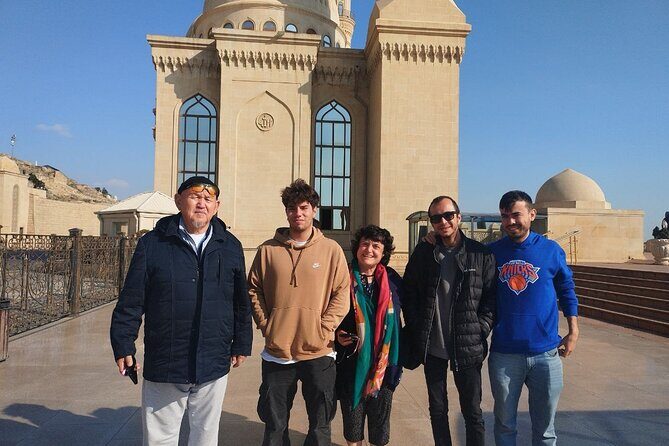
- Stop 1: Bibi-Heybat Mosque and the Caspian-side calm
- Stop 2: Gobustan mud volcanoes—science meets messy fun
- Stop 3: Gobustan rock art—how to read the carvings
- Stop 4: Ateshgah (Fire Temple)—why these flames kept drawing people
- Stop 5: Yanardag—still burning, even when the fire got smaller
- Stop 6: Heydar Aliyev Cultural Center—Zaha Hadid’s curves in motion
- Timing and traffic: plan for a long, full day
- What’s included (and what you may still pay for)
- Photo stops and the guide effect
- Who this tour is best for
- Should you book this Gobustan and Fire Temple tour?
- FAQ
- How long is the Gobustan–Mud Volcano–Fire Temple and Mountain Tour?
- Is hotel pickup and drop-off included?
- What languages are the guides available in?
- Are entrance tickets included?
- Is lunch included?
- Is bottled water provided?
- How many travelers are in the group?
- Can I cancel for a full refund?
Key things I’d watch for before you go
- Small-group size (max 15): easier questions and less waiting than big coaches
- Pickup and drop-off: it removes the hardest part of day-tripping from Baku
- Fire and gas sites: Ateshgah and Yanardag show you natural flames in a very unusual way
- Entrance tickets depend on options: some admissions are included, but you should confirm what you’re covered for
- Long day + traffic: give yourself patience, especially on the return to Baku
Baku day-trip power: why this combo works
This is one of those days that looks simple on paper—mosque, Gobustan, rock art, fire, back to the city—but it hangs together because the tour has a clear theme: Azerbaijan’s identity shown through land, belief, and survival.
You start with a major religious landmark in Baku’s area, then shift into the weird science-and-mud world of Gobustan. After that comes ancient rock art (human stories carved into stone), then you jump into places where fire burns because of gas from the ground. By the time you reach the modern architecture of the Heydar Aliyev Cultural Center, you’ve seen how the country keeps reinventing its story.
The biggest practical win is that you’re not doing this as a DIY puzzle. Between pickup, guided explanations, and included tickets for several stops, you lose less time arguing with taxi meters, figuring out entrances, or waiting alone at roadside points.
You can also read our reviews of more tours and experiences in Baku.
Price and value: what $30 really buys
At $30 per person, this sits in the budget-friendly zone for a full day with transport and a guide. The value comes from the combination: hotel pickup/drop-off, bottled water, and guide coverage across multiple stops instead of one or two.
Admission is where you should pay attention. The tour includes tickets for Gobustan rock art, Ateshgah, and Yanardagh when you select the option. But some site fees can still apply at places like the mud volcano area, and the tour description also notes that certain costs may be cash-based for the off-road approach to the mud volcanoes—so confirm what your booking includes.
If you book expecting everything to be fully covered with zero extra spending, you’ll want to verify. Some people experienced missing water or extra entrance fees when they had a different tour setup, so read your exact inclusions before you go.
Pickup, comfort, and the language reality
Pickup is included, which matters on day trips. You’re saving time and energy, and you’re less likely to miss the early start window.
Group size is capped at 15 travelers, and that can change the experience in small but meaningful ways: less crowding at each stop and more time for questions. A couple of reviews flagged bus comfort issues on some days, so if you’re tall or picky about seating, bring that up to yourself before you board.
Language coverage is broad—English, Arabic, Russian, Spanish, and Turkish. That’s great on paper. In real life, the quality of your explanations still depends on your guide and your specific language pairing, so use your confirmation message to ask what language the guide will speak for your departure.
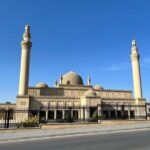
Stop 1: Bibi-Heybat Mosque and the Caspian-side calm
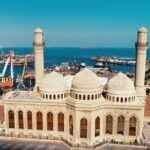
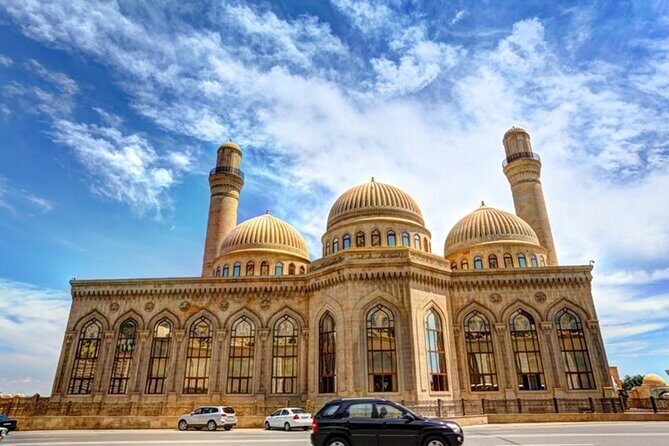
This start is smart. Bibi-Heybat Mosque gives you an immediate sense of place without exhausting you too early. You’ll see the design outside and inside, and you’ll walk through the gardens around the complex with views toward the Caspian Sea.
What makes this stop worth your time is the mix of architecture and atmosphere. Even when you only have about 30 minutes, the guided context helps you look past the postcard version. You’re not rushing just to check a box—you’re learning what the mosque represents in the area.
Also, admission is free for this stop, so you’re not stuck doing the math before you enter.
Stop 2: Gobustan mud volcanoes—science meets messy fun
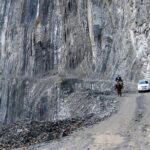
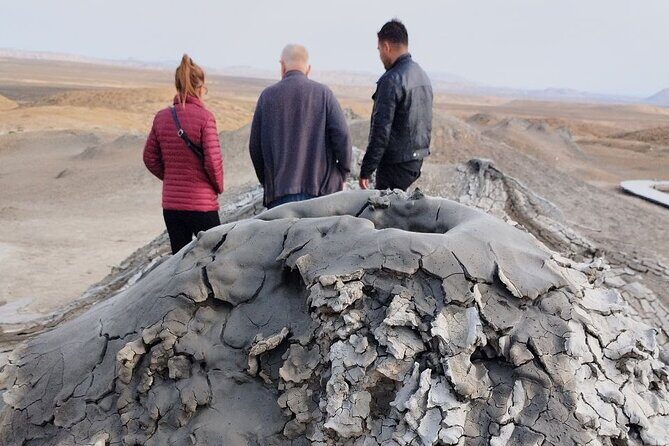
Gobustan’s mud volcanoes are one of those natural phenomena that looks unreal until you’re standing there. The area is famous for mud volcano activity—estimated to host hundreds of the planet’s mud volcanoes—plus the constant spectacle of mud bubbling and gassing.
You’ll typically spend about an hour at this part, and it’s not just about “seeing.” Many people come for the experience of how the ground changes, and there’s often a short, off-road approach involved to reach the best viewing spots. The tour notes an off-road fee may be cash-based in some setups. In group options, this may be included, but confirm your package so you’re not surprised on the day.
One practical reality: mud volcano stops are not comfortable in the way museums are. Wear shoes you don’t mind getting dirty, and expect uneven ground if you’re moving around for photos.
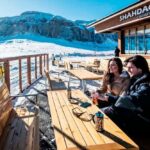
Stop 3: Gobustan rock art—how to read the carvings
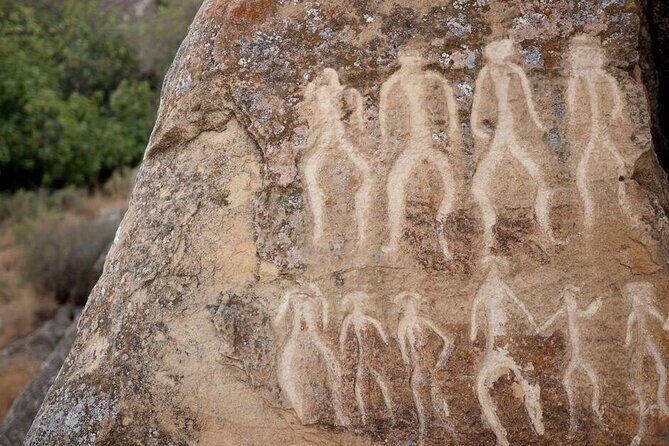
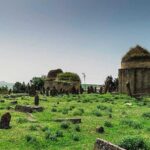
After the mud, rock art can feel like a reset—cooler, calmer, and more human. Gobustan’s petroglyphs are ancient rock drawings carved into stone, showing people and animals, hunting scenes, and everyday life long before modern writing existed.
This is where a guide can make the biggest difference. Petroglyphs are easy to miss if you’re just walking by. With an explanation, you start spotting patterns: what’s grouped together, how animals are depicted, and what kinds of scenes appear most often.
Plan for about an hour here. It’s enough time to see a meaningful portion if the group moves steadily, but not enough time to go wandering endlessly—so pay attention early and you’ll get more out of that hour.
Stop 4: Ateshgah (Fire Temple)—why these flames kept drawing people
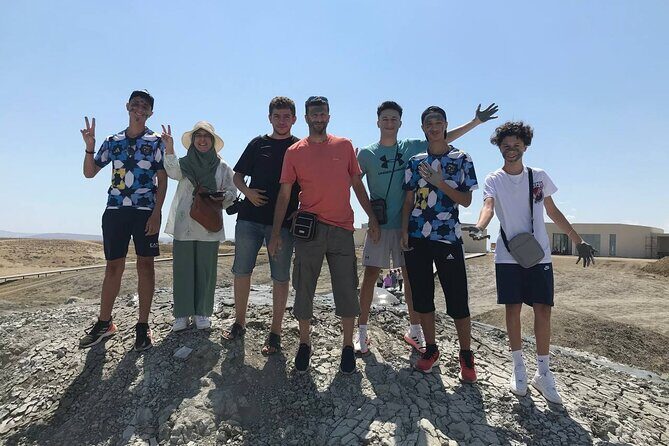
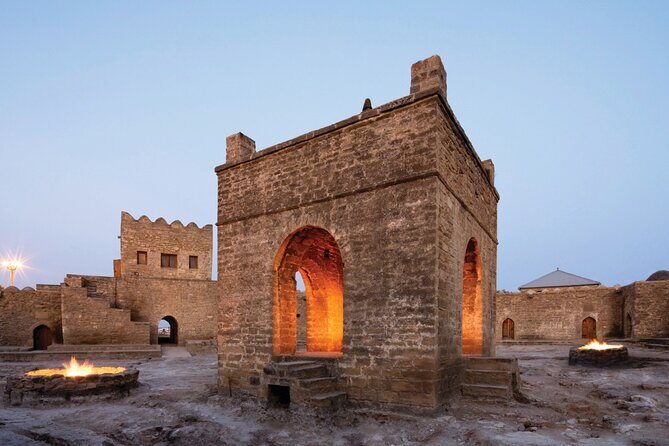
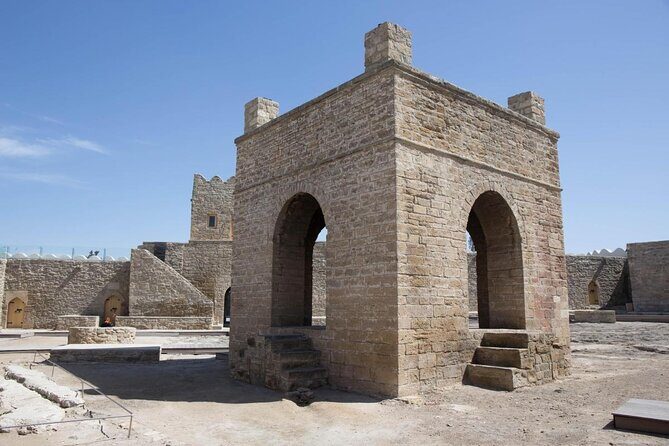
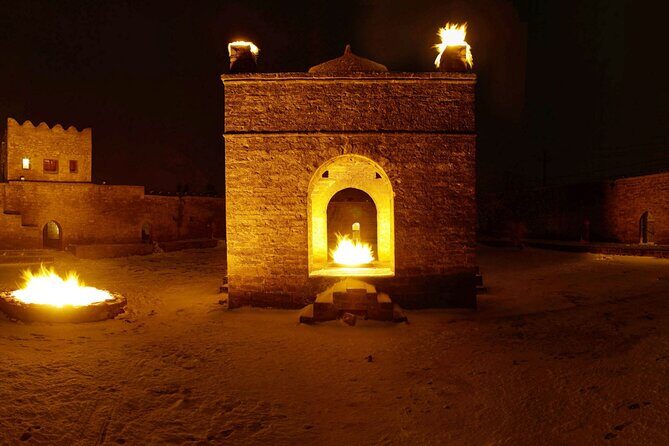
Ateshgah, the Fire Temple of Baku, is built around a natural gas vent that ignites flames. It’s known as a UNESCO World Heritage site, and it carries a layered religious story linked with Hindu, Sikh, and Zoroastrian traditions.
You get about an hour. That’s a good match for this kind of stop: you need time to walk around the complex, notice the architecture, and understand why fire was meaningful in the first place. The guide’s role matters here, because the site can look like a dramatic set piece unless you connect it to the underlying beliefs.
Entrance tickets for Ateshgah may be included depending on the option you choose. Again, confirm so you don’t end up paying twice.
Stop 5: Yanardag—still burning, even when the fire got smaller
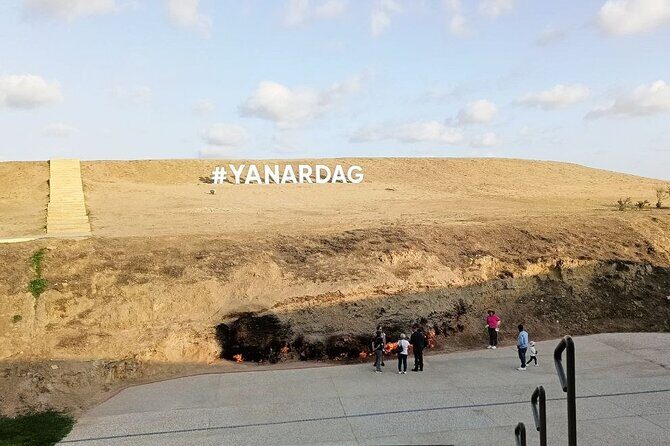
Yanardagh (often called Yanardag, or Fire Mountain) is famous for naturally burning gas. The fire has been burning for centuries, though the size of the flames can shrink over time as gas resources are developed.
You’ll visit Yanardag in Digah village and spend around an hour. This stop has a practical plus: it includes a short break option with nearby cafe time and views. That kind of pause matters because you’re stacking two fire-focused sites back-to-back, and energy can dip in the midday return drive.
Bring a jacket or layer even in warmer months if you’re sensitive to wind. Fire sites can be exposed, and you may spend time outside for photos.
As with Ateshgah, entrance at Yanardag may be covered depending on your selected option.
Stop 6: Heydar Aliyev Cultural Center—Zaha Hadid’s curves in motion
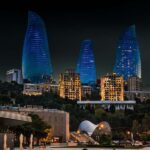
This last stop is a strong palate cleanser after the ancient and natural sites. The Heydar Aliyev Cultural Center challenges the usual boxy feel of civic buildings, with swooping shapes and a design that avoids right angles.
It’s named for Heydar Aliyev, who led Azerbaijan for nearly 20 years, and the building was designed by Zaha Hadid. You’ll get about an hour—enough to look around, take photos, and appreciate why the building looks like it’s flowing instead of sitting still.
One small tradeoff: the tour format here may limit how much time you get inside for exhibitions. If your main goal is interior galleries, you might not feel like you had time for them—but you’ll still get the architecture experience.
Timing and traffic: plan for a long, full day
The tour runs roughly 7 to 8 hours, and a good chunk of that is transport (often 2 to 3 hours) plus time spent moving through Baku traffic. Some people experienced later start times and a longer day than expected, especially when the return involves congestion.
So here’s my practical advice: treat this as a day-trip marathon, not a quick hit. If you’re planning dinner reservations or a late flight pickup, give yourself a cushion.
Also, lunch is not included. That means you should either eat during the provided break windows or budget for a meal on your own. The cafe near Yanardag can help, and some stops may come with options, but you’re responsible for choosing and paying.
What’s included (and what you may still pay for)
Included items help a lot on the ground: air-conditioned vehicle, pickup and drop-off, an English/Arabic/Russian/Spanish/Turkish guide, bottled water, photo shoots, and entrance tickets for Gobustan rock art and the fire sites based on your chosen option.
What can still cost extra:
- Lunch (not included)
- Any cash off-road fee for the mud volcano approach, depending on your exact group/ticket setup
If you want this day to feel smooth, check two things before you go:
- Which entrances are covered for your departure
- Whether the mud volcano approach involves a cash payment and if it’s included for your group type
Photo stops and the guide effect
This tour explicitly includes photo shoots, which is more useful than it sounds. It means someone is thinking about where to stand, when to stop for the best angles, and how to get group photos without you losing time to awkward logistics.
The guide experience is also a huge variable. Some guides you might get—like Elshad, Rosi, or Dinara—were called out as fun and informative in the feedback. When your guide is good, the day gets easier to enjoy because they connect the mosque details to the rock art story, then to the fire symbolism, without making it feel like a lecture.
Who this tour is best for
This is a strong fit for:
- First-timers in Baku who want a one-day highlights circuit beyond the city
- People who like guided explanations, not just sightseeing
- Travelers who enjoy natural oddities (mud volcanoes) paired with cultural sites (rock art and temples)
It’s less ideal for:
- Anyone who wants a highly relaxed pace with lots of free time at each stop
- People who can’t handle traffic delays
- Travelers who hate paying extra for entrances or cash-based local fees—unless you confirm inclusions ahead of time
Should you book this Gobustan and Fire Temple tour?
I’d book it if you want a compact, guided day that covers Gobustan’s strange nature and Baku’s fire-and-faith sites without you planning every detail. At $30, the value is real if your ticket option includes the major entrances and your guide provides solid explanations.
Skip or at least verify inclusions first if you’re trying to eliminate all surprise costs. The mud volcano area approach can involve cash, lunch is not provided, and some people reported gaps like missing water or extra entrance fees when tour setup didn’t match what they expected.
If you’re flexible and want a well-packed cultural-natural day from Baku, this one is worth putting on your shortlist.
FAQ
How long is the Gobustan–Mud Volcano–Fire Temple and Mountain Tour?
The tour lasts about 7 to 8 hours.
Is hotel pickup and drop-off included?
Yes. Pickup from your hotel and drop-off back to your hotel are included.
What languages are the guides available in?
Guides are available in English, Arabic, Russian, Spanish, and Turkish.
Are entrance tickets included?
Entrance tickets are included for Gobustan rock arts and for Ateshgah and Yanardagh if you select the option. Other site costs may still apply, depending on what’s included in your selected package.
Is lunch included?
No. Lunch is not included.
Is bottled water provided?
Yes. Bottled water is included.
How many travelers are in the group?
The tour has a maximum of 15 travelers.
Can I cancel for a full refund?
Yes. Cancellation is free up to 24 hours in advance for a full refund.
If you tell me your travel dates and whether you’re booking a group option or a private setup, I can help you think through the most likely extra costs and how to time lunch.