REVIEW · BAKU
2 days 1 Night Shamakhi – Gabala – Lahij – Sheki Tour ( Northern Route)
Book on Viator →Operated by “Travelway Azerbaijan” · Bookable on Viator
Two days is a fast way to see northern Azerbaijan. This group route takes you out of Baku and strings together Sheki, Shamakhi, and the Gabala area in a tight 2 days that still feels structured instead of chaotic. I like it because it handles the driving and most entry tickets for you, so your day is spent looking instead of figuring things out.
What I really like is the mix of big-ticket sights plus quieter stops: Juma Mosque, Sheki Khan’s Palace with the no-nails construction and colorful shebeke windows, and a real walk along Nohur Lake. I also love that you’re sleeping in a five-star hotel with breakfast, and the tour guide support can be excellent—ask if a guide like Rustam, Vahid, or Senan is available, since those names come up for attentive, patient help.
One possible drawback: the pace is packed, and a few items depend on conditions. Lahij can shift based on road conditions, cable car at Tufandag costs extra, lunches aren’t included, and Diri Baba Mausoleum entry shows conflicting notes—so confirm before you go.
In This Review
- Key things to know before you go
- Two Days Through Northern Azerbaijan From Baku
- Price and Value: What $215.76 Actually Covers
- Day 1: Diri Baba Mausoleum, Shamakhi, Lahij, and the Road Toward Sheki
- Diri Baba Mausoleum outside Shamakhi’s direction
- Juma Mosque in Shamakhi: minarets, rebuild stories, and a Friday concept
- Ismayilli: mountains, forests, rivers, and Silk Road context
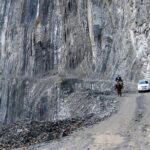
- Lahij craft village: copper work with deep roots
- Yeddi Gumbaz mausoleum: the seven tomb idea
- Nohur Lake in Gabala: a short shore walk that resets your brain
- Gebele and the Caucasian Albania link
- Tufandag Mountain Resort: cable car optional, views are the reason
- Sheki: arriving at the Silk Road atmosphere
- Day 2: Sheki Fortress, Khan’s Palace, and Karvansaray
- Sheki Fortress: defensive walls from the 17th century
- Palace of Sheki Khans: the no-nails building and shebeke windows
- Sheki Karvansaray: the upper caravanserai as a trading stop
- Hotel Night in Sheki: Five-Star Comfort on a Short Trip
- Getting Around and Staying Comfortable With a Small Group
- Lunches, Cable Cars, and Other Costs to Budget
- Who This Northern Route Tour Suits Best
- Should You Book This Northern Route Tour?
- FAQ
- Where does the tour start and end?
- What time does the tour start?
- How long is the tour?
- Is pickup from the airport or hotel included?
- What’s included in the tour price?
- Are lunches included?
- Is the cable car at Tufandag included?
- How many people are in the group?
- What happens if weather is bad?
Key things to know before you go
- Five-star hotel + breakfast included, which matters a lot on a short trip.
- Most major admissions are covered, including Sheki Palace and key Shamakhi/Gabala entries.
- Sheki Khan’s Palace is the star: colored-glass shebeke work and construction described as nail-free.
- You get a lakes-and-mountains day with Nohur Lake and Tufandag viewpoint time.
- Max group size is 18, so it’s not a huge bus crowd.
- Pace is real: 20–45 minute stops mean you’ll see a lot, but you won’t linger.
Two Days Through Northern Azerbaijan From Baku
This is the kind of tour that’s designed for people who want results without needing a private driver, and it uses the geography smartly. You start and end in Baku (meeting at Sabir’s Garden), then you work your way through mountain foothills, historic towns, and crafts until you’re back again—after one hotel night.
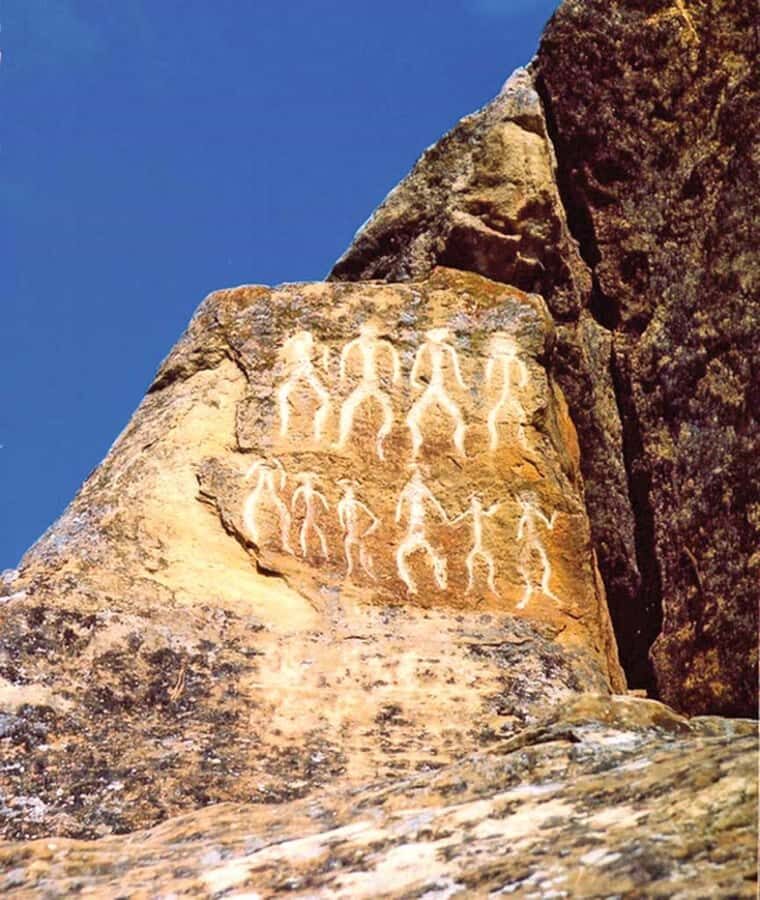
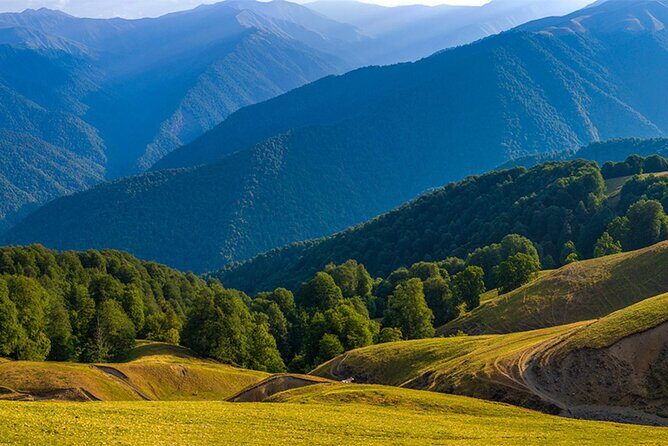
The “northern route” feeling comes from variety. You’ll move from arid-and-historical Gobustan settlement stops toward lush forested scenery in the Ismayilli area, then into Gabala’s lake-and-resort vibe, and finally into Sheki’s Silk Road architecture world.
Because it’s a group tour, you’ll get a built-in rhythm: ride, brief guided stop, photo time, and then back on the road. That rhythm is also why it can feel short if you’re the kind of traveler who likes slow mornings and long museum hours.
You can also read our reviews of more evening experiences in Baku
Price and Value: What $215.76 Actually Covers
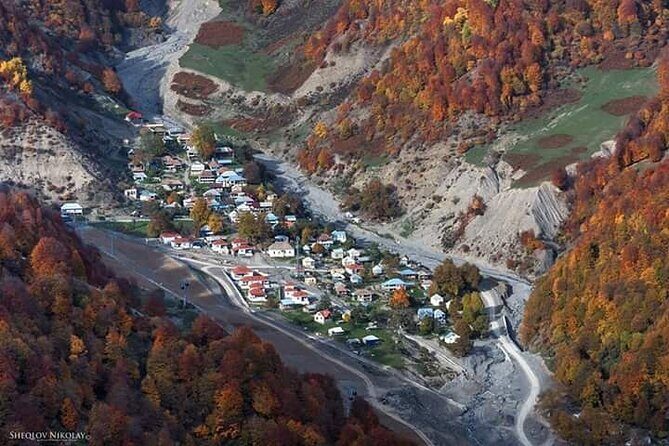
At $215.76 per person, the value comes down to what’s included versus what you’d normally pay for yourself. This package covers an air-conditioned vehicle and a tour guide, plus a five-star hotel night with breakfast. It also includes entry fees for several key sites—Juma Mosque, the 7 tombs in Shamakhi, Nohur Lake, the Sheki Fortress, Sheki Khan’s Palace, Sheki Karvansaray, and more.
It’s also not just “sightseeing stops.” You’re getting the kind of itinerary that would take time to coordinate: Baku pickup, inter-city transfers, and admissions bundled together. On a two-day timeline, that convenience is the core of the cost.
What can chip away at the value is what isn’t included. Lunches are not included, and the cable car at Tufandag isn’t included. If you want to ride up, you’ll pay extra on top. And because Diri Baba Mausoleum entry has conflicting notes, I’d treat that as a “double-check” item rather than assume it’s free.
Day 1: Diri Baba Mausoleum, Shamakhi, Lahij, and the Road Toward Sheki
Day 1 is about history you can see quickly, plus scenery that makes the drive worth it. Expect a series of focused stops—usually around 20 to 40 minutes—so the guide can give context without turning the day into a waiting game.
Diri Baba Mausoleum outside Shamakhi’s direction
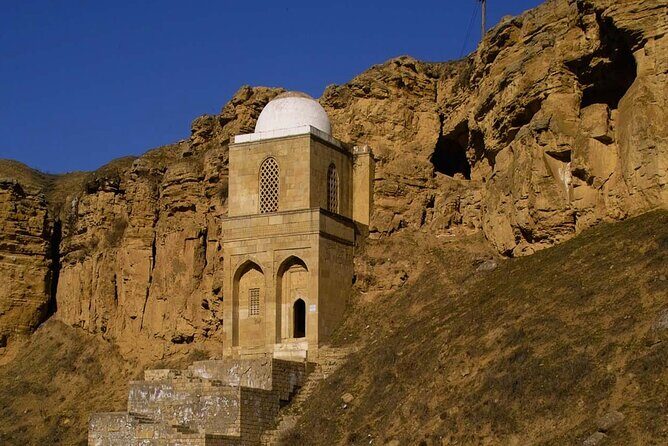
You start with Diri Baba Mausoleum, described as a Sufi darvish mausoleum used by sufis as a religious space for prayer away from the city. The building is said to have been built in 1402 and is still known as a religious place among citizens.
This is the kind of stop that can feel small but meaningful. If you like places with spiritual history and local tradition rather than big crowds, this fits. If you’re expecting a large showpiece monument, you might find it more quiet and simple.
One practical note: entry to Diri Baba Mausoleum appears to be included in some parts of the package information, but it’s listed as not included in another section. Before your tour starts, confirm whether you’ll pay at the entrance or if it’s already covered.
Juma Mosque in Shamakhi: minarets, rebuild stories, and a Friday concept
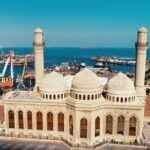
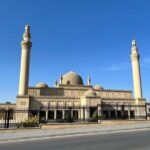
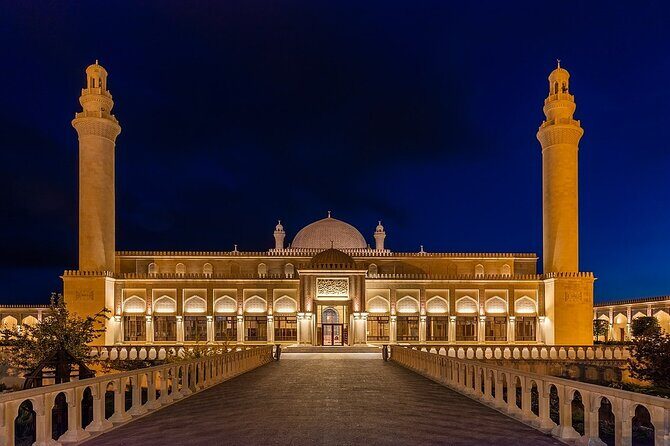
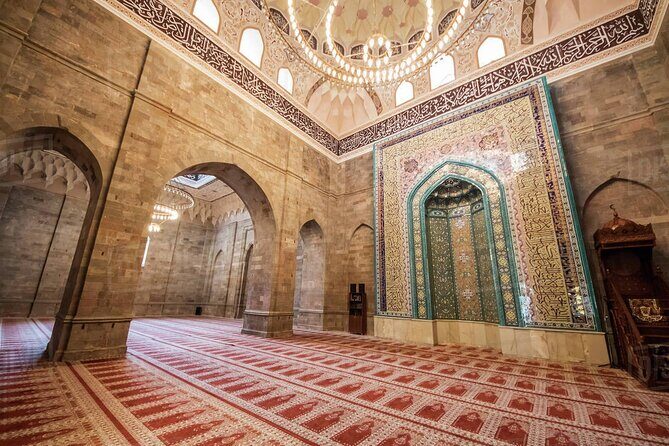
Next is Juma Mosque in Shamakhi, often called the Friday Mosque because Friday prayers are central in Muslim communities. The mosque is described as dating back about 743 years, with a complex area stated as 1 hectare.
Look up at the minarets: they’re listed as 36 meters tall. The building’s story is also dramatic—destroyed by Mongolians in 1222, burned by Armenians in 1905, and later recovered by Joseph Plosko (a Polish architect associated with Baku’s restoration work).
Even if your time is short, this is a stop where the guide’s explanation can change how you see it. The architecture isn’t just old; it’s resilient.
A few more Baku tours and experiences worth a look
Ismayilli: mountains, forests, rivers, and Silk Road context
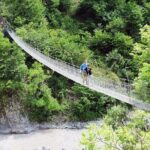
After Shamakhi’s mosque, you head toward Ismayilli, a northern region known for mountains, forests, lakes, and rivers. You’ll learn that some rivers swell in summer, with many river sources starting from the mountains.
You also get historical framing: the area was once part of Caucasian Albania and was on a Silk Road route to Georgia. This is a nice change of pace because it’s less about a single building and more about understanding why people settled and traveled here.
If you’re hoping for big photo moments, this is one place to keep your phone ready, even if the stop is brief.
Lahij craft village: copper work with deep roots
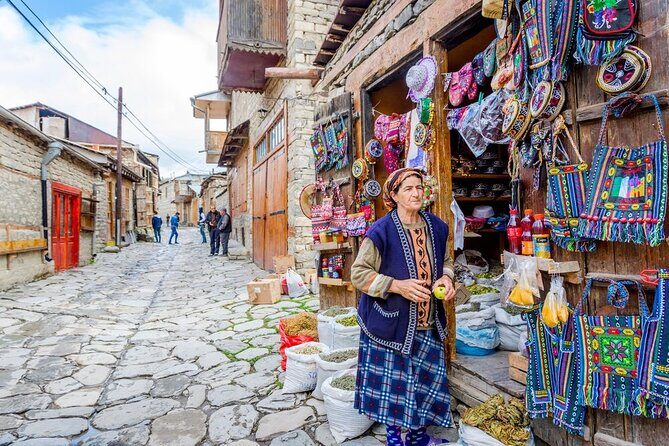
Then comes Lahij, a well-known Azerbaijani handcraft center for copper products and copper-based jewelry. The tour frames Lahij as having history more than 1500 years old and says it was used by Shirvanshaks kings as a summer residence.
Lahij is one of those stops where you can buy small souvenirs without feeling like you’re in a generic market stop. Focus on what you like—copper items, metalwork, and local craft design—rather than trying to collect everything. Because the stop is around 40 minutes, you’ll want to move with purpose.
This is also where your time management matters. If you arrive hungry, you’ll feel rushed. If you arrive ready to browse, you’ll enjoy the browsing.
Yeddi Gumbaz mausoleum: the seven tomb idea
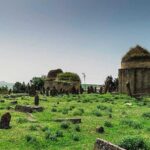
You’ll visit Yeddi Gumbaz Mausoleum, described as the seven tombs of Shamakhi khans from the 17th–18th centuries, during the Khanate period when rulers were separate small states.
This is a good stop for travelers who like how political history shows up in burial places. It also gives you a “timeline feeling” as the tour shifts toward Sheki, another Khanate center.
Nohur Lake in Gabala: a short shore walk that resets your brain
Nohur Lake is one of the most beautiful lakes mentioned in the route, and you’ll walk along the shore in Gabala. The tour also notes that Gabala was a capital of Caucasian Albania, and some ancient sources connect it with the name Kabalaka.
Even with a short stop time, lakes slow your thoughts down. Wear shoes that are comfortable for uneven ground near water. This is also the stop where you’ll probably want fewer photos and more just looking.
Gebele and the Caucasian Albania link
After the lake, you pass through Gebele, which is described as an ancient capital of Caucasian Albania. The tour adds that Christianity was the main religion historically, and that in some villages of Gabala people still pray Christian.
This is another “context” stop. It’s quick, but it helps explain why Northern Azerbaijan has layers beyond one religion or one architectural style.
Tufandag Mountain Resort: cable car optional, views are the reason
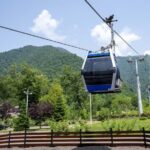
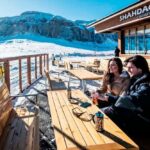
You’ll have time at Tufandag Mountain Resort, listed as a summer and winter complex with a cable car created to boost Azerbaijan’s ski and winter tourism potential. There are two cable car lines going up to 1900 meters.
Cable car tickets are not included, so you decide whether it’s worth paying extra. If the weather is good, the views can justify it. If the weather is questionable or you’re energy-limited, you can still use this time to enjoy the mountain setting from where the tour stops.
Sheki: arriving at the Silk Road atmosphere
Finally on Day 1, you reach Sheki. The tour frames it as an ancient Silk Road city with a Sheki Khanate identity in the 17th–18th centuries and a former name Nukha (changed during Soviet years in 1960).
This arrival stage is short, but it sets the stage. You’re not fully inside Sheki’s main monuments yet—that comes on Day 2.
Day 2: Sheki Fortress, Khan’s Palace, and Karvansaray
Day 2 is where Sheki’s architecture and defensive history gets its time. These are the stops you’ll remember when you look back at the trip.
Sheki Fortress: defensive walls from the 17th century
You start with Sheki Fortress, described as defense walls for the Sheki Khanate created in the 17th century. Some parts are still standing.
Even though it’s not a huge site by day-tour standards, the value is in imagining the layout: walls weren’t built for decoration. They were built because conflict was part of the Khanate reality.
If you’re visiting in hotter weather, bring water. You’ll likely feel the sun while moving around the remaining walls.
Palace of Sheki Khans: the no-nails building and shebeke windows
Then comes the main show: the Palace of Shaki Khans. It served as a main residential place for Sheki’s Khanate ruler.
What I’d center your attention on is the construction detail: it’s described as using special technology with no nails in the building. And then there’s the shebeke art—windows assembled from small pieces of colored glass and wood.
This is one of those places where the guide’s explanation can make your photos better. Don’t just snap and go. Spend a few minutes looking at the color pattern and how light hits the small pieces.
If you like architecture that mixes craftsmanship and everyday life, this palace rewards patience even though your time on-site is around 30 minutes.
Sheki Karvansaray: the upper caravanserai as a trading stop
Next is Sheki Karvansaray, the Upper Caravanserai. It’s described as an ancient hotel-like building used by merchants and traders, since Sheki sat on the Silk Road route to Georgia. Traders would stay here the night before continuing onward.
This stop gives you the human side of the Silk Road story. It wasn’t just travel and battles; it was commerce, lodging, and people waiting out schedules.
If you’re the type who likes details, ask the guide what travelers would have done there in the time when routes were longer and slower than today.
Hotel Night in Sheki: Five-Star Comfort on a Short Trip
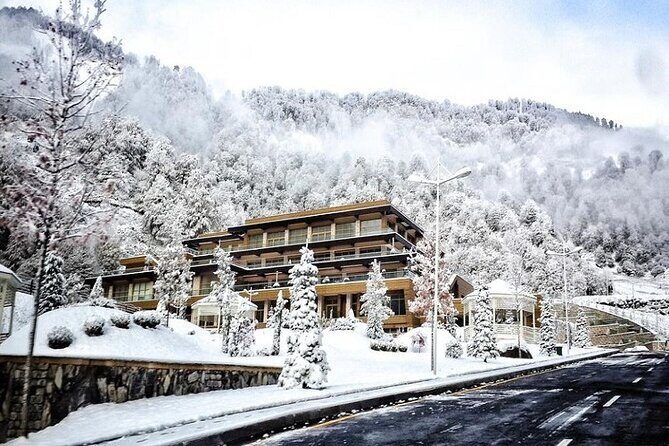
This tour includes hotel accommodation in a five-star hotel and gives you breakfast. That matters more on a two-day trip than people think, because you don’t have time to chase good meals or sleep quality.
What you can do with the night: if the hotel is in Sheki, you’ll likely have a chance to stroll around at a comfortable pace after the day’s travel. Just keep in mind you’re coming off a full day of stops—so don’t plan anything that requires early morning stamina unless you know you can handle it.
If you’re someone who needs downtime, take it. You’ll get more out of Palace and Fortress the next day if you’re not running on fumes.
Getting Around and Staying Comfortable With a Small Group
This is a group tour with a maximum of 18 travelers. That smaller size can help the guide manage questions and keep the pace smooth, especially at the busiest photo moments.
You’ll ride in an air-conditioned vehicle, which is a real plus on warm days. Pickup is offered from airport or hotel in Baku, so you won’t need to organize your own start point beyond meeting at Sabir’s Garden.
One thing to keep in mind: because stops are short, communication and meeting points matter. If you get the briefing from your guide early in the day, you’ll waste less time later.
From my perspective on what makes these tours succeed, a guide can make the difference between a checklist and a story. If you want more than just facts—if you want context—choose a time when you can ask questions, and lean into the guide’s style. Some of the most helpful support has come from guides like Rustam, Vahid, and Senan, based on firsthand impressions.
Lunches, Cable Cars, and Other Costs to Budget
Here’s where you should plan a little flexibility.
Lunches aren’t included. Since you’ll be outdoors and walking in parts of the route, you’ll probably want to budget for at least one meal outside the package. Bring a plan: either eat with the group where possible or set aside cash for quick meals near stops.
Cable car at Tufandag isn’t included. If you want the ride up (up to 1900 meters), you’ll pay extra. If weather is poor, cable car plans may not be worth it.
Diri Baba Mausoleum entry is the only item I’d treat carefully. Different parts of the tour information conflict, so it’s worth confirming whether you’ll need to pay on arrival.
Who This Northern Route Tour Suits Best
This tour fits you if:
- you want to see major Northern Azerbaijan highlights in 2 days without planning every transfer
- you like a structured day with a guide who can connect sites to local history
- you care about comfort, since the five-star hotel night and breakfast are included
- you’re okay with shorter stops and want breadth over deep museum time
You might want to think twice if:
- you hate a packed schedule
- you plan to spend a long time inside each site
- you’re very budget-sensitive and would rather assemble your own route locally
This is a “see a lot, learn a lot” itinerary. It’s not designed to be slow travel.
Should You Book This Northern Route Tour?
Yes, if your priority is efficiency with real guided stops. For a two-day trip starting in Baku, you’re getting a strong concentration of sites—Juma Mosque, Lahij craft browsing, Nohur Lake shore time, and the Sheki trio of Fortress, Khan’s Palace, and Karvansaray—plus a five-star hotel night with breakfast and most admissions handled.
I’d book with one condition: confirm the Diri Baba Mausoleum entry detail and decide in advance whether the Tufandag cable car is worth paying for you personally. Also, be ready for the pace. If you’re okay with quick, focused visits, you’ll come away with a full snapshot of Northern Azerbaijan without the stress of doing it alone.
FAQ
Where does the tour start and end?
It starts at Sabir’s Garden in Baku (meeting point listed) and ends back at the same meeting point.
What time does the tour start?
The start time is 9:00 am.
How long is the tour?
It runs for about 2 days (2 days 1 night).
Is pickup from the airport or hotel included?
Pickup is offered for convenience in Baku, including airport or hotel pickup.
What’s included in the tour price?
The tour includes an air-conditioned vehicle, a tour guide, several listed entrance tickets (including Juma Mosque, 7 tombs, Nohur Lake, Sheki Khan’s Palace, Sheki Karvansaray, and others), plus five-star hotel accommodation with breakfast.
Are lunches included?
No, lunches are not included.
Is the cable car at Tufandag included?
No, the cable car in Tufandag Resort is not included.
How many people are in the group?
The group has a maximum size of 18 travelers.
What happens if weather is bad?
The experience requires good weather. If it’s canceled due to poor weather, you’ll be offered a different date or a full refund.