A day trip from Baku can feel routine. This one gets interesting fast, with Gobustan’s ancient rock art and the fire sites of Absheron in a single 6 to 7 hour circuit. It’s a private setup, so the route stays guided, but your pace doesn’t feel trapped.
What I like most is the combination of nature weirdness and real religion history. You’ll spend real time with the mud volcano area and then switch gears to places like Ateshgah Fire Temple and the Bibi-Heybat Mosque, where details matter and the guide can connect the dots.
One practical consideration: the itinerary can involve several entrance fees, and the info provided is inconsistent about what’s included. I’d treat food and drinks as out of pocket too, since they aren’t included—plan around a long day on the move.
In This Review
- Key things to know before you go
- The Big Picture: A private Absheron Peninsula day with real contrasts
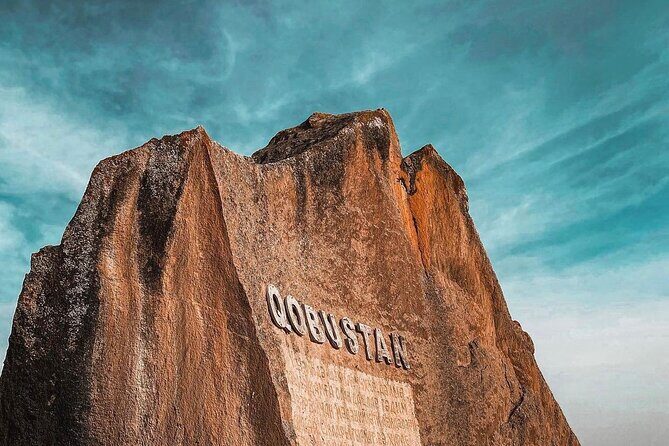
- Gobustan Rock Art: 40,000-year carvings in a semi-desert setting
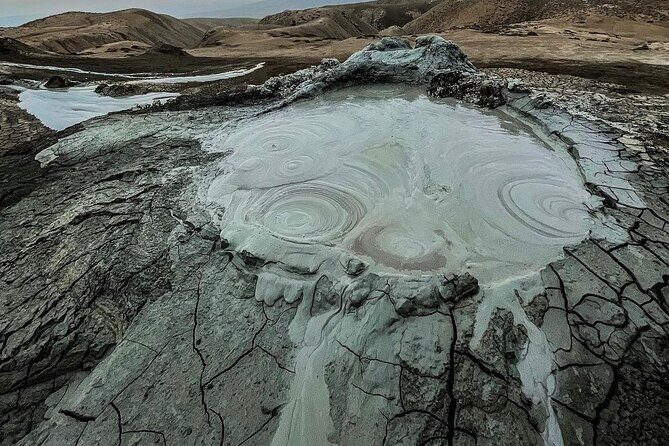
- Mud volcanoes: where the ground keeps talking
- Bibi-Heybat Mosque: marble, domes, and mosaic detail
- Yanar Dag Fire Mountain: continuous flames from natural gas
- Ateshgah Fire Temple: Zoroastrian shrines and the strange acoustics
- Heydar Aliyev Cultural Center: a quick reset after the fire and mud
- Price and Logistics: what $115 per person really buys
- Who this day trip is best for (and who should skip it)
- Final verdict: should you book this Baku day trip?
- FAQ
- How long is the day trip?
- What’s included in the price?
- Are entrance fees included?
- What stops are included in the day?
- Is this a private tour?
- What’s the policy if I need to cancel?
Key things to know before you go
- Private pace with pickup: Hotel pickup and drop-off in Baku keep the day smooth, and you’re not waiting on a big bus crowd.
- Soviet-era Lada car transport: It’s not just a gimmick—expect a road-trip feel rather than a tour-bus vibe.
- Gobustan runs on time: You get about 2 hours for rock art, so it pays to listen early and ask questions when the guide is setting context.
- Mud volcanoes are the star of the show: You’ll get about 1.5 hours there, with admission listed as free in the plan.
- Fire sites are close-timing games: Yanar Dag and Ateshgah are both timed stops, so don’t expect endless wandering.
- You’ll walk a bit between stops: The day is compact, so comfortable footwear and basic stamina help—especially if you want photos.
The Big Picture: A private Absheron Peninsula day with real contrasts
This excursion is built around a tight theme: the Absheron region’s geology and beliefs. You start with Gobustan’s open-air rock art, move to active mud volcanism, then shift into iconic religious landmarks connected to fire and devotion.
The value here is mostly in logistics and focus. You’re paying $115 per person for a private guide, a driver, and hotel pickup/drop-off, so you don’t burn your day figuring out transport between scattered sites. And because it’s private, you get more flexibility than a fixed-group tour—your guide can slow down for the parts you care about.
The route is also a nice mental reset. One stop is semi-desert rock carvings, the next is earth bubbling with mud, and then you’re at a mosque and two fire-related sites. It’s a lot, but it works because the guide can frame each place in plain language.
A few more Baku tours and experiences worth a look
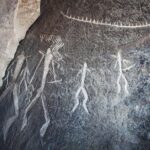
Gobustan Rock Art: 40,000-year carvings in a semi-desert setting
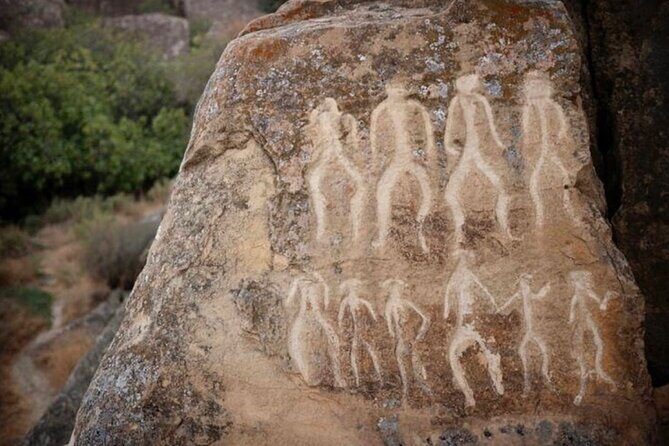
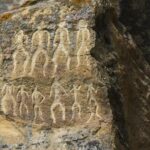
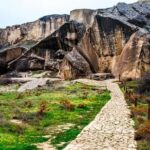
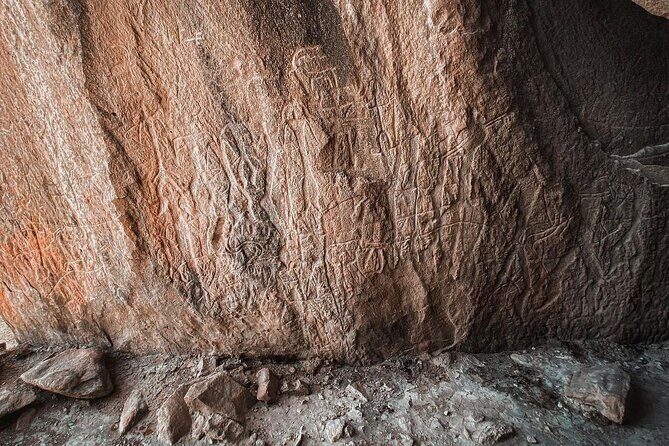
Gobustan is the kind of place you understand faster with a good guide. You’ll spend around 2 hours in the Gobustan Rock Art area, part of the Cultural Landscape of Gobustan, described as a 537-hectare zone with a plateau of rocky boulders rising out of the semi-desert. The headline is scale: more than 6,000 rock engravings, tied to rock art history going back around 40,000 years.
This stop isn’t just “look at carvings.” The site is spread across five well-known hills for rock art sites: Kichik Dash, Boyuk Dash, Jinghirdag-Yazily tepe, Shongardag, and Shikhgaya. Even with limited time, your guide can point out patterns and how the engravings connect to broader open-air traditions.
What I like about this stop is the mix of natural and human history. You’re not separated from the environment; it’s semi-desert terrain with stone and meaning layered on top. It’s also a rare chance to see how old the story can feel in one small geographic area.
Possible drawback: 2 hours disappears quickly if you’re trying to photograph everything. If you care about detail, listen first, then come back for images where it makes sense.
Mud volcanoes: where the ground keeps talking
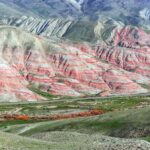
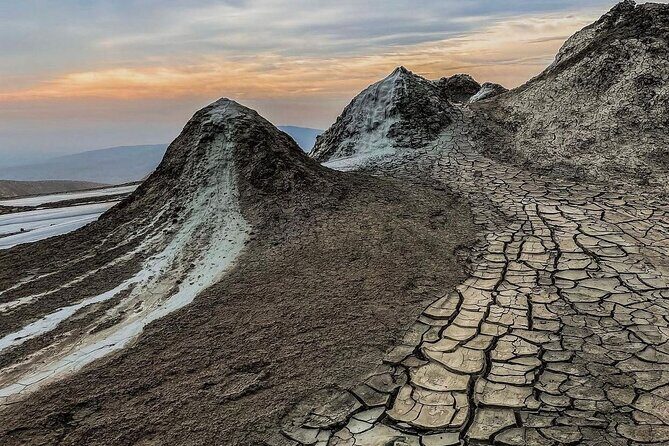
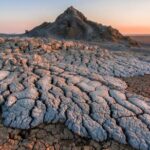
Next comes the mud volcano stop, and it’s hard not to remember it. The plan highlights that Azerbaijan is a global standout for mud volcanism, with 350+ types described across active, extinct, buried, oil-producing, and underwater forms. The message is clear: in eastern Azerbaijan’s dry zone and in adjacent Caspian Sea areas, mud volcanism has enough variety and activity that it’s considered a “homeland” of these features.
You get about 1 hour 30 minutes here, and the plan lists admission as free for this stop. That timing is about right: you need enough time to understand what you’re looking at (often strange small features spread across an area), but you don’t need the whole afternoon.
I also like that the tour includes the “why” of it, not only the “what.” Mud volcanoes can sound like a travel cliché until a guide explains how they’re formed and why there are so many different kinds in this region.
One thing to keep in mind: this is a stop where conditions can feel unrefined. You’re in a natural site, not a polished museum. If you’re the type who needs everything controlled and paved, this part may feel less formal than you’d prefer.
Bibi-Heybat Mosque: marble, domes, and mosaic detail
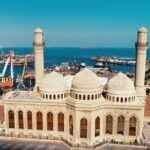
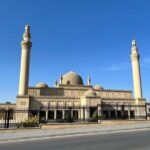
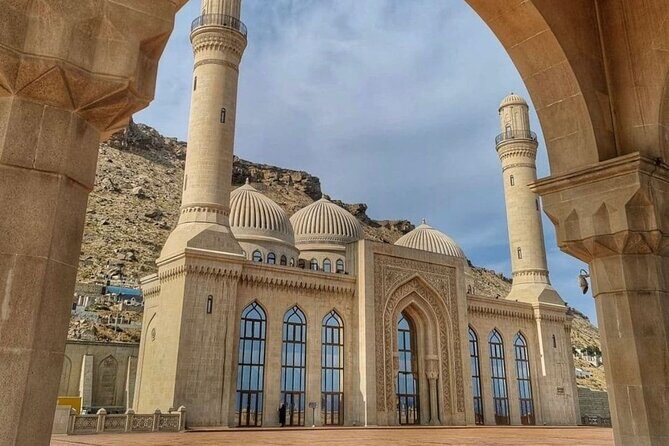
After the earth stops bubbling, you’ll switch to a classic architectural landmark: Bibi-Heybat Mosque. You have about 20 minutes at this stop, with admission listed as free.
The description leans on materials and design: white marble and dome-colored glass, plus a mosaic with Qur’an text (Surat al-Nisa) written in glass. The mosque is described as about 5 meters high and able to accommodate roughly 3,000 people at a time—useful context for understanding its importance and size.
Even in a short stop, this place can feel satisfying because it’s visually specific. Instead of “walk around,” you can look for the marble, the dome glass, and the mosaic work. A good guide can also add the context of why this mosque matters in Baku’s religious story.
Possible drawback: 20 minutes is short. If you want a slower visit, treat this as a quick orientation stop. For deeper time, you’d need extra independent sightseeing.
Yanar Dag Fire Mountain: continuous flames from natural gas
Then you hit the part many people come for: Yanar Dag, often called the fire mountain. The tour gives you about 1 hour here, and the plan says admission is included for this stop.
The standout detail is practical and memorable: there’s a wall-length area of fire, described as around 10 meters long, burning continuously along the edge of the hill. The source is natural gas coming up from beneath the surface, which means the fire doesn’t behave like a candle with rules—it’s more like a geological feature.
The plan also frames the deeper background. Before the 7th century, the volcano was used as a temple associated with the Mecus. Buildings around it were destroyed, but the fire continued. It’s one of those places where you can feel the long timeline—fire as both phenomenon and belief.
Why this stop is valuable: you’re not only seeing a show. You’re seeing how the same natural element can fuel human ritual and storytelling for generations.
Possible drawback: “continuous fire” can attract a lot of attention, and you may end up sharing viewpoint space with other visitors near the fire line. If you’re very particular about photo angles, take a few minutes to settle and choose one viewpoint rather than constantly moving.
Ateshgah Fire Temple: Zoroastrian shrines and the strange acoustics
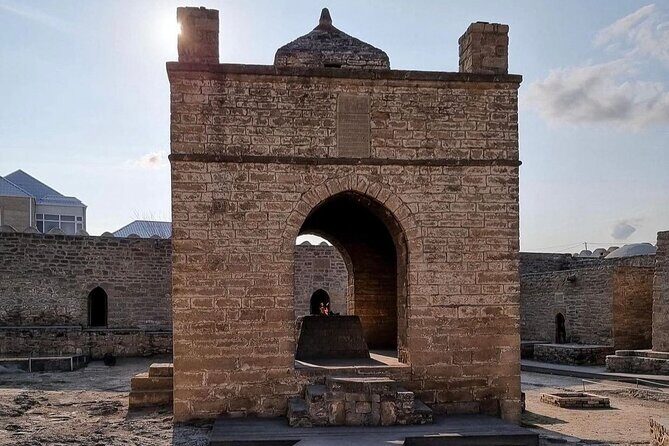
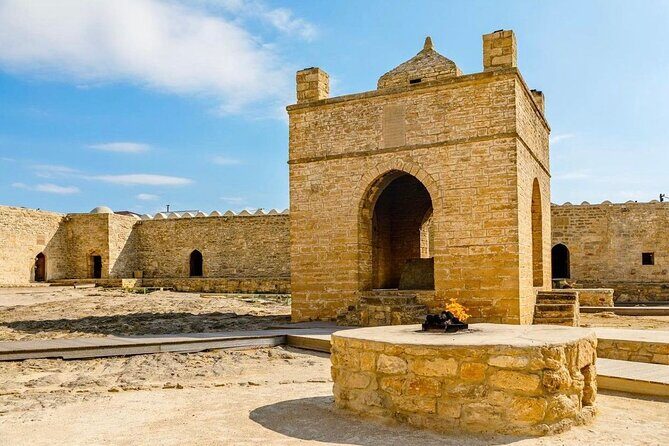
Ateshgah is where the day turns from nature fire into human-made fire symbolism. You’ll spend about 1 hour 30 minutes here, and the plan lists admission as included for this stop.
The site is described as one of the three Mecusi temples in the world. According to the plan, it’s considered sacred in Zoroastrianism in a way described as being as sacred as Mecca, and it links shrines across Iran, India, and Azerbaijan.
What makes Ateshgah interesting is the structure described: visitors enter cellars (you’ll go through a sequence of cells). In the yard of the four-storey building, you see flames burning in the dome. The plan also describes sensory moments tied to specific cells—for example, at around the 12th cell it can feel like you’re standing on a step of flame, and at the 18th cell you hear strange sounds, described as mixed voices that aren’t understood.
I like this stop because it’s not just visual. It’s designed to affect your body and attention as you move through spaces. If you’re the type who enjoys places where architecture has a purpose beyond looks, Ateshgah is worth paying attention to even when time is limited.
Possible drawback: if you dislike enclosed spaces or you get impatient with slow-moving site rules, you might wish for more breathing room between cells. The experience is “guided by the building,” so you’ll feel that rhythm.
Heydar Aliyev Cultural Center: a quick reset after the fire and mud
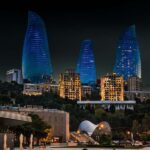
Your last short photo stop is at the Heydar Aliyev Cultural Center park, around 15 minutes, with admission listed as not included for this part of the day.
This is less about deep history and more about decompressing. You’ll have room to walk, enjoy outdoor exhibits (as noted in the plan), and take photos. There’s also an art composition in the park described as I Love Baku.
I’m glad this is last because after fire and ancient stone, it helps to end somewhere lighter. Even a short stop like this can keep your day from ending with everyone feeling rushed back to the car.
Price and Logistics: what $115 per person really buys
Let’s talk value without hand-waving. At $115 per person for a private day trip, you’re paying for three main things:
1) Hotel pickup and drop-off within Baku
2) An English-speaking guide (you’re not stuck with a phrasebook)
3) Driver service and transport via a Soviet-era Lada car
This is also a private tour, meaning only your group participates. That matters on a day like this because the sites are spread across the Absheron region. Without a driver and guide, you’d be stitching together transport and timing yourself.
The plan also notes group discounts and that the average booking timing is about 78 days in advance. If you want a specific date, don’t leave it to the last minute. Popular travel windows in Baku can mean fewer slots.
Now the messy part: ticket notes can look contradictory. The stop details say admission tickets are included at places like Gobustan, Yanar Dag, and Ateshgah, while the broader inclusions/exclusions list says entrance fees to museums are not included for Ateshgah, Yanardag, and Gobustan National Museum. That doesn’t mean the experience is bad—it means you should confirm what’s covered for your exact booking.
If you handle that small uncertainty up front, the price looks reasonable for a tightly packed private day.
Who this day trip is best for (and who should skip it)
This tour fits you best if you want a single-day hit of Absheron’s signature sites without spending your time on transport. It’s especially good if you like mixing types of travel: open-air history at Gobustan, science-y weirdness at mud volcanoes, and architectural/religious stops that explain how fire fits into belief.
It’s also a strong pick for small groups who want flexibility. The tour is private, and the driver and guide can adjust the pace to how you like to move through sites.
You might want to think twice if:
- you hate long days with timed stops (the day runs about 6 to 7 hours)
- you dislike any natural-site messiness at mud volcano areas
- you need food included, because food and drinks aren’t part of the package
Final verdict: should you book this Baku day trip?
I think this is a smart booking for a first Absheron day. You get a strong mix—Gobustan rock art, mud volcanoes, Bibi-Heybat Mosque, Yanar Dag, and Ateshgah Fire Temple—all under a private guide’s control. The best part is that the day feels like a coherent story: nature phenomena, then human belief systems tied to fire and meaning.
My one “do this first” recommendation: confirm exactly which entrance fees are included for your dates, especially for Gobustan National Museum, Yanardag/Yanar Dag, and Ateshgah. If those ticket details are clear, you’re set up for a memorable day that’s both practical and genuinely unusual.
FAQ
How long is the day trip?
The duration is listed as about 6 to 7 hours.
What’s included in the price?
Hotel pickup and drop-off, a professional driver service, all taxes/fees/handling charges, and an experienced English-speaking guide.
Are entrance fees included?
The stop descriptions mention admission tickets for several sites, but the exclusions section lists entrance fees to Ateshgah, Yanardag, and Gobustan National Museum as not included. Double-check what’s covered in your booking.
What stops are included in the day?
You’ll visit Gobustan Rock Art, mud volcanoes, Bibi-Heybat Mosque, Yanar Dag, Ateshgah Fire Temple, and a short photo stop at the Heydar Aliyev Cultural Center.
Is this a private tour?
Yes. It’s private, and only your group participates.
What’s the policy if I need to cancel?
Free cancellation is available up to 24 hours in advance for a full refund. If you cancel less than 24 hours before the start time, the amount paid won’t be refunded.