REVIEW · BAKU
Gobustan, Mud volcanoes, Fire temple, Fire mountain GROUP TOUR
Book on Viator →Operated by Bag Baku Tour · Bookable on Viator
Baku turns geology and faith into a single route. I like how the day links UNESCO Gobustan rock art with places powered by natural gas and earth chemistry, so it feels like one big story rather than four random stops. I also really liked the hands-on parts: climbing up to view mud volcano craters up close and seeing fire-worship heritage at Ateshgah. One thing to consider: ticket fees and lunch aren’t included, so you’ll want to budget for meals and keep some extra cash for entry costs.
This is a small-group format (up to 20) with an air-conditioned vehicle, which matters in Baku because the driving adds up. The stops are timed to balance walking with viewpoints, but you still need good weather and solid shoes if you plan to climb around the mud volcano area. If you prefer deep, ongoing commentary nonstop from the guide, you’ll want to come ready with questions, because the guide’s energy can make a difference.
In This Review
- Quick hits before you go
- Small-group day trip logistics that actually help
- Gobustan Rock Art Museum: technology inside, real petroglyphs outside
- Mud volcanoes near Baku: the world’s weirdest backyard trick
- Lunch break: one hour to reset, not to linger
- Ateshgah Fire Temple: where inscriptions explain the fire ritual
- Yanardag burning mountain: the natural gas flame that never takes a day off
- Price and value: $59 plus tickets and lunch
- Who this group tour is best for
- Should you book this Gobustan, mud volcanoes, Fire Temple and Yanardag tour?
- FAQ
- How long is the tour?
- What time does the tour start in Baku?
- How big is the group?
- What’s included in the price?
- What isn’t included?
- Is there a mobile ticket?
- What are the main stops on the route?
- Is the tour dependent on weather?
Quick hits before you go
- Gobustan Rock Art Museum plus open-air petroglyph rocks: tech inside, then real carvings outside
- Mud volcano craters you can climb to see up close: not just looking from afar
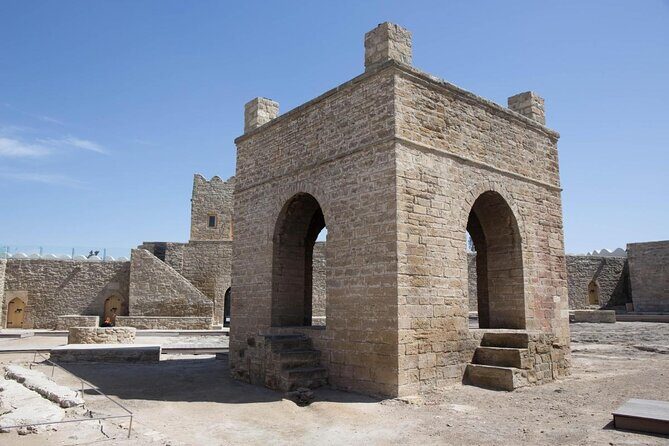
- Ateshgah’s fire-worship connection: Persian and Indian inscriptions tied to Hindu and Zoroastrian use
- Yanardag’s constantly burning flames: a hillside gas fire that has drawn pilgrims for a long time
- Small group, air-conditioned ride: easier pacing and more chance to ask questions
Small-group day trip logistics that actually help
This tour runs about 9 hours, starting at 9:30 AM, with pickup in Baku and ending back in the city near Fountain Square Passage. The max group size is 20, which is big enough that you won’t feel isolated, but small enough that the guide can still keep track of everyone. If you’ve ever been stuck on a packed bus where nobody hears anything, this setup is a nice change.
You also get an air-conditioned vehicle. That sounds basic, but on a day that includes long drives between sites, it makes the “in-between time” less painful. And because it’s scheduled as one continuous loop—Gobustan, then mud volcanoes, then Ateshgah, then Yanardag—you avoid the hassle of arranging multiple tickets and rides on your own.
Two practical realities to plan for:
First, you’re responsible for ticket fees (listed at USD 23) and lunch. Second, the experience needs good weather. If weather turns poor, it can get rescheduled or refunded, so don’t book a tight same-day follow-up right after.
You can also read our reviews of more tours and experiences in Baku.
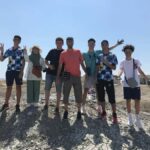
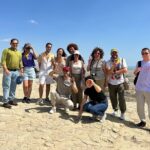
Gobustan Rock Art Museum: technology inside, real petroglyphs outside
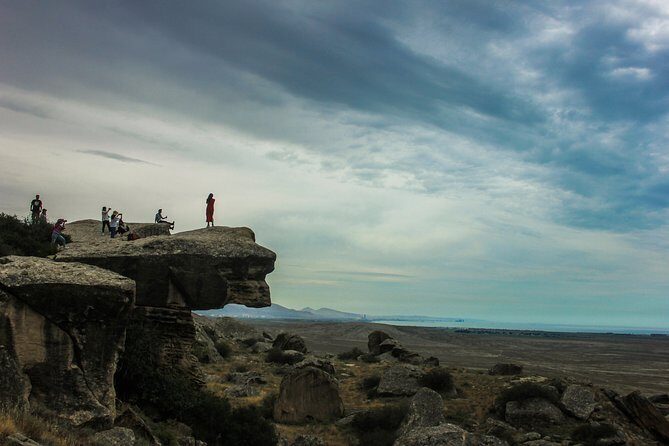
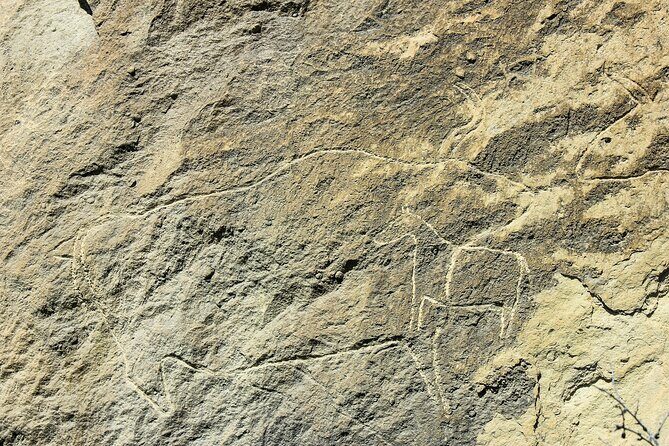
Gobustan is the headline stop for a reason. You’re visiting a UNESCO World Heritage Site, and the focus is the prehistoric rock art—petroglyphs carved into the landscape long ago. The tour gives you two layers here: the interactive museum and then the open-air rock area.
Inside the museum, the big win is how it explains what you’re looking at. You can use touch screens and view special 3D panoramas that show aspects of how people lived from roughly 5,000 to 20,000 years ago. Then the exhibits cover historical items and context dating to about the IV–II millennium BC. Even if you don’t consider yourself a “rock art person,” this museum helps you read the carvings instead of just staring at them.
After that comes the open sky portion. You’ll head from the museum to the Gobustan rocks, where you can see the engravings on the actual rock surfaces. This is where the experience clicks for many people, because the museum sets the stage and the outdoor carvings confirm you’re not imagining things—these marks are right there in the terrain.
What you might not love: the museum time and outdoor time are limited, because the day keeps moving. If you want to spend a long, slow afternoon studying a few specific panels, this tour’s structure may feel a bit “fast.” Still, for a one-day visit from Baku, it’s a strong way to get the meaning without needing to plan a full independent day.
Mud volcanoes near Baku: the world’s weirdest backyard trick
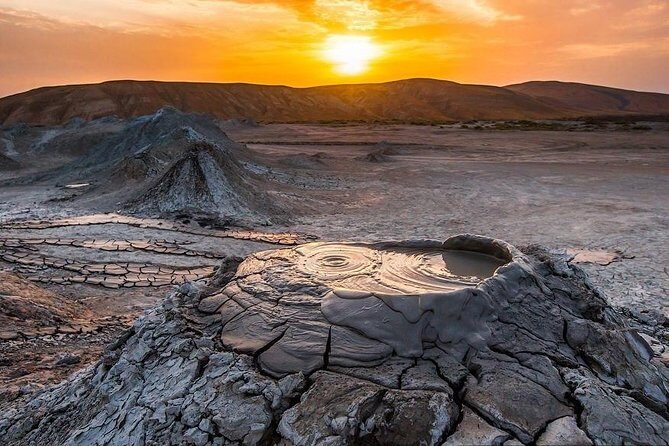
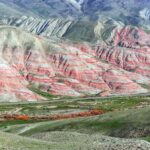
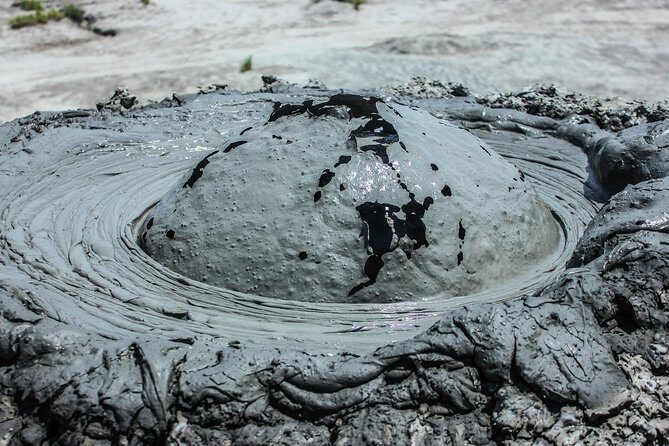
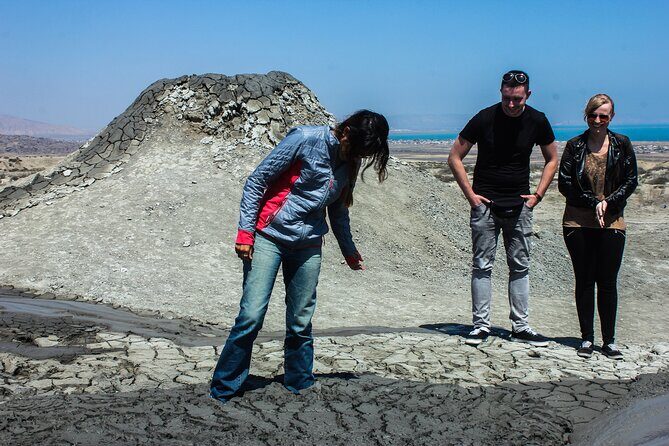
After Gobustan, the tour goes to the mud volcanoes, and this is one of the most memorable parts of the day. Azerbaijan holds a huge share of the world’s mud volcanoes—350 out of about 800 worldwide—so you’re not seeing a random spectacle. You’re seeing something that’s genuinely a signature of the region.
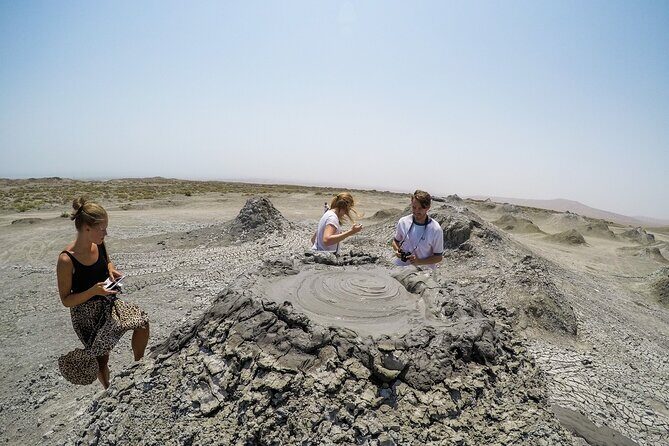
Here’s what stands out in the way the stop is run: you go to active mud volcanoes, and you can climb and get close enough to view craters. That’s a big difference from tours where you look from a distance and call it done. Up close, you start understanding why the area has been useful beyond curiosity.
You’ll also get context about the long geological timeline—mud volcano activity is described as dating back about 25 million years in what is now Azerbaijan. And the stop connects the science to practical uses: mud and volcanic clay have roles in chemical and construction industries and in pharmacology. It’s also used for treatment approaches related to nervous system issues, skin problems, and rheumatism. Even if you don’t care about industry applications, it helps you see the volcanoes as part of local life and knowledge, not just a photo moment.
The main drawback to plan around: footing. You’re climbing near craters, and the terrain can be uneven. Wear shoes you’re comfortable getting dusty or muddy, and don’t count on them being clean afterward. Also, remember you’re on a schedule—after this part, you’ll have about an hour for lunch in the city center.
Lunch break: one hour to reset, not to linger
The tour includes an hour’s lunch break in the city center between the mud volcanoes and Ateshgah. That time can be great if you keep it simple: grab something quick, drink water, and let your legs recover.
But since lunch isn’t included, you need to think ahead. If you wait until the last minute to find food, you may end up with something you don’t really want just to eat fast. I’d treat this hour as a quick meal window, not a slow sit-down lunch.
Ateshgah Fire Temple: where inscriptions explain the fire ritual
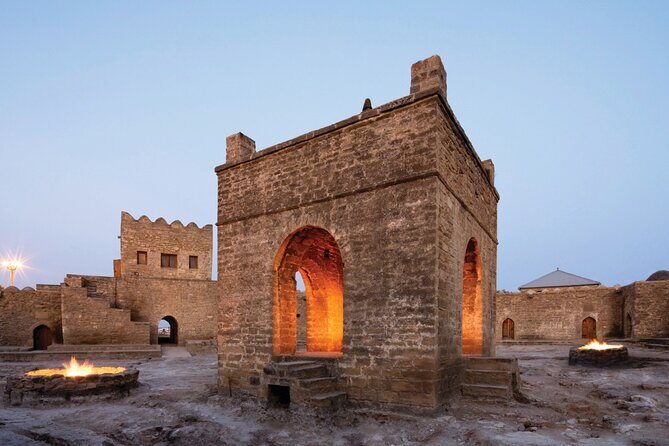
Next up is the Ateshgah Fire Temple, and this stop adds a totally different flavor to the day: religion and history tied to natural flames. The tour information highlights that the site is connected to Persian and Indian inscriptions and served as a place of worship for both Hindu and Zoroastrian traditions. The first mention is described as dating to the 7th century AD.
Inside the temple area, you’ll see many small cells that were used by fire worshippers, plus historical exhibits gathered from excavations. The items listed include cookware, stone slabs with inscriptions, and elements of clothes. This is the kind of site where the physical structures and the written traces help you understand how the place worked—not just that people believed in fire, but that they organized their worship around it.
One practical consideration: the time here is about an hour, so you’ll want to pay attention early. If you start wandering without a sense of what you’re looking at, the hour can go by quickly. If you do take a few minutes to read what’s emphasized—especially the inscription connection—you’ll get more from the visit.
This stop also makes the later Yanardag flames feel less random. You’re basically seeing two expressions of the same idea: fire tied to the earth, used as a sacred symbol across traditions.
Yanardag burning mountain: the natural gas flame that never takes a day off
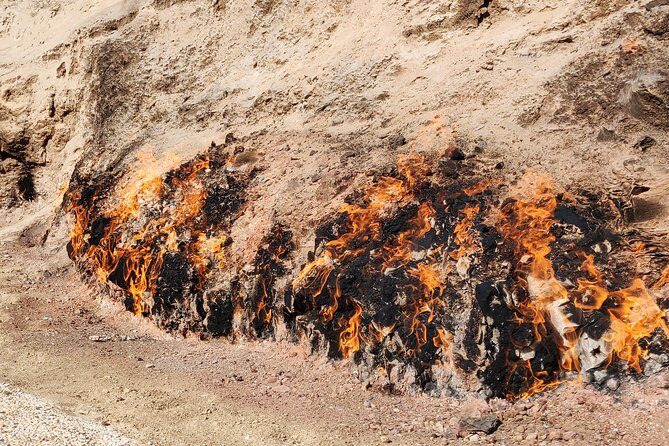
The final stop is Yanardag, also described as Yanardag State Historical, Cultural and Natural Reserve. The main feature is a natural gas flame burning constantly on a hillside near Baku. The name Yanardag literally translates as Burning Mountain, and the whole point is that it’s been burning since ancient times.
The tour gives you about 40 minutes here. That sounds short, but with a site like this, you’re there for atmosphere, flame views, and a bit of context. If you enjoy places that feel half scientific, half sacred, this one works. The information also notes that pilgrims from Iran and India visit to see the burning mountain, which reinforces that this isn’t just a local curiosity.
What to consider: your comfort depends on conditions. Because you’re outside near a hillside, weather matters. The tour requires good weather overall, and Yanardag is the sort of place where rain or strong winds can make the experience less pleasant. Also, because it’s the last stop, you’ll be tired. Keep your energy for quick photos, a slow look at the flames, and the final walk back to your drop-off point.
Price and value: $59 plus tickets and lunch
The tour price is $59 per person, for a full day of four major stops with an accredited guide and an air-conditioned vehicle. The catch is that ticket fees aren’t included, listed at USD 23, and lunch isn’t included either.
So what do you actually get for your money? You’re paying for:
- a guide who connects the sites (rock art, geology, temple history, and the burning flames)
- coordinated transport across sites around Baku
- a schedule that includes both indoor learning and outdoor viewing
From a value standpoint, it can be a good deal if you want a single organized day that hits the top attractions without juggling bookings. If you’re someone who enjoys geology and cultural history in one sweep, this day works especially well. But if you hate extra add-on costs, or you prefer controlling meal plans fully, you’ll want to factor those non-included items into your total budget.
A smart planning move: bring a little extra cash or an easy payment method for food and any ticket-related needs. Also, bring water and snacks if your stomach tends to get cranky on a tight schedule—just keep it realistic with what’s allowed at each site.
Who this group tour is best for
This tour is a strong match if you:
- want a one-day taste of Gobustan, Azerbaijan’s famous mud volcanoes, and the fire theme around Baku
- like practical structure: pickup, timed stops, and a guide handling the big explanations
- enjoy outdoors with short walks and viewpoint time rather than long hikes
It might be less ideal if you:
- want a lot of free time at just one location
- need lunch included (it isn’t)
- struggle with climbing/uneven ground at the mud volcanoes
One more note: the overall rating is 4.6 with a high recommendation rate (95%). That suggests most people leave feeling it’s worth the time. Still, like any group day, the guide’s style can affect how much you learn. If you care about specific details, bring curiosity and ask questions—then you’ll get more out of every stop.
Should you book this Gobustan, mud volcanoes, Fire Temple and Yanardag tour?
I’d book it if your ideal Baku day mixes prehistoric rock art, geology you can get close to, and places where fire is part of the cultural story. The pricing is fair for a full loop with an accredited guide and transport, and the mix of indoor and outdoor time keeps the day from feeling monotonous.
I’d skip or reconsider if you hate paying extra for tickets, you want a long sit-down lunch, or you dislike climbing on rough terrain. Also, if you’re the type who wants very detailed, constant commentary, keep expectations flexible and be ready to ask.
If you’re trying to pick just one organized day to cover these headline sites efficiently, this one makes a lot of sense.
FAQ
How long is the tour?
It’s listed at about 9 hours.
What time does the tour start in Baku?
The start time is 9:30 AM.
How big is the group?
The tour has a maximum of 20 travelers.
What’s included in the price?
The tour includes an accredited tour guide and an air-conditioned vehicle.
What isn’t included?
Ticket fees are listed as USD 23, and lunch is not included.
Is there a mobile ticket?
Yes, it’s a mobile ticket.
What are the main stops on the route?
Gobustan Rock Art Museum, mud volcanoes, Ateshgah Fire Temple, and Yanardag.
Is the tour dependent on weather?
Yes, it requires good weather. If it’s canceled due to poor weather, you’ll be offered a different date or a full refund.