Fire, mud, and petroglyphs in one day. This guided loop around Baku strings together UNESCO rock art and real Absheron Peninsula fire phenomena, all in one long but satisfying outing. I love how it keeps the pacing active with stops that each feel different, from carved stone to bubbling ground. I also like that mud volcanoes and the world’s first oil well are handled with included admissions, so you spend less time worrying about tickets. One thing to consider: it is an all-day format with a lot of driving time, and several key sites have entrance fees that are not included.
The guides attached to this kind of service get praised by name in the Absheron orbit, including Said and Ilqar-Viano, and that matters here. Good guiding turns place-names into context, especially at Gobustan and the fire sites, where the why is the whole point.
You’ll be in a comfortable air-conditioned vehicle and have bottled water, but you should plan for a proper lunch break on your own and flexible timing depending on traffic and weather.
In This Review
- Key points to know before you go
- Why Gobustan + Absheron works as one big day from Baku
- Price and logistics: what you’re really paying for
- Starting point in Old City Baku: the day begins with timing
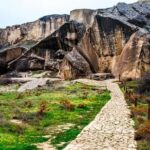
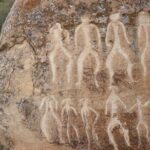
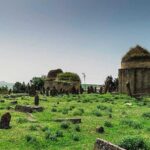
- Gobustan Rock Art and the 3D museum: seeing meaning in stone
- Mud Volcanoes: the included ticket you’ll actually be glad you got
- The world’s first oil well stop: why this tiny site matters
- Ateshgah Fire Temple: when inscriptions explain the smoke
- Yanar Dag Burning Mountain: the short visit that feels oddly magical
- Lunch and breaks: keep your energy steady
- What makes the guided part actually matter
- Who this tour is for (and who might want a different plan)
- Final verdict: should you book the Guided Gobustan, Mud Volcanoes & Absheron Tour?
Key points to know before you go
- Gobustan UNESCO rock art plus an indoor 3D stop makes the story easier to follow
- Mud Volcanoes admissions are included for a straightforward visit
- Bibiheybət oil-well stop is time-efficient with included admission
- Ateshgah and Yanar Dag have extra entrance fees so budget a bit more
- An 8-hour schedule means road time is real; bring patience and water habits
- Private tour format means your group stays together with the guide and driver
Why Gobustan + Absheron works as one big day from Baku
If you only have limited time in Baku, this trip is a smart way to see two very different sides of Azerbaijan’s natural and cultural story. You start with ancient human traces at Gobustan. Then you move outward to Absheron, where the ground and gas flames do the talking.
The value here is not just the “checklist” of famous sites. It’s the way the stops connect: people marked rock in Gobustan thousands of years ago, then centuries later the region became tied to oil and to the dramatic tradition of fire worship. You’re basically traveling through themes—stone, mud, fuel, flame—without changing the overall base.
At $59 per person for about 8 hours with pickup offered, air-conditioned transport, bottled water, and parking covered, the pricing is usually on the fair side for what you get. The catch is that not every entrance ticket is included, so you should budget for site entries and lunch.
You can also read our reviews of more guided tours in Baku

Price and logistics: what you’re really paying for
Here’s the simple breakdown. Your money buys an organized day with an air-conditioned vehicle, fuel and parking handled, and bottled water for the ride. It also includes admissions for two stops: the Mud Volcanoes and the world’s first oil well segment.
Not included are admissions for Gobustan’s 3D Interactive Museum / outdoor petroglyph area, Ateshgah Fire Temple, and Yanardagh Burning Mountain. Lunch is also not included. The tour description notes a buffet-style restaurant option in the 12–15 AZN range for lunch, which is helpful because it tells you what “not included” likely means in practice.
One more practical detail: this is a private tour, so you avoid the herd-style feeling of big group day tours. But it’s still an 8-hour day, and the itinerary openly allows for travel time and a middle break. In other words, you’re not popping in and out at every stop for 10 minutes. You’re doing a full day route.
Starting point in Old City Baku: the day begins with timing
You meet in Old City Baku, at the start point listed as Old City Baku, with daily hours shown from 9:00 AM to 6:00 PM. That timing matters because it affects how smoothly your day falls into place. Starting from the Old City area is convenient if you’re staying near downtown sights, and it keeps the first transfer simple.
The tour notes that pickup is offered. That typically helps you avoid the headache of lining up taxis for a route that goes out to the peninsula and back.
If you want the day to feel less rushed, plan to be ready a few minutes early. When your day is built around precise start times for museum entry windows, being late can shrink the time you get at the most interesting stops.
Gobustan Rock Art and the 3D museum: seeing meaning in stone
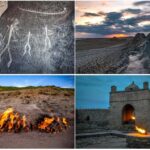
The first major stop is Gobustan Rock Art, about 40 miles (64 km) from central Baku. Gobustan is a UNESCO World Heritage Site, which is a big deal here—not because UNESCO makes something automatically good, but because it signals that the carvings are part of a protected cultural record.
You’ll visit two parts:
- Gobustan 3D Interactive Museum
- Gobustan Outdoor Museum (petroglyphs)
What I like about this pairing is that it teaches you how to look. Outdoors, you’re dealing with carved figures and marks that can feel cryptic at first glance. The museum component gives you a framework so you’re not just staring at rock and guessing.
The drawback: admission ticket is not included for this stop. So you should expect to pay on the spot or carry any needed payment method. Also, the time marked is 1 hour, which is enough to see both indoor and outdoor elements if the group moves efficiently, but it’s not enough for slow browsing if you stop to read everything.
Practical tip: wear shoes that can handle uneven outdoor paths. Gobustan is outdoors for part of the visit, and comfortable footing makes the whole thing easier.
Mud Volcanoes: the included ticket you’ll actually be glad you got
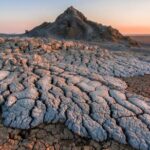
Next comes the stop that many people remember even if they forget the rest of the itinerary. Mud Volcanoes are a signature feature of Azerbaijan.
The tour highlights a big statistic: Azerbaijan has the most mud volcanoes of any country, with 350 of the world’s 700 mud volcanoes located in Azerbaijan. Whether you memorize the exact number or not, the point lands: this is not a one-off roadside curiosity. It’s a real regional phenomenon.
The time here is about 25 minutes, and the admission ticket is included. That’s a rare “good” kind of included cost, because it means you get the full experience without paying extra at the gate.
What to expect: you’ll be standing around a natural process—ground activity that looks strange, smells faintly earthy, and makes you think about how alive the terrain can be. It’s also the kind of stop where a guide helps. If you learn what you’re seeing (gas, mud movement, and how these volcanoes behave), the short visit feels richer.
One small consideration: the outing depends on conditions. Mud volcano sites can be best when the weather is decent. If conditions aren’t ideal, you might get less time or less comfort on the ground.
The world’s first oil well stop: why this tiny site matters
Then you head to the world’s first oil well stop, tied to Bibiheybət. The tour includes admission here (time is about 20 minutes), so again you don’t need to add ticket handling to your mental load.
The story is specific: in 1846, an engineer named Alekseev drilled a 21 m deep well under state advisor V.N. Semyonov, using a primitive percussion mechanism, and the drilling came back positive. Then in 1859, Colonel Edwin L. Drake struck oil in the United States for the first time—at least how the tour frames the global comparison.
Why this stop is worth your time: it gives you a regional anchor for why Azerbaijan has such a strong oil identity. You don’t just hear about “oil history” as a vague concept. You see the local starting point that connects to the wider world timeline.
The limitation: 20 minutes is short. You’ll likely focus on the key features and the explanation rather than deep museum-style reading. If you love industrial history, you might wish you had more time here, but the tight scheduling makes sense because it protects the rest of the day.
Ateshgah Fire Temple: when inscriptions explain the smoke
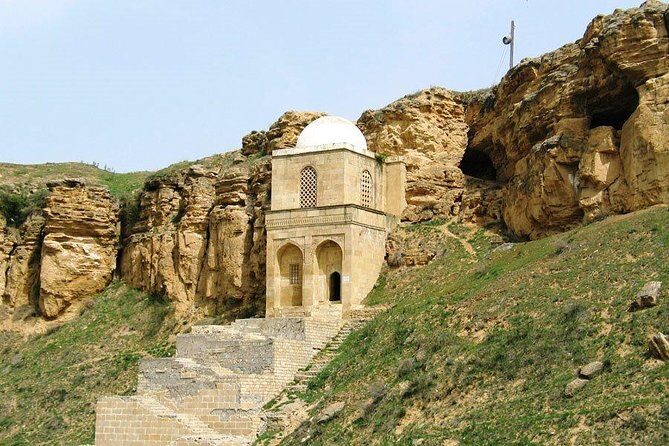
After oil history, the tour shifts to religious and cultural meaning with Ateshgah Fire Temple in Surakhany, a suburb in the Baku area.
This site is often called the Fire Temple of Baku, and the tour frames it as a castle-like religious complex. The deeper story is that it was used as a Hindu, Sikh, and Zoroastrian place of worship. The connection comes through Persian and Indian inscriptions, which is the kind of detail you want from a guided day trip. It turns the building from a photo stop into a cultural puzzle.
Your visit time is about 1 hour, and admission ticket is not included for this stop.
What I like about a place like this on a single-day itinerary is the contrast. You just left mud and oil. Now you’re looking at how people interpreted natural fire or fuel sources as spiritual significance. Absheron’s relationship to flame is not just a modern travel slogan—it links to belief systems and texts.
Possible drawback: not including the entrance ticket means you’ll have a small extra expense mid-route. Also, the hour can feel shorter than you expect if you like reading inscriptions or photographing details without rushing.
Practical tip: dress for warm indoor-outdoor transitions. Places like this can be partly open-air, and light changes fast as the sun shifts.
Yanar Dag Burning Mountain: the short visit that feels oddly magical
You finish with Yanar Dag, also called the Burning Mountain. This is described as a natural gas fire that burns continuously on a hillside on the Absheron Peninsula near the Caspian Sea.
The tour schedules this at about 30 minutes, and again, admission ticket is not included. That might sound like a downside, but 30 minutes is often the right length for a specific feature like this. You get enough time to see the flame, take photos, and watch the hillside in different angles as the guide adds context.
One more thing I appreciate: the tour calls Azerbaijan the Land of Fire, and then it backs up that nickname with a site where the fire is not theatrical. It’s a physical phenomenon. Even if you don’t care about the religious symbolism, you still get the wow factor of a hillside blaze tied to natural gas.
Weather note: the tour states this experience requires good weather. If conditions are poor, you may be offered a different date or a full refund. If you’re visiting in a season with unstable skies, it’s worth keeping your expectations flexible for the last stop.
Lunch and breaks: keep your energy steady
Lunch is not included, but the tour notes a buffet-style restaurant option where local food is offered around 12–15 AZN. That’s useful because it gives you a realistic range to plan for without guessing.
Because this is an 8-hour day, you should treat the lunch break as fuel, not just a formality. You’ll be outdoors at least part of the time, and you’ll do walking and standing even if the stops aren’t long.
Also consider this: the itinerary includes a mid-day break, and the tour description explicitly notes that the rest of your day is spent on transportation to get between locations and on rest time. That means if you skip lunch or eat lightly, you’ll feel it.
What to do: eat something simple and filling when the buffet option is available. Then snack later if you have room. Bring a water habit too, even though bottled water is included.
What makes the guided part actually matter
A day trip like this can easily turn into a bus ride with quick photos. The difference here is that the itinerary is built around explanation.
Gobustan is not just about seeing carvings. The guided component helps you understand why the carvings exist and what the site is protecting as a World Heritage record. Mud volcanoes are not just about being weird. A good guide gives you the science-like basics without making it feel like a lecture.
Ateshgah changes the tone again. The inscriptions and multi-faith worship history are the heart of the stop, and those details only land if someone points them out in a clear way.
And Yanar Dag? It’s easy to treat it like a roadside flame. But with context, it becomes a story about how natural fuel and human interpretation connect.
The guide experience matters so much that it’s one of the most praised elements in the broader Absheron Travel Agency feedback—names like Said, Ali, and Ethiram show up repeatedly in that positive narrative. Your specific guide may differ, but the consistent theme is that you should expect real narration, not just directions.
Who this tour is for (and who might want a different plan)
This tour is a great fit if you want a high-impact day from Baku that covers culture + nature + unusual geology without planning every detail. If you like switching themes—ancient art, natural phenomena, industrial history, and fire mythology—this itinerary does that well.
It’s also a good choice if you don’t want the hassle of self-driving across longer distances outside the city. The air-conditioned vehicle and pickup option reduce friction.
If you hate driving time and prefer slow, neighborhood-only sightseeing, this might feel like too much road for one day. The tour itself admits that a big chunk of your time is transportation and break time.
And if you have a strict budget that can’t handle additional entrance tickets for Gobustan, Ateshgah, and Yanar Dag, you’ll want to factor that in from the start.
Final verdict: should you book the Guided Gobustan, Mud Volcanoes & Absheron Tour?
If you’re the type who wants your day to feel like a story with chapters, not just a series of stops, I think this one earns its spot. At $59 per person, you get organized transport, bottled water, parking handled, and two included admissions that matter: Mud Volcanoes and the world’s first oil well. That’s solid value for an 8-hour private day trip.
I’d book it if:
- You want Gobustan UNESCO rock art plus Absheron’s famous fire sites in the same day
- You’re okay paying a few extra entrance fees for the sites marked not included
- You can handle an itinerary where travel time is part of the deal
I would hesitate if:
- You strongly prefer fully included admissions and one-stop simplicity
- You’re sensitive to weather, because the tour requires good conditions and may shift if conditions are poor
- You want a light schedule with minimal driving
Bottom line: this is a practical, well-structured day that turns Azerbaijan’s themes of stone, mud, oil, and flame into something you can actually remember.